Training Needs Assessment in 2026: The Strategic Blueprint for High Performing Organizations

A training needs assessment helps organizations identify skill gaps, leadership challenges, and workforce development priorities before investing in corporate training. In 2026, organizations in Nairobi, across Africa, and global markets are using training needs assessment frameworks to align employee capability with digital transformation, compliance standards, and strategic growth goals. Companies that implement evidence based training assessments achieve stronger productivity, improved leadership readiness, higher employee engagement, and better return on training investment.
Why Is Training Needs Assessment Becoming a Strategic Priority in 2026?
Organizations are facing a difficult reality in 2026. Technology is moving faster than workforce readiness. Many companies are investing heavily in digital systems, leadership programs, and AI tools without first identifying the actual capability gaps inside their organizations.
This is where a structured training needs assessment becomes essential.
A training needs assessment is no longer a simple HR exercise. It has evolved into a strategic leadership tool that helps organizations make smarter workforce decisions.
For corporate leaders in Nairobi and across international markets, the challenge is not only about teaching employees new skills. The real challenge is understanding:
- Which skills matter most
- Which departments require urgent intervention
- Which leadership competencies are missing
- Which future capabilities are necessary for sustainable growth
This shift is especially visible in sectors such as:
- Public service
- Banking and finance
- Healthcare
- Manufacturing
- Energy
- ICT
- NGOs and development agencies
Organizations that ignore structured workforce assessment often experience:
- Poor training ROI
- Low employee engagement
- Leadership gaps
- Compliance risks
- Reduced innovation capacity
Forward thinking institutions are now partnering with professional providers such as ForElite Training Institute to build long term learning ecosystems rather than isolated workshops.
Organizations seeking executive and institutional transformation increasingly explore programs through and to align learning with business strategy.
What Exactly Is a Training Needs Assessment?
A training needs assessment is a systematic process used to identify the gap between current workforce capability and desired organizational performance.
It answers three important questions:
| Question | Purpose |
|---|---|
| What skills are missing? | Identifies technical capability gaps |
| Why do these gaps matter? | Connects training to business outcomes |
| How should learning happen? | Determines the best delivery approach |
In 2026, the most effective assessments combine:
- Workforce analytics
- Leadership interviews
- Employee surveys
- Performance reviews
- Compliance audits
- AI powered learning insights
- Behavioral and wellness indicators
Modern organizations are moving beyond generic training calendars.
Instead, they are adopting precision learning strategies.
How Does Training Needs Assessment Support the ‘Whole Professional’ Framework?
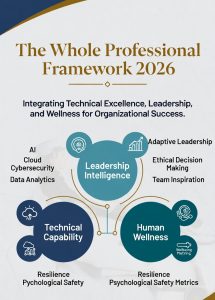
The strongest organizations in 2026 are developing what experts call the Whole Professional.
This approach recognizes that employee performance is shaped by three connected dimensions:
| Dimension | Focus |
|---|---|
| Technical Capability | The what |
| Leadership Intelligence | The why |
| Human Wellness | The how |
Many competitors focus only on technical certifications.
That approach is outdated.
Organizations now understand that sustainable performance requires emotional resilience, leadership adaptability, and employee wellbeing alongside technical expertise.
What Technical Skills Are Organizations Prioritizing in 2026?
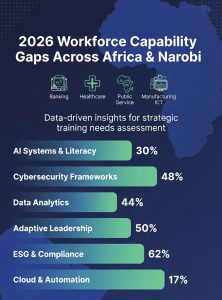
Several capability areas are dominating workforce development conversations across Africa and global markets.
These include:
Digital Transformation Skills
Organizations require employees who can work confidently with:
- AI systems
- Cloud platforms
- Cybersecurity frameworks
- Data analytics
- Automation tools
Compliance and Governance Skills
Public institutions and regulated sectors are increasingly aligning training with:
- POLD Regulations 2023
- ESG governance frameworks
- ISO standards
- Agenda 2063 workforce goals
Project and Operational Excellence
Companies are also prioritizing:
- Strategic planning
- Procurement management
- Monitoring and evaluation
- Financial accountability
- Agile project management
Institutions exploring future ready workforce capability often rely on structured solutions from to strengthen both technical and operational excellence.
Why Are Leadership Skills Becoming More Important Than Ever?
Technology alone cannot transform institutions.
Leadership determines whether transformation succeeds or fails.
In 2026, leadership development is shifting away from command and control models toward adaptive leadership.
Organizations need leaders who can:
- Manage uncertainty
- Lead hybrid teams
- Build psychological safety
- Drive ethical AI adoption
- Navigate geopolitical complexity
- Inspire cross generational collaboration
The demand is especially high across Nairobi’s growing corporate and public sector landscape.
Executives increasingly want leaders who remain calm under pressure while still delivering measurable results.
This is why leadership capability assessments are becoming a central component of training needs assessment exercises.
How Can Africa and MENA Firms Scale Agentic AI Responsibly?
This is one of the most searched leadership questions entering 2026.
Agentic AI systems can independently perform tasks, make recommendations, and automate workflows. However, organizations cannot scale these technologies responsibly without workforce readiness.
A strong training needs assessment helps organizations determine:
- AI literacy levels
- Governance awareness
- Data ethics understanding
- Cybersecurity preparedness
- Leadership oversight capability
This becomes especially important under evolving governance frameworks linked to:
- Agenda 2063 digital transformation priorities
- Public accountability regulations
- Institutional risk management standards
Responsible AI implementation requires human capability before technological expansion.
That principle is now central to modern corporate governance.
How Does Employee Wellness Affect Training Outcomes?
This is the dimension many organizations ignored for years.
But in 2026, burnout, stress, and disengagement are major barriers to workforce productivity.
Employees cannot absorb learning effectively when overwhelmed.
Modern training needs assessment frameworks therefore examine:
- Employee morale
- Workload pressure
- Psychological safety
- Leadership communication
- Organizational culture
- Mental wellness indicators
High performing organizations are treating wellness as a business strategy.
Not a soft benefit.
This shift is especially visible among public institutions and multinational organizations operating in high pressure environments.
What Makes Modern Training Needs Assessment Different From Traditional HR Surveys?
Traditional assessments focused mainly on collecting employee opinions.
Modern assessments are far more sophisticated.
Today’s frameworks integrate:
| Traditional Approach | Modern Strategic Approach |
|---|---|
| Generic questionnaires | Data driven diagnostics |
| Annual reviews | Continuous capability mapping |
| Training requests | Business aligned workforce planning |
| Classroom only learning | Hybrid learning ecosystems |
| HR ownership | Executive leadership ownership |
This strategic shift allows organizations to move from reactive training toward proactive workforce transformation.
How Are Nairobi Organizations Using Training Needs Assessment for Institutional Growth?
Nairobi has become one of Africa’s fastest growing professional training markets.
Organizations are under increasing pressure to:
- Improve public service delivery
- Strengthen governance
- Accelerate digital transformation
- Build globally competitive workforces
As a result, training needs assessment is becoming central to organizational strategy.
Leading institutions are now conducting assessments before:
- Leadership programs
- Change management initiatives
- AI adoption projects
- Compliance training
- Executive retreats
- Workforce restructuring
Many organizations are also integrating capacity building with strategic consulting through providers such as to improve long term institutional performance.
What Should a High Quality Training Needs Assessment Include?
An effective assessment should include multiple layers of organizational insight.
Organizational Analysis
This evaluates:
- Strategic priorities
- Market pressures
- Regulatory obligations
- Workforce risks
Task Analysis
This identifies:
- Role specific competency gaps
- Operational bottlenecks
- Process inefficiencies
Individual Analysis
This examines:
- Employee capability
- Leadership readiness
- Behavioral strengths
- Learning preferences
How Does Regulatory Alignment Improve Institutional Trust?
Institutional trust matters deeply in 2026.
Organizations are increasingly judged by their governance maturity.
A strong training needs assessment demonstrates commitment to:
- Accountability
- Compliance
- Ethical leadership
- Workforce sustainability
This becomes especially important when aligning workforce strategy with frameworks such as:
- POLD Regulations 2023
- Agenda 2063
- ESG governance standards
- National workforce development policies
Public sector organizations in particular are under growing pressure to show measurable learning outcomes linked to service delivery performance.
What Are the Biggest Mistakes Organizations Make During Training Needs Assessment?
Several common mistakes reduce the effectiveness of workforce development investments.
Focusing Only on Technical Skills
Organizations often ignore leadership and wellness dimensions.
This creates incomplete workforce transformation.
Treating Assessment as a One Time Event
Capability needs change constantly.
Assessment should be continuous.
Ignoring Business Strategy
Training disconnected from strategic priorities rarely produces measurable results.
Using Generic Programs
Every organization has unique workforce realities.
Customized assessment is essential.
How Can Organizations Measure the ROI of Training Needs Assessment?
Executives increasingly want measurable outcomes.
The strongest organizations evaluate:
| Metric | Business Impact |
|---|---|
| Employee productivity | Operational efficiency |
| Leadership readiness | Succession strength |
| Employee retention | Reduced turnover costs |
| Compliance performance | Reduced institutional risk |
| Innovation capability | Competitive advantage |
Data driven measurement transforms training from a cost center into a strategic investment.
What Is the Future of Training Needs Assessment Beyond 2026?
The future is moving toward intelligent workforce ecosystems.
This includes:
- AI powered learning diagnostics
- Predictive capability mapping
- Personalized learning journeys
- Skills based workforce planning
- Continuous organizational sensing
The organizations that thrive will not necessarily be the largest.
They will be the most adaptable.
And adaptability begins with understanding workforce reality clearly.
That is the true purpose of training needs assessment.
Frequently Asked Questions About Training Needs Assessment
What is the main purpose of a training needs assessment?
The main purpose is to identify workforce skill gaps and align training investments with organizational goals.
How often should organizations conduct a training needs assessment?
Most organizations should conduct assessments annually. Fast changing sectors may require quarterly reviews.
Who should be involved in a training needs assessment?
Executive leaders, HR teams, department managers, employees, and external training consultants should all contribute.
Why is training needs assessment important in 2026?
Organizations face rapid digital transformation, AI disruption, governance pressures, and workforce wellbeing challenges that require strategic capability planning.
How does training needs assessment improve employee performance?
It ensures employees receive relevant learning aligned to actual workplace challenges and future organizational priorities.
What industries benefit most from training needs assessment?
Public sector institutions, healthcare, banking, manufacturing, ICT, NGOs, and energy sectors benefit significantly.
Can small organizations conduct effective training needs assessments?
Yes. Small organizations can use scaled assessments to identify critical capability gaps and prioritize strategic workforce development.
How does AI affect training needs assessment?
AI enables predictive analytics, personalized learning recommendations, and continuous capability tracking across organizations.
Conclusion
Training needs assessment has evolved into a strategic leadership discipline.
It is no longer simply about identifying training topics.
It is about preparing organizations for the realities of 2026 and beyond.
The strongest institutions understand that workforce transformation requires technical excellence, leadership intelligence, and human centered wellbeing working together.
Organizations that invest in strategic capability assessment today will build more resilient teams, stronger leaders, and more trusted institutions tomorrow.
For organizations seeking long term workforce transformation, the future begins with asking better questions before delivering training solutions.
That is the power of modern training needs assessment.