Skip to content
-
Subscribe to our newsletter & never miss our best posts. Subscribe Now!
ForElite Resource Center ForElite Resource Center ForElite Resource Center

Innovate Your Mind. Illuminate Your Future.

ForElite Resource Center ForElite Resource Center ForElite Resource Center

Innovate Your Mind. Illuminate Your Future.

  • Training Categories
  • About Us
  • Contact Us
  • Training Categories
  • About Us
  • Contact Us
Close

Search

  • https://www.facebook.com/
  • https://twitter.com/
  • https://t.me/
  • https://www.instagram.com/
  • https://youtube.com/
Subscribe
ForElite Resource Center ForElite Resource Center ForElite Resource Center

Innovate Your Mind. Illuminate Your Future.

ForElite Resource Center ForElite Resource Center ForElite Resource Center

Innovate Your Mind. Illuminate Your Future.

  • Training Categories
  • About Us
  • Contact Us
  • Training Categories
  • About Us
  • Contact Us
Close

Search

  • https://www.facebook.com/
  • https://twitter.com/
  • https://t.me/
  • https://www.instagram.com/
  • https://youtube.com/
Subscribe
Home/Operations/Mastering Monitoring and Evaluation (ME) in the Modern Era
Mastering Monitoring and Evaluation (ME) in the Modern Era
Operations

Mastering Monitoring and Evaluation (ME) in the Modern Era

By ForElite
April 25, 2026 14 Min Read
0

Monitoring and Evaluation (M&E) are indispensable pillars for any initiative aiming to achieve measurable impact and sustainable success. In an increasingly data-driven world, these processes provide the critical insights needed to track progress, assess effectiveness, and ensure accountability across projects, programs, and policies. This comprehensive guide delves into the core concepts of M&E, exploring their definitions, processes, objectives, and the nuanced differences that distinguish them. We will also examine the strategic importance of M&E, delve into modern frameworks, and highlight the transformative role of digital tools and Artificial Intelligence (AI) in shaping the future of M&E in 2026 and beyond.

What is Monitoring?

Monitoring is the systematic and continuous collection, analysis, and use of information to track the progress of an initiative against its predetermined objectives. It is an ongoing process that provides real-time feedback, allowing stakeholders to make timely adjustments and ensure that activities are proceeding as planned. The essence of monitoring lies in its ability to answer the question: “Are we on track?”
Key characteristics of effective monitoring include:
•Regularity: Data collection and analysis occur at predetermined, frequent intervals.
•Focus on Inputs and Outputs: Primarily concerned with the resources utilized (inputs) and the immediate products or services delivered (outputs).
•Performance Measurement: Utilizes specific indicators to measure progress, efficiency, and adherence to timelines and budgets.
•Early Warning System: Identifies potential challenges, deviations, and risks early, enabling proactive corrective actions.
For organizations engaged in complex initiatives, mastering monitoring skills is paramount. For instance, in development projects, robust monitoring systems are crucial for ensuring that resources are optimally utilized and project milestones are met. Training on Monitoring and Evaluation for Development Projects can equip professionals with the necessary expertise to design and implement effective monitoring strategies.

What is Evaluation?

Evaluation, in contrast to monitoring, is a periodic and systematic assessment of the relevance, effectiveness, efficiency, impact, and sustainability of a project or program. It typically occurs at specific junctures—mid-term, end-term, or ex-post—to provide a deeper understanding of what has been achieved, why, and what lessons can be learned for future endeavors. Evaluation seeks to answer broader questions such as: “Did we achieve what we set out to do?” and “What difference did we make?”
Evaluations can be categorized into several types, each serving a distinct purpose:
•Formative Evaluation: Conducted during the implementation phase to improve the project design and delivery.
•Summative Evaluation: Performed at the end of a project to assess its overall success, impact, and lessons learned.
•Impact Evaluation: Focuses specifically on the long-term effects and changes attributable to the intervention.
•Process Evaluation: Examines how a program is being implemented, focusing on its operations, activities, and service delivery.
Evaluation provides critical insights that inform strategic decision-making and policy formulation. It moves beyond mere tracking to analyze the underlying causes of success or failure, offering recommendations for improvement and scalability. The findings from evaluations are invaluable for accountability to stakeholders and for fostering organizational learning.

The Strategic Importance of M&E

Monitoring and Evaluation are not merely bureaucratic exercises; they are strategic tools that drive performance, enhance accountability, and foster continuous learning within any organization or project. Their combined power provides a holistic view of an initiative’s journey, from inception to impact. The benefits derived from a well-implemented M&E system are multifaceted:
•Improved Resource Allocation: By tracking progress and identifying inefficiencies, M&E ensures that resources—financial, human, and material—are utilized effectively and directed towards activities that yield the greatest impact.
•Enhanced Accountability and Transparency: M&E provides credible evidence of results, demonstrating to funders, beneficiaries, and other stakeholders that commitments are being met and resources are being managed responsibly. This builds trust and strengthens relationships.
•Evidence-Based Decision Making: M&E generates data and insights that inform strategic adjustments, allowing project managers and policymakers to make informed decisions based on real-world performance rather than assumptions.
•Organizational Learning and Adaptation: Perhaps one of the most critical aspects, M&E fosters a culture of learning. By systematically analyzing what works and what doesn’t, organizations can refine their strategies, improve future interventions, and build institutional knowledge. This adaptive management approach is vital for navigating complex and dynamic environments.
•Demonstrating Impact: Ultimately, M&E enables organizations to articulate and prove the positive changes they bring about. This is particularly crucial for non-profits and development agencies that rely on demonstrating tangible impact to secure funding and public support.

The M&E Lifecycle & Process

M&E Lifecycle
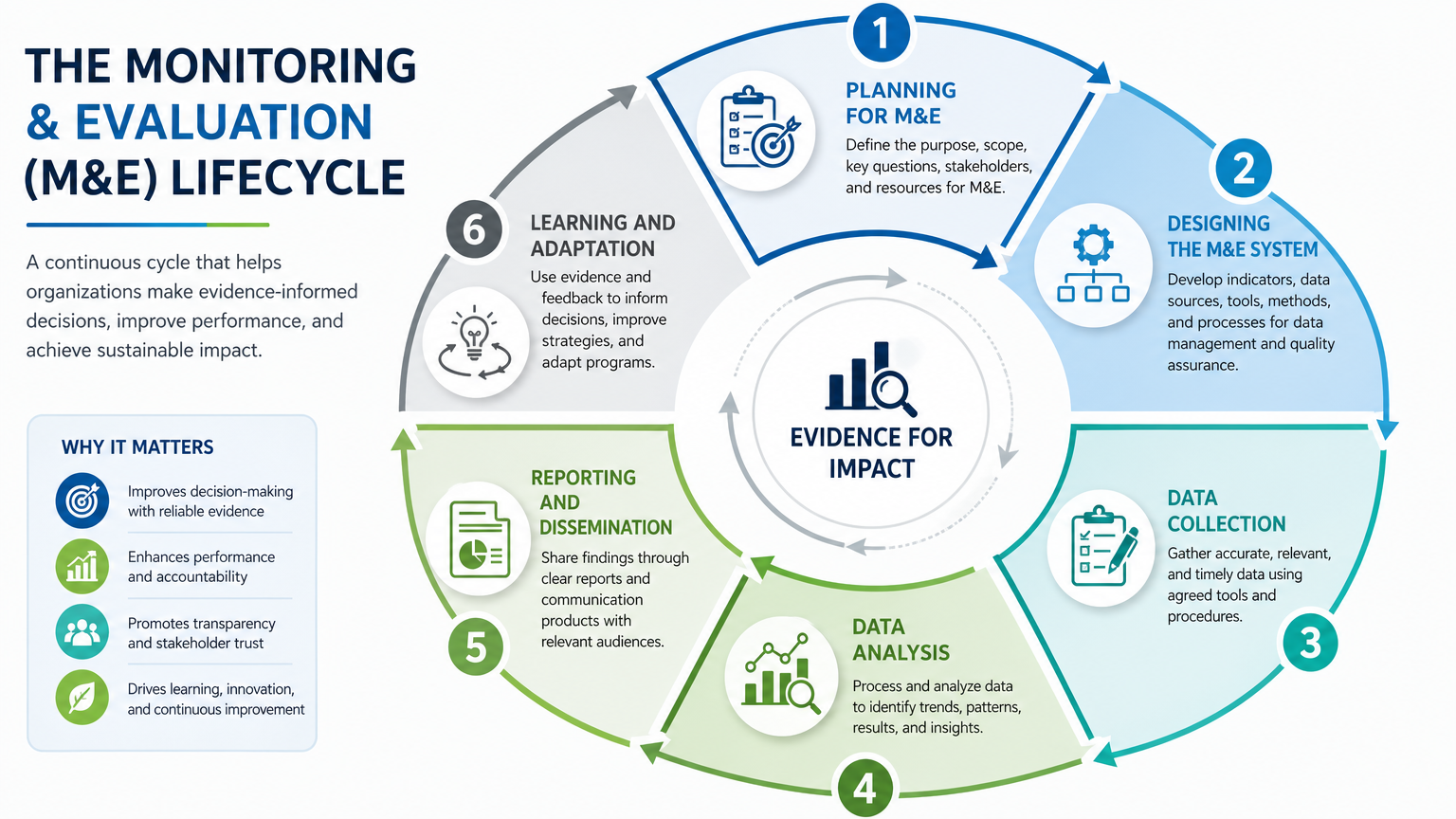
The M&E lifecycle is an iterative process that integrates monitoring and evaluation activities throughout the entire project or program duration. It typically involves several interconnected stages, ensuring that learning is continuous and informs subsequent actions. While specific models may vary, a common M&E lifecycle includes:

Planning for M&E:

This initial stage involves defining the project’s objectives, identifying key stakeholders, and developing a comprehensive M&E framework. This framework outlines what will be monitored and evaluated, including indicators, data sources, collection methods, and reporting mechanisms. It also involves establishing baselines against which progress will be measured.

Designing the M&E System:

Based on the framework, a detailed M&E plan is developed. This plan specifies the operational aspects, such as roles and responsibilities, budget allocation for M&E activities, data collection tools (e.g., surveys, focus group discussions, observation checklists), and data management protocols. This is where the practical implementation of M&E is mapped out.

Data Collection:

This involves systematically gathering data according to the M&E plan. This can include quantitative data (e.g., surveys, statistics) and qualitative data (e.g., interviews, case studies). The integrity and accuracy of data collection are paramount for reliable M&E.

Data Analysis:

Once collected, data is analyzed to identify trends, patterns, and deviations from expected results. This stage transforms raw data into meaningful information and insights. Modern M&E often leverages advanced analytical tools, including AI-powered platforms, to process large datasets efficiently.

Reporting and Dissemination:

Findings from monitoring and evaluation activities are compiled into reports and shared with relevant stakeholders. Effective reporting is clear, concise, and actionable, highlighting key achievements, challenges, and recommendations. Dissemination ensures that insights reach those who can utilize them for decision-making and learning.
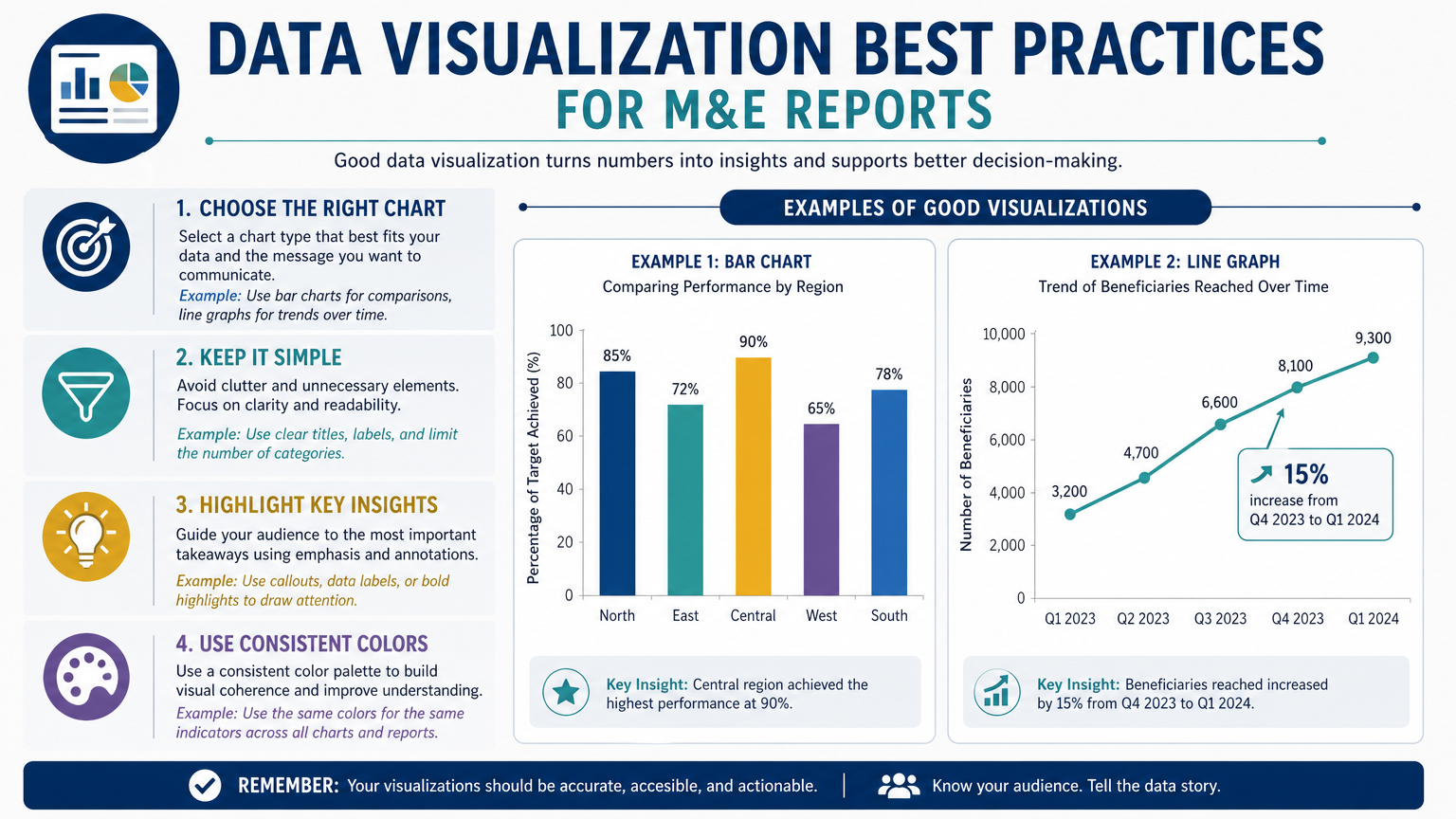
Data Visualization Best Practices

Learning and Adaptation:

This crucial final stage involves using the M&E findings to inform future planning, adjust ongoing interventions, and refine strategies. It closes the loop, ensuring that M&E is not just about accountability but also about continuous improvement and organizational learning. This adaptive approach is a hallmark of effective Results-Based Management (RBM).

Monitoring vs. Evaluation: The Definitive Comparison
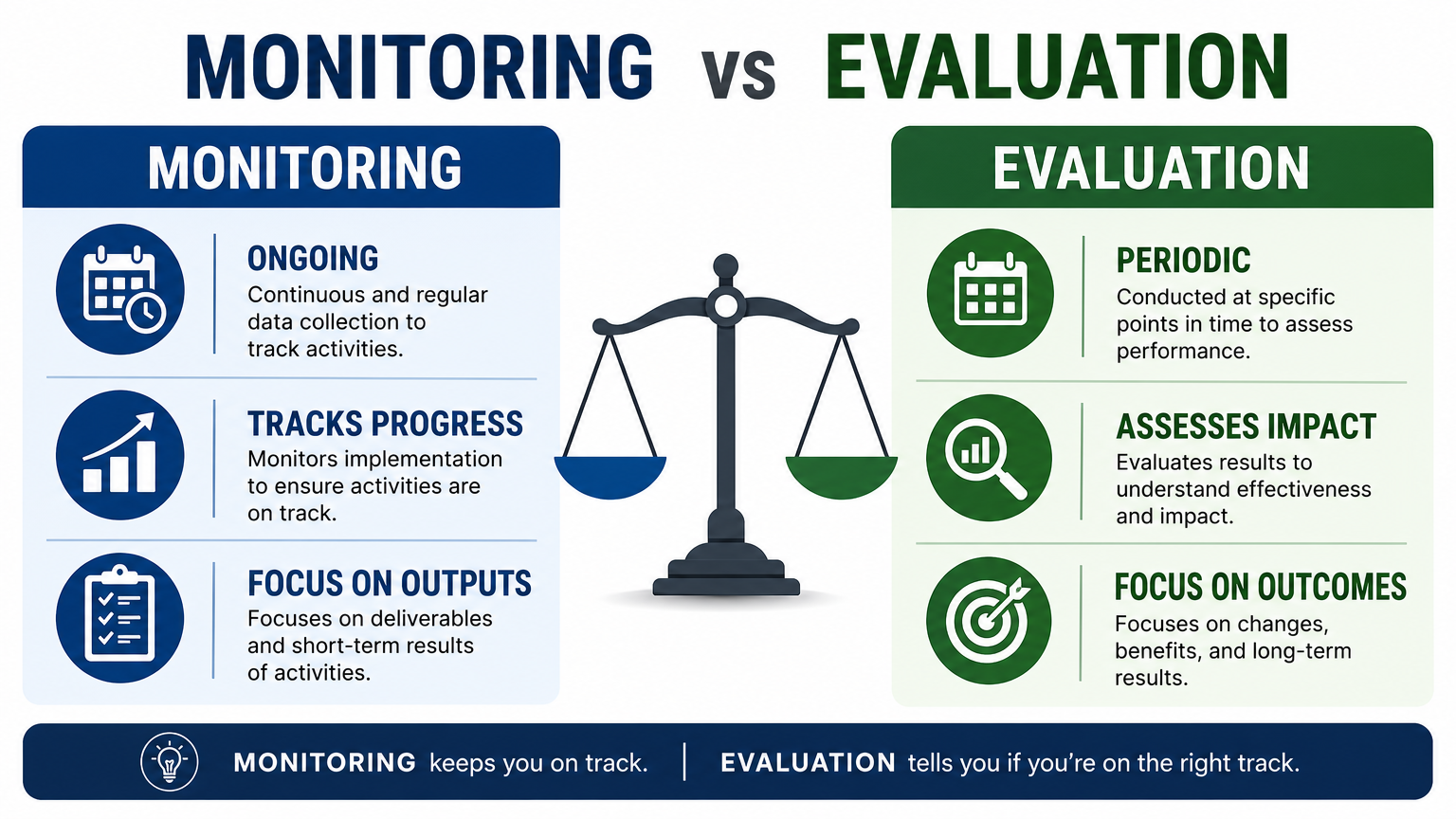
Monitoring vs. Evaluation Comparison
While often used interchangeably, monitoring and evaluation are distinct yet complementary processes. Understanding their differences is crucial for designing effective M&E systems. The table below summarizes their key distinctions:
Aspect
Monitoring
Evaluation
Purpose
To track progress and ensure activities are on track.
To assess overall value, impact, and lessons learned.
Timing
Ongoing, continuous throughout the project lifecycle.
Periodic, at specific milestones (mid-term, end-term) or after completion.
Focus
Inputs, activities, and outputs.
Outcomes, impacts, relevance, efficiency, effectiveness, and sustainability.
Questions
Are we doing things right? Are we on schedule? Are we within budget?
Did we do the right things? What difference did we make? Why?
Users
Project managers, implementers, operational staff.
Donors, policymakers, senior management, external stakeholders.
Methodology
Routine data collection, tracking indicators, progress reports.
In-depth studies, surveys, interviews, case studies, comparative analysis.
Flexibility
High, allows for real-time adjustments.
Lower, provides strategic insights for future planning.
Both monitoring and evaluation are essential for a comprehensive understanding of project performance and impact. Monitoring provides the necessary data for day-to-day management, while evaluation offers a broader, more strategic perspective on long-term achievements and systemic improvements. Professionals seeking to deepen their understanding of these distinctions and their practical application can benefit from interactive workshops on M&E that provide hands-on experience in building robust M&E systems.

Designing Robust M&E Frameworks: Logic Models and Theory of Change
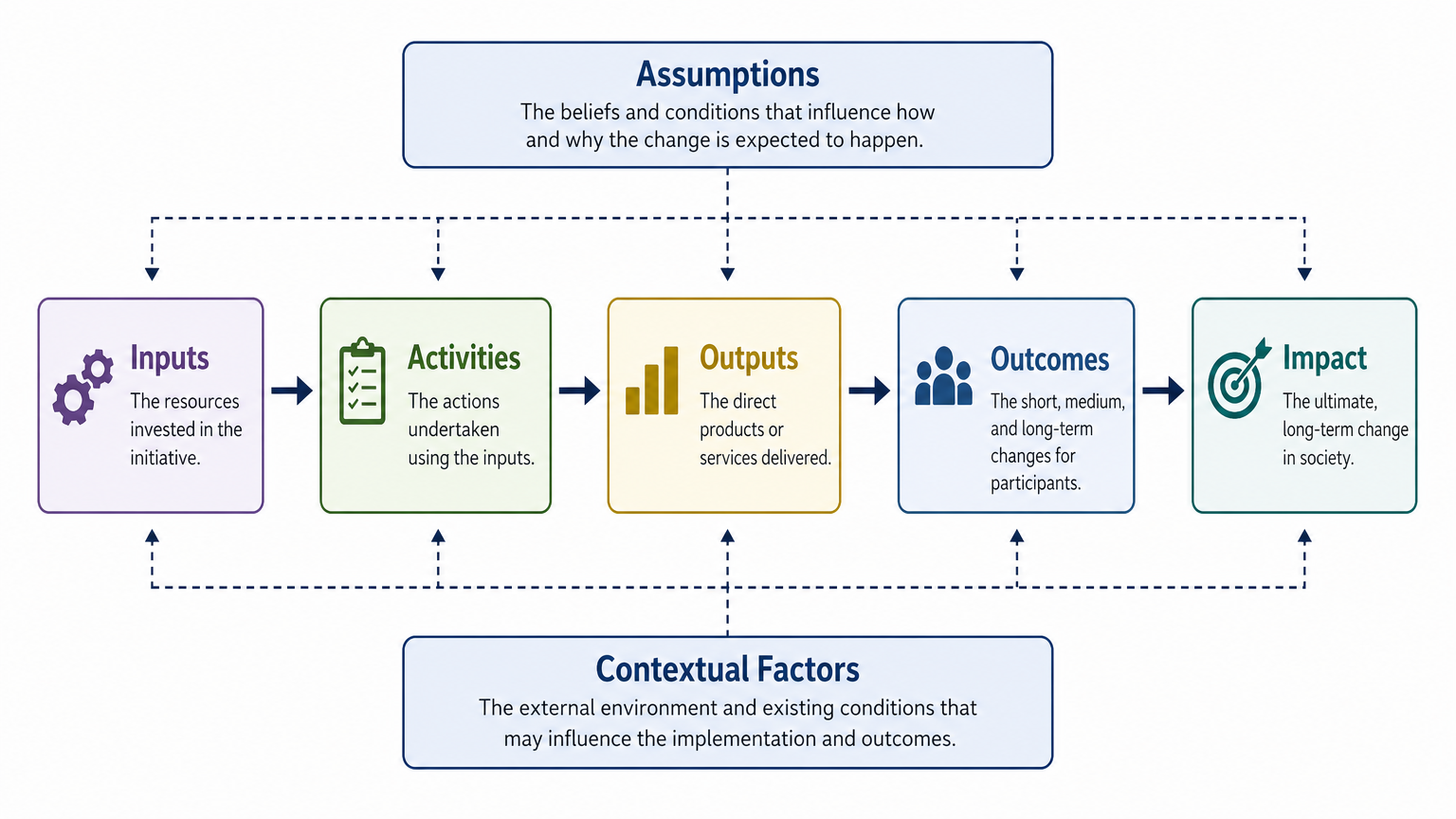
Theory of Change Model
Effective M&E begins with a clear understanding of how an intervention is expected to lead to desired changes. Two fundamental tools for conceptualizing and planning M&E are the Logic Model and the Theory of Change. While related, they serve different purposes and offer distinct advantages.

The Logic Model

A Logic Model is a visual representation that illustrates the causal links between program resources, activities, and expected results. It provides a clear, linear pathway from inputs to ultimate outcomes, helping stakeholders understand how a program is supposed to work. A typical Logic Model includes:
•Inputs: Resources invested in the program (e.g., funding, staff, materials).
•Activities: Actions undertaken by the program (e.g., training sessions, workshops, service delivery).
•Outputs: Direct products or services resulting from the activities (e.g., number of people trained, reports produced).
•Outcomes: Short-term and medium-term changes that occur as a result of the outputs (e.g., increased knowledge, improved skills, changed behaviors).
•Impact: Long-term, broader changes in society or the environment that the program aims to contribute to (e.g., reduced poverty, improved health outcomes).
Logic Models are particularly useful for program planning, communication, and operational monitoring. They provide a clear roadmap for implementation and help identify appropriate indicators for tracking progress. They answer the question: “What do we expect to happen?”

The Theory of Change (ToC)

A Theory of Change (ToC) is a more comprehensive and often more complex articulation of how and why an initiative is expected to lead to desired outcomes. It goes beyond the linear cause-and-effect of a Logic Model to explore the underlying assumptions, contextual factors, and causal pathways that are believed to bring about change. A ToC typically includes:
•Long-Term Goals: The ultimate desired impact.
•Preconditions: The necessary conditions that must be met for the long-term goals to be achieved.
•Interventions: The specific actions or programs designed to create these preconditions.
•Assumptions: The beliefs about how change will happen and the external factors that might influence success or failure.
•Pathways of Change: The detailed causal links, often non-linear, explaining how interventions lead to preconditions and ultimately to long-term goals.
ToCs are powerful tools for strategic planning, evaluation design, and stakeholder engagement. They encourage critical thinking about the underlying rationale of an intervention and help identify potential risks and opportunities. They answer the question: “Why do we expect this to happen?”

M&E Framework vs. M&E Plan

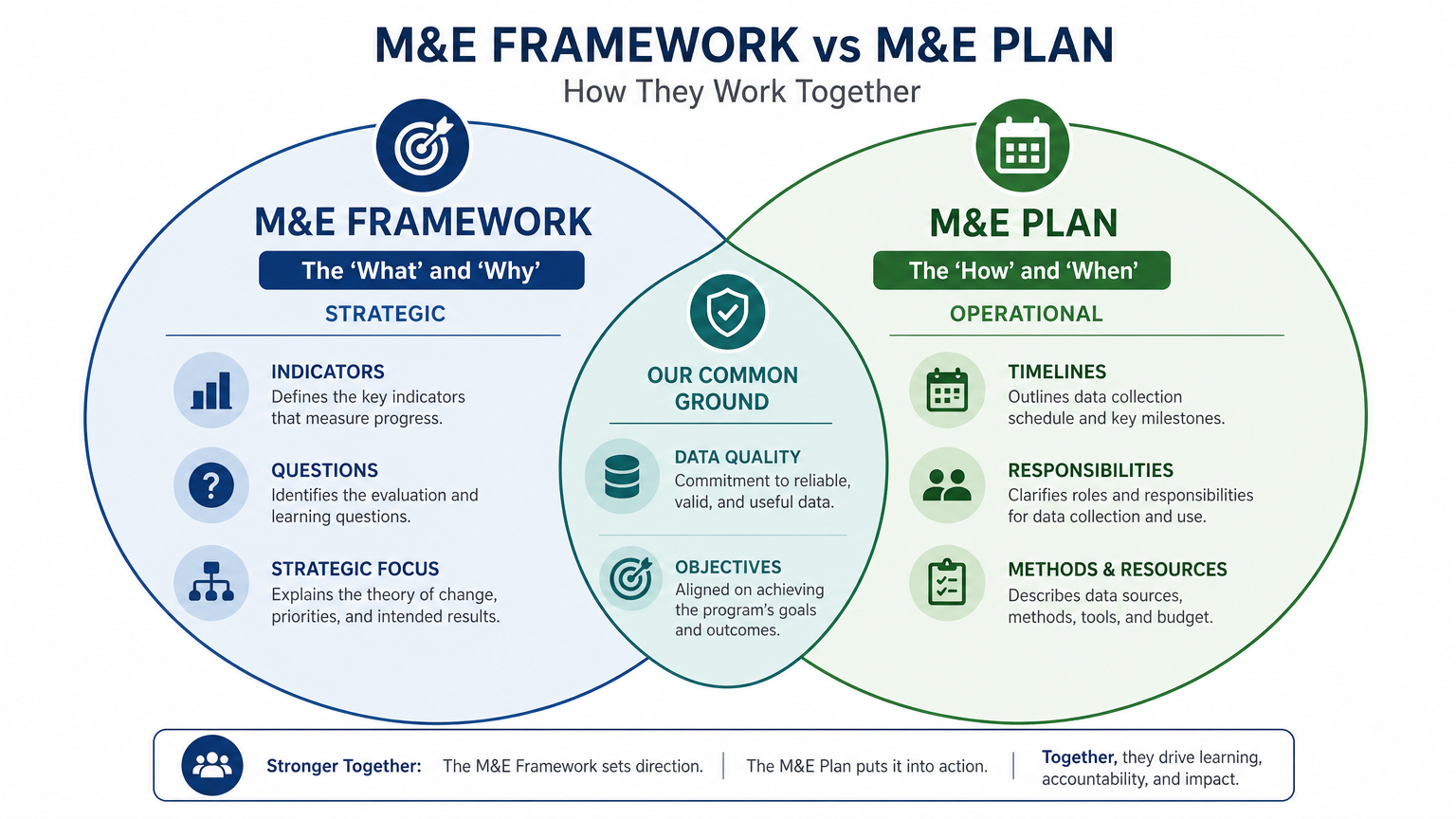
M&E Framework vs. M&E Plan
The terms M&E Framework and M&E Plan are often used interchangeably, but they represent distinct components of a robust M&E system. Understanding their specific roles is crucial for effective project management and evaluation.

M&E Framework

An M&E Framework is the conceptual blueprint that outlines the overall strategy for monitoring and evaluating an intervention. It defines what will be measured and why. Key elements of an M&E Framework include:
•Program Theory: The underlying logic or theory of change that guides the intervention.
•Key Questions: The overarching questions that the M&E system aims to answer.
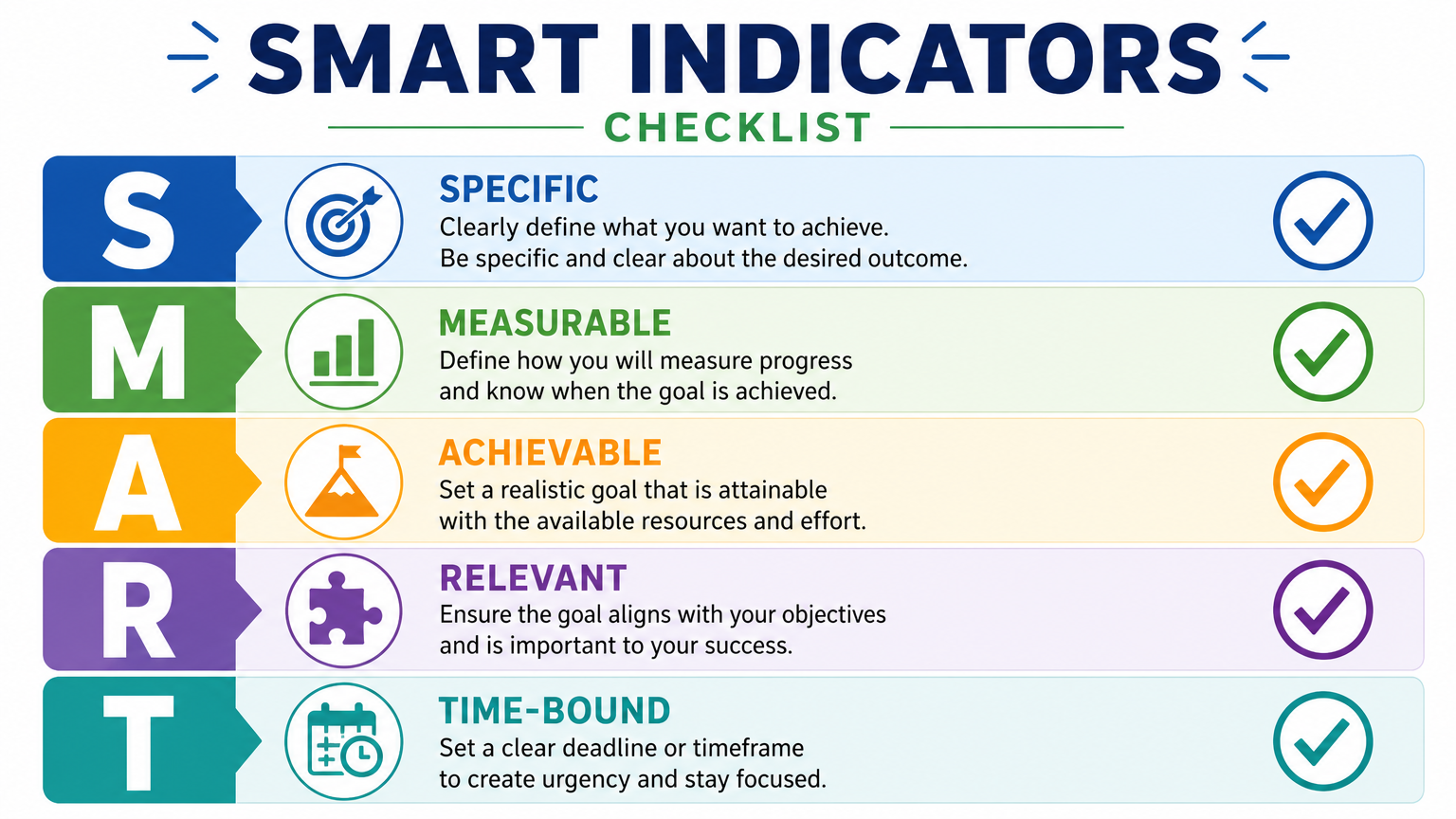
•Indicators: Specific, measurable, achievable, relevant, and time-bound (SMART) metrics used to track progress and results.
•Data Sources: Where the information for each indicator will come from.
•Reporting Requirements: The types of reports to be generated and their intended audience.
Essentially, the M&E Framework provides the strategic direction and conceptual foundation for all M&E activities. It ensures alignment between the intervention’s objectives and the measurement of its performance and impact.

M&E Plan

An M&E Plan is the operational document that details how the M&E Framework will be implemented. It translates the strategic vision of the framework into concrete, actionable steps. Key elements of an M&E Plan include:
•Activities: Specific tasks to be undertaken for data collection, analysis, and reporting.
•Timelines: A schedule for when each M&E activity will occur.
•Responsibilities: Clear assignment of roles and responsibilities for M&E tasks.
•Budget: Allocation of financial resources for M&E activities.
•Data Collection Tools: Specific instruments to be used (e.g., survey questionnaires, interview guides).
•Data Management Procedures: Protocols for data entry, storage, quality assurance, and security.
The M&E Plan is a practical guide for day-to-day M&E operations. It ensures that the M&E system is implemented efficiently and effectively, providing the necessary data to inform decision-making and demonstrate accountability. For instance, a detailed M&E plan is critical for organizations managing projects with geographical components, where Training on Monitoring and Evaluation using GIS can be highly beneficial for data collection and visualization.

Digital M&E & AI Trends in 2026

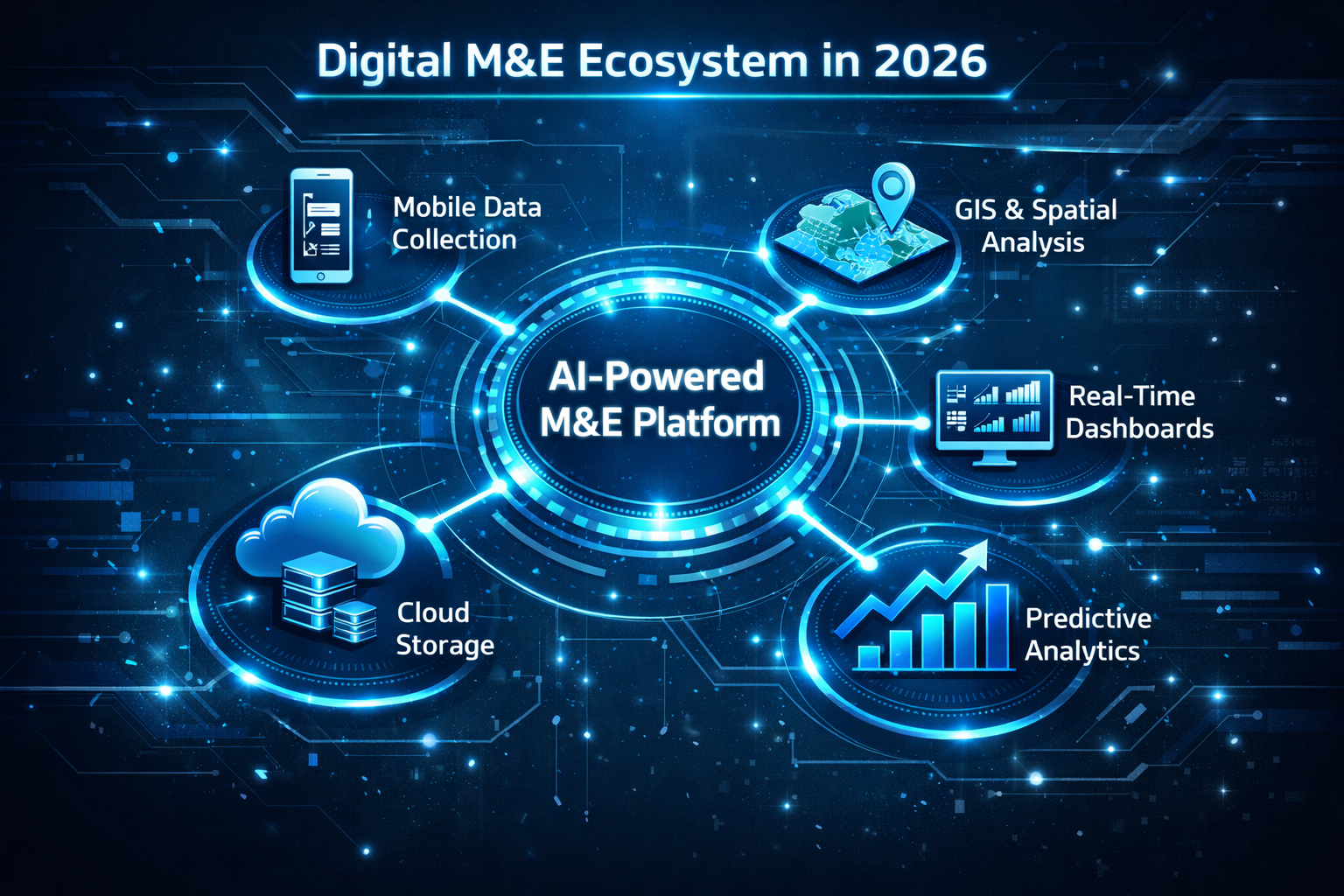
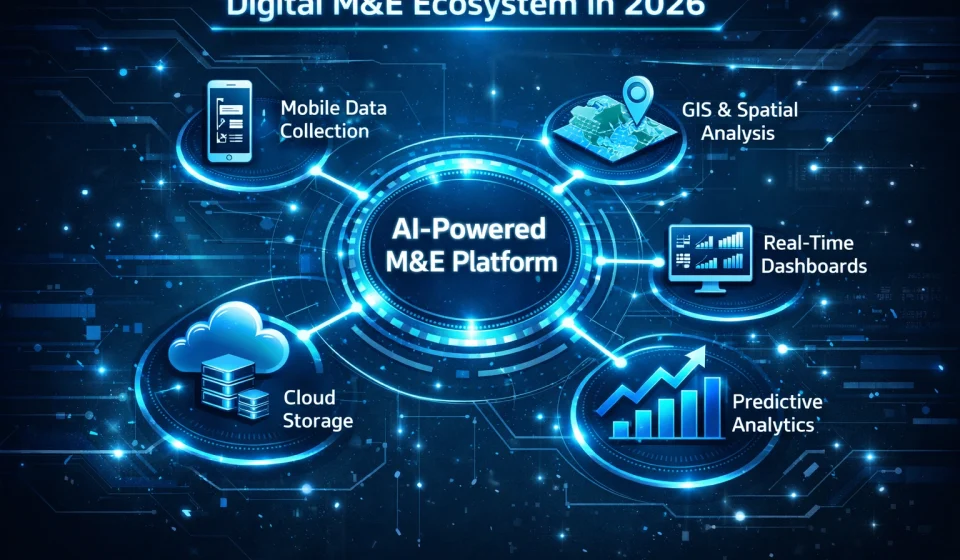
Digital M&E Ecosystem
The landscape of Monitoring and Evaluation is being rapidly transformed by advancements in digital technology and Artificial Intelligence. In 2026, these innovations are not just enhancing traditional M&E practices but are fundamentally reshaping how data is collected, analyzed, and utilized to drive impact. The integration of digital tools and AI offers unprecedented opportunities for real-time insights, predictive analytics, and increased efficiency.

Key Digital M&E Trends:

•Mobile Data Collection: The widespread adoption of smartphones and tablets has revolutionized data collection in the field. Tools like KoboToolbox and SurveyCTO enable enumerators to collect data digitally, often offline, and sync it to central servers, significantly reducing data entry errors and speeding up the process. AI-powered mobile surveys can even adapt questions based on previous responses, enhancing data quality.
•Geographic Information Systems (GIS): GIS technology is becoming integral for M&E, especially for projects with spatial dimensions. It allows for the visualization of project activities and outcomes on maps, enabling better targeting of interventions, analysis of geographical disparities, and more compelling reporting. For example, tracking the spread of a disease or the reach of an agricultural program can be powerfully illustrated through GIS.
•Real-time Dashboards and Visualization: Digital platforms allow for the creation of interactive dashboards that present M&E data in real-time. This moves away from static reports to dynamic visualizations that stakeholders can explore, enabling quicker identification of trends, performance gaps, and areas requiring attention. Tools like Tableau, Power BI, and specialized M&E platforms are at the forefront of this trend.
•Cloud-Based Data Management: Secure, scalable cloud platforms are becoming the standard for storing and managing vast amounts of M&E data. This facilitates collaboration among dispersed teams and ensures data accessibility while maintaining robust security protocols.

The Role of Artificial Intelligence (AI) in M&E:

AI is poised to be a game-changer in M&E, offering capabilities that were once unimaginable. In 2026, AI applications are moving beyond basic automation to provide sophisticated analytical power:
•Automated Data Validation and Cleaning: AI algorithms can automatically detect inconsistencies, errors, and outliers in large datasets, significantly reducing the time and effort required for data cleaning. This ensures higher data quality and reliability.
•Natural Language Processing (NLP) for Qualitative Data: NLP allows AI to analyze vast amounts of qualitative data from interviews, focus group discussions, and open-ended survey responses. It can identify themes, sentiments, and key insights that would be time-consuming for human analysts to uncover, providing a richer understanding of project impact.
•Predictive Analytics: Machine learning models can analyze historical M&E data to predict future trends, potential risks, and project outcomes. This enables proactive decision-making, allowing interventions to be adjusted before problems escalate. For example, predicting areas prone to food insecurity based on climate data and past intervention effectiveness.
•Automated Report Generation: AI can assist in drafting M&E reports by synthesizing data, generating summaries, and even suggesting visualizations. While human oversight remains crucial, this significantly streamlines the reporting process.
•Enhanced Impact Measurement: AI can help in isolating the causal effect of interventions by controlling for confounding variables and analyzing complex relationships within data, leading to more robust impact assessments. For professionals working with large datasets, understanding how to leverage these tools is essential. Courses like Training on Results-Based Monitoring and Evaluation (RBM) often incorporate modules on data analytics and the application of modern tools.

Best Practices for Effective Monitoring and Evaluation
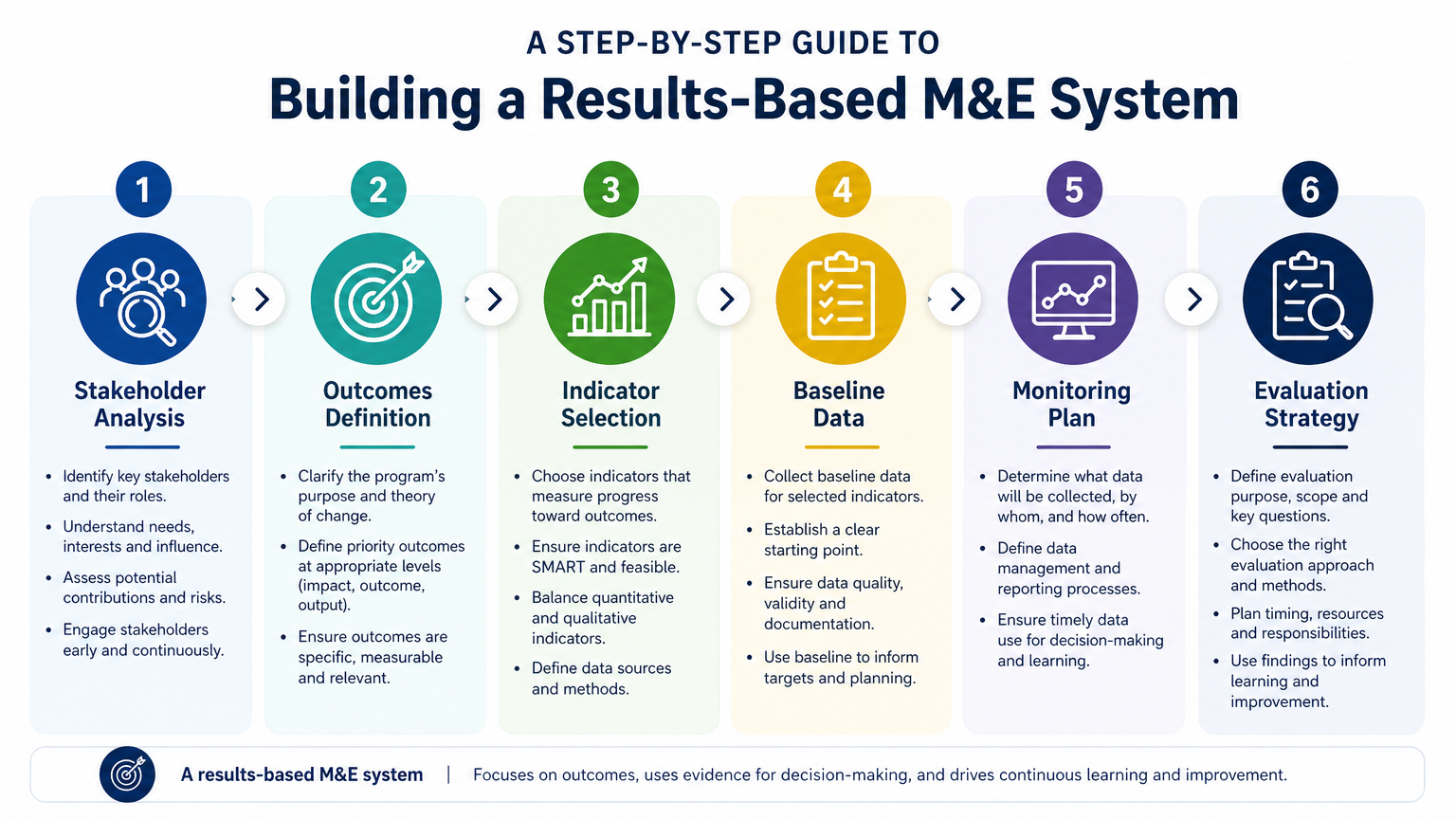
Steps to Building a Results-Based M&E System
To maximize the effectiveness of M&E efforts, organizations should adhere to several best practices that ensure rigor, relevance, and utility:
1.Integrate M&E from the Outset: M&E should not be an afterthought but an integral part of project design and planning. This ensures that objectives are measurable, indicators are well-defined, and resources are allocated for M&E activities.
2.Stakeholder Engagement: Involve all relevant stakeholders—beneficiaries, implementers, funders, and policymakers—in the M&E process. This fosters ownership, ensures relevance, and enhances the utilization of findings.
3.Develop SMART Indicators: Indicators should be Specific, Measurable, Achievable, Relevant, and Time-bound. Well-defined indicators are crucial for objective tracking of progress and results.
SMART Indicators Checklist
1.Ensure Data Quality: Implement robust data collection methodologies, quality assurance protocols, and validation processes to ensure that the data collected is accurate, reliable, and consistent.
2.Foster a Culture of Learning: M&E should be viewed as a learning opportunity, not just an accountability mechanism. Encourage teams to openly discuss findings, learn from successes and failures, and adapt strategies accordingly.
3.Utilize Appropriate Tools and Technology: Leverage digital tools and AI where appropriate to enhance efficiency, accuracy, and the depth of analysis. This includes mobile data collection, GIS, and advanced analytics platforms.
4.Ethical Considerations: Ensure that M&E activities are conducted ethically, respecting the privacy and dignity of participants. Obtain informed consent, protect sensitive data, and ensure that findings are used responsibly.
5.Disseminate Findings Effectively: Present M&E results in clear, concise, and accessible formats tailored to different audiences. Use visualizations and summaries to highlight key messages and recommendations.

Conclusion

Monitoring and Evaluation are more critical than ever in an era demanding accountability, efficiency, and demonstrable impact. By systematically tracking progress, assessing outcomes, and fostering continuous learning, M&E empowers organizations to make informed decisions, optimize resource allocation, and ultimately achieve their strategic goals. The integration of digital technologies and Artificial Intelligence is further revolutionizing the field, offering powerful new capabilities for data collection, analysis, and predictive insights. Embracing these advancements and adhering to best practices will enable practitioners to build robust M&E systems that not only measure success but actively contribute to it. As the world continues to evolve, so too must our approaches to understanding and proving the value of our interventions. Investing in comprehensive M&E, therefore, is not just good practice—it is essential for driving meaningful and sustainable change.

FAQs About Monitoring and Evaluation

What is the primary difference between monitoring and evaluation?

Monitoring is an ongoing process that tracks the progress of activities and outputs to ensure an initiative stays on track, while evaluation is a periodic assessment that examines the overall value, impact, and lessons learned from an intervention.

Why is M&E important for project success?

M&E is crucial for project success because it enables evidence-based decision-making, improves resource allocation, enhances accountability to stakeholders, fosters continuous learning, and helps demonstrate the actual impact of an intervention.

How do Logic Models and Theories of Change contribute to M&E?

Logic Models provide a linear representation of how a program’s inputs and activities lead to outputs and outcomes, aiding in operational tracking. Theories of Change offer a broader, more complex explanation of the causal pathways and assumptions underlying an intervention, guiding strategic planning and evaluation design.

What role does AI play in modern M&E?

AI significantly enhances modern M&E by automating data validation and cleaning, analyzing qualitative data through Natural Language Processing, providing predictive analytics for future outcomes, and assisting in automated report generation, thereby increasing efficiency and depth of insight.

What are SMART indicators in M&E?

SMART indicators are metrics that are Specific, Measurable, Achievable, Relevant, and Time-bound. They are essential for objectively tracking progress and results, ensuring that M&E efforts are focused and effective.

Can M&E be conducted without digital tools?

While M&E can be conducted without digital tools, leveraging technology significantly enhances efficiency, accuracy, and the depth of analysis, especially for large or complex projects. Digital tools facilitate mobile data collection, real-time reporting, and advanced data visualization.

How often should evaluations be conducted?

The frequency of evaluations depends on the project’s scope, duration, and funding requirements. They are typically conducted at key milestones, such as mid-term or end-term, or after the project’s completion to assess overall impact and gather lessons learned.

Who is responsible for M&E in a project?

Responsibility for M&E often involves a collaborative effort. Project managers, dedicated M&E specialists, and sometimes external evaluators all play a role. Stakeholders, including beneficiaries and funders, are also engaged to ensure relevance and utility of the M&E process.

Author

ForElite

Follow Me
Other Articles
climate finannce careergrowth infograph
Previous

The Ultimate Guide to Climate Finance Courses: Boost Your Career and Drive Sustainability in 2026

Bridging the Divide: How Board-Level Vision Fuels Ground-Level Clarity
Next

Bridging the Divide: How Board-Level Vision Fuels Ground-Level Clarity

No Comment! Be the first one.

Leave a Reply Cancel reply

Your email address will not be published. Required fields are marked *

Recent Posts

  • The Agility Mandate: How Anticipatory Leadership Drives Business Success in a Changing World
  • GIS Industry Trends and Applications: How Geospatial Technology Is Transforming Businesses in 2026
  • Leadership in the Workplace: How to Be a Good Leader
  • The 2026 Blueprint: Master Supply chain trends 2026 with Power, Speed, and Unshakable Resilience
  • AI Training Courses Every Corporate Team Should Explore: 10 Powerful Programs for Business Growth

Recent Comments

  1. tgwsproxy on The Career Development Imperative: What Africa and MENA Leaders Must Invest In Before 2027
  2. heictopng on The Career Development Imperative: What Africa and MENA Leaders Must Invest In Before 2027
  3. aiimagechecker on The Career Development Imperative: What Africa and MENA Leaders Must Invest In Before 2027
  4. heictopng on The Ultimate Guide to Climate Finance Courses: Boost Your Career and Drive Sustainability in 2026
  5. bachvideoai on The Career Development Imperative: What Africa and MENA Leaders Must Invest In Before 2027

Archives

  • June 2026
  • May 2026
  • April 2026
  • March 2026

Categories

  • About Training and ForElite
  • Accounting and Econometrics
  • AI and Emerging Tech
  • Data
  • Environment and Pollution
  • Finanance
  • GJLO
  • Health and Workplace Safety
  • Industry Specific
  • Leadership
  • Operations
  • SDGs
  • Soft Skills
Your subscription could not be saved. Please try again.
Your subscription has been successful.

SECURE YOUR COMPETITIVE ADVANTAGE TODAY.

Subscribe to the Premier Intel newsletter for weekly market insights and training updates.

We use Brevo as our marketing platform. By submitting this form you agree that the personal data you provided will be transferred to Brevo for processing in accordance with Brevo's Privacy Policy.

Copyright 2026 — ForElite Resource Center. All rights reserved.