
The Best Transport and Logistics Training Courses for 2026: Navigating the Future of Supply Chains

Introduction: The Evolving Landscape of Transport and Logistics
The transport and logistics industry is undergoing a profound transformation, driven by technological advancements, increasing globalization, and a growing emphasis on sustainability. As we look towards 2025, professionals in this sector must continuously adapt and upskill to remain competitive and drive innovation. This comprehensive guide explores the best transport and logistics training courses available, highlighting key skills, emerging trends, and how to choose the right program to advance your career in this dynamic field.
Why Professional Training Matters in 2025
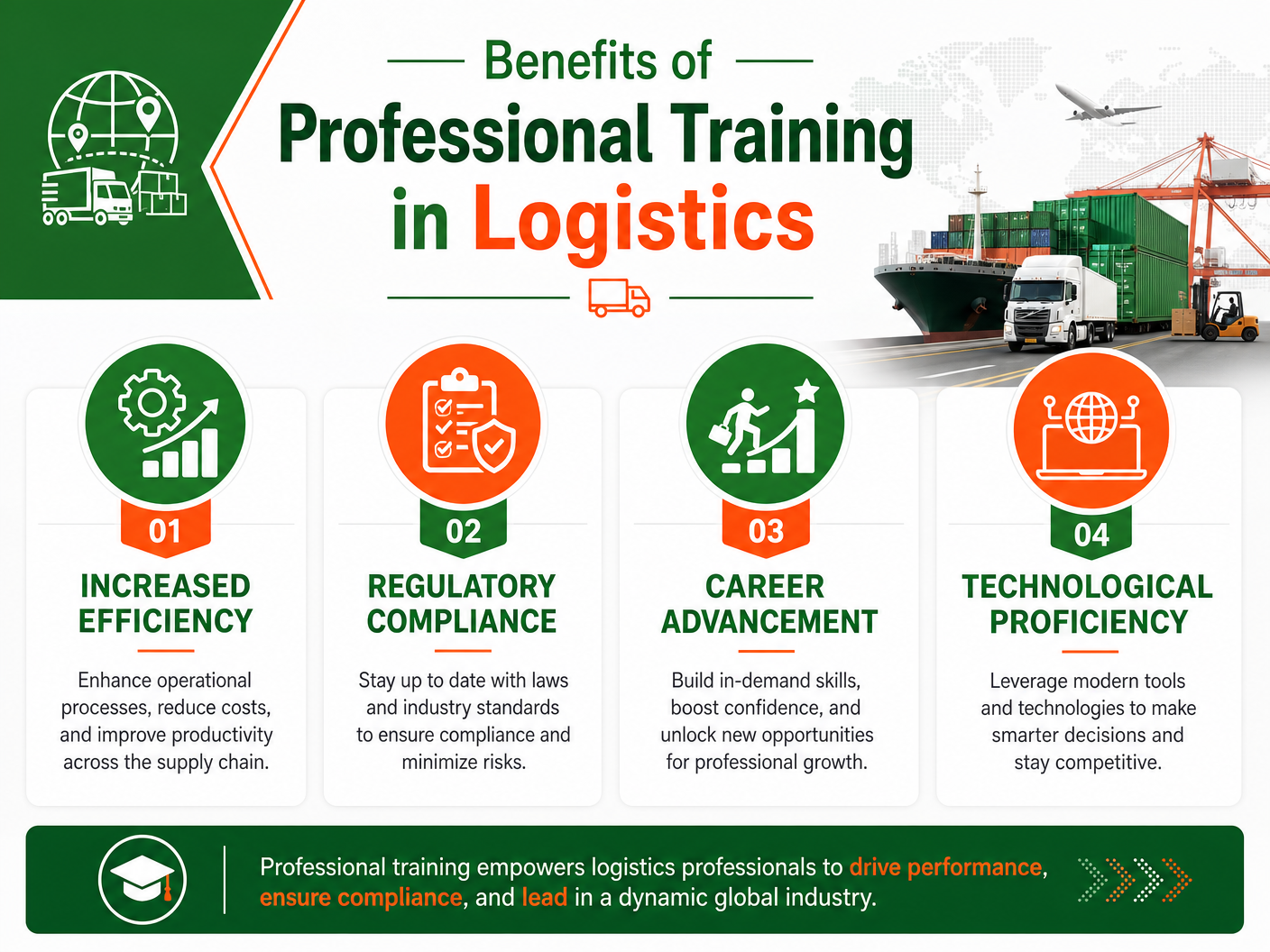
In an industry characterized by rapid change, professional training is no longer a luxury but a necessity. The complexities of global supply chains, the imperative for operational efficiency, and the integration of cutting-edge technologies demand a workforce equipped with specialized knowledge. By investing in training, logistics professionals can:
•Improve Operational Efficiency and Decision-Making: Modern courses equip individuals with analytical tools and strategic frameworks to optimize processes and make data-driven decisions.
•Stay Compliant with International Regulations: The global nature of logistics necessitates a deep understanding of evolving international trade laws, customs regulations, and safety standards.
•Enhance Employability and Career Advancement Opportunities: Specialized certifications and advanced training programs open doors to leadership roles and higher-earning potential.
•Keep Pace with Technological Advancements: Training in areas like AI, automation, and blockchain ensures professionals can leverage new tools to their full potential.
Key Skills for Transport and Logistics Professionals in 2025
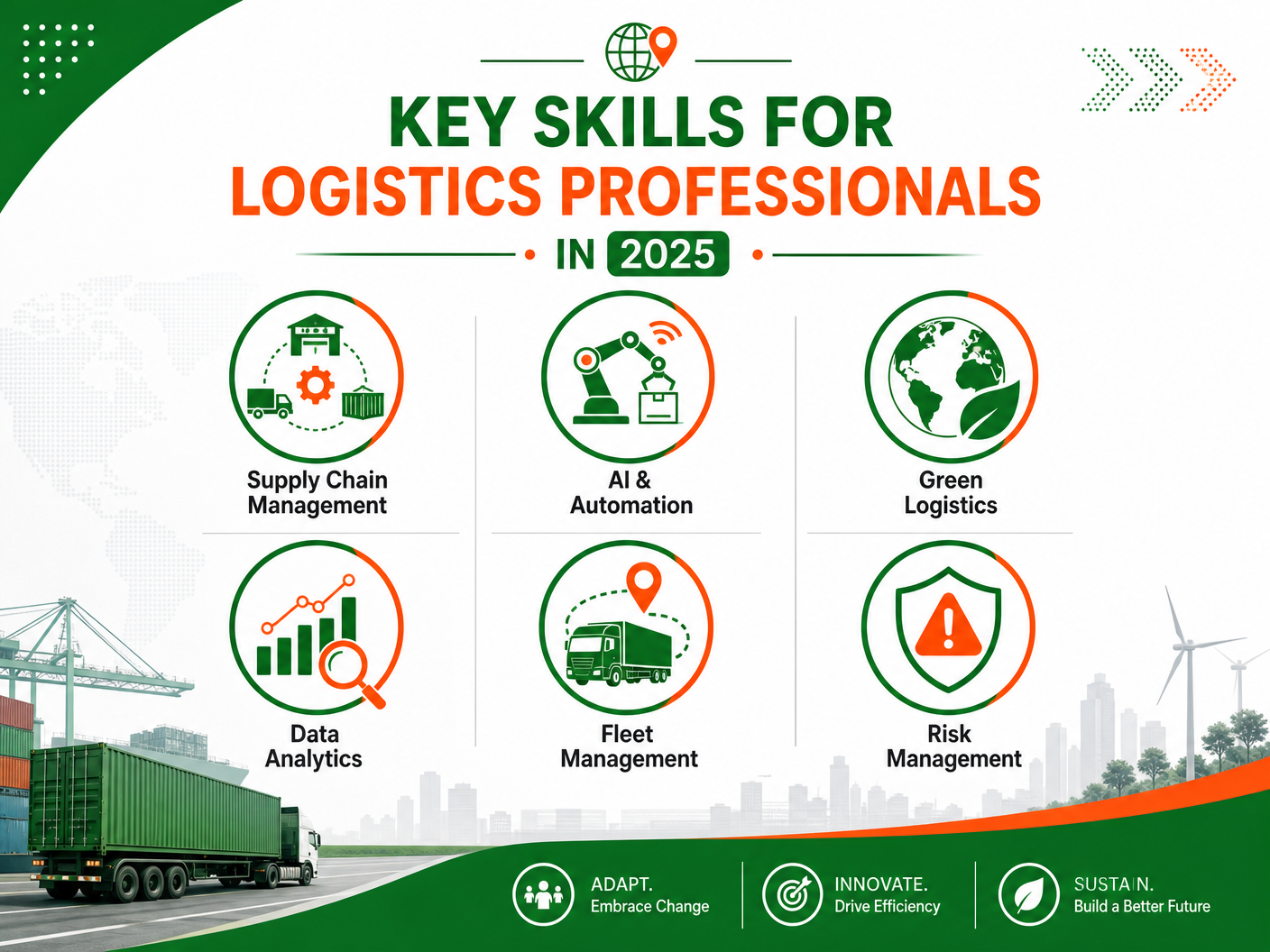
The demands on logistics professionals are expanding beyond traditional operational roles. The following skills are becoming increasingly critical:
•Supply Chain Management: A holistic understanding of end-to-end supply chain processes, from sourcing to delivery.
•Fleet and Transport Operations: Expertise in route optimization, vehicle tracking, fuel efficiency, and regulatory compliance.
•Warehouse and Inventory Control: Advanced knowledge of inventory management systems, automation in warehousing, and lean logistics principles.
•Data Analysis and Logistics Software Proficiency: The ability to utilize digital tools for predictive maintenance, demand forecasting, and operational optimization.
•Regulatory Compliance and Safety Procedures: Up-to-date knowledge of transport laws, safety protocols, and risk mitigation strategies.
•Sustainability and Green Logistics: Understanding environmental impact, carbon footprint reduction, and sustainable practices in logistics.
•Digital Transformation Acumen: Familiarity with AI, IoT, blockchain, and other emerging technologies shaping the industry.
Types of Transport and Logistics Courses
Various types of training programs cater to different career stages and learning objectives:
•Short-Term Courses: Focused programs designed to quickly enhance specific skills or introduce new concepts.
•Certification Programs: Industry-recognized qualifications that validate expertise and boost credibility.
•Diploma and Degree Programs: Comprehensive academic programs offering in-depth knowledge and theoretical foundations.
•Specialized Courses: Training focused on niche areas such as dangerous goods handling, cold chain logistics, or humanitarian logistics.
Online vs. In-Person Training: Choosing Your Learning Path
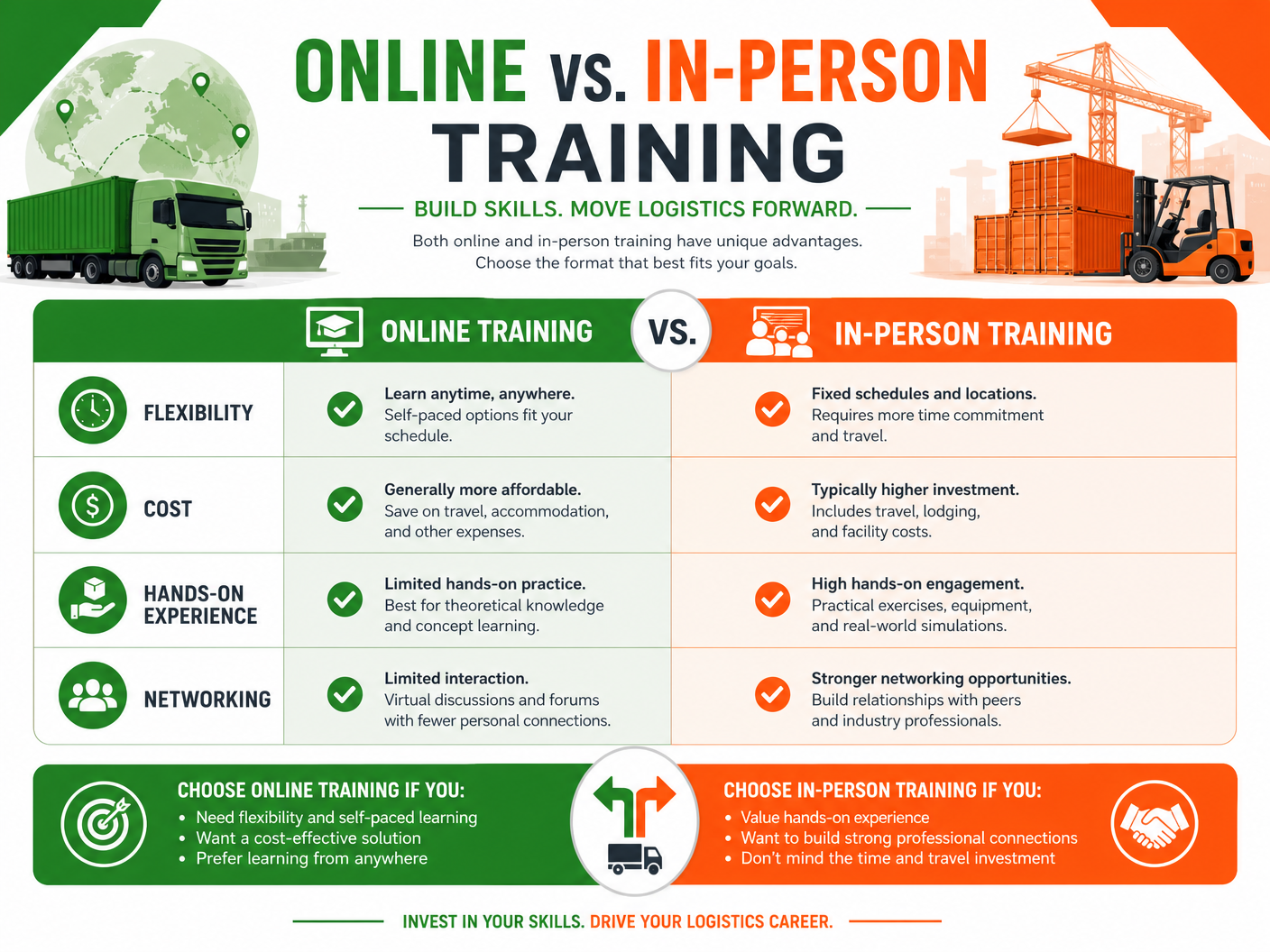
The choice between online and in-person training depends on individual preferences, learning styles, and career goals. Both formats offer distinct advantages:
|
Feature
|
Online Training
|
In-Person Training
|
|
Flexibility
|
High (self-paced, accessible from anywhere)
|
Lower (fixed schedules and locations)
|
|
Cost
|
Generally lower (reduced travel and accommodation)
|
Higher (includes travel, accommodation, and venue costs)
|
|
Hands-on Experience
|
Limited (simulations, virtual labs)
|
Extensive (practical exercises, direct interaction)
|
|
Networking
|
Virtual (online forums, professional platforms)
|
Direct (classroom interactions, industry events)
|
|
Learning Style
|
Self-disciplined, independent learners
|
Collaborative, interactive learners
|
Top Transport and Logistics Certifications for 2025
Earning a recognized certification is a powerful way to demonstrate expertise and accelerate career growth. Here are some of the most impactful certifications for logistics professionals in 2025:
•Certified Supply Chain Professional (CSCP): Focuses on end-to-end supply chain management, logistics strategies, and operational efficiency. This certification is ideal for professionals seeking to master the entire supply chain process.
•Certified in Logistics, Transportation, and Distribution (CLTD): Designed for professionals involved in distribution, warehousing, and freight operations, emphasizing best practices in logistics management.
•FIATA Diploma in Freight Forwarding: A globally recognized qualification for expertise in international freight forwarding and trade.
•CILT Certification in Logistics and Transport: Offered by the Chartered Institute of Logistics and Transport, this certification enhances professional credibility across various logistics and transport domains.
Specialized Courses for a Competitive Edge
To gain a competitive advantage, professionals can delve into specialized training areas. ForElite Training offers several relevant courses that align with current industry needs:
•Training on GIS in Transportation and Logistics: Master GIS for transportation and logistics. Learn to optimize routes, analyze traffic patterns, and improve logistics efficiency for smarter operations.
•Training on Fleet Management and Transportation Logistics: Master AI-driven fleet management and transportation logistics. Learn route optimization, vehicle tracking, fuel efficiency, and data-driven operations.
•Training on Transport and Logistics Safety and Strategic Multimodal Risk Mitigation: Learn transport and logistics safety and multimodal risk mitigation. Improve compliance, hazard control, and safety performance across road, rail, and maritime.
•Training on Logistics and Distribution Management: Master logistics and distribution management. Learn supply chain flow, inventory control, warehousing, transport optimization, and cost-effective delivery.
These specialized programs, such as those offered by ForElite Training, provide targeted knowledge that can significantly enhance expertise in specific aspects of logistics management and operational execution.
Future Trends Shaping Logistics Training in 2025
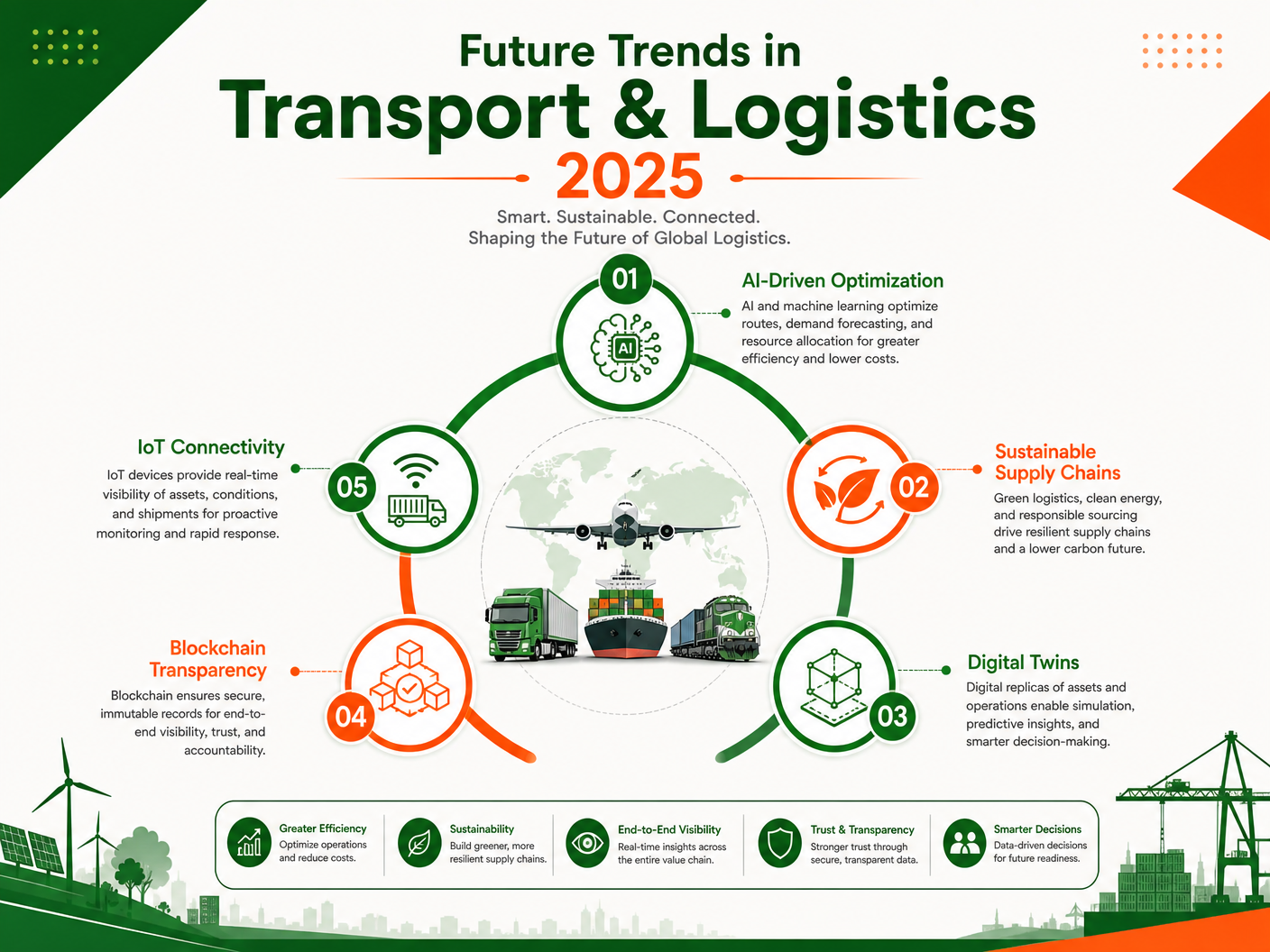
The logistics industry is continuously evolving, with several key trends influencing the demand for specific training and skills:
•AI and Automation: The integration of artificial intelligence and automation in warehouses, transportation, and supply chain planning is revolutionizing efficiency and decision-making. Training in AI-driven logistics, predictive analytics, and robotic process automation will be crucial.
•Green Logistics and Sustainability: With increasing environmental concerns and regulatory pressures, training in sustainable supply chain practices, carbon footprint reduction, and eco-friendly transportation methods is becoming essential. This includes understanding ESG (Environmental, Social, and Governance) factors in logistics operations.
•Blockchain Applications: Blockchain technology offers enhanced transparency, security, and traceability in supply chain management, reducing fraud and improving efficiency. Professionals need to understand its applications in logistics.
•Digital Twins and IoT: The use of digital twins for real-time simulation and optimization of supply chain processes, coupled with IoT devices for enhanced visibility and data collection, will be a significant trend. Training in these areas will enable better predictive maintenance and operational insights.
•Resilience and Risk Management: Global events have underscored the importance of resilient supply chains. Training in risk assessment, disaster recovery planning, and building agile supply chain networks will be vital for mitigating disruptions.
How to Choose the Right Logistics Training Course
Selecting the ideal training program requires careful consideration of several factors:
•Accreditation and Industry Recognition: Ensure the course or certification is recognized and respected within the logistics industry.
•Course Content and Relevance to Your Career: Choose programs that align with your career goals and address current industry demands.
•Learning Format: Decide whether online, in-person, or blended learning best suits your schedule and learning style.
•Costs and Return on Investment (ROI): Evaluate the financial investment against the potential career benefits and salary increase.
•Instructor Expertise and Course Provider Reputation: Research the instructors’ qualifications and the overall reputation of the training institution.
Conclusion: Investing in Your Logistics Career
The transport and logistics sector offers immense opportunities for growth and innovation. By proactively engaging in professional development and choosing the right training courses, individuals can equip themselves with the skills and knowledge needed to thrive in this evolving industry. Whether it’s mastering AI-driven logistics, understanding sustainable practices, or gaining specialized certifications, continuous learning is the cornerstone of a successful logistics career in 2025 and beyond. Invest in your future today to become a leader in the next generation of supply chain excellence.



[…] Read also: […]