

In today’s rapidly changing business environment, organizations face increasing pressure to demonstrate transparency, accountability, and integrity. Stakeholders, employees, customers, regulators, and investors expect leaders to make decisions that not only drive profitability but also uphold ethical standards. As a result, ethical leadership has emerged as one of the most critical competencies for modern leaders.
Ethical leadership goes beyond compliance with laws and regulations. It involves making decisions based on moral principles, promoting fairness, fostering trust, and creating a workplace culture where integrity thrives. Organizations that prioritize ethical leadership often experience stronger employee engagement, improved stakeholder relationships, and long-term sustainability.
Understanding Ethical Leadership
Ethical leadership refers to the practice of leading with honesty, integrity, fairness, and accountability. Ethical leaders demonstrate values-driven behavior and serve as role models for their teams. They make decisions that align with organizational values while considering the impact on employees, customers, communities, and other stakeholders.
Furthermore, ethical leaders encourage open communication, transparency, and responsible decision-making. They establish clear expectations for ethical conduct and hold themselves accountable to the same standards they expect from others.
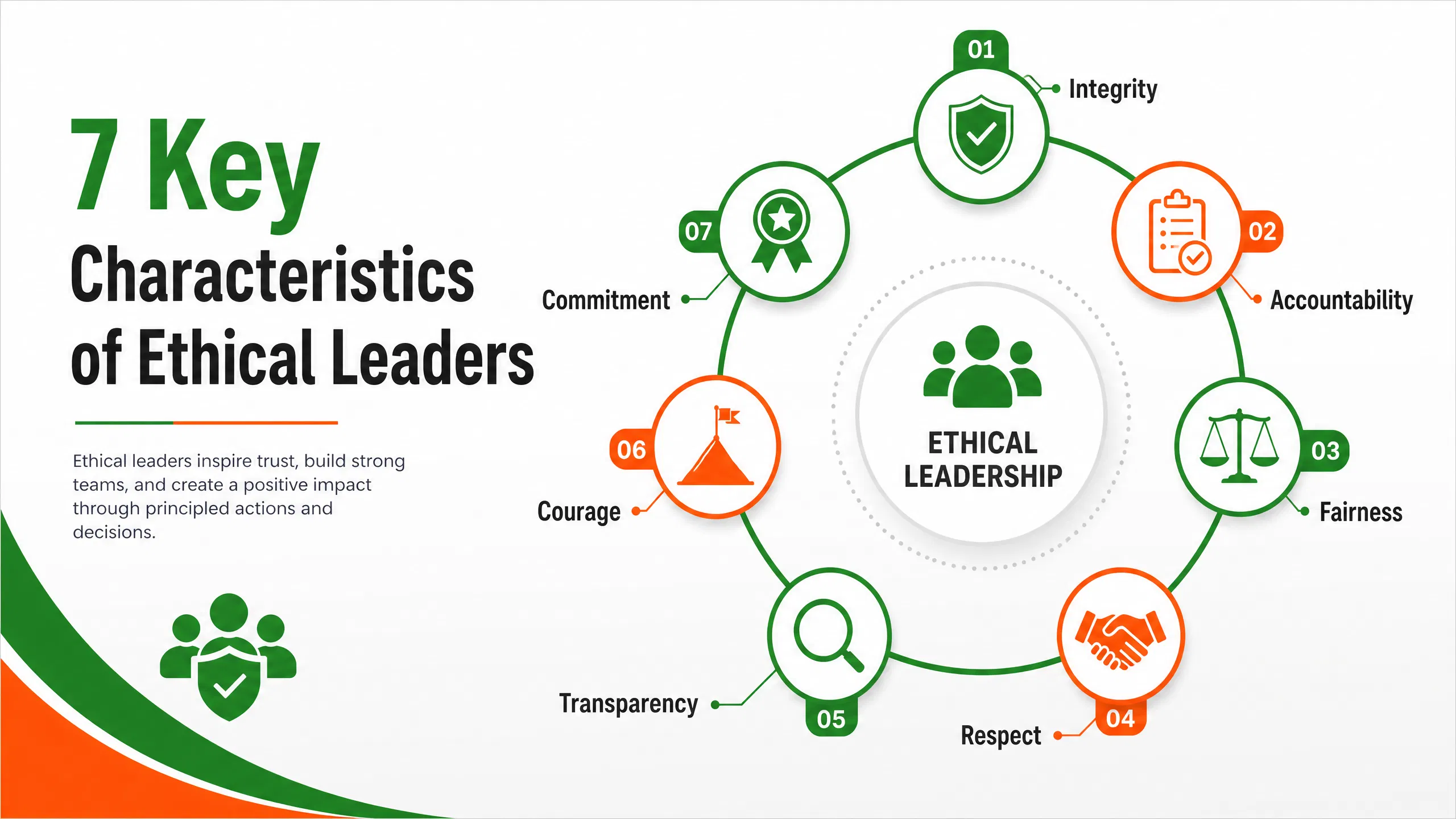
Key characteristics of ethical leaders include:
- Integrity and honesty
- Accountability and responsibility
- Fairness and impartiality
- Respect for others
- Transparency in decision-making
- Commitment to organizational values
- Courage to address ethical dilemmas
Why Ethical Leadership Matters
Organizations led by ethical leaders are more likely to build trust among employees and stakeholders. Trust serves as the foundation for collaboration, innovation, and long-term business success.
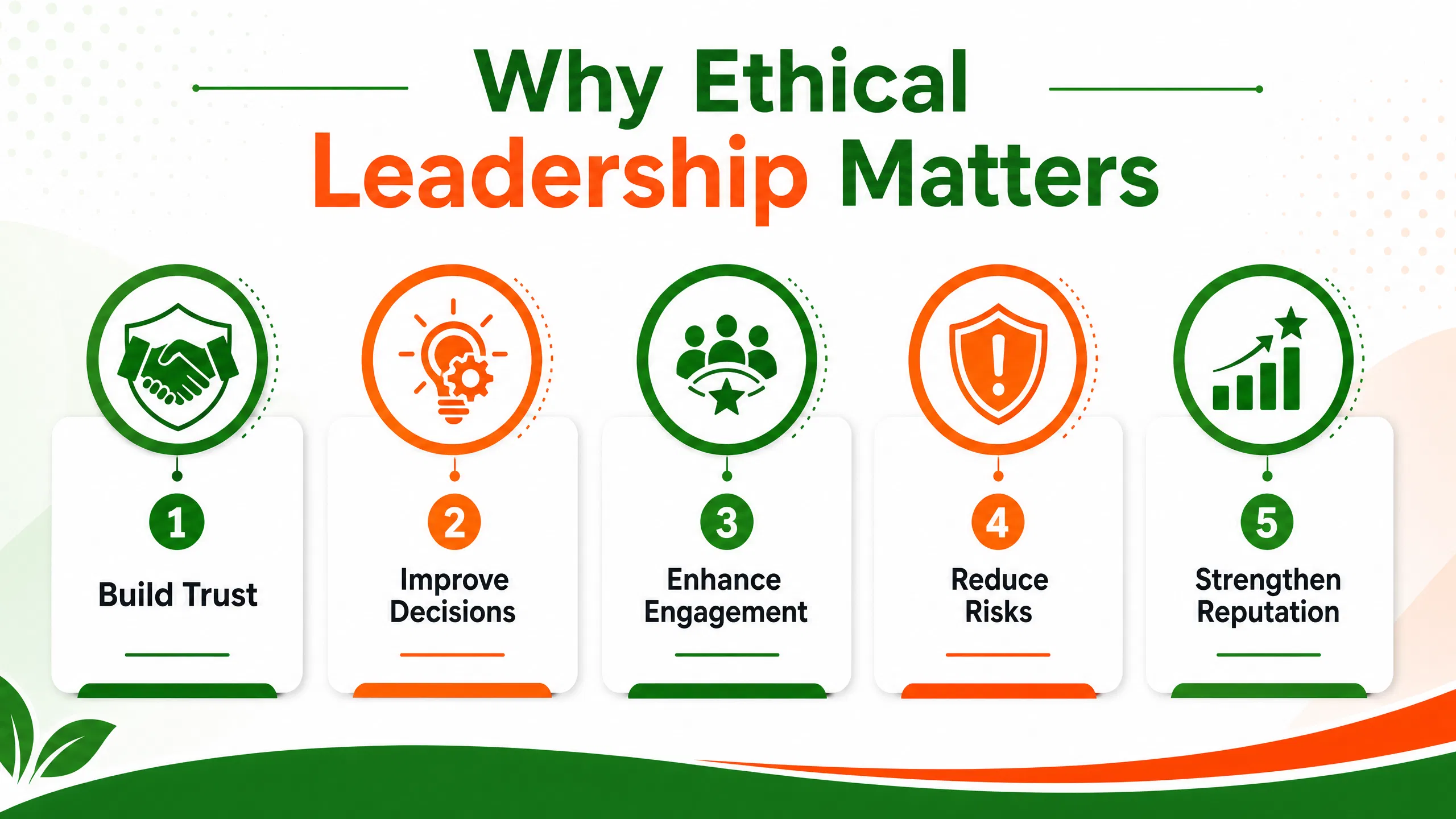
Moreover, ethical leadership helps organizations:
Build Organizational Trust
Employees are more likely to trust leaders who consistently demonstrate integrity. Trust improves workplace morale, strengthens teamwork, and enhances productivity.
Improve Decision-Making
Ethical leaders use structured frameworks to evaluate decisions, ensuring that short-term gains do not compromise long-term sustainability. Ethical decision-making reduces the likelihood of misconduct and reputational damage.
Enhance Employee Engagement
Employees want to work for organizations that align with their values. Ethical leadership fosters a positive work environment where employees feel respected, valued, and motivated.
Reduce Organizational Risks
Unethical behavior can lead to legal issues, financial losses, and reputational crises. Ethical leaders create systems that minimize fraud, corruption, and compliance violations.
Strengthen Organizational Reputation
A strong ethical culture enhances public perception and stakeholder confidence. Organizations known for ethical practices often attract better talent, stronger partnerships, and greater customer loyalty.
Core Principles of Ethical Leadership
Integrity
Integrity involves acting consistently with moral values and organizational principles. Leaders with integrity maintain honesty even when faced with difficult situations.
Accountability
Ethical leaders take responsibility for their actions and decisions. They acknowledge mistakes, learn from them, and implement corrective measures when necessary.
Fairness
Fairness ensures that employees and stakeholders are treated equitably. Ethical leaders avoid favoritism and make objective decisions based on merit and facts.
Transparency
Transparency promotes trust by ensuring that decisions and processes are communicated openly. Employees appreciate leaders who provide clear explanations for organizational decisions.
Respect
Respecting the dignity, perspectives, and contributions of others creates an inclusive and collaborative workplace culture.
Ethical Leadership in Action
Ethical leadership becomes most visible during challenging situations. Leaders often encounter ethical dilemmas that require balancing competing interests and making difficult decisions.
For example, a leader may need to choose between maximizing short-term profits and maintaining environmental responsibility. Ethical leaders evaluate both the immediate and long-term consequences of their decisions and prioritize actions that align with organizational values.
Similarly, ethical leadership plays a critical role during organizational crises. Transparent communication, accountability, and responsible decision-making help organizations maintain stakeholder trust even during difficult periods.
Professionals seeking practical strategies for handling ethical dilemmas can benefit from the Training on Ethics, Integrity and Responsible Leadership, which focuses on ethical decision-making frameworks, governance principles, and accountability practices.
Building an Ethical Organizational Culture
Ethical leadership is not solely the responsibility of executives. It requires commitment throughout the organization.
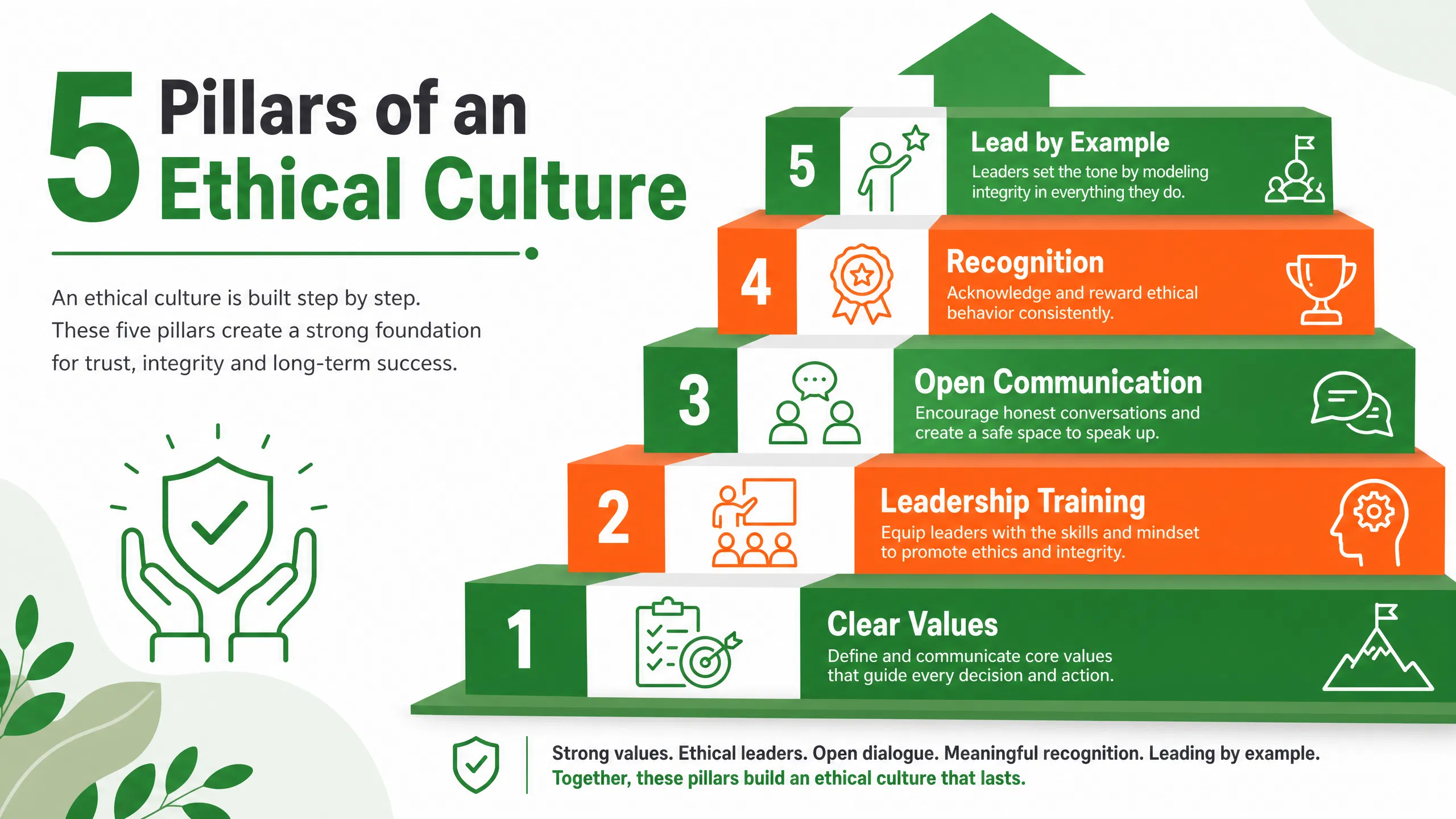
Establish Clear Values
Organizations should define and communicate core values that guide behavior and decision-making.
Provide Leadership Development
Training programs help leaders understand ethical frameworks, governance principles, and responsible leadership practices.
Organizations can strengthen leadership capabilities through programs such as:
- Training on Leadership and Management Skills for New Managers and Supervisors
- Training on Strategic Leadership and Governance Innovation for Public Officials
- Training on Transformational Leadership and Public Sector Innovation
Encourage Open Communication
Employees should feel comfortable reporting concerns and discussing ethical challenges without fear of retaliation.
Recognize Ethical Behavior
Organizations can reinforce ethical conduct by recognizing employees who demonstrate integrity and accountability.
Lead by Example
Leaders must model the behavior they expect from others. Employees are more likely to embrace ethical practices when they observe leaders consistently demonstrating ethical behavior.
Ethical Leadership in the Digital Era
The digital age presents new ethical challenges for leaders. Artificial intelligence, data privacy, cybersecurity, digital communication, and online reputation management require leaders to navigate increasingly complex ethical considerations.
Consequently, organizations must develop policies and frameworks that ensure responsible use of technology while protecting stakeholder interests.
Leaders can strengthen their understanding of ethical communication through programs such as:
- Training on Anti-Greenwashing and Ethical Communications
- Training on Digital Reputation Management and AI-Based Attribution Strategy
The Connection Between Ethical Leadership and Performance Management
Ethical leadership directly influences organizational performance. Leaders who establish clear expectations, provide constructive feedback, and promote accountability create high-performing teams.
Effective performance management aligns employee goals with organizational objectives while ensuring fairness and transparency throughout the evaluation process.
Organizations seeking to strengthen performance management can explore the Training on Advanced Performance Management Strategies, which focuses on aligning performance, engagement, and continuous improvement initiatives.
Developing Future Ethical Leaders
The future of organizational success depends on developing leaders who can balance innovation, profitability, and ethical responsibility.
Leadership development programs should focus on:
- Ethical decision-making
- Emotional intelligence
- Accountability
- Strategic thinking
- Stakeholder engagement
- Crisis management
- Governance and compliance
Research and professional leadership communities consistently highlight that immersive leadership development experiences, real-world case studies, and peer learning opportunities significantly improve leadership effectiveness.
Leveraging Digital Transformation to Support Ethical Leadership
Digital platforms play an important role in promoting transparency, stakeholder engagement, and organizational accountability. Businesses can use modern digital tools to communicate values, share performance metrics, and build trust with stakeholders.
Organizations seeking to strengthen their online presence and digital engagement strategies can benefit from the expertise offered by Nexera Digital Solutions, a digital marketing consultancy that helps businesses enhance visibility, engagement, and growth through strategic digital solutions.
Conclusion
Ethical leadership is no longer optional. It has become a strategic necessity for organizations seeking sustainable growth, stakeholder trust, and long-term success. Leaders who prioritize integrity, accountability, fairness, and transparency create resilient organizations capable of navigating uncertainty and change.
Ultimately, ethical leadership influences every aspect of organizational performance, from employee engagement and decision-making to governance and reputation management. By investing in leadership development, fostering ethical cultures, and embracing responsible business practices, organizations can position themselves for lasting success in an increasingly complex world.
As the demands on leaders continue to evolve, the ability to lead ethically will remain one of the most valuable and impactful leadership competencies of the twenty-first century.