Skills-Based Leadership in 2026: How Capability Scans Help Managers Prevent Talent Crises

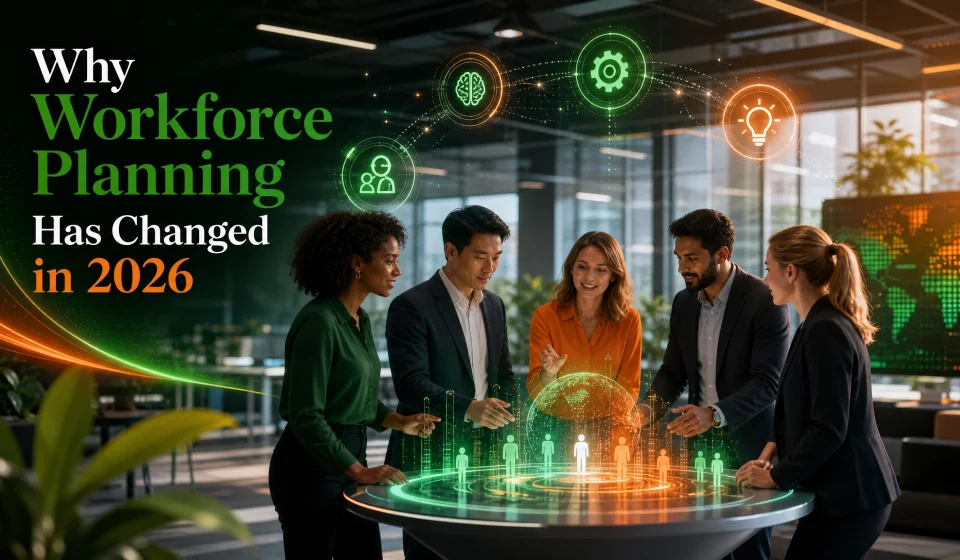
Why Workforce Planning Has Changed in 2026
The workplace of 2026 looks dramatically different from what many organizations experienced only a few years ago. Artificial intelligence, automation, digital transformation, and changing customer expectations have accelerated the pace of change across virtually every industry. As a result, organizations can no longer rely solely on job descriptions, annual performance reviews, or traditional workforce planning methods. The focus has shifted toward identifying and developing capabilities that allow employees to adapt quickly to emerging business needs.
Recent workforce research indicates that employers increasingly expect employees to possess advanced capabilities that were traditionally associated with senior roles. A major analysis of more than one billion job advertisements found that leadership, strategic thinking, emotional intelligence, and decision-making skills are appearing more frequently even in entry-level positions. This reflects a broader shift toward skills-based organizations that prioritize capabilities over job titles.
Consequently, managers are under growing pressure to anticipate future workforce needs rather than react to crises after they occur. The most successful leaders are no longer asking, “Who do we have?” Instead, they ask, “What capabilities do we have, what capabilities will we need, and where are the gaps?” This strategic mindset is at the heart of skills-based leadership.
The Rise of Skills-Based Organizations
Organizations are increasingly recognizing that employees possess valuable skills beyond the boundaries of their current job descriptions. A software developer may have strong project management capabilities. A customer service representative may possess leadership potential. A finance analyst may have advanced data visualization skills that could benefit other departments.
Therefore, businesses are redesigning talent management systems around skills and capabilities rather than static organizational charts. This approach improves workforce agility and helps organizations respond faster to changing market demands.
Why Traditional Job Titles No Longer Tell the Full Story
Job titles often hide valuable skills. Two employees with the same title may possess vastly different capabilities. Conversely, employees in different departments may share critical competencies that can be deployed across multiple projects.
Capability scans provide visibility into these hidden strengths and allow organizations to utilize talent more effectively.
Understanding Capability Scans
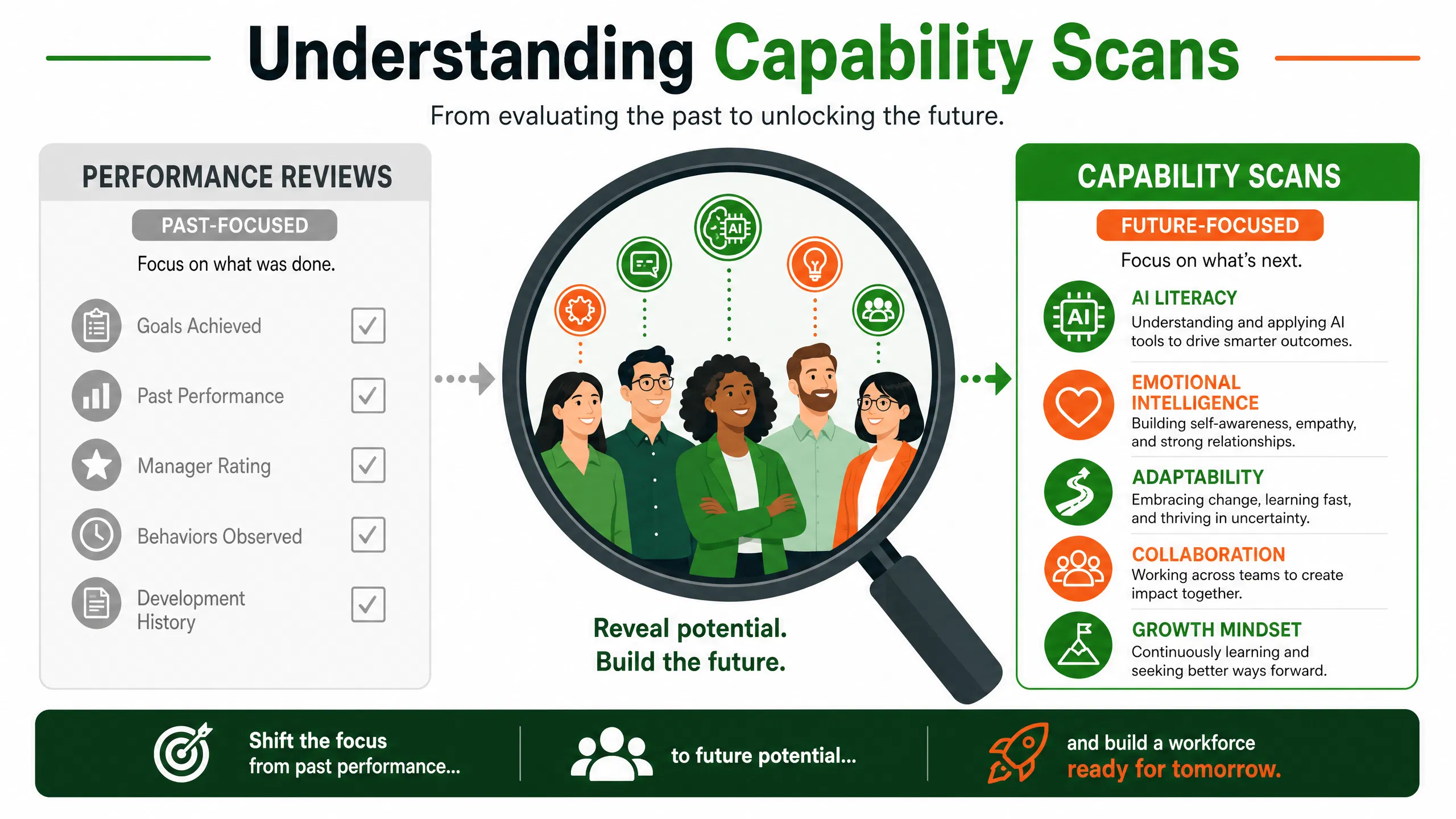
A capability scan is a structured process used to identify the current and future skills, competencies, knowledge areas, and leadership capabilities within an organization. Think of it as a health check-up for organizational talent.
Unlike traditional performance reviews that primarily evaluate past performance, capability scans focus on future readiness. They answer important questions such as:
- Which critical skills are missing?
- Which capabilities are becoming obsolete?
- What emerging competencies will be required within the next two to three years?
- Which employees have hidden potential for advancement?
According to the OECD, many firms experience skills gaps, yet some remain unaware of them because they lack systematic assessment processes. Capability scans address this challenge by creating a data-driven view of workforce readiness.
What a Capability Scan Really Measures
Effective capability scans evaluate several dimensions:
| Capability Area | Examples |
|---|---|
| Technical Skills | Data analytics, AI literacy, cybersecurity |
| Leadership Skills | Coaching, delegation, strategic thinking |
| Digital Skills | Automation tools, digital collaboration |
| Human Skills | Communication, emotional intelligence |
| Future Skills | Adaptability, innovation, problem-solving |
As a result, managers gain a comprehensive understanding of organizational strengths and weaknesses.
Difference Between Performance Reviews and Capability Scans
Performance reviews evaluate what employees have achieved. Capability scans assess what employees can potentially contribute in the future.
This distinction is critical because future business success depends on capabilities that may not yet be visible through current performance metrics.
The Hidden Cost of Waiting Too Long to Identify Skill Gaps
Many organizations only recognize skills shortages when productivity declines, customer complaints increase, or key projects fail. By that point, the problem has already become expensive.
Research continues to show that skills gaps are among the most significant barriers to organizational growth. Surveys reveal that only a small percentage of learning and development professionals believe their workforce is fully prepared to meet future business objectives. Leadership, AI literacy, and technical expertise consistently rank among the most significant shortages.
Early Warning Signs Managers Often Miss
Several indicators suggest emerging capability gaps:
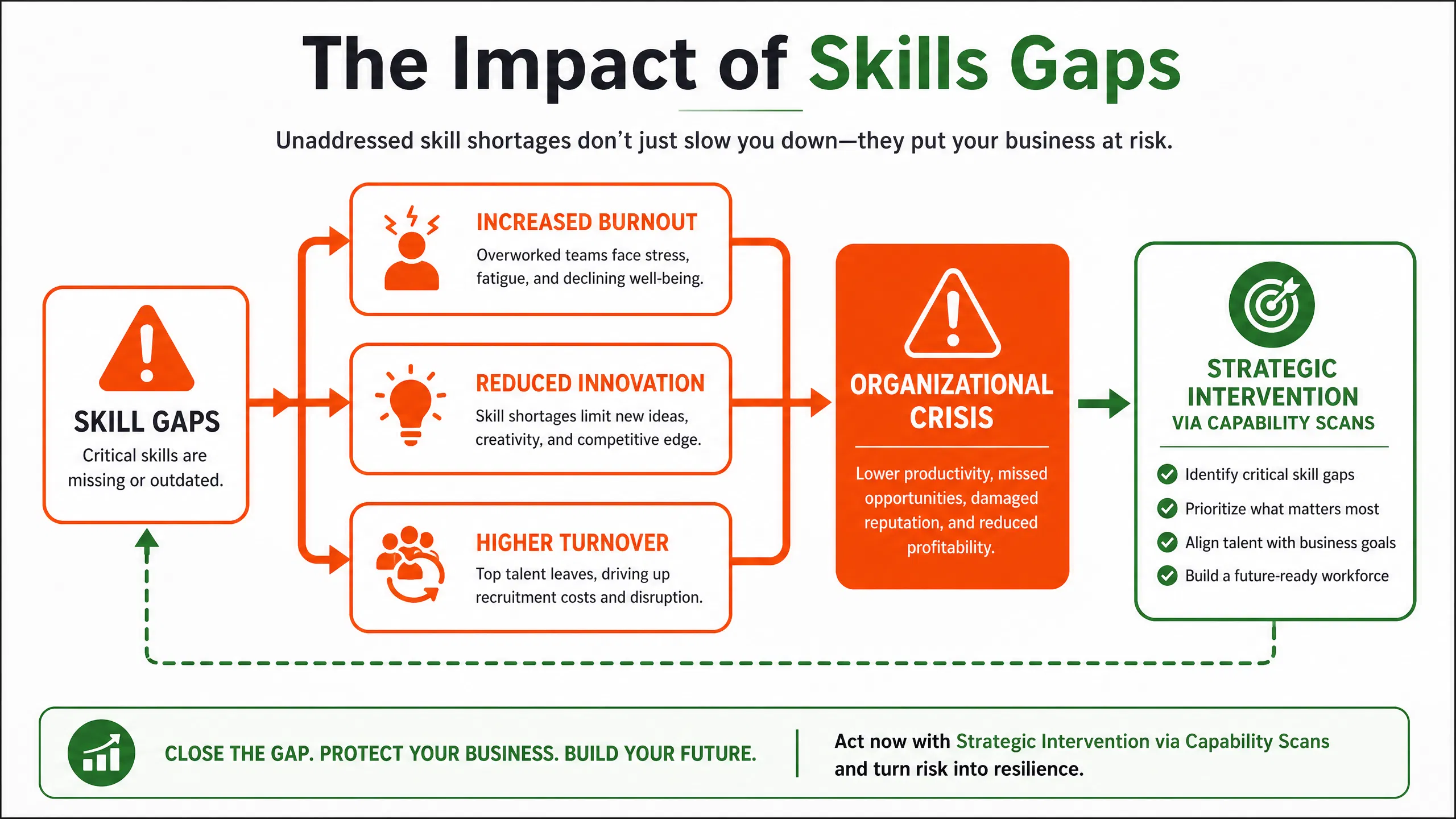
- Increased employee burnout
- Delayed project delivery
- Reduced innovation
- Higher employee turnover
- Growing reliance on external consultants
- Difficulty adopting new technologies
Meanwhile, many managers mistakenly attribute these symptoms to performance issues rather than capability deficiencies.
How Skills Gaps Turn Into Business Risks
Skill shortages create a domino effect. Teams become overloaded. Innovation slows. Employee engagement declines. Recruitment costs rise. Customer satisfaction suffers.
Capability scans allow managers to detect these risks early and intervene before they escalate into organizational crises.
Skills-Based Leadership as a Competitive Advantage
Skills-based leadership focuses on developing capabilities rather than managing positions. It recognizes that workforce flexibility is one of the most valuable assets in a rapidly changing economy.
Managers who adopt this approach become talent architects. Instead of merely assigning tasks, they actively build organizational capability.
Moving From Position-Based to Capability-Based Management
Traditional management often revolves around organizational hierarchy. Skills-based leadership shifts attention toward what employees can do and what they could potentially learn.
This perspective creates greater flexibility when business priorities change.
Building Agile Teams for Continuous Change
Agile organizations depend on employees who can learn quickly, adapt effectively, and collaborate across functions.
Capability scans provide the visibility needed to build these adaptive teams by identifying strengths, weaknesses, and development opportunities.
The Growing Role of Micro-Credentials for Managers
Micro-credentials have emerged as one of the most effective tools for rapid workforce development. Unlike traditional degree programs, micro-credentials focus on specific skills and competencies that can be applied immediately.
Research published in 2026 highlights the growing importance of micro-credentials in supporting workforce flexibility and rapid skill acquisition.
Why Micro-Credentials Are Accelerating Workforce Development
Recent surveys reveal that 96% of employers believe micro-credentials strengthen job applications, while 87% have hired candidates with micro-credentials within the past year. Additionally, many employers are willing to offer higher starting salaries to individuals who possess these credentials.
Because of this, managers increasingly use micro-credentials to address capability gaps quickly and cost-effectively.
Essential Micro-Credentials Managers Should Pursue
Managers preparing for 2026 and beyond should consider micro-credentials in:
- Leadership and management
- AI literacy
- Data analytics
- Change management
- Project management
- Strategic workforce planning
- Digital transformation
Organizations seeking structured leadership development can benefit from the Leadership and Management Skills for New Managers and Supervisors Course, which focuses on leadership fundamentals, communication, performance management, and team development.
Internal Mobility Strategies That Retain Top Talent
One of the most overlooked benefits of capability scans is their ability to support internal mobility.
Employees increasingly want growth opportunities. When organizations fail to provide them, talented individuals often seek opportunities elsewhere.
Creating Visible Career Pathways
Capability data allows managers to identify potential career paths based on actual skills rather than assumptions.
Employees gain visibility into future opportunities, while organizations retain valuable talent.
Matching Employees to Emerging Opportunities
Capability scans make it easier to match employees with:
- New projects
- Leadership roles
- Cross-functional assignments
- Innovation initiatives
- Succession planning opportunities
Consequently, organizations reduce recruitment costs while strengthening workforce engagement.
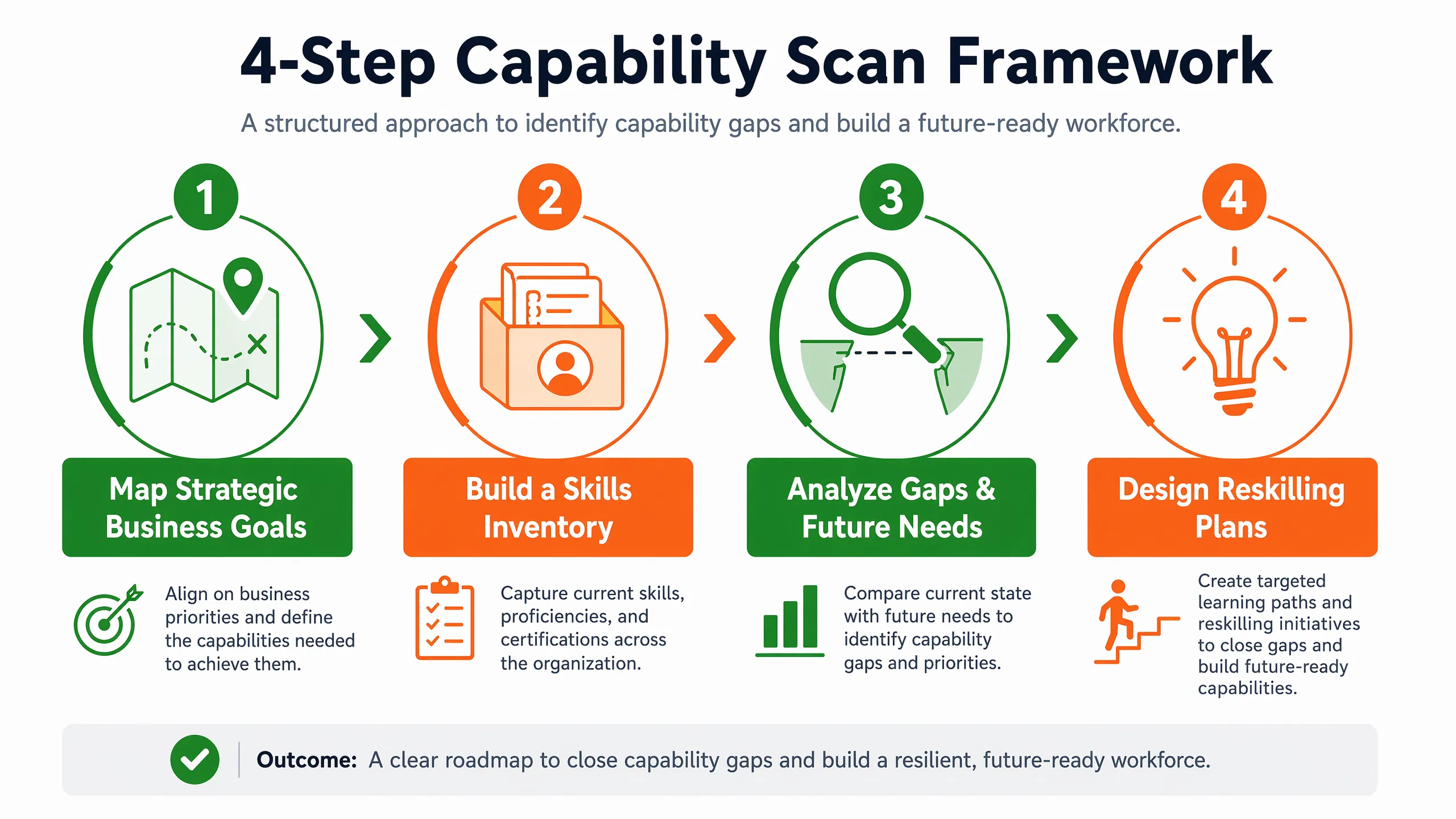
A Practical Framework for Conducting Capability Scans
Managers can implement capability scans using a structured four-step process.
Step 1: Map Strategic Business Goals
Start by identifying future business objectives. Consider emerging technologies, market shifts, customer expectations, and organizational priorities.
Step 2: Build a Skills Inventory
Document current employee capabilities through:
- Self-assessments
- Manager evaluations
- Certifications
- Project histories
- Skills assessments
Step 3: Analyze Gaps and Future Needs
Compare existing capabilities against future requirements. Focus on both technical and human-centered skills.
Step 4: Design Reskilling and Mobility Plans
Develop targeted learning pathways that close capability gaps through training, coaching, mentoring, and internal mobility opportunities.
Training Solutions That Support Workforce Reskilling
Organizations seeking to strengthen workforce capabilities can leverage specialized training programs from ForElite Training Institute, which provides professional development programs across leadership, project management, digital transformation, human capital development, and organizational effectiveness.
Several training areas are especially relevant for capability-based workforce development:
- Leadership Development Programs
- Human Capital and Talent Development Training
- Project Management Training Courses
- Digital Transformation Programs
- Performance Management Training Solutions
Organizations looking to strengthen digital capabilities and technology-driven workforce transformation initiatives can also explore solutions from Nexera Digital Solutions.
The Future of Workforce Reskilling Beyond 2026
The future belongs to organizations that treat capabilities as strategic assets. AI adoption, automation, and evolving business models will continue reshaping workforce requirements. Studies suggest that significant portions of today’s skill requirements will change before 2030, making continuous learning essential rather than optional.
Managers who embrace capability scans will be better positioned to anticipate these changes. Rather than scrambling to fill urgent skills shortages, they will proactively build resilient teams capable of adapting to new challenges.
The most successful organizations will combine capability intelligence, targeted micro-credentials, internal mobility programs, and continuous reskilling strategies. Together, these elements create a workforce that remains competitive even as industries evolve.
Conclusion
Skills-based leadership is rapidly becoming a defining characteristic of successful organizations in 2026. Traditional workforce planning methods are no longer sufficient in a business environment shaped by AI, digital transformation, and continuous disruption. Capability scans offer managers a practical way to identify emerging skill gaps before they become costly organizational crises.
By systematically assessing workforce capabilities, investing in micro-credentials, supporting internal mobility, and implementing structured reskilling initiatives, managers can transform workforce planning from a reactive process into a strategic advantage. Organizations that master this approach will not only close skills gaps faster but also create more agile, engaged, and future-ready teams.
FAQs
1. What is a capability scan in workforce management?
A capability scan is a structured assessment that identifies current workforce skills, future capability requirements, and potential gaps that could impact organizational performance.
2. How often should organizations conduct capability scans?
Most organizations benefit from conducting capability scans every six to twelve months, particularly in rapidly changing industries.
3. Why are micro-credentials important for managers?
Micro-credentials provide targeted, flexible learning opportunities that help managers acquire relevant skills quickly without committing to lengthy degree programs.
4. How do capability scans support internal mobility?
Capability scans identify employee strengths and hidden talents, making it easier to match individuals with new roles, projects, and career opportunities within the organization.
5. What skills are most important for workforce reskilling in 2026?
Leadership, AI literacy, digital fluency, critical thinking, adaptability, data literacy, communication, and change management are among the most important capabilities for the future workforce.