

How Training Helps Organizations Close Skills Gaps: A Strategic Guide for African Businesses

Training helps organizations close skills gaps by identifying specific performance deficits and providing targeted learning interventions that align employee capabilities with evolving business goals. This proactive approach ensures that a workforce remains adaptable, productive, and capable of navigating the rapid technological shifts currently transforming the African economic landscape.
What is a Skills Gap in the African Context?
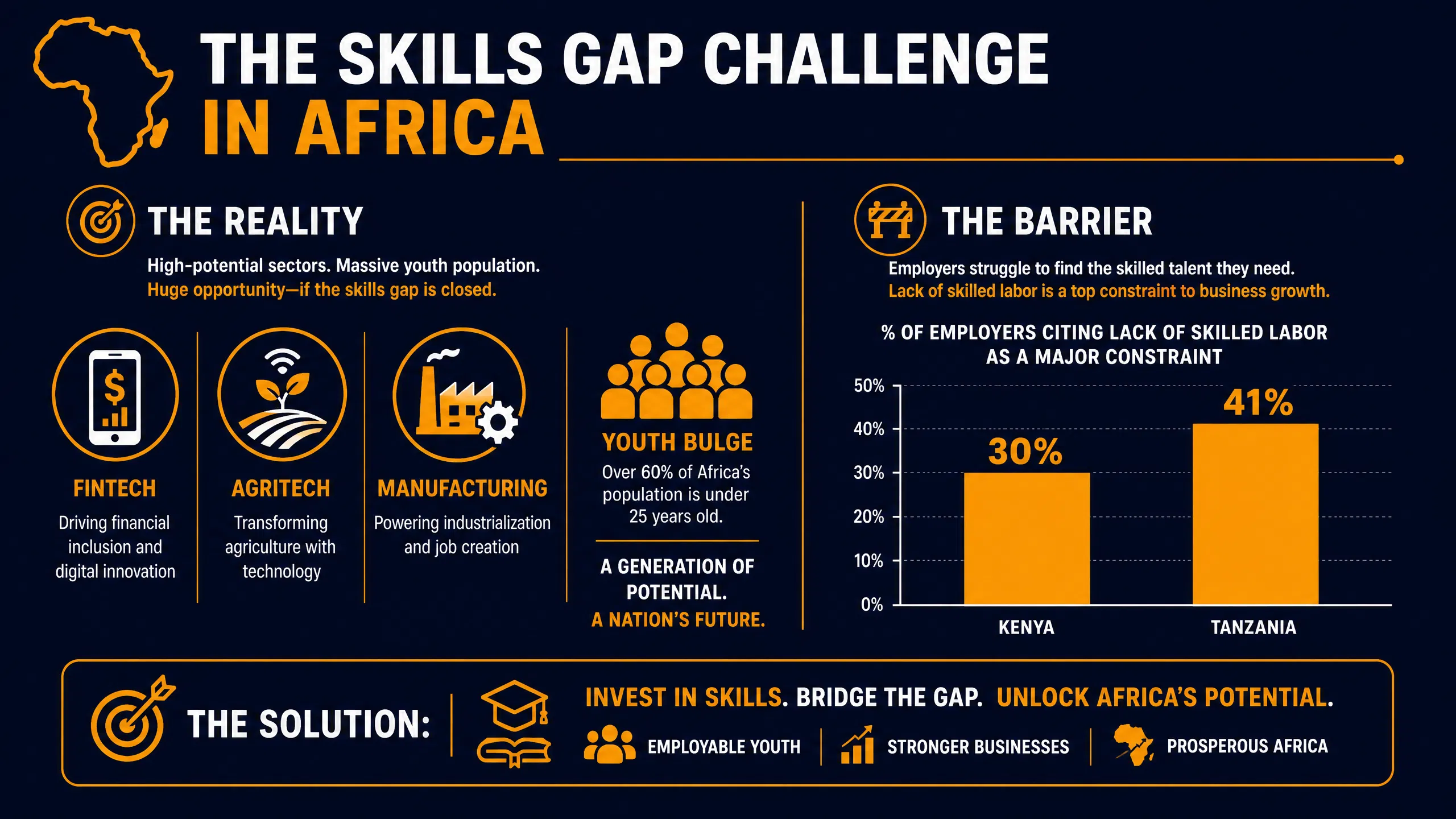
A skills gap is the mismatch between the competencies a workforce currently possesses and the skills required to perform a job effectively. In Africa, this challenge is particularly acute due to a “youth bulge” and the rapid digitization of industries like fintech, agritech, and manufacturing.
According to the World Economic Forum, employers in the region already identify inadequately skilled workforces as a major constraint. For example, 30% of firms in Kenya and 41% in Tanzania cite a lack of skilled labor as a significant barrier to business growth (World Economic Forum, 2017).
At ForElite Training Institute, we specialize in bridging these divides through professional development programs designed for the modern African professional.
Why Does Training Improve Organizational Performance?
Effective corporate training does more than just teach a new tool; it transforms the operational DNA of a company. When an organization invests in capacity building, it triggers several high-impact outcomes:
-
Increased Efficiency: Employees reach proficiency 40% to 60% faster in structured learning environments compared to traditional on-the-job trial and error (Deelan, 2026).
-
Enhanced Innovation: A workforce trained in critical thinking and new technologies is better equipped to propose creative solutions to stagnant business problems.
-
Operational Resilience: Organizations that prioritize continuous learning can pivot more quickly during market disruptions or regulatory changes.
5 Practical Steps to Close Skills Gaps Through Training
Closing the gap requires a systematic approach rather than ad-hoc workshops.
-
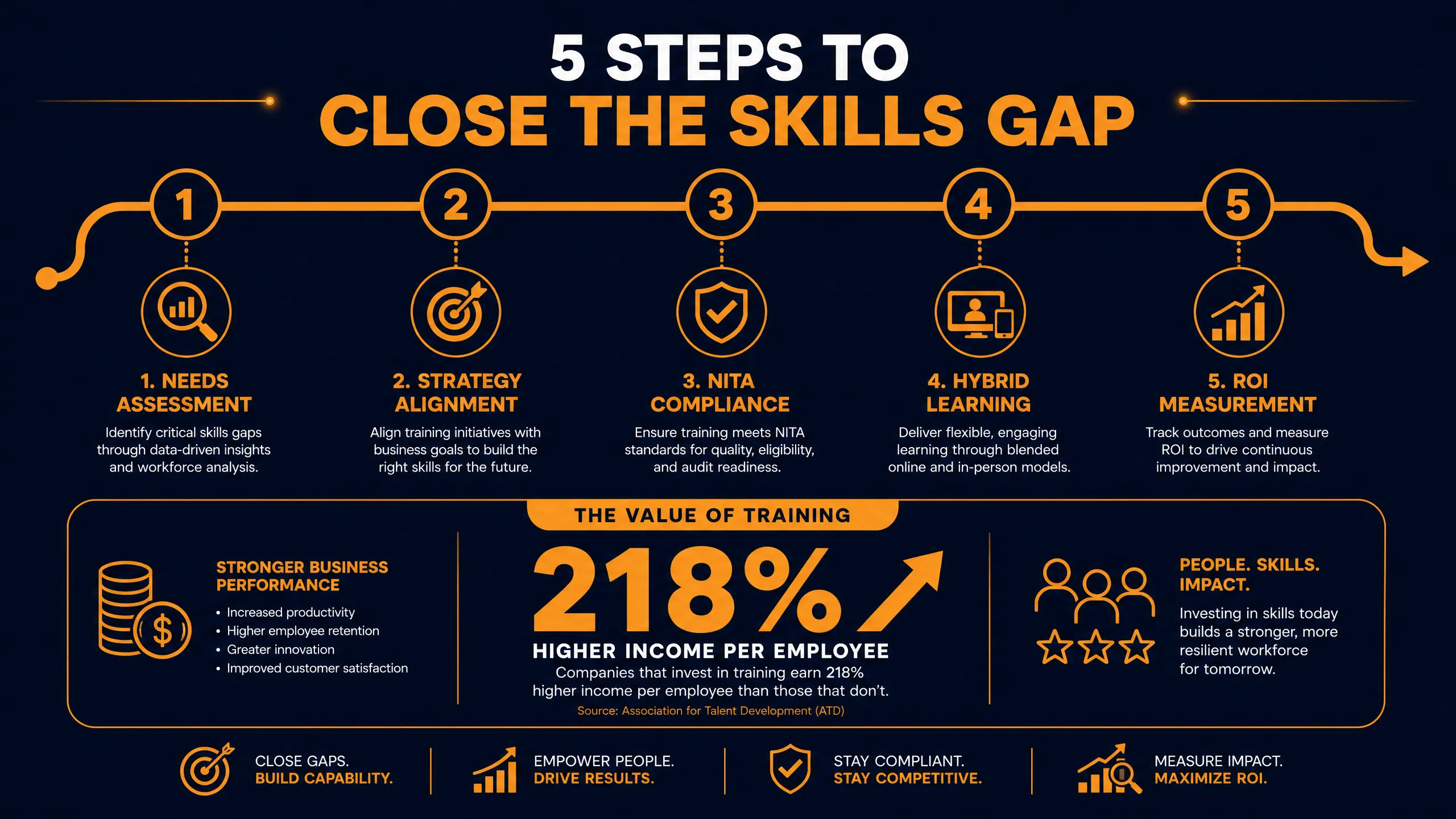
Conduct a Training Needs Assessment (TNA): Identify where your team struggles. Is it technical proficiency, leadership, or soft skills like communication?
-
Align Learning with Business Strategy: Ensure every course supports a specific organizational goal, such as increasing digital sales or improving customer retention.
-
Utilize NITA-Compliant Programs: For Kenyan organizations, leveraging NITA (National Industrial Training Authority) registered trainers like ForElite Training Institute allows you to claim training reimbursements while ensuring quality.
-
Implement Hybrid Learning: Combine on-site workshops at a premium venue with virtual follow-ups to maximize retention and flexibility.
-
Measure and Adjust: Use post-training evaluations to track performance improvements and ROI.
Supporting Data and Case Studies
Data Points: The Value of Training
-
Income Per Employee: Brands with formalized training programs see 218% higher income per employee than those without (Deelan, 2026). This matters because it proves that training is a revenue generator, not just a cost center.
-
Human Capital Potential: Sub-Saharan Africa currently captures only 55% of its human capital potential, compared to a global average of 65% (World Economic Forum, 2017). Closing this 10% gap through training could unlock massive economic growth across the continent.
-
Retention: 76% of employees are more likely to stay with a company that offers continuous professional development (Post University, 2022). High retention reduces the massive costs associated with recruitment and onboarding.
Case Study: Coaching Culture at CBA Group (Kenya)
In 2014, the Commercial Bank of Africa (now NCBA) recognized a need to inspire its workforce, where 65% of staff were Millennials (Generation Y). The HR team trained 85 managers in coaching skills to foster proactive career growth and performance conversations (FSD Africa, 2016).
-
Outcome: This intervention moved the organization from a traditional “command and control” style to a coaching culture, significantly improving employee engagement and internal leadership pipelines.
-
Why it matters: It demonstrates that soft-skills training like coaching and leadership is essential for managing Africa’s young and dynamic workforce.
FAQ: Closing the Skills Gap
What is corporate training?
Corporate training is a system of professional development activities designed to improve the performance, safety, and productivity of employees within an organization.
How do I identify a skills gap in my team?
You can identify gaps through performance reviews, employee surveys, and a Training Needs Assessment (TNA), which compares current employee output against the skills required for future business objectives.
Why is training important for African businesses today?
With the African labor market adding 10 to 12 million youth annually, businesses must provide specialized training to ensure these new entrants can meet the demands of the Fourth Industrial Revolution.
Is corporate training tax-deductible in Kenya?
Yes, Kenyan employers who contribute to the NITA levy can claim reimbursements for training costs when using a registered training provider.
Conclusion
Closing the skills gap is no longer optional for organizations that wish to lead in the African market. By investing in targeted training, companies can turn a “skills deficit” into a competitive advantage, ensuring their teams are ready for the challenges of tomorrow.
How training helps organizations close skills gaps is by fostering a culture of continuous improvement and alignment. Ready to elevate your team? Contact ForElite Training Institute today to book a customized capacity-building session at our Nairobi-based facilities.
References
-
Deelan. (2026). Advantages of Training Employees: Boost Business Success.
-
FSD Africa. (2016). Coaching Culture for Business Case Study: CBA Group.
-
Post University. (2022). The Benefits of Corporate Training: How to Implement Development Opportunities.
-
World Economic Forum. (2017). The Future of Jobs and Skills in Africa.