

Understanding AI Project Management
What Is AI Project Management?
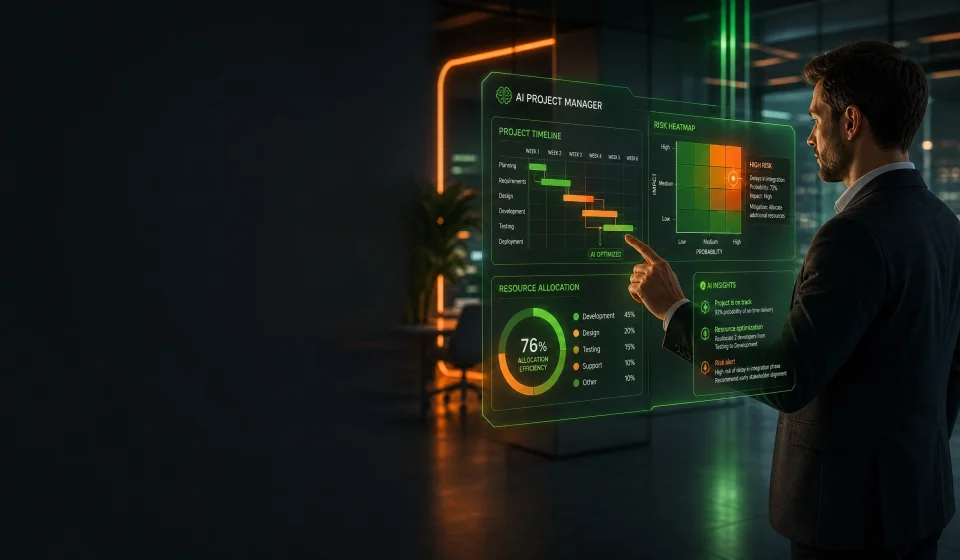
Artificial Intelligence has rapidly moved from being a futuristic concept to becoming a practical business tool. AI project management refers to the use of artificial intelligence technologies to assist project managers in planning, scheduling, monitoring, forecasting, reporting, and decision-making. Instead of spending countless hours creating reports, tracking deadlines, and identifying risks manually, project teams can leverage intelligent systems to automate repetitive processes and gain deeper insights from project data.
Today’s organizations face increasing project complexity. Teams often operate across multiple locations, stakeholders expect faster results, and budgets remain tight. AI helps bridge these challenges by analyzing large volumes of information in seconds and identifying patterns that humans might overlook. As a result, organizations can make more informed decisions while reducing project delays and cost overruns.
Recent industry research highlights how quickly adoption is accelerating. According to the Association for Project Management, approximately 70% of project professionals report that their organizations are already using AI, compared to just 36% two years earlier. The same research indicates that nearly all remaining organizations are planning AI adoption in the near future. This dramatic growth demonstrates that AI is no longer an optional innovation but an increasingly important component of modern project delivery.
Why Organizations Are Adopting AI Faster Than Ever
The growing popularity of AI project management is driven by measurable business outcomes. Organizations are seeking ways to improve efficiency, reduce risk, and enhance collaboration. AI-powered tools can generate schedules, forecast resource requirements, summarize meetings, and identify potential project bottlenecks before they become serious problems.
Many companies are also discovering significant financial returns from AI investments. Industry surveys have found that a large majority of project managers using AI report positive returns on investment, while many organizations plan to increase spending on AI-powered project management tools. Productivity gains, improved forecasting accuracy, and streamlined communication are among the most commonly reported benefits.
The shift is not merely technological. It represents a transformation in how projects are managed. Project managers are increasingly moving away from administrative tasks and focusing more on leadership, stakeholder engagement, strategic planning, and business value creation.
The Evolution of Project Management
From Traditional Methods to Intelligent Systems
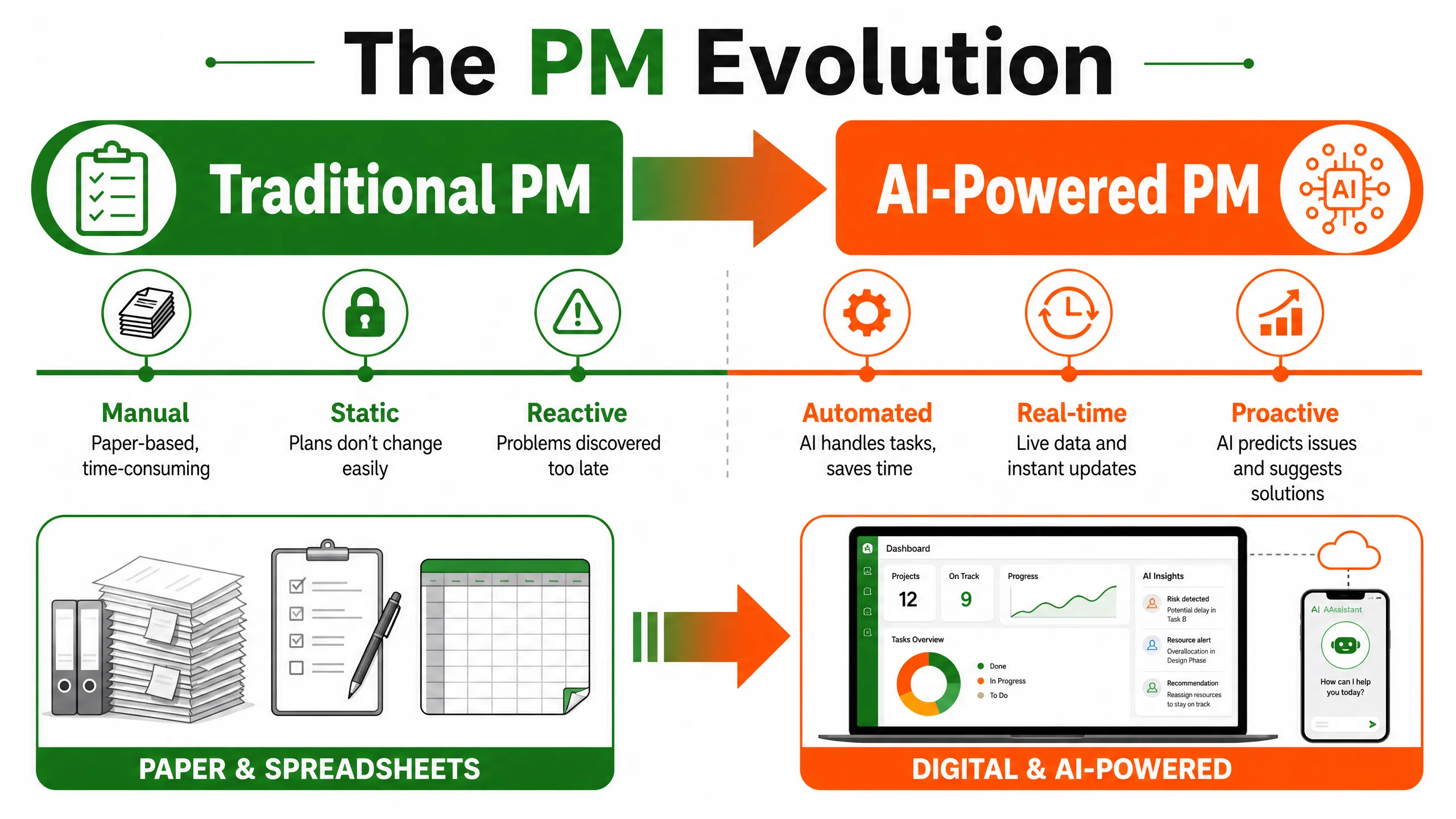
Project management has evolved significantly over the past several decades. Traditional methodologies focused heavily on manual planning, documentation, and periodic reporting. Project managers spent substantial amounts of time updating spreadsheets, preparing presentations, and tracking project performance through static reports.
Today, AI-powered platforms are transforming these activities. Intelligent systems can automatically collect project data, analyze progress, and generate actionable insights in real time. Rather than reacting to problems after they occur, teams can proactively address risks before they impact project outcomes.
This evolution resembles the transition from paper maps to GPS navigation. Traditional project management provided direction, but AI offers dynamic guidance based on changing conditions. Project managers can now access live insights that help them navigate uncertainty more effectively and maintain alignment with organizational objectives.
The Role of Automation in Modern Projects
Automation serves as the foundation of AI project management. Routine tasks such as status reporting, schedule updates, meeting summaries, and resource tracking can now be completed automatically. This allows project teams to spend more time solving complex problems and less time handling administrative work.
Leading consulting firms are already experiencing this transformation. AI-powered collaboration platforms are replacing static presentations and enabling real-time project visibility across stakeholders. Teams can access updated information instantly, reducing communication delays and improving decision-making.
The result is a more agile and responsive project environment where information flows seamlessly between team members, managers, and executives.
Core Technologies Powering AI Project Management
Machine Learning
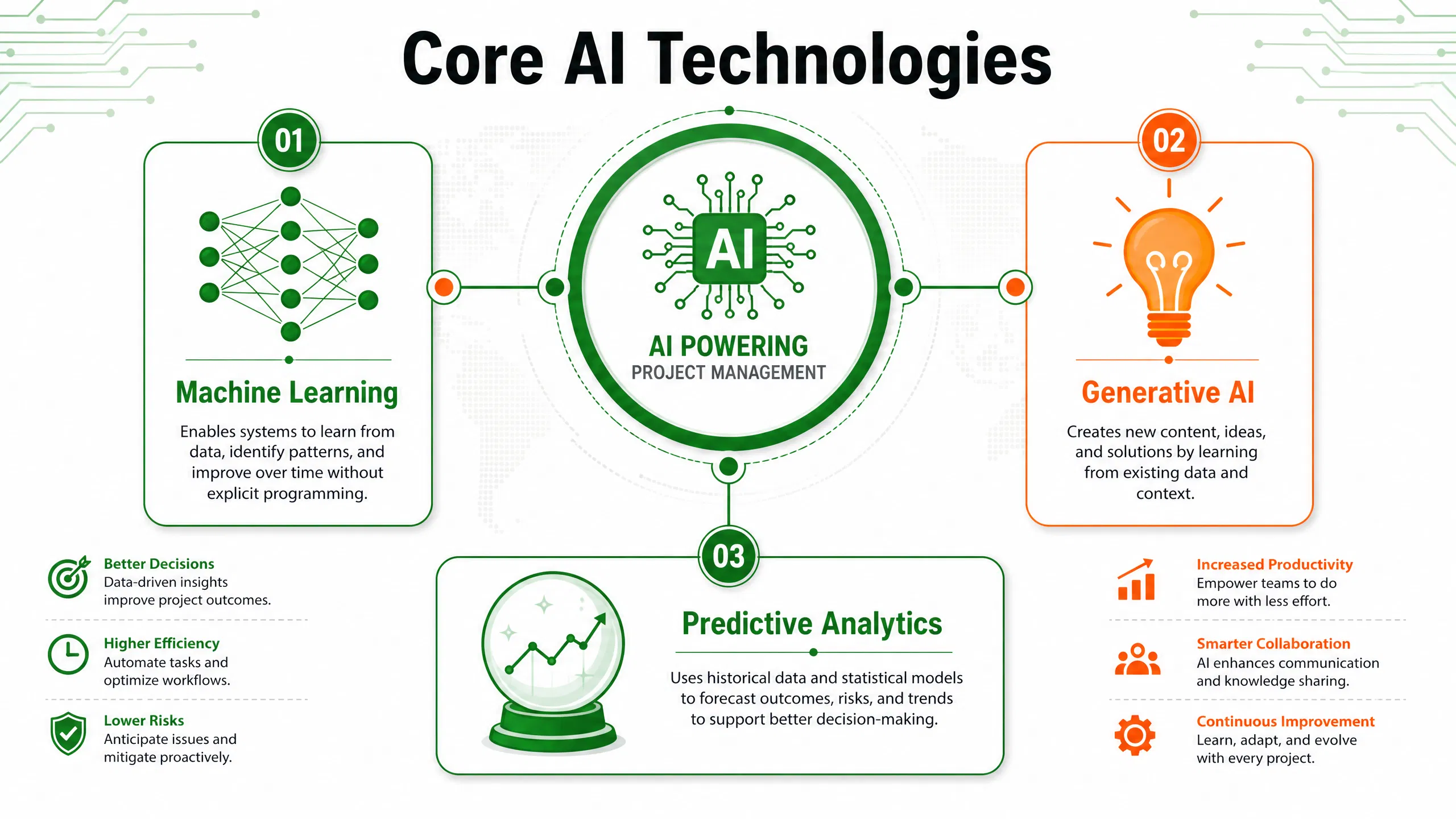
Machine learning enables systems to learn from historical project data and improve predictions over time. By analyzing previous project outcomes, machine learning algorithms can estimate timelines, identify risks, and recommend optimal resource allocations.
For example, if past projects consistently experienced delays during a specific phase, machine learning models can flag similar risks in new initiatives. This proactive approach allows project managers to take corrective action before problems escalate.
Generative AI
Generative AI has emerged as one of the most impactful technologies in project management. Tools powered by large language models can create reports, summarize meetings, draft stakeholder communications, and generate project documentation within seconds.
Instead of starting from scratch, project managers can use AI-generated drafts as a foundation and focus on refining content. This dramatically reduces administrative workload while maintaining communication quality.
Predictive Analytics
Predictive analytics transforms historical and real-time data into future-oriented insights. AI can forecast budget overruns, schedule delays, resource shortages, and performance issues with increasing accuracy.
Organizations that leverage predictive analytics gain a competitive advantage because they can anticipate challenges and adjust strategies before negative outcomes occur. This capability is especially valuable in large-scale projects involving multiple stakeholders and complex dependencies.
Key Benefits of AI Project Management
Improved Planning and Scheduling
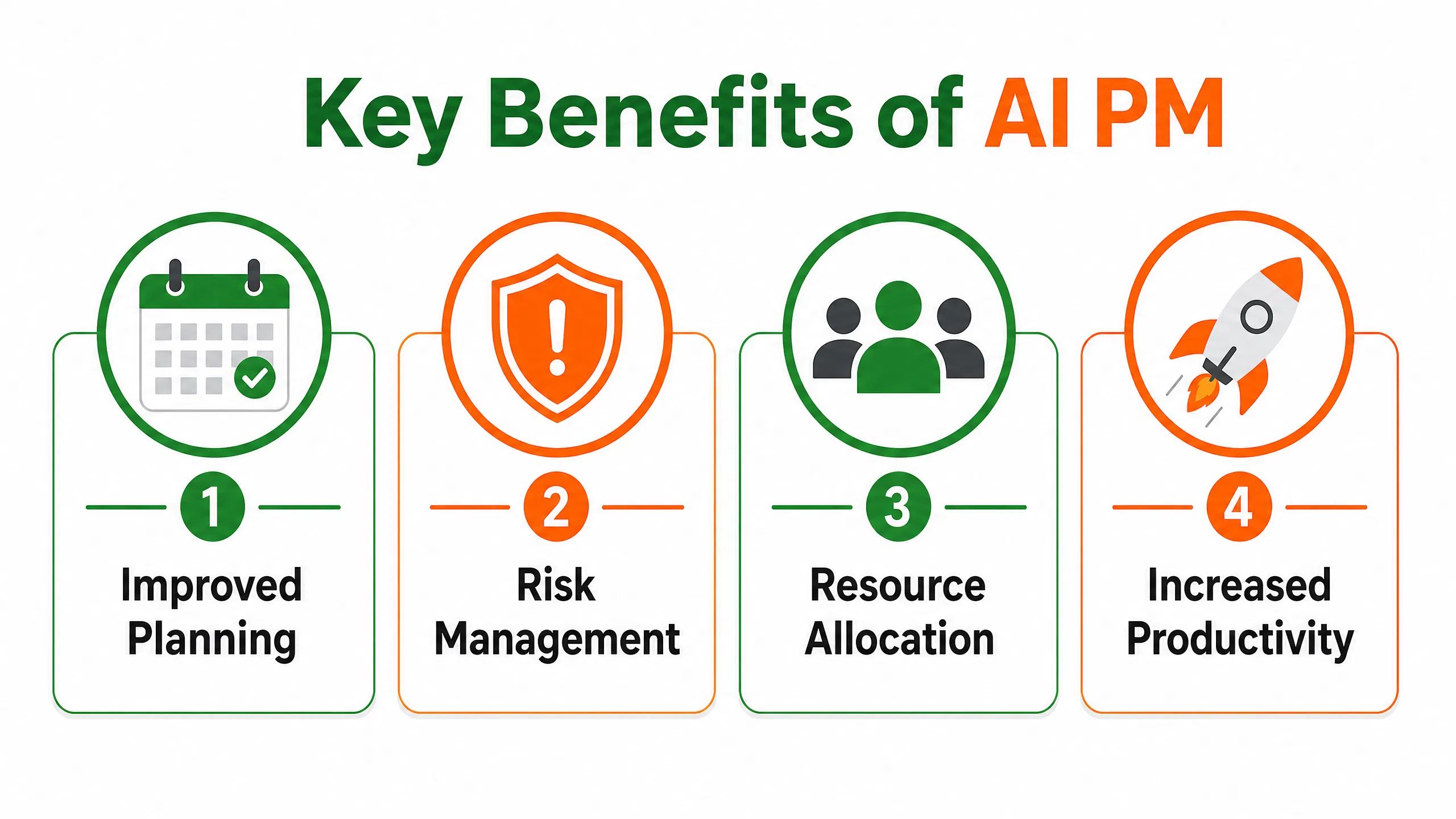
One of the most significant benefits of AI project management is enhanced planning accuracy. Traditional project schedules often rely heavily on assumptions and manual estimates. AI improves this process by analyzing historical performance data and identifying realistic timelines.
Project managers can create more accurate schedules, reduce uncertainty, and improve stakeholder confidence. Intelligent scheduling tools can also adapt automatically when project conditions change, ensuring that plans remain relevant throughout the project lifecycle.
Enhanced Risk Management
Risk management has always been a critical component of project success. AI strengthens this capability by continuously monitoring project data and identifying emerging threats.
Rather than relying solely on periodic risk reviews, teams can receive real-time alerts about potential issues. These alerts may include schedule risks, resource conflicts, budget concerns, or stakeholder engagement challenges. Early detection allows organizations to implement mitigation strategies before risks become costly problems.
Better Resource Allocation
Resource management becomes increasingly challenging as organizations handle multiple projects simultaneously. AI helps optimize resource allocation by analyzing workload patterns, skill requirements, and project priorities.
Project managers can identify underutilized resources, prevent employee burnout, and ensure that critical projects receive the necessary support. This leads to improved productivity and more efficient use of organizational talent.
Increased Productivity
Research consistently demonstrates productivity improvements associated with AI adoption. Many project professionals report significant efficiency gains after implementing AI-powered tools. Automated reporting, intelligent scheduling, and predictive insights enable teams to accomplish more work in less time.
The productivity benefits extend beyond individual project managers. Entire organizations can streamline operations, accelerate project delivery, and improve overall business performance.
Real-World Applications of AI in Project Management
AI for Construction Projects
Construction projects generate enormous amounts of data related to schedules, budgets, materials, and safety requirements. AI helps construction managers monitor progress, predict delays, and optimize resource utilization.
Predictive analytics can identify potential schedule disruptions caused by weather conditions, supply chain issues, or labor shortages. This enables construction firms to adjust plans proactively and maintain project momentum.
AI for IT and Software Development
Software development environments produce continuous streams of project information. AI tools can analyze code repositories, project backlogs, testing results, and team performance metrics to provide actionable recommendations.
Development teams use AI to prioritize tasks, identify technical risks, and improve sprint planning. As software projects become more complex, AI increasingly serves as a valuable decision-support tool.
AI for Business Operations
Beyond construction and technology sectors, AI project management supports initiatives in healthcare, finance, manufacturing, logistics, and professional services. Organizations use AI to improve forecasting accuracy, streamline communication, and enhance operational efficiency.
Businesses seeking to build these capabilities can benefit from specialized training programs such as the Project Management Professional Training Courses, the Agile Project Management Training Courses, and the Monitoring and Evaluation Training Courses.
Challenges and Limitations
Data Quality and Governance
AI systems are only as effective as the data they analyze. Poor data quality can lead to inaccurate predictions and unreliable recommendations. Organizations must establish strong data governance practices to maximize AI effectiveness.
Data accuracy, consistency, and accessibility should be prioritized during AI implementation. Without reliable information, even the most sophisticated AI solutions may produce misleading results.
Human Oversight and Ethical Concerns
Despite its capabilities, AI cannot replace human judgment entirely. Project management involves complex interpersonal dynamics, strategic decisions, and ethical considerations that require human oversight.
Industry experts emphasize the importance of balancing automation with accountability. Governance frameworks, transparency, and responsible AI practices are essential for sustainable adoption. Recent research indicates that many organizations are still developing effective governance structures to support large-scale AI deployment.
Essential Skills for AI-Driven Project Managers
Technical Skills
Project managers working in AI-enabled environments need a foundational understanding of data analytics, AI concepts, and digital tools. While deep technical expertise may not always be necessary, familiarity with AI capabilities helps managers evaluate recommendations and communicate effectively with technical teams.
Leadership and Strategic Thinking
As AI automates routine tasks, leadership skills become increasingly valuable. Project managers must focus on stakeholder engagement, conflict resolution, change management, and strategic alignment.
The future project manager acts less like an administrator and more like a business strategist. Success depends on the ability to interpret AI-generated insights and translate them into meaningful actions.
Organizations looking to strengthen these competencies can explore the Leadership and Management Training Programs and the Strategic Management Training Course.
Training and Professional Development
Recommended Courses and Certifications
The rapid growth of AI project management has created a strong demand for professional development opportunities. Project managers who invest in continuous learning position themselves for long-term career success.
Relevant learning pathways include:
| Training Area | Key Benefit |
|---|---|
| Project Management | Improved project delivery |
| Agile Methodologies | Enhanced adaptability |
| Data Analytics | Better decision-making |
| Leadership Development | Stronger team management |
| Digital Transformation | Effective technology adoption |
Organizations pursuing broader digital transformation initiatives can also benefit from consulting and implementation support offered by Nexera Digital Solutions.
Future Trends in AI Project Management
AI Agents and Autonomous Project Support
AI agents represent the next major evolution in project management technology. These systems can perform complex tasks autonomously, including monitoring project performance, generating recommendations, and coordinating workflows.
Industry analysts predict significant growth in AI agent adoption over the next several years. However, successful implementation will depend on strong governance, clear business objectives, and effective integration with existing processes.
The Rise of Predictive Decision-Making
Predictive decision-making will continue shaping the future of project management. Organizations increasingly expect AI systems to identify opportunities, forecast outcomes, and recommend actions before challenges emerge.
Projects that leverage predictive insights are more likely to achieve schedule, budget, and quality objectives. As predictive models become more sophisticated, project managers will gain access to increasingly accurate guidance and recommendations.
Conclusion
AI project management is redefining how organizations plan, execute, and monitor projects. What began as simple automation has evolved into intelligent decision support capable of transforming project outcomes. From predictive analytics and risk management to resource optimization and autonomous workflows, AI enables organizations to operate with greater efficiency and confidence.
The evidence is clear: AI adoption within project management continues to accelerate across industries. Organizations that embrace AI thoughtfully while maintaining strong governance and human oversight will be better positioned to deliver successful projects in an increasingly competitive environment. The future belongs to project managers who can combine technological intelligence with human leadership, strategic thinking, and adaptability.
FAQs
1. What is AI project management?
AI project management involves using artificial intelligence technologies to improve project planning, scheduling, risk management, resource allocation, and decision-making.
2. Can AI replace project managers?
AI can automate many administrative tasks, but human leadership, communication, strategic thinking, and stakeholder management remain essential.
3. What are the main benefits of AI in project management?
Key benefits include improved productivity, better forecasting, enhanced risk management, optimized resource allocation, and faster decision-making.
4. Which industries benefit most from AI project management?
Construction, IT, healthcare, finance, manufacturing, logistics, and professional services are among the industries experiencing significant benefits.
5. How can project managers prepare for AI adoption?
Project managers should develop skills in AI literacy, data analytics, leadership, strategic planning, and digital transformation while pursuing relevant professional training and certifications.