

Thought Leadership: The Ultimate Guide to Building Authority, Trust, and Business Growth in 2026

Understanding Thought Leadership
What Thought Leadership Really Means
Thought leadership is one of the most discussed concepts in business today. Yet, despite its popularity, many people misunderstand what it truly represents. Thought leadership is not about posting motivational quotes on social media or publishing articles filled with buzzwords. Instead, it is the ability to provide original insights, informed perspectives, and practical solutions that help others navigate challenges and seize opportunities.
A true thought leader influences the way people think. They challenge conventional wisdom, introduce fresh ideas, and contribute meaningful expertise to their industry. Whether it is a CEO, consultant, entrepreneur, researcher, or industry expert, thought leaders become trusted sources of information because they consistently offer value. Their influence stems from knowledge, experience, and credibility rather than self-promotion.
Today’s audiences are becoming increasingly selective about the content they consume. As a result, businesses and professionals can no longer rely solely on advertising to gain trust. People want evidence of expertise. They want guidance from individuals and organizations that understand their problems and can provide actionable solutions. Thought leadership fulfills this need by positioning experts as reliable advisors rather than salespeople.
The concept resembles a lighthouse in a stormy sea. While countless voices compete for attention, genuine thought leaders provide direction and clarity. Their ideas help others make informed decisions, navigate uncertainty, and discover new possibilities.
Why Thought Leadership Matters More Than Ever
The digital landscape has become saturated with content. Every day, millions of blog posts, videos, podcasts, and social media updates compete for attention. Consequently, standing out requires more than simply publishing content regularly.
Recent research shows that 99% of senior executives consider thought leadership important or critical when evaluating potential advisors and service providers. Additionally, 75% of decision-makers actively seek content that provides practical solutions to complex business challenges.
These numbers reveal an important reality. Decision-makers are not merely looking for products or services. They are searching for expertise and strategic guidance. Organizations that consistently demonstrate industry knowledge gain a significant competitive advantage.
Thought leadership also plays a crucial role in trust-building. Trust has become one of the most valuable currencies in modern business. Buyers conduct extensive research before engaging with vendors, and many complete a significant portion of their purchasing journey independently. High-quality thought leadership helps establish credibility long before direct conversations occur.
The Evolution of Thought Leadership
From Industry Expertise to Digital Influence
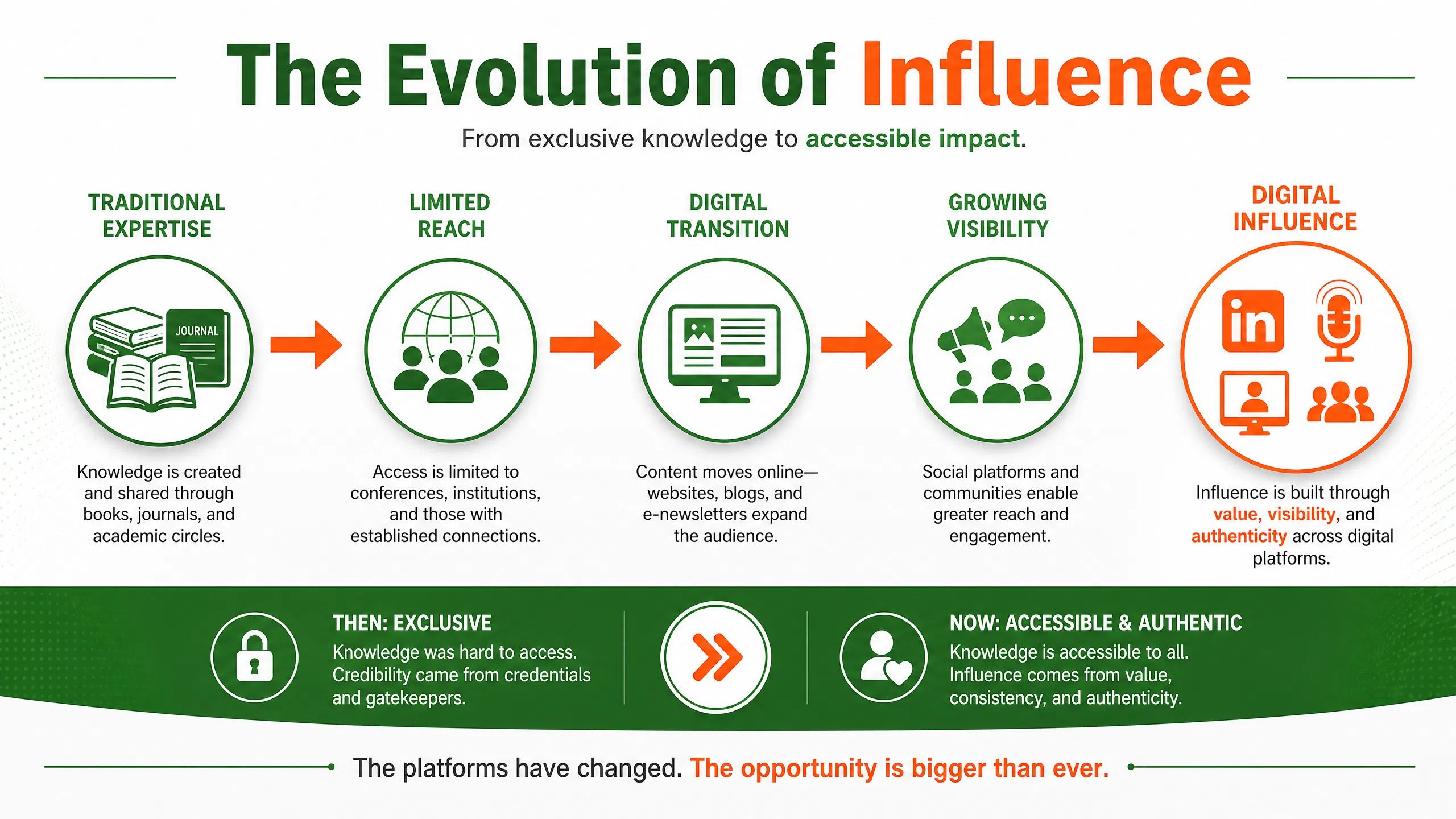
Historically, thought leadership was associated with academics, researchers, and influential business leaders. Their ideas spread through books, conferences, and professional journals. Today, however, digital platforms have transformed how expertise is shared and consumed.
LinkedIn, podcasts, webinars, newsletters, and video platforms have democratized thought leadership. Professionals no longer need publishing contracts or speaking tours to build influence. Instead, they can connect directly with audiences worldwide.
This shift has created both opportunities and challenges. On one hand, experts can reach broader audiences than ever before. On the other hand, increased accessibility has resulted in content overload. Many individuals claim thought leadership status without contributing genuinely original ideas.
As a result, audiences have become more discerning. They reward authenticity, depth, and practical value while ignoring generic content. Successful thought leaders focus on helping their audiences solve problems rather than chasing visibility alone.
The Role of AI and Modern Search
Artificial intelligence has introduced another significant transformation. AI-powered search systems increasingly evaluate content based on expertise, depth, relevance, and authority. This means organizations must move beyond keyword optimization and focus on demonstrating real knowledge.
Industry observers note that thought leadership is becoming increasingly important for establishing authority in AI-driven search environments. Content that interprets trends, explains complex issues, and offers unique perspectives is more likely to gain recognition and visibility.
At the same time, AI-generated content has created a flood of similar articles and opinions. Therefore, originality has become even more valuable. Readers and search engines alike favor content that reflects genuine expertise and firsthand experience.
Key Characteristics of Effective Thought Leaders
Authenticity and Credibility
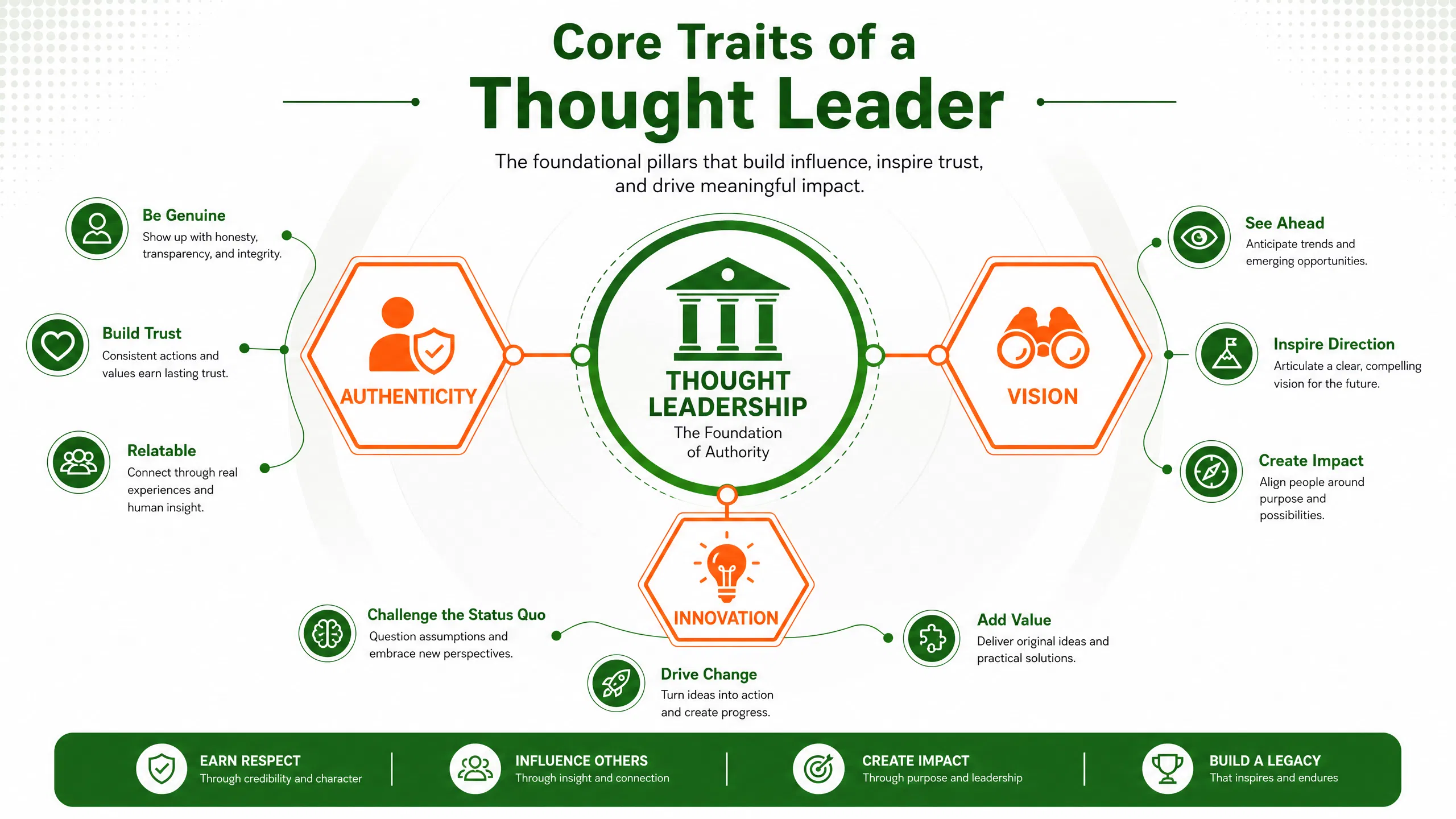
Authenticity serves as the foundation of thought leadership. People can quickly identify content that feels forced, generic, or self-serving. Consequently, thought leaders must communicate honestly and transparently.
Credibility comes from demonstrated expertise. It is built through experience, achievements, research, and consistent delivery of valuable insights. When audiences see evidence of competence, trust naturally follows.
Authentic thought leaders also acknowledge uncertainty. They do not pretend to have all the answers. Instead, they share perspectives, encourage discussion, and remain open to learning.
Vision and Innovation
Another defining trait is the ability to see beyond current circumstances. Thought leaders identify emerging trends, anticipate future challenges, and propose innovative solutions.
Consider influential business figures who predicted technological shifts years before they became mainstream. Their impact stemmed not only from expertise but also from foresight. They helped others prepare for change rather than merely react to it.
Visionary thinking transforms ordinary experts into industry influencers. It allows them to shape conversations rather than simply participate in them.
Benefits of Thought Leadership
Building Brand Authority
One of the most significant benefits of thought leadership is enhanced authority. When organizations consistently publish insightful content, they become recognized as trusted sources of information.
Authority influences purchasing decisions. Buyers prefer working with companies that demonstrate expertise and understanding. Thought leadership provides evidence of these qualities.
Organizations investing in thought leadership often experience increased media attention, speaking opportunities, partnership requests, and industry recognition. These outcomes further reinforce credibility and visibility.
Professional development also contributes to authority building. Leadership-focused programs such as Leadership and Management Skills for New Managers and Supervisors Training help professionals strengthen their ability to guide teams, communicate effectively, and influence organizational success.
Driving Revenue and Business Growth
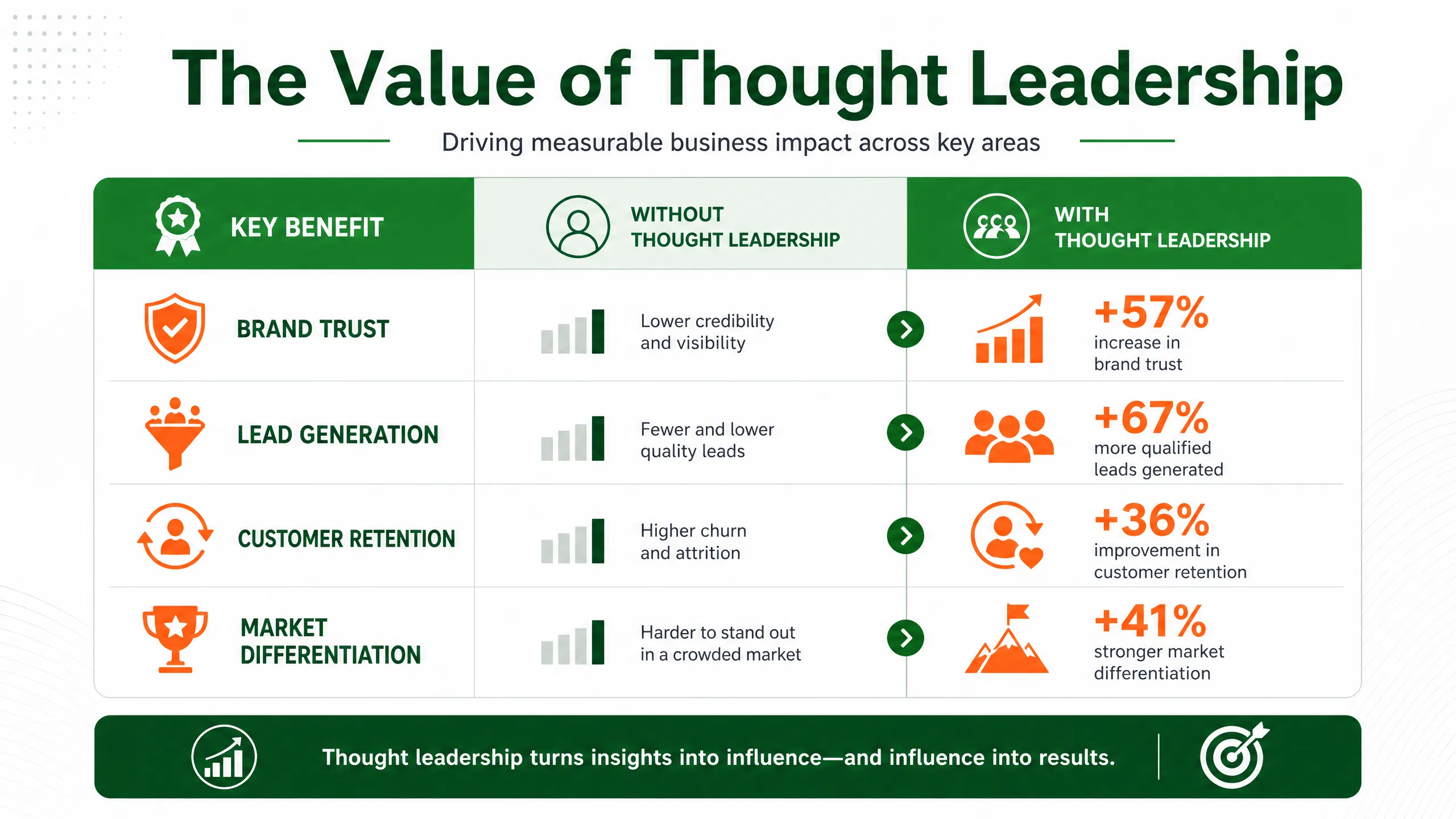
Thought leadership is not merely a branding exercise. It can generate measurable business outcomes. Research indicates that high-quality executive thought leadership can contribute substantial shareholder value and influence purchasing decisions.
The following table highlights key business benefits:
| Benefit | Impact |
|---|---|
| Brand Trust | Increased credibility among prospects |
| Lead Generation | Higher quality inbound inquiries |
| Customer Retention | Stronger relationships with existing clients |
| Market Differentiation | Competitive advantage in crowded industries |
| Revenue Growth | Improved conversion and sales opportunities |
Organizations that consistently educate their audiences often find themselves at the top of consideration lists when purchasing decisions arise.
Thought Leadership Strategies for 2026
Creating Valuable Content
Content remains the engine of thought leadership. However, quality matters far more than quantity.
Successful thought leaders focus on:
- Original research
- Industry analysis
- Expert commentary
- Case studies
- Educational resources
- Practical frameworks
The goal is to provide insights that audiences cannot easily find elsewhere. Valuable content solves problems, answers questions, and challenges assumptions.
Leveraging Social Media Platforms
Social media provides unparalleled opportunities for thought leadership distribution. LinkedIn remains particularly effective for professional audiences, while podcasts and video platforms continue to grow in influence.
The key is consistency. Thought leaders regularly share insights, engage in discussions, and contribute meaningful perspectives to industry conversations.
Audiences appreciate authenticity over perfection. Therefore, sharing experiences, lessons learned, and practical observations often generates stronger engagement than polished promotional messages.
Speaking Engagements and Events
Speaking opportunities remain among the most powerful thought leadership tools available. Conferences, webinars, workshops, and industry events allow experts to showcase knowledge directly.
Public speaking creates deeper connections than written content alone. It enables audiences to experience expertise in real time while building trust and credibility.
Organizations seeking to develop globally competent leaders may benefit from programs such as Global Leadership Training Course, which focuses on cross-cultural leadership and strategic decision-making in international environments.
Leadership Development and Thought Leadership
Why Leadership Skills Matter
Thought leadership and leadership development are closely connected. Individuals cannot effectively influence others without strong leadership capabilities.
Leadership involves communication, strategic thinking, emotional intelligence, and decision-making. These competencies enable professionals to inspire trust and guide meaningful change.
Organizations increasingly recognize the importance of developing leadership talent. According to ForElite Training Institute, leadership programs help participants strengthen team management, communication, performance management, and strategic decision-making skills.
Professional Training Opportunities
Professionals seeking to strengthen thought leadership capabilities can benefit from specialized training programs, including:
- Strategic Leadership and Future-Ready Management Training
- Ethics, Integrity and Responsible Leadership Training
- Leadership and Management Skills for New Managers and Supervisors Training
- Global Leadership Training Course
- ForElite Training Institute Course Catalog
These programs emphasize practical application, strategic thinking, and leadership effectiveness, which are essential foundations for credible thought leadership.
Digital Marketing and Thought Leadership
SEO and Content Marketing
Thought leadership and SEO work exceptionally well together. Search engines reward content that demonstrates expertise and addresses user intent comprehensively.
High-quality thought leadership content naturally attracts backlinks, social shares, and engagement signals. These factors contribute to improved search visibility and organic traffic growth.
Businesses that combine expertise-driven content with strategic SEO practices often achieve sustainable online visibility. Agencies such as Nexera Digital Solutions help organizations leverage digital marketing, SEO, and content strategies to strengthen online authority and drive measurable growth.
Personal Branding
Personal branding plays a significant role in thought leadership success. Audiences connect with people more easily than corporations. Consequently, executives and subject matter experts often become the faces of organizational expertise.
Strong personal brands are built through consistency, authenticity, and expertise. They communicate clear values, perspectives, and areas of specialization.
Personal branding does not require constant self-promotion. Instead, it involves consistently helping others through valuable insights and meaningful contributions.
Common Mistakes to Avoid
Prioritizing Visibility Over Value
Many aspiring thought leaders focus excessively on reach, followers, and engagement metrics. While visibility matters, it should never come at the expense of value.
Audiences remember useful insights far longer than viral posts. Sustainable influence results from consistently helping people solve real problems.
Ignoring Audience Needs
Thought leadership fails when it becomes self-centered. Effective leaders focus on audience challenges, questions, and aspirations.
Understanding audience needs requires active listening. Surveys, interviews, feedback sessions, and community engagement provide valuable insights into what audiences truly care about.
When content addresses genuine concerns, engagement and trust naturally increase.
Measuring Thought Leadership Success
Thought leadership should be evaluated using meaningful metrics rather than vanity indicators alone.
Key performance indicators include:
- Website traffic growth
- Organic search visibility
- Lead generation
- Speaking invitations
- Media mentions
- Audience engagement
- Customer trust and retention
- Revenue influence
Success often develops gradually. Thought leadership resembles compound interest. Small, consistent contributions accumulate over time, creating significant influence and business impact.
The Future of Thought Leadership
The future of thought leadership will be shaped by authenticity, expertise, and innovation. AI-generated content will continue increasing, making originality even more valuable.
Audiences will increasingly reward professionals who provide unique insights backed by experience and evidence. Organizations that invest in leadership development, research, and high-quality content creation will maintain a competitive advantage.
At the same time, trust will remain the defining factor. Businesses and individuals that consistently demonstrate integrity, transparency, and expertise will continue earning influence in an increasingly crowded marketplace.
Conclusion
Thought leadership has evolved into one of the most powerful tools for building authority, trust, and business growth. It goes beyond content marketing and personal branding. At its core, thought leadership is about helping people think differently, solve problems, and navigate change with confidence.
Organizations and professionals that invest in expertise, leadership development, and authentic communication position themselves for long-term success. Research consistently demonstrates that decision-makers value high-quality thought leadership when selecting partners, advisors, and service providers.
The path to becoming a respected thought leader is not built on self-promotion. Instead, it is built on delivering value, sharing insights, and contributing meaningfully to conversations that matter. Those who commit to this approach will continue shaping industries, influencing decisions, and driving growth well into the future.
FAQs
1. What is thought leadership?
Thought leadership is the practice of sharing expert insights, innovative ideas, and practical solutions that influence how people think and make decisions within a particular field.
2. Why is thought leadership important for businesses?
It helps businesses build trust, establish authority, attract customers, and differentiate themselves from competitors in crowded markets.
3. How can someone become a thought leader?
By consistently sharing valuable insights, conducting research, developing expertise, engaging with audiences, and maintaining authenticity over time.
4. What platforms are best for thought leadership?
LinkedIn, industry blogs, podcasts, webinars, conferences, newsletters, and professional communities are among the most effective platforms.
5. How do you measure thought leadership success?
Success can be measured through website traffic, search rankings, lead generation, speaking opportunities, audience engagement, media mentions, and business growth metrics.