
Public Sector Auditing: Leadership Lessons from Our Recent Nairobi Seminar

Leadership Lessons Every Public Auditor Should Embrace
The central message that emerged from our recent Nairobi seminar was simple yet powerful: technical expertise alone is no longer enough. Today’s public sector auditor must also be a capable leader who inspires confidence, drives organizational change, and helps institutions improve their performance. While auditing standards provide the framework for evaluating compliance and financial management, leadership determines whether audit findings translate into meaningful reforms. The best auditors understand that their role extends beyond identifying weaknesses. They become trusted advisors who help management understand risks, prioritize corrective actions, and strengthen governance systems.
Leadership also requires adaptability. Public institutions operate in environments characterized by changing regulations, political transitions, evolving technologies, and increasing public scrutiny. Therefore, auditors who rely solely on traditional methods may struggle to address emerging risks effectively. Strong leaders embrace continuous learning, encourage innovation within their audit teams, and remain open to new approaches that improve audit quality. During the seminar, participants repeatedly highlighted that successful audit leaders create environments where team members feel empowered to ask difficult questions, challenge assumptions, and propose practical solutions.
Another valuable lesson involved collaboration. Auditors often interact with finance departments, procurement teams, project managers, ICT specialists, and senior executives. Because each stakeholder has unique priorities, effective communication becomes essential. Leadership means translating complex audit findings into practical recommendations that decision-makers can understand and implement. Instead of presenting reports filled with technical jargon, successful audit leaders explain risks in terms of organizational impact, service delivery, financial sustainability, and public confidence.
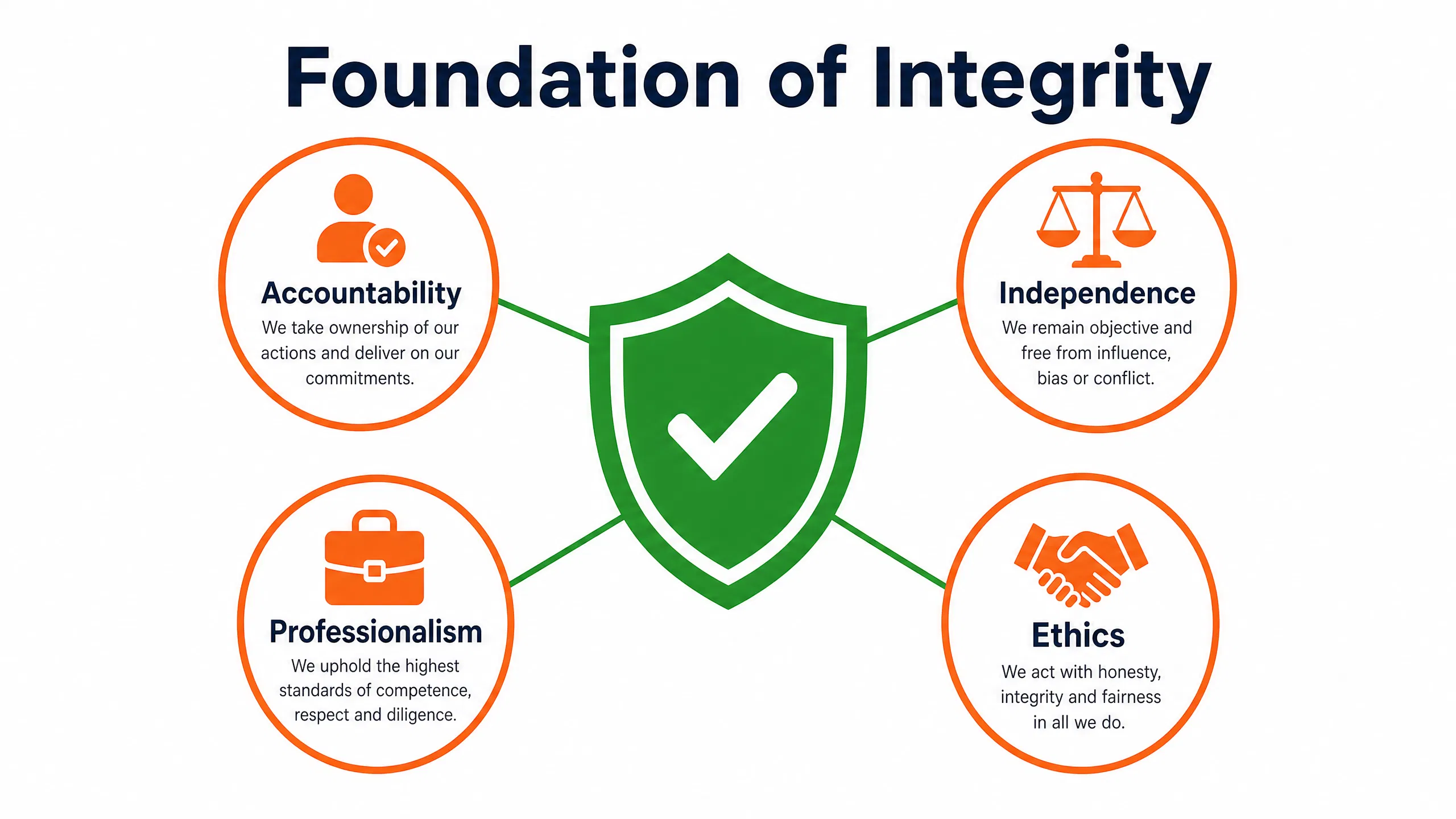
The seminar also reinforced the importance of ethical leadership. Public trust depends on the integrity of those responsible for safeguarding public resources. Every audit recommendation, every interview, and every professional interaction contributes to an institution’s credibility. Consequently, leadership begins with personal accountability, independence, professionalism, and unwavering commitment to ethical principles.
Building a Culture of Integrity
Integrity is often described as the foundation of public sector auditing, but building an ethical culture requires more than simply adopting codes of conduct. It demands consistent leadership behaviors that influence how employees think, make decisions, and respond to challenges. During the Nairobi seminar, facilitators emphasized that organizational culture is shaped less by written policies and more by what leaders consistently demonstrate through their actions.
Leaders who encourage openness create environments where employees are comfortable reporting irregularities without fear of retaliation. Similarly, transparent communication strengthens relationships between auditors and management by promoting trust rather than confrontation. Participants discussed several examples where organizations successfully reduced fraud risks by establishing confidential reporting mechanisms, strengthening internal controls, and promoting ethical leadership from senior management.
Integrity also extends to audit quality. Audit conclusions must always be supported by sufficient evidence, objective analysis, and professional judgment. External pressures, political influence, or organizational interests should never compromise audit independence. As a result, leaders must continuously reinforce professional standards while providing mentorship to less experienced auditors who may encounter ethical dilemmas.
One practical recommendation shared during the seminar involved regular ethics workshops integrated into organizational training calendars. Institutions that invest consistently in ethics education tend to experience stronger compliance cultures and greater confidence among stakeholders. Professionals interested in governance, compliance, and ethics training can explore programs offered through Leadership and Management, where leadership development is combined with practical organizational applications.
Risk-Based Decision Making
Modern auditing has shifted from checking every transaction to identifying areas of greatest organizational risk. This transition requires auditors to think strategically rather than mechanically. Instead of treating every process equally, risk-based auditing focuses resources where they generate the greatest value.
During our seminar, participants explored practical approaches for conducting enterprise risk assessments, evaluating control environments, and prioritizing high-impact audit engagements. Public institutions increasingly face risks related to cybersecurity, procurement, climate resilience, digital transformation, donor-funded projects, and complex public-private partnerships. Consequently, audit leaders must continually reassess priorities rather than relying solely on historical audit plans.
Risk-based decision making also improves resource utilization. Many internal audit departments operate with limited staffing and constrained budgets. Leadership therefore involves making difficult choices about where audit efforts will produce the greatest organizational benefit. This requires understanding institutional objectives, consulting stakeholders, analyzing emerging risks, and maintaining flexibility throughout the audit cycle.
An important discussion centered on balancing assurance with advisory services. While auditors must preserve independence, they can also provide valuable recommendations during project planning and policy development. Early engagement often prevents problems before they become significant findings, ultimately saving organizations substantial financial and reputational costs.
The seminar emphasized that successful risk-based auditing depends on continuous monitoring rather than annual assessments alone. Organizations that regularly review risks remain better prepared to respond to changing environments while strengthening accountability and governance.
Data-Driven Auditing
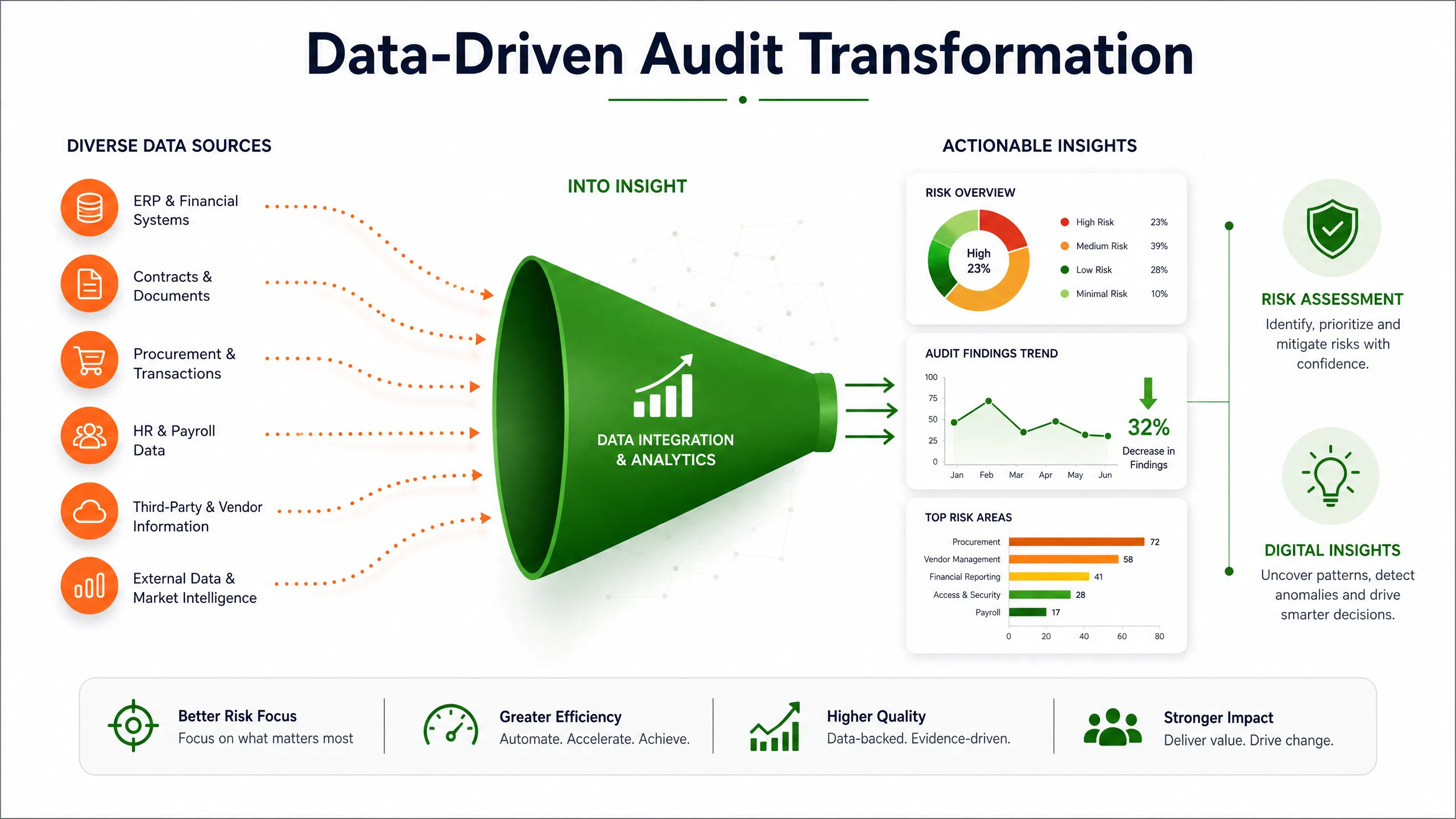
Digital transformation continues to reshape nearly every aspect of public administration, and auditing is no exception. Governments increasingly rely on integrated financial management systems, electronic procurement platforms, enterprise resource planning systems, and digital records. Because of these developments, auditors have access to unprecedented volumes of information that can improve audit quality when analyzed effectively.
Data-driven auditing allows professionals to identify anomalies, detect unusual spending patterns, monitor procurement activities, evaluate project performance, and assess financial trends far more efficiently than traditional sampling methods alone. During the Nairobi seminar, facilitators demonstrated how data analytics enhances audit planning by helping teams identify high-risk transactions before fieldwork begins.
Participants also discussed how automation reduces repetitive tasks, allowing auditors to focus on higher-value analytical work. Rather than spending excessive time verifying manual records, professionals can devote greater attention to interpreting findings, evaluating internal controls, and advising management. As technology evolves, auditors who understand analytics will become increasingly valuable to their organizations.
However, technology alone cannot replace professional judgment. Data may reveal unusual patterns, but experienced auditors must still interpret context, evaluate evidence, and determine appropriate recommendations. Leadership therefore involves combining technical tools with critical thinking, ethical reasoning, and organizational understanding.
Continuous professional development remains essential for keeping pace with emerging technologies. Courses covering digital skills, data analytics, and organizational transformation are increasingly important for public sector professionals seeking long-term career growth. Additional learning opportunities are available through Digital skills, which supports professionals adapting to today’s technology-driven workplace.
Leveraging Digital Audit Tools
Digital audit tools continue to expand the capabilities of audit teams by improving efficiency, consistency, and reporting quality. Cloud-based collaboration platforms, automated working papers, visualization dashboards, and artificial intelligence-assisted analytics now support many aspects of modern auditing. Although these technologies cannot replace human expertise, they significantly improve productivity when implemented appropriately.
Our seminar explored practical examples where digital dashboards enabled management to monitor implementation of audit recommendations in real time. Instead of waiting months for follow-up reviews, organizations could track corrective actions continuously, increasing accountability across departments. Participants also examined how visualization techniques help communicate complex findings more effectively to senior executives and oversight committees.
Successful implementation, however, depends on organizational readiness. Institutions must invest not only in software but also in staff training, cybersecurity, data governance, and change management. Leaders play a critical role in encouraging adoption while addressing employee concerns about new technologies.
Digital transformation should always align with organizational objectives rather than technology for its own sake. When implemented strategically, modern audit tools strengthen transparency, improve decision-making, and enhance public confidence in government institutions.
Common Challenges Facing Public Sector Auditors
Public sector auditors operate in increasingly complex environments where financial accountability, regulatory compliance, and performance expectations continue to expand. Although governments have strengthened governance frameworks over the years, auditors still encounter numerous operational and strategic challenges that can affect the quality and impact of their work. During our Nairobi seminar, participants openly discussed these realities, sharing practical experiences from ministries, county governments, regulatory agencies, donor-funded projects, and state corporations.
One of the strongest messages from the seminar was that today’s challenges require innovative leadership rather than traditional approaches. Leaders must anticipate emerging risks, develop resilient audit teams, and foster collaboration across departments. Likewise, organizations need to recognize that effective auditing is not merely a control function but a strategic investment that protects public resources, strengthens service delivery, and builds citizen confidence.
Participants agreed that while technology, regulations, and public expectations continue to evolve, the core principles of integrity, independence, professionalism, and continuous improvement remain constant. These values provide the foundation for navigating uncertainty while maintaining the credibility of public sector audit institutions.
Resource Constraints
Limited financial resources remain one of the most significant challenges facing many public audit institutions. Audit departments are often expected to oversee increasingly complex operations despite having relatively small teams and constrained operational budgets. As a result, auditors must carefully prioritize engagements based on organizational risks and available capacity.
Resource limitations also affect professional development. Some organizations struggle to provide regular training opportunities, making it difficult for auditors to keep pace with evolving standards, emerging technologies, and changing regulations. During the seminar, participants emphasized that investment in people should never be viewed as an optional expense. Well-trained auditors consistently deliver greater value by identifying risks earlier, improving recommendations, and supporting stronger governance.
Leadership becomes particularly important in resource-constrained environments. Effective managers maximize available talent, encourage knowledge sharing, and create collaborative teams capable of delivering high-quality work despite operational limitations. Continuous mentoring, structured coaching, and practical learning opportunities often compensate for limited financial resources while strengthening institutional capacity over time.
Emerging Fraud Risks
Fraud continues to evolve alongside technological advancement. Electronic procurement systems, online payment platforms, digital banking, and integrated financial management systems have improved efficiency but also introduced sophisticated fraud risks. Consequently, auditors must continually update their investigative skills and understanding of digital controls.
Our Nairobi seminar examined several emerging fraud scenarios involving procurement manipulation, cyber-enabled financial crime, identity fraud, payroll irregularities, and project implementation risks. Participants agreed that fraud prevention requires collaboration among auditors, finance teams, ICT professionals, legal departments, and organizational leadership.
Modern fraud detection increasingly relies on data analytics rather than manual transaction reviews. Continuous monitoring systems can identify unusual spending patterns, duplicate payments, suspicious vendor relationships, and abnormal financial activities before significant losses occur. Therefore, organizations that invest in analytics capabilities strengthen both prevention and early detection efforts.
Regulatory Changes
Public sector regulations continue to evolve as governments strengthen accountability, transparency, procurement oversight, and financial reporting requirements. New legislation often introduces additional compliance responsibilities while expanding the scope of audit activities. Because of this, auditors must remain informed about legal developments affecting their institutions.
Keeping pace with regulatory change requires more than reading new legislation. Professionals must understand how revised standards influence risk assessments, audit methodologies, reporting requirements, and stakeholder expectations. During the seminar, facilitators encouraged participants to establish continuous learning cultures where regulatory updates become part of routine professional development rather than occasional training events.
How Continuous Professional Development Makes the Difference
Continuous learning was one of the strongest recurring themes throughout our Nairobi seminar. Participants consistently recognized that the audit profession changes too rapidly for professionals to rely solely on qualifications earned years earlier. New technologies, revised auditing standards, evolving governance frameworks, and increasingly complex organizational structures require auditors to update their knowledge continuously throughout their careers.
Professional development also extends beyond technical auditing competencies. Leadership, strategic thinking, stakeholder engagement, communication, negotiation, project management, and digital literacy now play equally important roles in determining professional success. Consequently, organizations that invest in comprehensive capacity building create stronger audit functions capable of supporting broader institutional objectives.
One particularly valuable discussion focused on experiential learning. Classroom instruction provides theoretical foundations, but practical case studies, simulations, peer discussions, and mentoring relationships significantly enhance knowledge retention and application. Participants appreciated opportunities to learn directly from experienced practitioners who had successfully addressed similar organizational challenges.
Organizations seeking structured professional development programs across governance, finance, project management, monitoring and evaluation, procurement, leadership, and digital transformation can explore the extensive learning opportunities available at professional development courses.
Skills Every Modern Auditor Needs
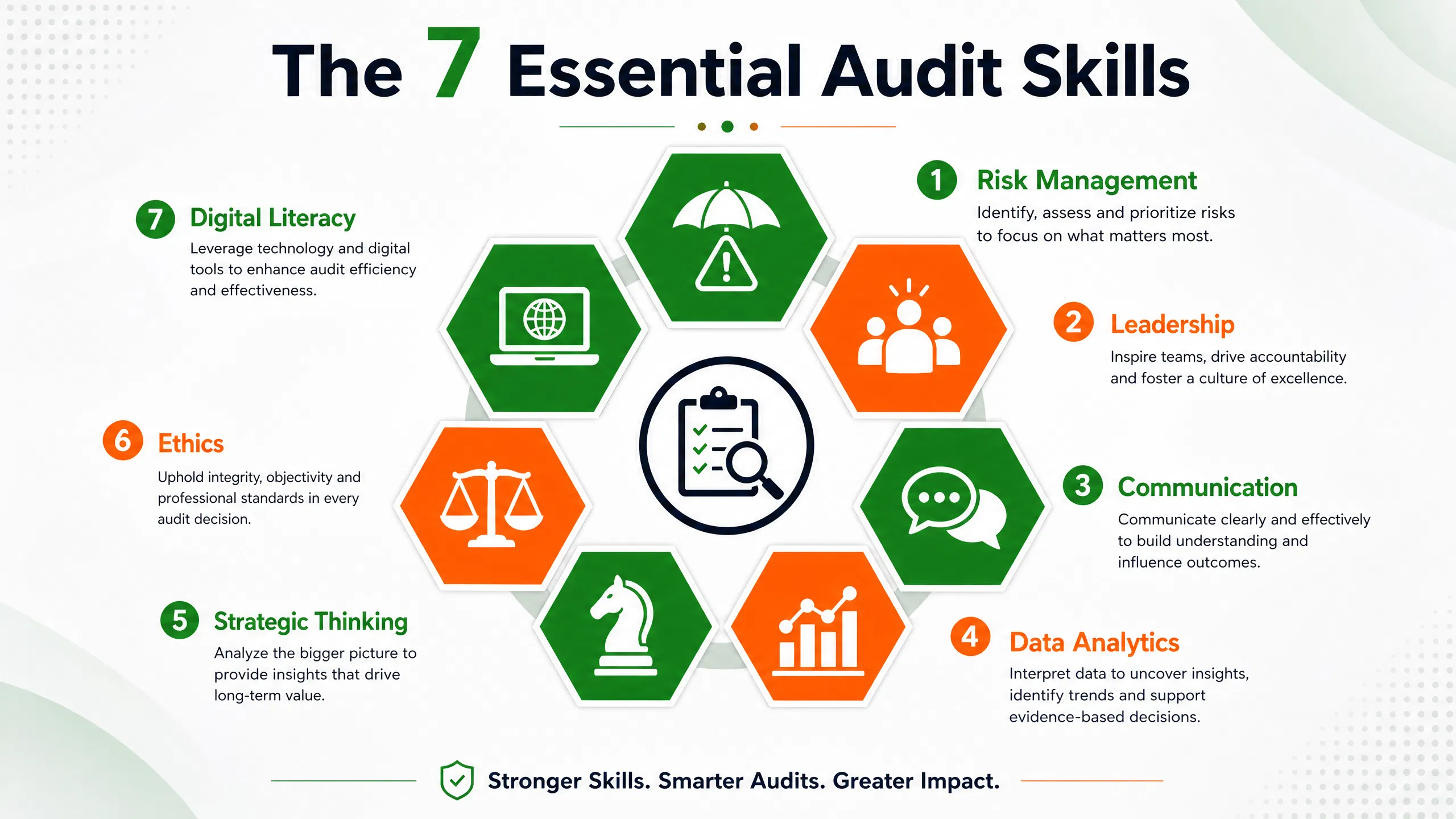
The seminar identified several competencies that distinguish high-performing audit professionals in today’s public sector environment.
| Skill | Why It Matters |
|---|---|
| Risk Management | Enables prioritization of high-impact audit engagements. |
| Leadership | Helps influence organizational improvement beyond compliance. |
| Communication | Improves implementation of audit recommendations. |
| Data Analytics | Supports evidence-based auditing and fraud detection. |
| Strategic Thinking | Aligns audit activities with institutional objectives. |
| Ethics & Integrity | Maintains public confidence and professional credibility. |
| Digital Literacy | Supports auditing within technology-driven organizations. |
Developing these competencies requires ongoing education rather than one-time training events. Instead, organizations should establish learning pathways that combine technical knowledge with leadership development and practical application.
Leadership Beyond Compliance
Leadership in public sector auditing extends far beyond ensuring compliance with regulations. The most effective leaders help organizations improve governance, optimize resource utilization, strengthen internal controls, and achieve strategic objectives. They communicate audit findings constructively, encourage organizational learning, and promote accountability at every level.
Participants repeatedly observed that audit recommendations achieve greater impact when presented collaboratively rather than confrontationally. Building trust with management encourages meaningful dialogue and increases the likelihood of successful implementation. Leadership therefore involves balancing independence with constructive engagement, ensuring that auditors remain objective while supporting organizational improvement.
Why Organizations Should Invest in Audit Leadership Training
Organizations that invest consistently in leadership development often experience measurable improvements in governance, operational efficiency, and institutional performance. Strong audit leaders build capable teams, foster innovation, strengthen stakeholder relationships, and create cultures of accountability that extend beyond individual audit engagements.
Leadership training also improves succession planning. As experienced professionals retire or transition into executive roles, organizations require prepared successors capable of maintaining audit quality and institutional knowledge. Structured development programs reduce leadership gaps while supporting long-term organizational resilience.
Another important benefit involves employee retention. Professionals are more likely to remain with organizations that invest in their growth and provide meaningful career development opportunities. Leadership programs signal organizational commitment to excellence while enhancing motivation, engagement, and performance.
For institutions seeking customized in-house programs tailored to organizational objectives, ForElite Institute provides corporate training solutions designed specifically for government agencies, public institutions, NGOs, and private organizations.
Conclusion
Public sector auditing is undergoing a significant transformation. As governments embrace digital technologies, strengthen governance frameworks, and respond to rising public expectations, auditors are expected to provide far more than traditional compliance assurance. They are becoming strategic partners who help organizations improve performance, manage risks proactively, strengthen accountability, and deliver greater value to citizens. The discussions during our recent Nairobi seminar clearly demonstrated that effective auditing begins with strong leadership, continuous learning, ethical decision-making, and a commitment to organizational excellence.
The seminar also highlighted that successful audit leaders combine technical competence with interpersonal skills. They communicate findings clearly, build productive relationships with stakeholders, encourage innovation within their teams, and support management in implementing sustainable improvements. At the same time, they remain independent, objective, and committed to protecting the public interest. These qualities enable auditors to move beyond identifying weaknesses and become catalysts for meaningful institutional change.
Technology will continue to reshape public financial management, introducing new opportunities alongside emerging risks. Therefore, auditors who invest in digital literacy, data analytics, cybersecurity awareness, and risk-based methodologies will be better positioned to serve their organizations effectively. Continuous professional development is no longer optional, it is an essential component of maintaining professional relevance in an increasingly dynamic environment.
Organizations also have a responsibility to invest in leadership development. Building capable audit teams requires structured training, mentorship, practical learning experiences, and exposure to evolving international best practices. Institutions that prioritize professional growth consistently strengthen governance, improve operational efficiency, and increase stakeholder confidence.
Whether you serve in a ministry, county government, regulatory authority, development agency, or state corporation, the lessons from our Nairobi seminar remain relevant. Leadership is not defined by job titles but by the ability to inspire positive change, uphold integrity, embrace innovation, and influence better decision-making. By cultivating these qualities, public sector auditors can continue strengthening accountability while contributing meaningfully to national development.
Professionals seeking practical, industry-focused learning opportunities can explore the wide range of governance, finance, procurement, leadership, monitoring and evaluation, digital transformation, and public sector management courses available at ForElite Institute. Organizations looking to strengthen their online visibility, digital communication, and technology adoption can also benefit from the expertise offered by Nexera Digital Solutions.
Frequently Asked Questions
1. Why is leadership important in public sector auditing?
Leadership enables auditors to influence organizational improvement beyond compliance. Strong leaders communicate recommendations effectively, build stakeholder trust, encourage accountability, and support successful implementation of audit findings.
2. What skills should modern public sector auditors develop?
Modern auditors should strengthen competencies in risk management, data analytics, digital technologies, communication, strategic thinking, ethical leadership, project management, and stakeholder engagement alongside traditional auditing skills.
3. How does technology improve public sector auditing?
Technology enhances audit efficiency through automation, continuous monitoring, data analytics, electronic working papers, fraud detection, visualization dashboards, and improved reporting, allowing auditors to focus more on strategic analysis.
4. Why is continuous professional development necessary for auditors?
Audit standards, regulations, technologies, and governance expectations continue to evolve. Continuous professional development ensures auditors remain technically competent, professionally relevant, and capable of addressing emerging organizational risks.
5. Where can public sector professionals access specialized audit and leadership training?
Professionals can explore specialized public sector, governance, leadership, procurement, finance, monitoring and evaluation, and digital skills programs through ForElite Training, which offers both customized corporate training and individual professional development courses.