
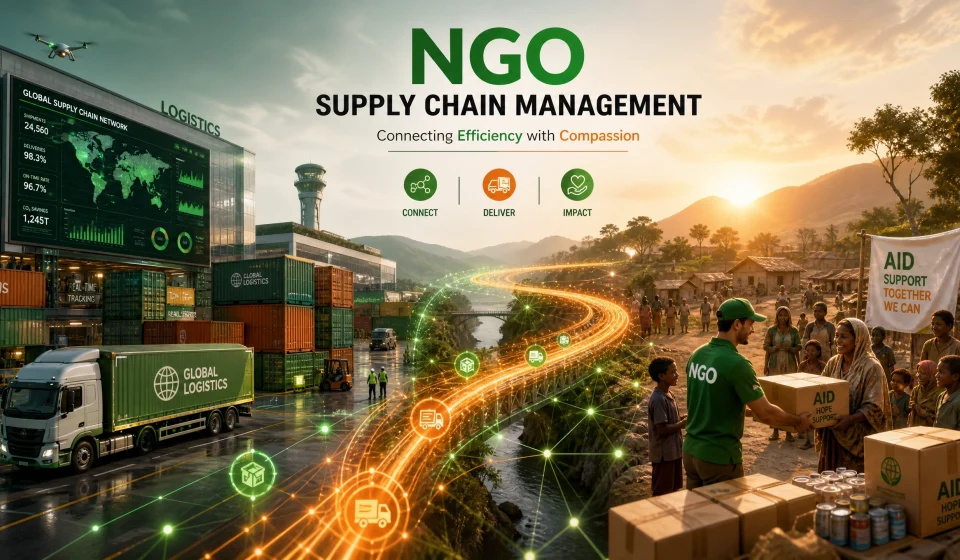

In today’s rapidly changing world, nonprofit organizations face a difficult balancing act. Donors expect transparency, beneficiaries need timely support, and funding is often unpredictable. Meanwhile, corporations have spent decades refining their supply chains to deliver products faster, cheaper, and more efficiently. The question is no longer whether NGOs should learn from business practices, it is how quickly they can adapt them.
A 2024 humanitarian logistics report by the World Economic Forum highlighted that disruptions caused by climate events, geopolitical tensions, and transportation bottlenecks are affecting both commercial and humanitarian supply chains. Organizations that use data-driven planning and resilient procurement systems are recovering faster from disruptions than those relying on traditional manual processes.
For NGO leaders, this presents a valuable opportunity. Corporate supply chain management is not just about moving goods from warehouses to customers. It is about forecasting demand, managing risks, optimizing resources, building partnerships, and measuring performance. These are exactly the challenges NGOs face when delivering food aid, medical supplies, educational materials, or emergency relief.
Organizations that want to strengthen these capabilities can benefit from professional training in logistics, procurement, and operations management. Programs such as Advanced Logistics and Transport Management Training , Procurement and Supply Chain Management Training , and Warehouse, Inventory and Stock Control Management Training provide practical skills that are increasingly relevant for nonprofit leaders as well as corporate professionals.
Why NGOs Need Supply Chain Thinking Today
Many NGOs still operate with fragmented systems. Procurement may be handled by one department, warehousing by another, and field distribution by a third. As a result, delays occur, costs increase, and accountability becomes harder to maintain. Corporate supply chains, on the other hand, are designed as integrated systems where information flows continuously from suppliers to end users.
Think about a humanitarian organization responding to floods in East Africa. If procurement teams do not know current warehouse stock levels, they may order unnecessary supplies. If transport schedules are not coordinated with field teams, trucks may arrive when communities are not ready to receive goods. These inefficiencies waste both time and donor funds.
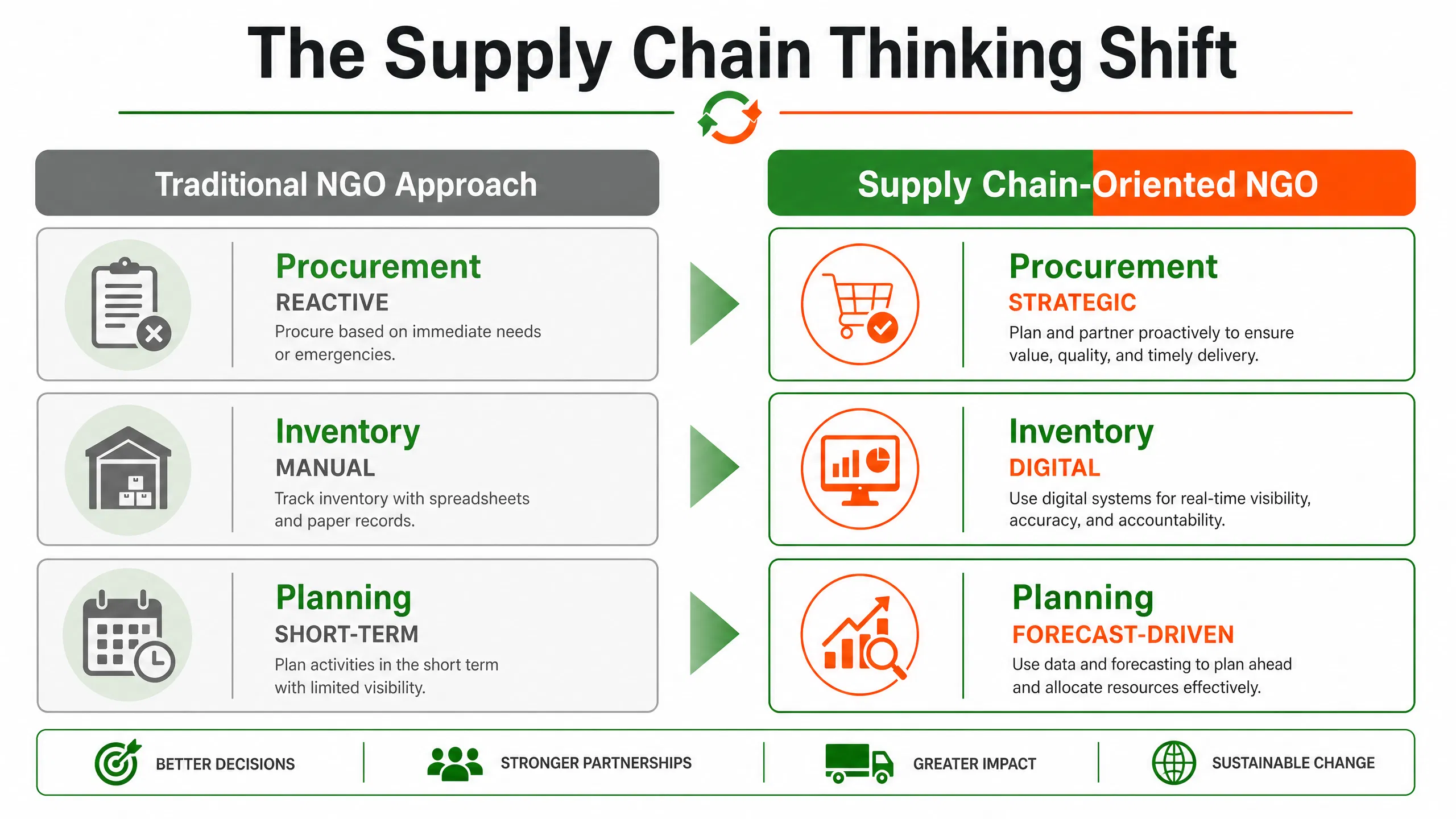
Consequently, adopting supply chain thinking helps NGOs:
-
Reduce operational costs
-
Improve response times
-
Increase transparency
-
Strengthen donor confidence
-
Reach beneficiaries more effectively
-
Prepare for future disruptions
This shift requires leadership commitment. NGO executives must view logistics not as a support function, but as a strategic capability that directly affects program impact.
Understanding the Corporate Supply Chain Advantage
What Makes Corporate Supply Chains Efficient?
Corporate supply chains are built around a simple principle: deliver the right product, to the right place, at the right time, and at the lowest possible cost. Companies achieve this through standardized processes, performance metrics, supplier collaboration, and continuous improvement.
For example, global retailers track inventory in real time across thousands of locations. Manufacturers forecast demand months in advance using historical data and market trends. Transportation companies optimize routes to reduce fuel consumption and delivery times.
NGOs can apply the same principles. Instead of forecasting consumer demand, they can forecast humanitarian needs. Instead of optimizing retail deliveries, they can optimize distribution to remote communities.
The Role of Technology and Data
Modern corporations rely heavily on digital tools. Enterprise resource planning systems, inventory management software, GPS tracking, and analytics dashboards provide managers with instant visibility into operations.
NGOs are increasingly adopting similar technologies, but many still rely on spreadsheets and manual reporting. Therefore, investing in digital systems can dramatically improve coordination and accountability.
For organizations seeking to modernize their operations, Supply Chain Management and Logistics Training offers practical guidance on integrating technology, procurement, warehousing, and transportation into a unified operational framework.
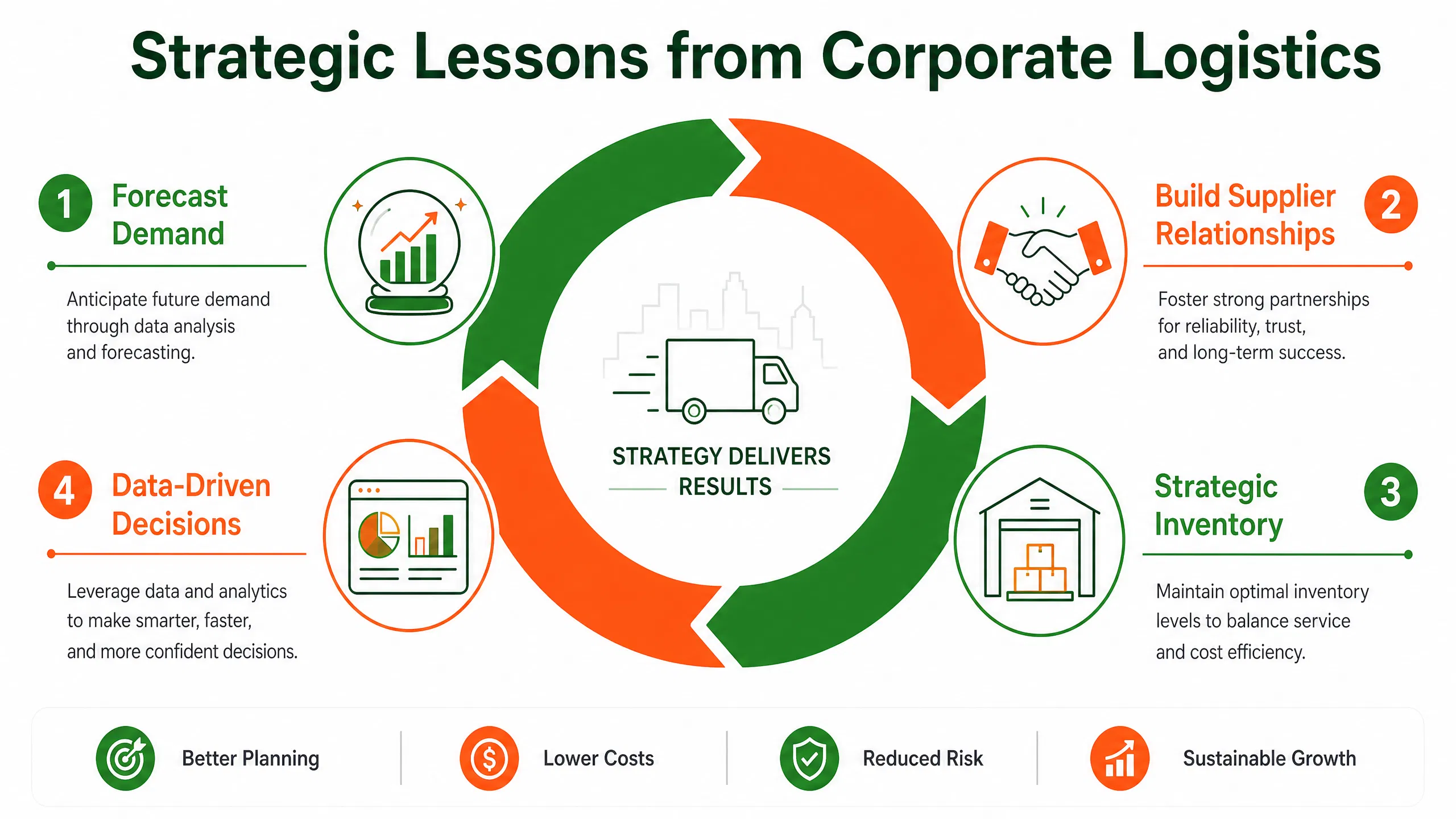
Lesson 1: Forecast Demand Before Crisis Strikes
Predictive Planning in Humanitarian Operations
One of the biggest lessons from corporate supply chains is the importance of forecasting. Businesses do not wait for customers to place orders before preparing inventory. They analyze trends, seasonal patterns, and market signals to anticipate demand.
NGOs can do the same. For instance, drought-prone regions often experience predictable food shortages. By analyzing rainfall data, population movements, and historical response patterns, organizations can pre-position supplies before a crisis escalates.
This proactive approach offers several advantages:
-
Lower emergency procurement costs
-
Faster response times
-
Reduced transportation bottlenecks
-
Better coordination with local authorities
-
Improved beneficiary outcomes
Imagine trying to buy thousands of tents after a major flood has already occurred. Prices rise, suppliers become overwhelmed, and delivery times increase. By contrast, pre-positioned inventory allows immediate distribution when communities need help most.
Effective forecasting also improves donor relations. Donors are more likely to support organizations that demonstrate strategic planning rather than reactive crisis management.
Lesson 2: Build Strong Supplier Relationships
From One-Time Purchases to Strategic Partnerships
Many NGOs treat procurement as a series of isolated transactions. Corporate supply chains take a different approach. They build long-term relationships with reliable suppliers, negotiate framework agreements, and collaborate on quality improvements.
For NGOs, strategic supplier relationships can provide:
-
Priority access during emergencies
-
Better pricing through long-term contracts
-
Consistent product quality
-
Faster delivery times
-
Reduced administrative workload
Consider a health-focused NGO that regularly purchases medical supplies. Instead of issuing a new tender for every shipment, it could establish framework agreements with pre-qualified suppliers. During an outbreak, orders could be placed immediately without lengthy procurement procedures.
This approach does not eliminate transparency or competition. Rather, it creates a structured system where suppliers are evaluated continuously based on performance, reliability, and compliance.
Professionals responsible for procurement and supplier management can strengthen these capabilities through Procurement and Supply Chain Management Training , which covers strategic sourcing, contract management, and supplier relationship management.
Lesson 3: Treat Inventory as a Strategic Asset
Avoiding Overstocking and Stockouts
Inventory is often misunderstood in the nonprofit sector. Some organizations keep excessive stock “just in case,” while others operate with dangerously low reserves. Corporate supply chains aim for a balanced approach that minimizes both overstocking and stockouts.
Excess inventory ties up donor funds, increases storage costs, and risks expiration or damage. Insufficient inventory leads to program delays and unmet beneficiary needs.
A strategic inventory system should answer three questions:
-
What items are critical for operations?
-
How much stock is needed?
-
When should replenishment occur?
For example, emergency response items such as water purification tablets, tarpaulins, and medical kits may require higher safety stock levels than less critical supplies. Accurate inventory records are essential for making these decisions.
Modern warehouse management practices include barcode tracking, cycle counting, and automated reorder alerts. These techniques reduce errors and improve visibility across multiple storage locations.
Organizations looking to improve warehouse efficiency can benefit from Warehouse, Inventory and Stock Control Management Training , which focuses on inventory optimization, stock control procedures, and warehouse performance management.
Lesson 4: Use Data for Faster Decisions
Dashboards, KPIs, and Real-Time Visibility
Corporate executives rarely make major decisions based on intuition alone. They rely on key performance indicators (KPIs) such as inventory turnover, delivery accuracy, transportation costs, and supplier performance.
NGO leaders can adopt similar metrics. Useful indicators might include:
-
Average procurement lead time
-
Percentage of on-time deliveries
-
Stockout frequency
-
Cost per beneficiary served
-
Warehouse utilization rate
-
Emergency response time
Real-time dashboards allow managers to identify problems before they become crises. If a shipment is delayed, corrective action can be taken immediately. If stock levels fall below minimum thresholds, replenishment orders can be triggered automatically.
Data-driven decision-making also strengthens accountability. Donors increasingly expect evidence of efficiency and impact. Clear operational metrics demonstrate that resources are being managed responsibly.
Training in logistics analytics and operational performance measurement is becoming increasingly important for NGO managers. Advanced Logistics and Transport Management Training includes practical approaches to transportation planning, performance monitoring, and logistics optimization that are directly applicable to humanitarian operations.
Lesson 5: Strengthen Last-Mile Delivery
Reaching Remote Communities Efficiently
The “last mile” is often the most difficult and expensive part of humanitarian logistics. Roads may be damaged, communities may be geographically dispersed, and security conditions may be uncertain.
Corporate companies invest heavily in last-mile optimization because it directly affects customer satisfaction. NGOs should do the same because it directly affects beneficiary outcomes.
Effective last-mile strategies include:
-
Route optimization
-
Local distribution partnerships
-
Community-based delivery networks
-
Mobile tracking systems
-
Flexible transportation options
For example, partnering with local transport providers can improve access to remote areas while supporting local economies. Community volunteers can help verify beneficiary lists and coordinate distribution schedules.
The key lesson is that delivery does not end when supplies leave the warehouse. Success is measured by whether the right assistance reaches the right people in a timely and dignified manner.
Lesson 6: Build Resilience, Not Just Efficiency
Preparing for Disruptions and Emergencies
An efficient supply chain is valuable, but a resilient supply chain is essential. NGOs operate in environments where uncertainty is the norm rather than the exception. Natural disasters, political instability, disease outbreaks, inflation, and transportation disruptions can quickly derail carefully planned operations. Therefore, modern NGO leaders should adopt resilience strategies that leading corporations have used for years to maintain continuity during crises.
Corporate organizations prepare for disruptions through scenario planning, supplier diversification, contingency inventories, and business continuity plans. NGOs can implement similar practices by identifying high-risk areas within their operations and developing alternative solutions before emergencies occur. For example, instead of relying on a single supplier for emergency medical kits, an NGO could establish agreements with multiple vendors located in different regions. Similarly, transportation plans should include backup routes and alternative logistics providers in case primary routes become inaccessible.
Risk assessments should also become a regular part of operational planning rather than an annual exercise. Leaders need to ask critical questions: What happens if a major supplier fails? How quickly can emergency supplies be sourced locally? Which communities are most vulnerable to transportation delays? Answering these questions in advance significantly improves organizational preparedness.
Developing resilient logistics systems also requires collaboration across departments. Finance, procurement, operations, and program management teams should work together when evaluating risks and preparing mitigation strategies. This integrated approach ensures that operational decisions support both humanitarian objectives and financial sustainability. Organizations interested in strengthening resilience can also benefit from Disaster Risk Reduction and Emergency Management Training offered by Forelite Training, which equips professionals with practical approaches to emergency planning, disaster preparedness, and coordinated response.
Lesson 7: Invest in People and Skills
Training as a Long-Term Competitive Advantage
Technology, systems, and infrastructure are important, but people remain the driving force behind every successful supply chain. Corporate organizations invest heavily in employee development because they understand that skilled professionals make better decisions, solve problems faster, and adapt more effectively to change. NGOs should adopt the same mindset if they want to build sustainable operational excellence.
Many nonprofit organizations promote talented program officers into leadership positions without providing formal training in procurement, logistics, project management, or operational strategy. While these professionals often possess excellent technical expertise, they may lack the management skills required to oversee complex supply chains. As a result, operational inefficiencies can persist despite the team’s commitment and experience.
Continuous professional development helps bridge this gap. Training programs provide practical knowledge in areas such as strategic procurement, inventory optimization, transport planning, supplier relationship management, and performance measurement. Equally important, they expose leaders to international best practices that can be adapted to local humanitarian contexts.
Leadership development should also extend beyond technical competencies. Communication, negotiation, stakeholder engagement, and change management are increasingly important as NGOs collaborate with governments, private sector organizations, and international donors. Managers who understand how to build partnerships and lead multidisciplinary teams are better positioned to deliver successful humanitarian programs.
Organizations seeking to strengthen leadership capabilities may consider Project Management Professional (PMP) Training, Monitoring and Evaluation Training, and Leadership and Management Development Courses available through Forelite Training. These programs complement supply chain knowledge by enhancing decision-making, accountability, and organizational effectiveness.
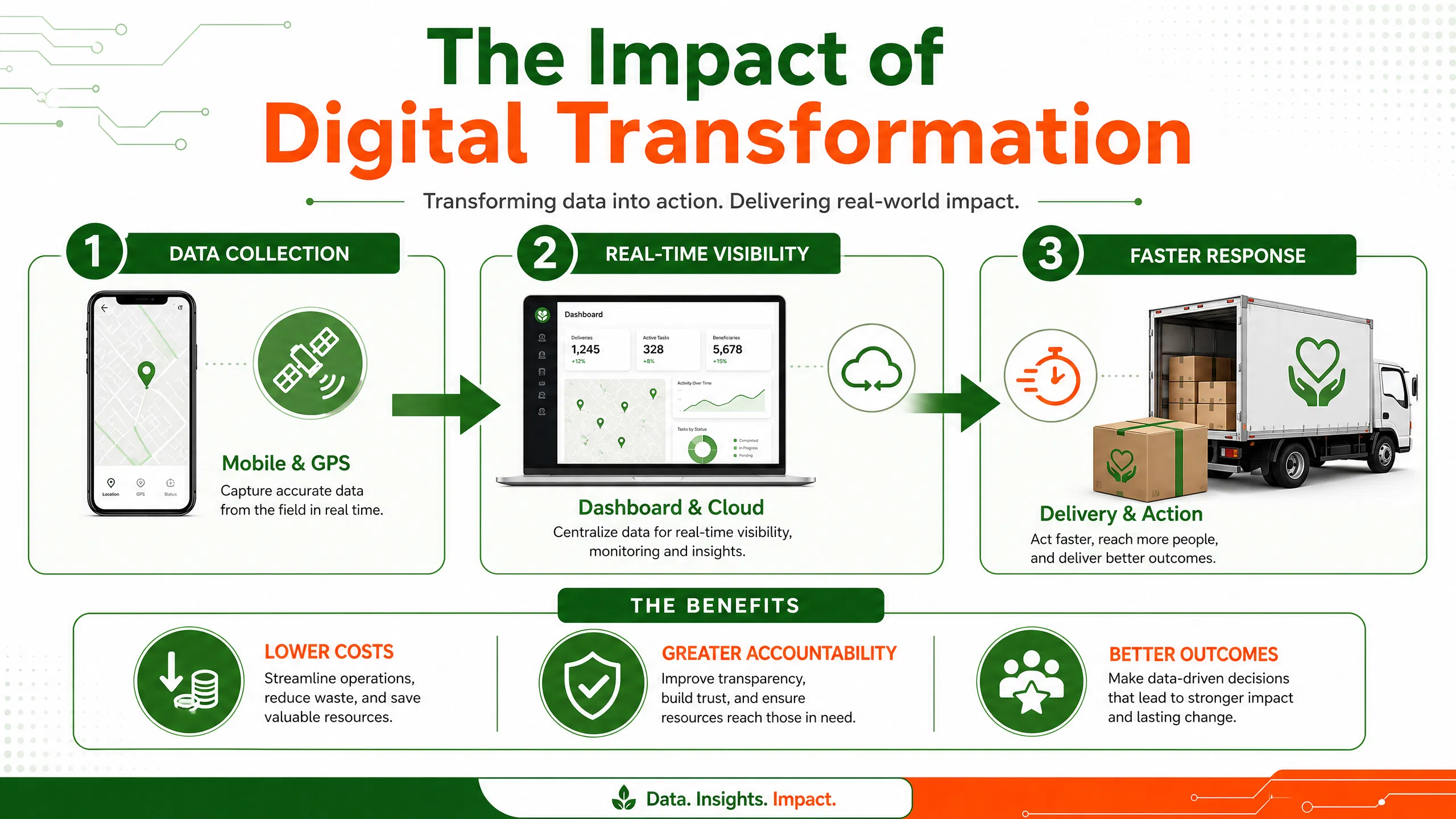
Lesson 8: Embrace Digital Transformation
How Digital Tools Improve NGO Operations
Digital transformation is reshaping every sector, including humanitarian operations. Corporate organizations have demonstrated that digital technologies not only improve efficiency but also enhance transparency, customer experience, and organizational agility. NGOs can achieve similar benefits by embracing modern digital solutions that streamline operations and improve data visibility.
Cloud-based procurement systems, warehouse management software, electronic inventory tracking, GPS-enabled transportation monitoring, and mobile data collection tools enable organizations to make informed decisions in real time. Instead of waiting weeks for field reports, managers can monitor stock movements, shipment progress, and distribution activities through centralized dashboards.
Artificial intelligence and predictive analytics are also becoming increasingly valuable in humanitarian logistics. These technologies help organizations forecast demand, identify supply chain risks, optimize transportation routes, and allocate resources more effectively. Although advanced analytics may seem beyond the reach of smaller NGOs, affordable cloud-based platforms have made these capabilities accessible to organizations of all sizes.
Digital transformation is not simply about purchasing software. It requires strategic planning, staff training, process redesign, and continuous improvement. Successful implementation depends on aligning technology with organizational goals rather than adopting tools for their own sake.
Organizations seeking support in digital transformation, website development, workflow automation, and technology consulting can partner with Nexera Digital Solutions, whose expertise helps organizations modernize operations and improve digital efficiency while supporting long-term organizational growth.
Comparing Traditional NGO Operations and Supply Chain-Oriented NGOs
| Area | Traditional NGO Approach | Supply Chain-Oriented NGO |
|---|---|---|
| Procurement | Reactive purchasing | Strategic sourcing and supplier partnerships |
| Inventory | Manual tracking | Digital inventory management |
| Planning | Short-term response | Forecast-driven planning |
| Decision Making | Experience-based | Data-driven analytics |
| Risk Management | Reactive | Proactive contingency planning |
| Performance Measurement | Limited KPIs | Comprehensive operational dashboards |
| Technology | Spreadsheets | Integrated digital platforms |
| Collaboration | Departmental silos | Cross-functional coordination |
| Donor Reporting | Periodic updates | Real-time operational transparency |
| Organizational Learning | Informal | Continuous professional development |
This comparison illustrates that modern supply chain management is not merely about logistics. It represents a holistic management philosophy that emphasizes planning, visibility, collaboration, accountability, and continuous improvement. NGOs adopting these principles position themselves to achieve greater operational efficiency while delivering more meaningful impact to the communities they serve.
The Future of NGO Leadership
The future of nonprofit leadership will increasingly resemble the best aspects of corporate leadership without compromising humanitarian values. Successful NGO executives will be expected to combine compassion with analytical thinking, operational excellence with community engagement, and strategic planning with rapid response capabilities.
Emerging trends such as climate change, urbanization, digital transformation, artificial intelligence, and evolving donor expectations will continue to reshape humanitarian operations. Organizations that invest in supply chain capabilities today will be better equipped to adapt to tomorrow’s challenges. Likewise, partnerships between NGOs, governments, academic institutions, and private companies will become increasingly important for addressing complex global problems.
Modern leaders should also foster a culture of continuous improvement. Corporate organizations routinely evaluate performance, identify lessons learned, and refine operational processes. NGOs can adopt similar practices by conducting after-action reviews, collecting beneficiary feedback, measuring operational performance, and investing in innovation. These practices strengthen accountability while ensuring that organizations continue delivering value to both donors and beneficiaries.
Ultimately, effective NGO leadership is no longer defined solely by passion for a cause. It is equally defined by the ability to manage resources efficiently, build resilient systems, leverage technology, and empower people through continuous learning.
Conclusion
Corporate supply chain management offers valuable lessons that extend far beyond the private sector. Forecasting demand, strengthening supplier relationships, optimizing inventory, embracing digital technologies, building resilience, and investing in people are not exclusively business practices, they are essential leadership competencies for modern NGOs.
As humanitarian challenges become increasingly complex, nonprofit organizations must move beyond reactive operations toward strategic, data-driven management. Supply chains should be viewed as critical enablers of organizational impact rather than administrative functions operating behind the scenes. Every improvement in procurement efficiency, transportation planning, inventory management, or performance measurement translates into faster assistance, lower costs, greater accountability, and better outcomes for the communities NGOs serve.
Professional development plays a central role in this transformation. By equipping leaders with modern supply chain knowledge and practical management skills, organizations can improve operational performance while strengthening donor confidence and expanding their long-term impact. The most successful NGOs of the future will not simply deliver aid efficiently, they will build resilient, intelligent, and adaptive systems capable of responding effectively to an increasingly uncertain world.
Frequently Asked Questions
1. Why should NGO leaders study corporate supply chain management?
Corporate supply chain management provides proven strategies for improving efficiency, reducing operational costs, strengthening accountability, and enhancing service delivery. These principles can significantly improve humanitarian operations without compromising nonprofit values.
2. How does digital transformation improve NGO operations?
Digital technologies improve visibility across procurement, inventory, transportation, and reporting processes. They enable faster decision-making, better resource allocation, improved transparency, and stronger donor reporting.
3. What is the biggest supply chain challenge facing NGOs today?
Many NGOs struggle with fragmented systems, limited real-time data, unpredictable funding, and increasing operational risks caused by climate change, conflicts, and global supply chain disruptions.
4. Which professional skills are most valuable for modern NGO leaders?
Supply chain management, procurement, logistics planning, project management, monitoring and evaluation, digital transformation, leadership, and risk management are among the most valuable competencies.
5. How can NGOs begin adopting corporate supply chain practices?
Organizations should start by assessing current operations, investing in staff training, implementing performance metrics, strengthening supplier relationships, adopting digital tools, and developing long-term operational strategies focused on resilience and continuous improvement.