

Epidemiology and Disease Surveillance: The Foundation of Modern Public Health

Understanding Epidemiology
What Is Epidemiology?
Epidemiology is often described as the backbone of public health because it helps scientists and healthcare professionals understand how diseases spread, why they occur, and who is most at risk. Rather than focusing on treating one patient at a time, epidemiologists study entire populations to identify patterns of illness and develop strategies that prevent future outbreaks. This field combines biology, medicine, statistics, environmental science, and social sciences to answer one of humanity’s oldest questions: why do diseases occur, and how can we stop them?
Today, epidemiology has become even more important because infectious diseases can spread across continents within days due to international travel and global trade. The COVID-19 pandemic clearly demonstrated how interconnected the world has become and why rapid disease detection is essential. According to the World Health Organization (WHO), investments in surveillance and preparedness continue to improve protection against health emergencies worldwide, although significant gaps remain in many countries.
The discipline extends far beyond infectious diseases. Epidemiologists investigate chronic illnesses such as cancer, diabetes, cardiovascular diseases, mental health disorders, occupational illnesses, environmental exposures, and injuries. Consequently, governments rely heavily on epidemiological evidence when designing vaccination campaigns, creating health policies, allocating healthcare budgets, and preparing emergency response plans.
Healthcare organizations seeking to strengthen these capabilities can benefit from specialized professional development. Programs available through ForElite Traininng Institute, including public health and data analysis courses, help professionals develop practical epidemiological skills that are increasingly demanded worldwide.
Why Epidemiology Matters Today
Modern health threats are becoming increasingly complex. Climate change, urbanization, antimicrobial resistance, emerging zoonotic diseases, and population growth continue to create new public health challenges. Because of this, epidemiology has evolved from simply counting disease cases into a sophisticated science supported by advanced analytics, artificial intelligence, satellite imagery, genomic sequencing, and real-time digital reporting.
The WHO’s World Health Statistics 2025 report highlights both encouraging progress and persistent challenges. Millions more people now benefit from stronger protection against health emergencies compared to previous years, yet many countries remain off track in achieving the health-related Sustainable Development Goals by 2030.
Equally important, epidemiological research informs preventive medicine. Instead of waiting until hospitals become overwhelmed, public health officials can identify risk factors early and intervene before diseases spread widely. This preventive approach saves lives while significantly reducing healthcare costs.
Understanding Disease Surveillance
Definition and Objectives
Disease surveillance is the continuous and systematic collection, analysis, interpretation, and dissemination of health-related information for public health action. Simply put, surveillance acts as an early warning system that enables governments and health agencies to detect unusual disease patterns before they become widespread epidemics.
An effective surveillance system serves several critical objectives. It identifies outbreaks at the earliest possible stage, monitors disease trends over time, evaluates prevention programs, guides public health interventions, supports research, and informs policy decisions. Without surveillance, outbreaks may remain undetected until hospitals begin reporting unusually high numbers of patients, which is often too late to prevent widespread transmission.
Modern surveillance relies on multiple information sources, including hospitals, clinics, diagnostic laboratories, pharmacies, schools, veterinary services, environmental monitoring stations, and even digital platforms. Increasingly, artificial intelligence is being integrated into surveillance systems to detect subtle disease patterns that humans might overlook.
Kenya provides a strong example of surveillance improvements. WHO-supported initiatives strengthened Integrated Disease Surveillance and Response (IDSR), trained thousands of frontline health workers, expanded environmental surveillance, and improved laboratory confirmation systems for priority diseases.
Professionals interested in strengthening surveillance competencies can explore specialized health and monitoring programs offered by ForElite Training Institute to gain practical experience with surveillance methodologies and public health reporting systems.
Types of Disease Surveillance
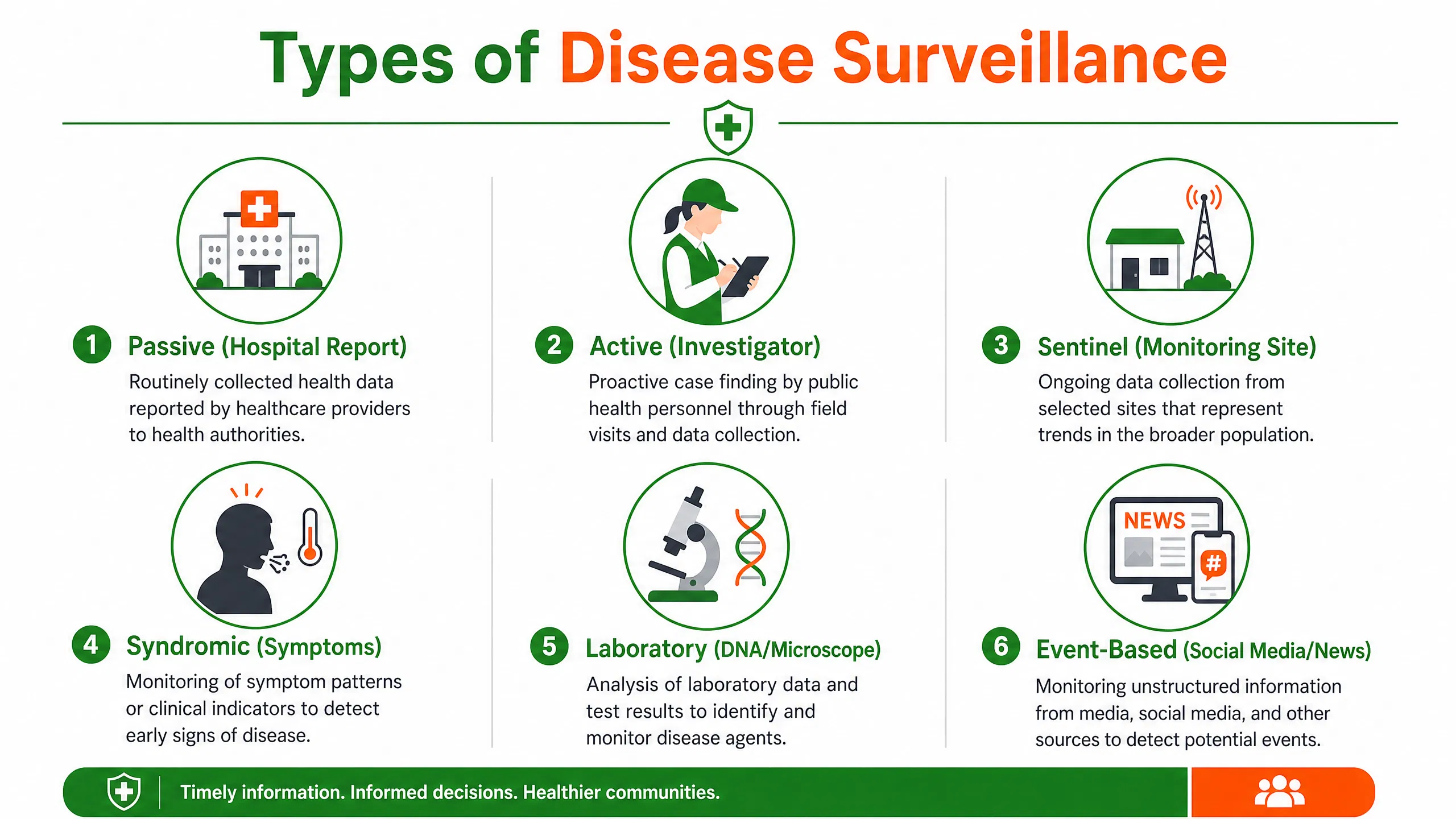
Public health agencies employ several complementary surveillance approaches because no single system captures every health event effectively.
| Surveillance Type | Primary Purpose | Example |
|---|---|---|
| Passive Surveillance | Routine reporting | Hospital notifications |
| Active Surveillance | Active case searching | Outbreak investigations |
| Sentinel Surveillance | Selected reporting sites | Influenza monitoring |
| Syndromic Surveillance | Symptom monitoring | Emergency department visits |
| Laboratory Surveillance | Confirm diagnosis | Genomic sequencing |
| Event-Based Surveillance | Media and digital monitoring | Social media outbreak alerts |
Passive surveillance remains the most widely used because healthcare facilities routinely report notifiable diseases. Meanwhile, active surveillance becomes essential during outbreaks when health authorities actively search for additional cases.
Digital technologies now complement traditional surveillance methods. Artificial intelligence, machine learning, geographic information systems (GIS), electronic medical records, and mobile applications significantly improve reporting speed and analytical accuracy. These innovations enable health authorities to visualize disease hotspots almost in real time and coordinate rapid response efforts.
Core Components of Epidemiology
Person, Place, and Time
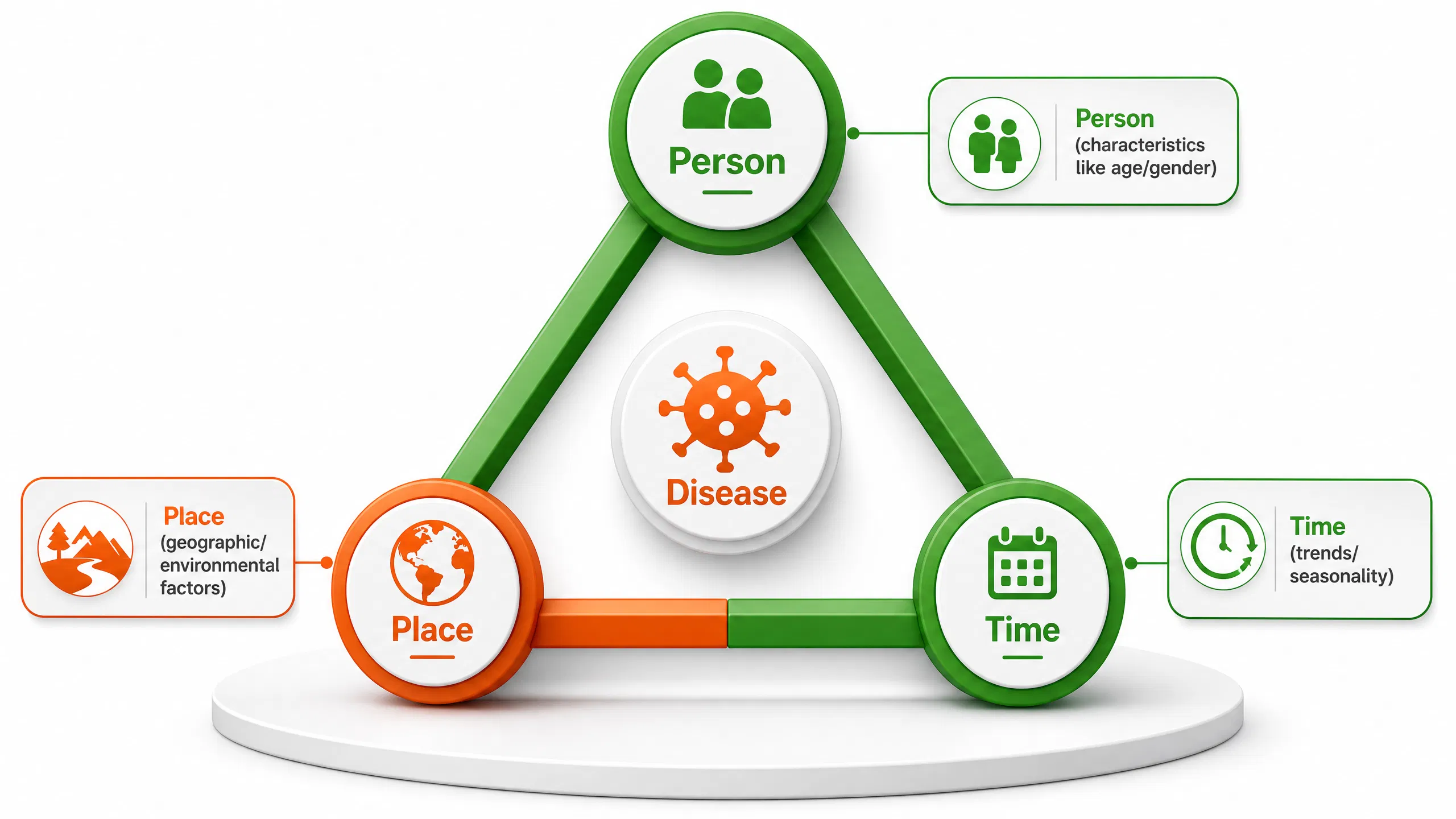
Every epidemiological investigation begins with three fundamental questions: Who is getting sick? Where are they becoming ill? When did the illness occur? These questions form the classic epidemiological triangle of person, place, and time, which remains one of the most powerful frameworks for understanding disease distribution.
The person component examines characteristics such as age, gender, occupation, socioeconomic status, genetics, behaviors, vaccination history, and underlying health conditions. These variables help identify vulnerable populations and guide targeted interventions. Similarly, the place component investigates geographic patterns, environmental exposures, population density, sanitation, healthcare access, and climate conditions that may influence disease transmission.
The time component focuses on identifying trends, seasonality, incubation periods, and outbreak timelines. For example, influenza typically peaks during specific seasons, while foodborne illnesses may cluster around particular events or locations. By analyzing these temporal patterns, epidemiologists can forecast future outbreaks and recommend preventive measures before transmission accelerates.
The integration of digital mapping technologies and Geographic Information Systems has dramatically enhanced spatial epidemiology. Professionals interested in GIS applications for health surveillance may benefit from specialized GIS and spatial analysis courses, where practical mapping techniques are taught for real-world public health applications.
Epidemiological Study Designs
Observational Studies
Epidemiological investigations rely heavily on study designs that help researchers understand patterns, causes, and effects of diseases without interfering with natural conditions. Observational studies are among the most widely used because they allow scientists to examine real-world health outcomes while maintaining ethical standards. Essentially, these studies focus on what is already happening in populations rather than manipulating variables.
There are three major types of observational studies: cohort studies, case-control studies, and cross-sectional studies. Each plays a distinct role in understanding disease dynamics. Cohort studies follow groups of people over time to determine how different exposures affect disease outcomes. Case-control studies, on the other hand, start with individuals who already have a disease and compare them with those who do not to identify potential risk factors. Cross-sectional studies provide a snapshot of health conditions at a specific point in time, offering valuable insights into prevalence and distribution.
Additionally, observational studies are especially useful in epidemiology because randomized controlled trials are often impractical or unethical when studying harmful exposures. For instance, it would be unethical to expose people intentionally to toxic chemicals or infectious pathogens. Therefore, observational methods become the safest and most effective alternative.
In modern practice, data for observational studies is increasingly drawn from electronic health records, insurance databases, mobile health applications, and population registries. This shift toward digital health data has significantly improved accuracy, speed, and scale of epidemiological research.
Professionals looking to develop expertise in research methods and data interpretation can benefit from structured training programs where applied epidemiology and statistical analysis are key components of public health education.
Experimental Studies
Unlike observational research, experimental studies involve deliberate intervention by researchers to test hypotheses under controlled conditions. Typically, these include randomized controlled trials (RCTs), which are considered the gold standard for evaluating medical treatments, vaccines, and public health interventions.
In experimental studies, participants are randomly assigned to either an intervention group or a control group. This randomization helps eliminate bias and ensures that differences in outcomes can be attributed to the intervention itself rather than external factors. For example, vaccine trials test safety and effectiveness by comparing vaccinated individuals with those receiving a placebo.
However, experimental studies are not limited to clinical settings. They are also widely used in public health to evaluate health education campaigns, behavioral interventions, sanitation programs, and community health strategies. Because these studies are highly structured, they provide strong evidence for decision-making in healthcare policy.
Nonetheless, experimental studies can be expensive, time-consuming, and sometimes ethically complex. This is why they are often complemented by observational research to provide a more complete understanding of health issues.
Disease Surveillance Systems
Traditional Surveillance
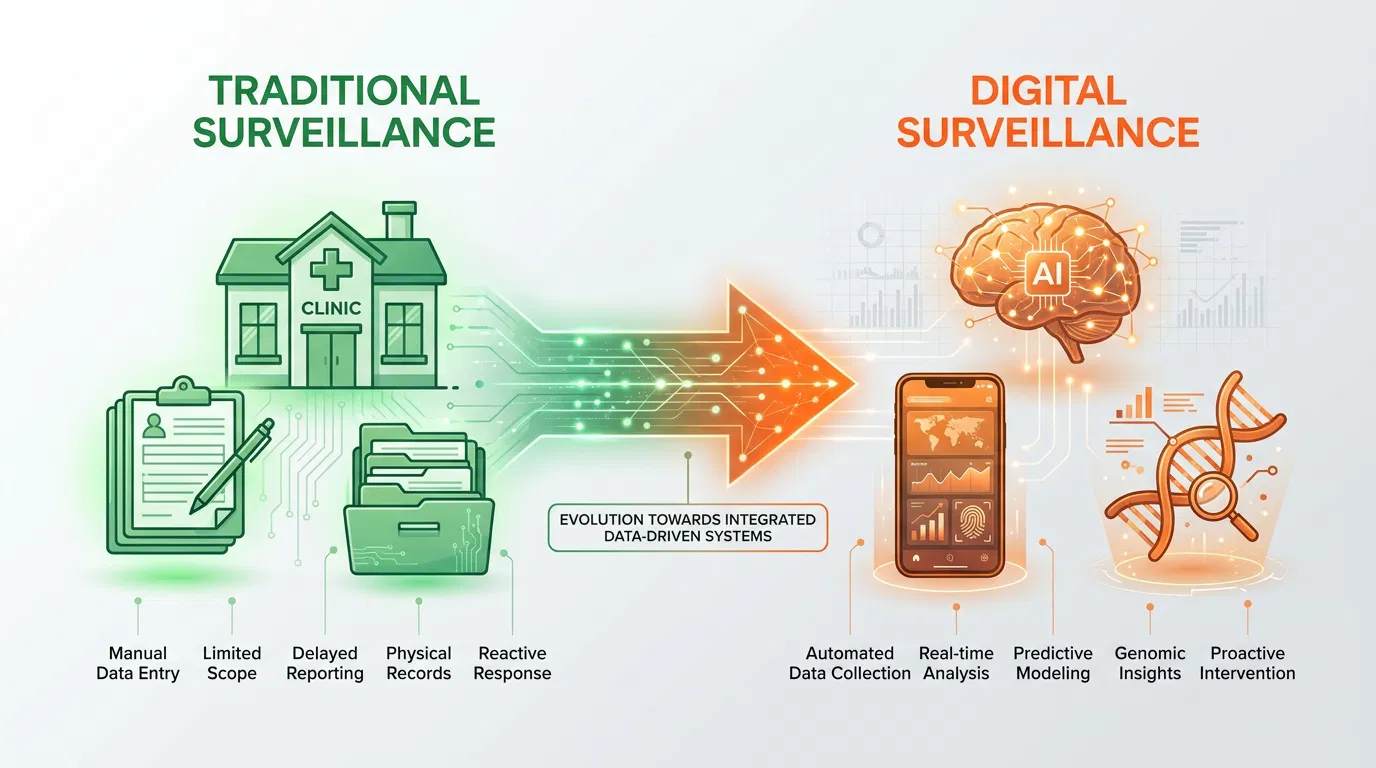
Traditional disease surveillance systems rely on structured reporting mechanisms from healthcare facilities, laboratories, and public health institutions. Typically, clinicians identify cases of notifiable diseases and report them to local health authorities, who then aggregate and analyze the data at regional or national levels.
These systems have been the backbone of public health for decades and remain essential in many countries. For instance, diseases such as tuberculosis, malaria, cholera, and measles are tracked through routine reporting systems that help governments monitor disease burden and respond to outbreaks.
However, traditional systems often face limitations such as reporting delays, underreporting, incomplete data, and lack of real-time analysis. These challenges can hinder rapid response during outbreaks, especially in resource-limited settings.
Despite these limitations, traditional surveillance remains crucial because it provides standardized, validated, and legally mandated health data. In many regions, it also serves as the foundation upon which modern digital surveillance systems are built.
Digital and AI-Powered Surveillance
In recent years, disease surveillance has undergone a major transformation due to advances in digital technology and artificial intelligence. Digital surveillance systems collect data from electronic health records, mobile applications, laboratory networks, wearable devices, and even social media platforms to detect early signals of disease outbreaks.
Artificial intelligence plays a critical role in analyzing massive datasets to identify unusual patterns that may indicate emerging health threats. For example, machine learning algorithms can detect spikes in flu-like symptoms reported in emergency departments or identify unusual clusters of gastrointestinal illness in specific regions.
Geographic Information Systems (GIS) further enhance surveillance by mapping disease spread in real time. This allows health authorities to visualize hotspots and allocate resources more effectively.
Additionally, event-based surveillance systems monitor news reports, online forums, and social media posts to detect early warnings of disease outbreaks. While these sources are less structured, they often provide faster signals than traditional systems.
Digital transformation in surveillance is also supported by organizations offering data-driven training and technology integration services, including solutions provided by Nexera Digital Solutions, which focus on improving digital health infrastructure and analytics capabilities.
Importance of Disease Surveillance
Early Outbreak Detection
One of the most critical roles of disease surveillance is the early detection of outbreaks before they escalate into large-scale public health emergencies. Essentially, surveillance acts as the eyes and ears of the healthcare system, continuously scanning for unusual patterns in disease occurrence.
Early detection allows health authorities to implement containment measures such as vaccination campaigns, quarantine protocols, travel advisories, and public awareness campaigns. For example, during influenza seasons, surveillance data helps determine when vaccines should be administered and which strains are most prevalent.
Without effective surveillance systems, outbreaks may spread unnoticed until hospitals become overwhelmed. This delay can lead to higher mortality rates, economic disruption, and widespread panic.
Policy Development and Resource Allocation
Disease surveillance also plays a crucial role in shaping health policies and guiding resource allocation. Governments rely on surveillance data to determine where to invest in healthcare infrastructure, staffing, vaccination programs, and emergency preparedness.
For instance, if surveillance data indicates a rising trend in malaria cases in a specific region, public health authorities can prioritize mosquito control programs, distribute insecticide-treated nets, and increase access to diagnostic tools.
Similarly, chronic disease surveillance helps policymakers design long-term interventions for conditions such as diabetes, cancer, and cardiovascular diseases. This ensures that healthcare systems remain responsive to both immediate threats and long-term health challenges.
Epidemiology and Disease Surveillance: The Foundation of Modern Public Health
Challenges Facing Disease Surveillance
Data Quality and Underreporting
Even though disease surveillance systems have advanced significantly, data quality remains a persistent challenge. Often, the effectiveness of surveillance depends on the accuracy, completeness, and timeliness of the information being collected. In many settings, especially low-resource environments, underreporting is a major issue because healthcare workers may be overwhelmed, undertrained, or lacking proper reporting tools.
Consequently, gaps in data can lead to misleading conclusions about disease prevalence and distribution. If cases are not properly recorded, public health officials may underestimate the severity of an outbreak or fail to detect emerging threats early enough. Inconsistent reporting formats between facilities further complicate the aggregation and interpretation of data at national and global levels.
Another critical concern is data duplication or misclassification, where cases are counted multiple times or incorrectly categorized. As a result, surveillance systems may produce distorted trends that affect decision-making. Addressing these challenges requires continuous training of health personnel, standardized reporting protocols, and improved digital infrastructure that minimizes manual entry errors.
To strengthen professional competence in this area, structured learning pathways such as epidemiology and health data management courses provide essential skills in data validation, reporting systems, and field surveillance operations.
Infrastructure and Resource Limitations
Another major barrier to effective disease surveillance is limited infrastructure. In many regions, healthcare facilities lack laboratory capacity, reliable internet connectivity, or even basic reporting tools such as computers and standardized forms. This creates delays in transmitting health data from local clinics to national surveillance centers.
Additionally, insufficient funding often restricts the expansion of surveillance programs. Without adequate financial support, it becomes difficult to maintain trained personnel, upgrade digital systems, or conduct field investigations during outbreaks. Rural and remote areas are especially affected, where access to healthcare services is already limited.
Human resource shortages also play a significant role. Many countries face a shortage of trained epidemiologists, biostatisticians, and public health officers capable of managing surveillance systems effectively. Therefore, building workforce capacity is essential to ensuring that surveillance systems function efficiently and sustainably.
International organizations and digital transformation initiatives, including solutions\
are increasingly supporting countries in developing stronger digital health infrastructure and scalable data systems to overcome these limitations.
Privacy, Ethics, and Data Security
As surveillance systems become more digital and data-driven, concerns around privacy and ethics have become increasingly important. Specifically, modern surveillance often involves collecting sensitive personal health information, including location data, medical history, and behavioral patterns.
If not properly managed, this data can be misused or exposed to unauthorized access. Therefore, strong data protection frameworks are essential to maintain public trust. Ethical surveillance must balance the need for public health protection with individual rights to privacy and confidentiality.
Moreover, during outbreaks, governments may need to implement emergency surveillance measures such as contact tracing or mobility tracking. While these tools are highly effective in controlling disease spread, they must be carefully regulated to prevent misuse.
Clear legal frameworks, transparent data governance policies, and secure digital systems are essential to ensuring that surveillance practices remain ethical and trustworthy.
Future Trends in Epidemiology and Surveillance
Artificial Intelligence and Predictive Analytics
The future of epidemiology is increasingly shaped by artificial intelligence and predictive modeling. Essentially, AI systems can analyze massive datasets far faster than human analysts, identifying patterns that would otherwise go unnoticed. This allows for early prediction of disease outbreaks, enabling proactive rather than reactive responses.
Machine learning models are now being used to forecast influenza trends, predict malaria outbreaks based on weather patterns, and identify communities at high risk of chronic diseases. In addition, predictive analytics can help optimize healthcare resource allocation, ensuring that hospitals are prepared for surges in patient numbers.
As these technologies continue to evolve, their integration into public health systems will become more seamless and widespread. However, they must be carefully validated to avoid biases and inaccuracies that could affect health decisions.
Genomic Surveillance and Pathogen Tracking
Another major advancement is genomic surveillance, which involves analyzing the genetic material of pathogens to track mutations and transmission patterns. For example, during the COVID-19 pandemic, genomic sequencing played a critical role in identifying new variants and understanding how the virus evolved over time.
This approach allows scientists to monitor antibiotic resistance, track the spread of infectious diseases, and develop targeted vaccines more effectively. Additionally, genomic data combined with traditional surveillance creates a more comprehensive picture of disease dynamics.
As sequencing technologies become faster and more affordable, genomic surveillance is expected to become a routine part of public health monitoring systems worldwide.
Mobile Health and Real-Time Reporting
Mobile health technologies are revolutionizing how data is collected and shared. Nowadays, health workers can report cases directly from mobile devices, enabling real-time updates to centralized surveillance systems. This significantly reduces delays in outbreak detection and response.
Mobile applications also empower communities by allowing individuals to report symptoms, receive health alerts, and access public health information. Consequently, surveillance becomes more participatory and inclusive.
Wearable devices and remote monitoring tools further enhance data collection by continuously tracking physiological indicators such as heart rate, temperature, and oxygen levels. These innovations are expected to play a growing role in early disease detection.
Professional Skills and Training in Epidemiology
Building a Strong Public Health Workforce
A strong epidemiological system depends on skilled professionals who can collect, analyze, and interpret health data effectively. Therefore, training programs in epidemiology, biostatistics, disease surveillance, and data analytics are essential for building a competent public health workforce.
Core skills include statistical analysis, outbreak investigation, data visualization, field epidemiology, and communication of findings to policymakers and the public. In addition, modern epidemiologists must also understand digital tools such as GIS mapping, machine learning, and database management systems.
Continuous professional development ensures that health workers remain updated with evolving technologies and methodologies.
Importance of Specialized Training Programs
Structured training programs play a crucial role in bridging the gap between theoretical knowledge and practical application. Courses offered through platforms such as ForElite Training Institute provide hands-on learning experiences in public health surveillance, environmental health monitoring, and epidemiological research methods.
These programs help professionals gain real-world exposure to outbreak investigation techniques, surveillance reporting systems, and data interpretation frameworks. As a result, participants become better equipped to respond to public health emergencies and contribute to national health systems.
Additionally, organizations focused on digital transformation and health analytics, support the integration of technology into public health training and surveillance systems.
Conclusion
Epidemiology and disease surveillance remain essential pillars of global health security. Together, they provide the tools needed to understand disease patterns, detect outbreaks early, and guide effective public health interventions. As the world becomes increasingly interconnected, the importance of strong surveillance systems continues to grow.
Ultimately, advancements in technology, artificial intelligence, and genomic science are transforming how diseases are monitored and controlled. However, these innovations must be supported by strong infrastructure, ethical frameworks, and a well-trained workforce.
Strengthening epidemiological systems is not just a technical requirement but a global necessity that directly impacts lives, economies, and future generations.
Frequently Asked Questions (FAQs)
1. What is the main purpose of epidemiology?
Epidemiology aims to study how diseases spread, identify risk factors, and develop strategies to prevent and control health problems in populations.
2. How does disease surveillance help prevent outbreaks?
It provides early detection of unusual disease patterns, allowing health authorities to respond quickly before outbreaks spread widely.
3. What are the main types of disease surveillance systems?
The main types include passive, active, sentinel, syndromic, laboratory-based, and event-based surveillance systems.
4. Why is digital surveillance important in modern healthcare?
Digital surveillance enables real-time data collection, faster outbreak detection, and improved decision-making using AI and analytics tools.
5. What skills are needed to work in epidemiology?
Key skills include statistical analysis, data interpretation, outbreak investigation, GIS mapping, and knowledge of public health systems.