
Disaster Risk Reduction and Management: Building Resilient Communities for a Safer Future

Disasters have always been part of human history, but today’s world is experiencing more frequent, complex, and costly emergencies than ever before. Climate change, rapid urbanization, environmental degradation, population growth, and technological hazards are increasing the vulnerability of communities across the globe. Floods, droughts, wildfires, pandemics, earthquakes, industrial accidents, and storms are no longer isolated events. Instead, they are becoming recurring challenges that demand proactive planning rather than reactive responses.
Disaster Risk Reduction and Management (DRRM) has emerged as one of the most important strategies for protecting lives, infrastructure, economies, and ecosystems. Rather than waiting for disasters to occur, DRRM focuses on understanding risks, reducing vulnerabilities, strengthening preparedness, and ensuring faster recovery. Governments, humanitarian organizations, private businesses, and local communities all have a role to play in creating resilient societies capable of withstanding future shocks.
The growing adoption of digital technologies, geographic information systems (GIS), artificial intelligence, remote sensing, drones, and predictive analytics has transformed how disaster risks are assessed and managed. At the same time, professional training has become increasingly valuable because organizations require skilled personnel who can plan, coordinate, and implement effective disaster preparedness and response strategies. Institutions such as ForeElite Training Institute provide specialized professional development opportunities that help practitioners acquire these essential competencies through internationally relevant courses. Learn more about their training programs at our website.
This comprehensive guide explores the principles of disaster risk reduction and management, current global trends, technological innovations, community resilience strategies, and the growing importance of professional capacity development.
Understanding Disaster Risk Reduction and Management
Disaster Risk Reduction and Management is a systematic approach to identifying, assessing, and minimizing disaster risks before hazards become catastrophic events. Rather than focusing solely on emergency response, DRRM emphasizes prevention, preparedness, mitigation, recovery, and continuous improvement. The ultimate objective is not merely surviving disasters but reducing the likelihood of devastating impacts altogether.
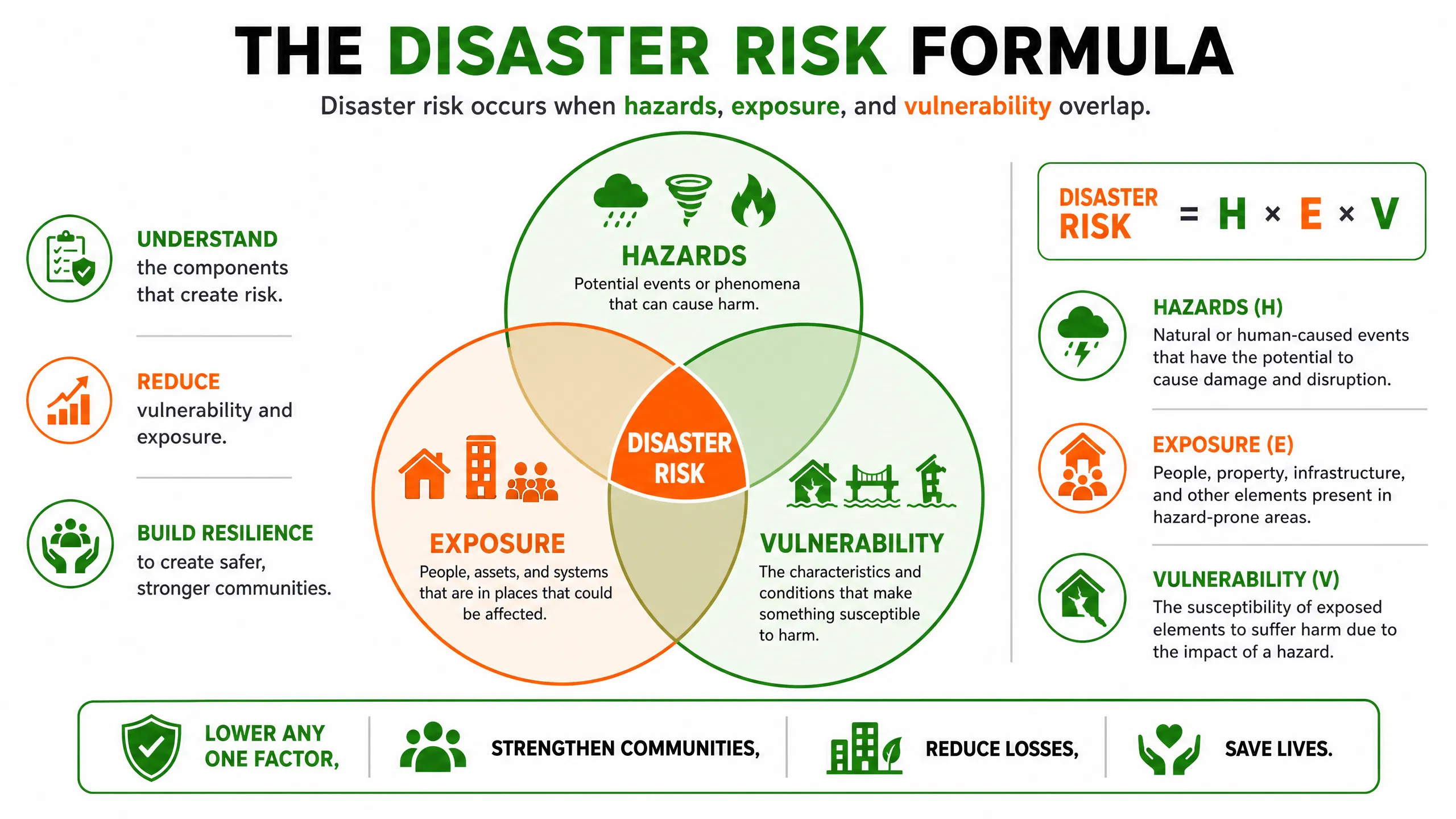
Every disaster occurs when three major elements intersect: hazards, exposure, and vulnerability. Hazards include natural phenomena such as floods, droughts, hurricanes, earthquakes, volcanic eruptions, and landslides, as well as human-induced events like industrial accidents, cyberattacks, and hazardous material spills. Exposure refers to the people, infrastructure, businesses, and ecosystems located within hazard-prone areas. Vulnerability represents the weaknesses that increase potential damage, including poor housing, inadequate infrastructure, poverty, environmental degradation, weak governance, and limited preparedness.
Consequently, disaster risk can be significantly reduced by addressing vulnerabilities before emergencies occur. This proactive approach often proves far more cost-effective than relying exclusively on disaster response and recovery. International studies consistently demonstrate that investments in prevention save multiple times their value by reducing future disaster losses.
Modern DRRM is also closely aligned with sustainable development. Safe infrastructure, environmental conservation, resilient healthcare systems, effective governance, and public awareness all contribute to reducing disaster risks while simultaneously improving overall quality of life. Therefore, disaster risk reduction should not be viewed as a standalone activity but as an integral component of national development planning.
What Is Disaster Risk Reduction (DRR)?
Disaster Risk Reduction focuses specifically on preventing new disaster risks, reducing existing risks, and strengthening resilience. It involves coordinated policies, legislation, infrastructure investments, education programs, environmental management, land-use planning, and technological innovation.
Unlike traditional emergency management models that emphasized responding after disasters occurred, DRR seeks to identify hazards early and implement measures that reduce their impact. For example, constructing flood barriers, enforcing earthquake-resistant building codes, restoring wetlands, developing drought-resistant agriculture, and establishing community evacuation plans all represent disaster risk reduction measures.
International cooperation has strengthened significantly through frameworks such as the Sendai Framework for Disaster Risk Reduction, which encourages countries to improve governance, understand disaster risks, invest in resilience, enhance preparedness, and “Build Back Better” during recovery efforts.
Businesses have also recognized the importance of DRR. Supply chain disruptions caused by natural disasters can result in billions of dollars in economic losses each year. As a result, organizations increasingly integrate disaster risk assessments into business continuity planning to protect operations, employees, and customers.
Difference Between Disaster Management and Disaster Risk Reduction
Although the terms are frequently used together, they are not identical. Understanding their distinction helps organizations design more comprehensive resilience strategies.
| Aspect | Disaster Risk Reduction | Disaster Management |
|---|---|---|
| Primary Focus | Preventing and reducing risks | Managing disasters before, during, and after occurrence |
| Timeframe | Long-term | Continuous lifecycle |
| Goal | Reduce vulnerabilities | Minimize disaster impacts |
| Activities | Risk assessment, mitigation, planning | Preparedness, response, recovery |
| Outcome | Increased resilience | Effective emergency coordination |
Disaster management encompasses the entire disaster lifecycle, including preparedness, emergency response, recovery, and rehabilitation. Disaster risk reduction forms a crucial component within that broader framework by addressing the underlying causes of vulnerability.
Ultimately, successful disaster management cannot exist without effective disaster risk reduction. Responding efficiently to emergencies is important, but preventing disasters from becoming catastrophic remains the most sustainable strategy.
Professionals working in emergency management, humanitarian response, urban planning, environmental management, public health, engineering, and government administration increasingly require specialized training in these interconnected disciplines. Organizations seeking to build these competencies can explore professional development opportunities through ForeElite Training Institute’s Disaster Management and related programmes.
Why Disaster Risk Reduction Matters Today
The urgency surrounding disaster risk reduction has never been greater. The frequency, intensity, and complexity of disasters continue to rise due to interconnected global challenges. Climate change has increased the likelihood of severe weather events, while expanding urban populations place more people in hazard-prone areas. Aging infrastructure, environmental degradation, and socioeconomic inequalities further amplify disaster risks.
Meanwhile, economic globalization means disasters occurring in one region can disrupt international supply chains, financial markets, food production, and energy systems across multiple continents. The COVID-19 pandemic clearly demonstrated how interconnected today’s risks have become.
Disasters also disproportionately affect vulnerable populations, including children, older adults, persons with disabilities, and low-income communities. Limited access to healthcare, education, financial resources, and resilient infrastructure often makes recovery much slower for these groups.
Equally important, investing in disaster risk reduction supports broader sustainable development objectives. Improved infrastructure, better environmental management, stronger healthcare systems, enhanced governance, and increased public awareness all contribute to healthier, safer, and more resilient societies.
The private sector has likewise become an essential stakeholder in disaster resilience. Financial institutions, insurers, logistics companies, manufacturers, utilities, and technology providers increasingly collaborate with governments to strengthen national resilience and reduce economic disruptions.
Professionals seeking expertise in organizational resilience, emergency preparedness, risk assessment, and crisis leadership can expand their practical knowledge through specialized capacity-building programmes offered at ForElite Institute.
The Growing Impact of Climate Change
Climate change is reshaping the global disaster landscape. Rising temperatures influence rainfall patterns, sea levels, drought frequency, glacier melting, and storm intensity. These environmental changes create cascading effects across agriculture, water resources, public health, biodiversity, infrastructure, and economic development.
Flooding has become more frequent in many regions due to heavier rainfall events, while prolonged droughts threaten food security and water availability elsewhere. Coastal communities face increasing risks from sea-level rise and storm surges. Wildfires have expanded in both frequency and severity as higher temperatures dry vegetation and extend fire seasons.
Similarly, climate-related disasters often trigger secondary crises. Floods may contaminate drinking water supplies, increase disease outbreaks, damage transportation infrastructure, interrupt electricity generation, and displace entire communities. Droughts can reduce agricultural production, raise food prices, increase migration pressures, and intensify resource conflicts.
These interconnected challenges require integrated disaster risk management approaches that combine climate adaptation, environmental conservation, sustainable development, and emergency preparedness. Governments are increasingly incorporating climate risk assessments into national development planning, recognizing that resilience investments today reduce future humanitarian and economic losses.
Organizations working in climate resilience, environmental management, water resources, agriculture, and urban planning benefit significantly from multidisciplinary professional training. ForeElite Training Institute offers numerous related courses covering climate adaptation, GIS, project management, monitoring and evaluation, environmental sustainability, and risk management. Explore available programmes at ForElite Institute.
Economic and Social Consequences of Disasters
Disasters create impacts that extend far beyond immediate physical destruction. While the first concern during an emergency is protecting human lives, the long-term consequences often affect economic stability, social wellbeing, public health, education systems, and national development. When disasters occur, communities may lose homes, businesses, employment opportunities, agricultural productivity, transportation networks, and essential services. These losses can slow economic growth and increase poverty, especially in regions where communities already face limited resources.
The economic impact of disasters can be measured through direct and indirect losses. Direct losses include damaged buildings, destroyed infrastructure, lost equipment, and emergency response expenses. Indirect losses include reduced business activity, unemployment, supply chain interruptions, decreased tourism revenue, and increased government spending on recovery programmes. For example, a flood that damages a farming region does not only destroy crops; it can also affect food supply chains, market prices, household income, and national food security.
Similarly, disasters create significant social consequences. Families may experience displacement, loss of livelihoods, psychological distress, and disruption of education. Children may miss school for extended periods when learning facilities are damaged or converted into emergency shelters. Healthcare systems can become overwhelmed due to increased injuries, disease outbreaks, and limited access to essential medical services.
Vulnerable populations often experience the greatest impacts. Communities with inadequate housing, limited access to information, weak infrastructure, and low financial capacity usually require longer recovery periods. Therefore, effective disaster risk reduction must address social inequalities and ensure that resilience strategies include everyone.
Professional expertise in areas such as humanitarian coordination, emergency planning, vulnerability assessment, and community resilience is increasingly important. Organizations and professionals interested in strengthening their disaster management skills can benefit from structured capacity-building programmes, including specialized training opportunities available through ForeElite Training Institute.
The Four Phases of Disaster Management
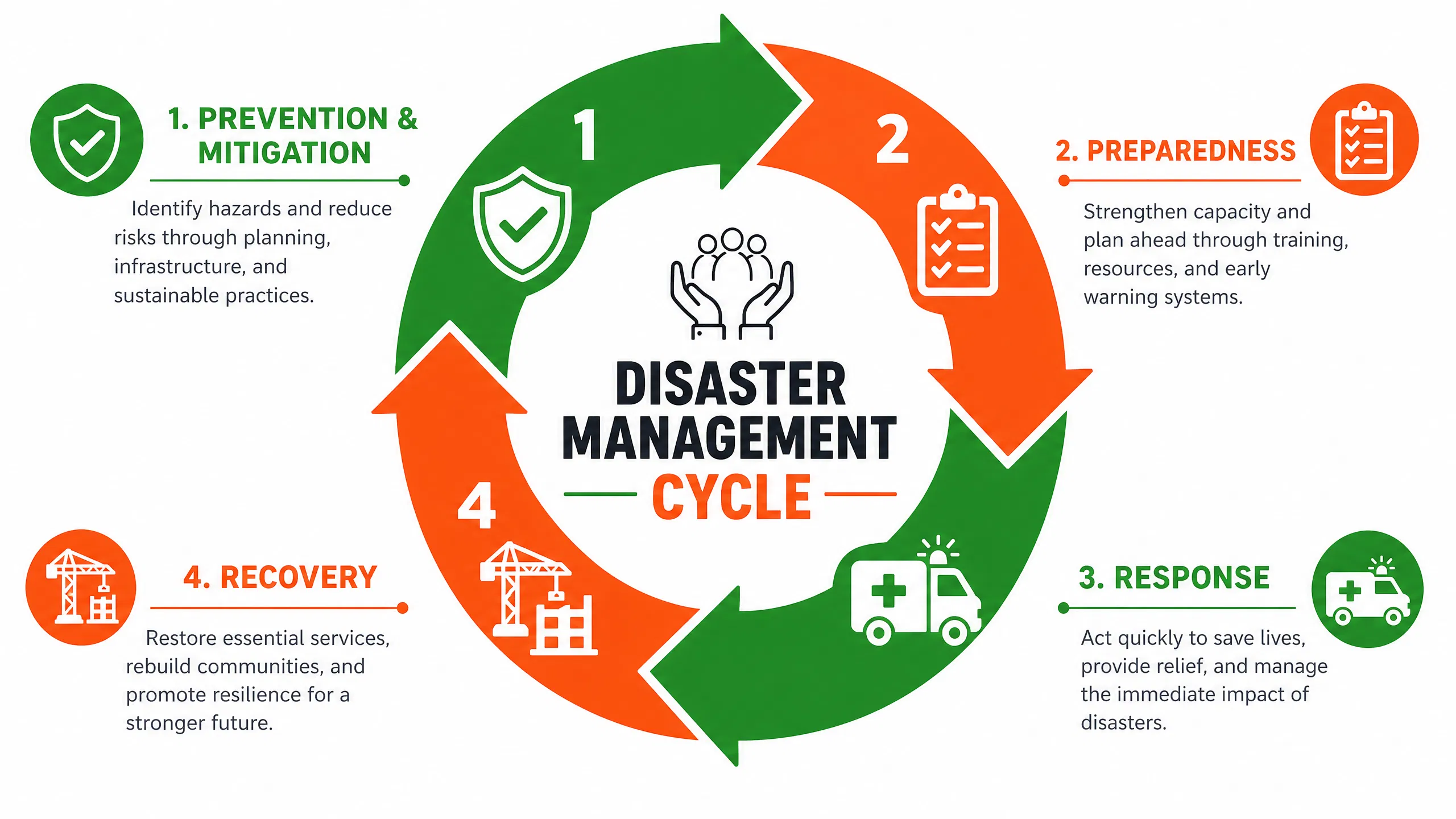
Disaster management follows a continuous cycle designed to reduce risks, prepare communities, respond effectively, and recover sustainably. This cycle is commonly divided into four major phases: prevention and mitigation, preparedness, response, and recovery.
Although these phases are often presented separately, they are deeply connected. Effective recovery improves future preparedness, while strong mitigation reduces the severity of future emergencies. Think of disaster management as maintaining a strong shield rather than simply repairing damage after an attack.
Prevention and Mitigation
It, Prevention and mitigation, represent the foundation of disaster risk management because they focus on reducing the likelihood and severity of disasters before they happen. Prevention involves actions designed to avoid creating risks, while mitigation focuses on reducing the impact of unavoidable hazards.
Examples of prevention and mitigation measures include:
- Enforcing safe construction standards.
- Developing hazard-resistant infrastructure.
- Protecting forests and wetlands.
- Improving drainage systems in flood-prone areas.
- Establishing land-use regulations.
- Strengthening healthcare and emergency systems.
- Promoting climate-smart agriculture.
For instance, constructing buildings in earthquake-prone regions requires engineering designs that allow structures to withstand seismic forces. In flood-prone communities, proper urban planning, improved drainage networks, and protection of natural water systems can significantly reduce damage.
Environmental management also plays a major role in mitigation. Forest conservation reduces landslide risks, mangrove restoration protects coastal communities, and sustainable water management improves drought resilience. As a result, disaster risk reduction becomes closely connected with environmental sustainability.
Professionals involved in engineering, urban development, environmental management, government planning, and humanitarian programmes require knowledge of risk assessment methods and mitigation strategies. Training programmes focused on these areas help professionals develop practical skills for designing safer communities.
Preparedness
Preparedness focuses on ensuring that individuals, organizations, and governments are ready to respond effectively when disasters occur. Even with strong prevention measures, some hazards cannot be completely eliminated. Therefore, preparedness ensures that communities can act quickly and efficiently when emergencies happen.
Preparedness activities include developing emergency response plans, conducting simulations, establishing communication systems, training response teams, maintaining emergency supplies, and educating communities about safety procedures.
A strong preparedness system answers important questions:
- Who makes decisions during an emergency?
- How will information reach affected communities?
- Where will people evacuate?
- How will medical support be provided?
- Which organizations coordinate response activities?
Without proper preparedness, even well-resourced countries can experience unnecessary losses. Confusion, delayed communication, poor coordination, and lack of clear responsibilities can increase disaster impacts.
Technology has transformed preparedness activities. Early warning systems now use satellites, weather monitoring equipment, artificial intelligence, and mobile communication platforms to provide alerts before disasters occur. These systems give communities valuable time to evacuate, protect assets, and organize emergency responses.
Training is essential because disaster preparedness depends on skilled professionals who understand risk analysis, emergency coordination, logistics management, and communication strategies. Courses related to project management, monitoring and evaluation, GIS applications, and emergency management support professionals working in disaster preparedness roles. More information about professional development programmes can be found at ForeElite Training Institute Courses.
Response
The response phase begins immediately after a disaster occurs. The primary objectives are saving lives, reducing suffering, protecting property, and providing essential services to affected populations.
Emergency response activities may include:
- Search and rescue operations.
- Medical assistance.
- Emergency shelter provision.
- Food and water distribution.
- Security management.
- Damage assessments.
- Restoration of critical services.
During this stage, coordination becomes extremely important. Multiple organizations may be involved, including government agencies, humanitarian organizations, healthcare providers, security teams, community groups, and international partners.
Effective communication is one of the most important elements of emergency response. Accurate information helps decision-makers allocate resources, identify urgent needs, and prevent misinformation. Modern disaster response increasingly uses digital platforms, mobile applications, drones, and geographic information systems to improve coordination.
GIS technology, in particular, has become a powerful tool in emergency management. It allows responders to map affected areas, identify vulnerable populations, analyze infrastructure damage, and plan evacuation routes. Professionals interested in strengthening their technical capabilities can explore related GIS and data management training programmes through ForeElite Training Institute GIS Training Programs.
Recovery and Rehabilitation
Recovery begins after immediate emergency needs have been addressed. The goal is to restore normal activities while creating stronger systems that reduce future risks. Recovery is not simply about rebuilding what was destroyed; it is an opportunity to build back better.
Recovery activities include:
- Reconstructing homes and infrastructure.
- Restoring livelihoods.
- Supporting affected communities psychologically.
- Rebuilding schools and healthcare facilities.
- Improving future disaster preparedness.
Importantly, recovery decisions influence future resilience. Rebuilding damaged structures in the same vulnerable locations without improvements may create repeated risks. Instead, recovery programmes should incorporate safer designs, improved planning, and community participation.
For example, after a flood, rebuilding homes with improved drainage systems and elevated foundations can reduce future damage. After a drought, recovery efforts may include promoting drought-resistant crops and improving water management practices.
Monitoring and evaluation are critical during recovery because organizations need to measure whether interventions are effective. Data collection, reporting, accountability systems, and impact assessments help ensure resources are used efficiently.
Professionals working in development projects, humanitarian programmes, government agencies, and non-governmental organizations often require strong monitoring and evaluation skills. Relevant professional courses are available through ForeElite Training Institute Monitoring and Evaluation Training.
Technology Transforming Disaster Risk Management
Technology has changed how societies understand, predict, and respond to disasters. Today, disaster management is increasingly supported by advanced digital tools that improve decision-making and reduce response times.
Traditional disaster management relied heavily on historical information and manual assessments. While these approaches remain valuable, modern technologies provide faster and more accurate insights. Satellite imagery, artificial intelligence, drones, mobile applications, cloud computing, and big data analytics allow organizations to understand risks before they become emergencies.
For example, artificial intelligence can analyze weather patterns and historical disaster data to identify potential risks. Remote sensing technology can monitor environmental changes such as deforestation, flooding, drought conditions, and land degradation. Drones can quickly capture images of damaged areas where physical access is difficult.
Digital transformation has also improved communication during emergencies. Mobile alerts, social media platforms, and emergency applications allow authorities to share warnings quickly with large populations.
Organizations seeking digital solutions, data platforms, and technology-driven approaches for resilience initiatives can explore services offered by Nexera Digital Solutions.
GIS, AI, Remote Sensing, and Early Warning Systems
The evolution of technology has created new possibilities for predicting, preventing, and responding to disasters. Today, disaster risk reduction is no longer dependent only on traditional observations and historical records. Instead, organizations increasingly rely on advanced digital tools that provide accurate information, improve coordination, and support faster decision-making.
Geographic Information Systems (GIS)
One of the most important technologies in modern disaster management is Geographic Information Systems (GIS). GIS enables professionals to collect, analyze, visualize, and interpret location-based information. Since disasters are closely connected to geography, understanding where risks exist is essential for effective planning.
For example, GIS can be used to identify communities located in flood-prone areas, map earthquake vulnerability zones, analyze wildfire risks, locate emergency facilities, and determine the safest evacuation routes. By combining different layers of information such as population density, infrastructure networks, environmental conditions, and historical disaster records, decision-makers can develop more accurate risk assessments.
Remote Sensing Technology
Similarly, remote sensing technology has transformed how organizations monitor environmental changes. Satellites can provide valuable information about rainfall patterns, land cover changes, rising sea levels, drought conditions, and areas affected by disasters. This information allows governments and humanitarian organizations to act earlier and allocate resources more effectively.
Artificial intelligence
Artificial intelligence (AI) is also becoming increasingly important in disaster risk management. AI systems can process large amounts of data from weather stations, satellites, social media platforms, and emergency reports to identify patterns that humans may not easily detect. For example, AI-powered models can help predict floods, forecast storms, identify vulnerable communities, and optimize emergency response operations.
Early Warning Systems
Early warning systems represent another major advancement in disaster preparedness. These systems combine scientific monitoring, communication networks, and community awareness to provide alerts before dangerous events occur. A warning is only effective when people understand it and know how to respond. Therefore, successful early warning systems require not only technology but also public education, clear communication, and community involvement.
Organizations working in disaster management increasingly require professionals who understand GIS applications, data analysis, and digital risk assessment. Specialized technical training programmes can help professionals develop these skills. For individuals seeking to strengthen their GIS and spatial analysis capabilities, relevant learning opportunities are available through ForeElite Training Institute GIS Training Programs.
Data-Driven Decision Making in Disaster Management
Data has become one of the most valuable resources in modern disaster risk reduction. When collected, analyzed, and used effectively, data helps organizations understand risks, predict emergencies, coordinate responses, and evaluate recovery efforts.
In the past, disaster decisions were often based on limited information gathered after an event occurred. Today, organizations can access real-time information through satellites, sensors, mobile applications, digital reporting platforms, and community feedback systems. This shift from reactive decision-making to proactive planning has significantly improved disaster resilience.
For instance, before a major flood occurs, authorities can analyze rainfall forecasts, river levels, population distribution, and infrastructure conditions to identify areas at highest risk. Emergency teams can then prepare evacuation plans, position supplies, and communicate warnings before the situation becomes critical.
Data also supports effective resource allocation. During emergencies, resources such as medical supplies, rescue teams, food, and temporary shelters must reach affected populations quickly. Data-driven systems help organizations determine where assistance is needed most and avoid delays caused by poor coordination.
Monitoring and evaluation also depend heavily on accurate data. After disaster response activities are completed, organizations need evidence to determine whether interventions achieved their objectives. Data helps measure the effectiveness of recovery programmes, identify gaps, and improve future strategies.
Professionals working in humanitarian organizations, government agencies, development projects, and international institutions require strong data management and analytical skills. Training in areas such as monitoring and evaluation, project management, research methods, and digital tools enhances their ability to support evidence-based disaster management.
Professional development opportunities covering data analysis, monitoring frameworks, and related competencies can be explored through ForeElite Training Institute Professional Training Courses.
Building Community Resilience
Disaster resilience begins at the community level. While governments and international organizations provide essential support, local communities are often the first to experience disasters and the first to respond. Therefore, empowering communities with knowledge, skills, and resources is one of the most effective approaches to reducing disaster impacts.
A resilient community is not one that never experiences hazards. Instead, it is a community that understands its risks, prepares effectively, adapts to changing conditions, and recovers quickly after emergencies.
Community resilience involves several important elements, including:
- Public awareness and education.
- Local emergency planning.
- Strong communication networks.
- Inclusive decision-making.
- Access to reliable information.
- Community-based response teams.
Education plays a particularly important role. When people understand local hazards and know what actions to take during emergencies, they can protect themselves and assist others. Simple actions such as knowing evacuation routes, preparing emergency supplies, and understanding warning messages can save lives.
Additionally, community participation ensures that disaster plans reflect local realities. External organizations may provide technical expertise, but local residents understand their environment, cultural practices, and specific challenges. Including communities in planning processes creates stronger ownership and more effective solutions.
Women, youth, older adults, and persons with disabilities should also be actively included in resilience initiatives. Different groups experience disasters differently, and inclusive planning ensures that no one is left behind.
Education and Capacity Building
Capacity building is a fundamental component of disaster risk reduction. Communities, institutions, and professionals require continuous learning to respond effectively to evolving risks.
Professional training helps individuals develop practical abilities in areas such as:
- Disaster preparedness planning.
- Emergency coordination.
- Risk assessment.
- Climate adaptation.
- Crisis communication.
- Humanitarian logistics.
- Monitoring and evaluation.
- Project management.
As disasters become more complex, organizations need professionals who can combine technical knowledge with leadership, communication, and analytical skills. Effective disaster management is not only about responding to emergencies; it requires strategic thinking, collaboration, and long-term planning.
Training institutions play an important role by providing structured learning opportunities that connect theory with practical applications. Professionals can improve their capabilities through specialized courses designed for government officials, NGOs, development practitioners, engineers, project managers, and humanitarian workers.
Public-Private Partnerships in Disaster Risk Reduction
Disaster risk reduction is not the responsibility of governments alone. The private sector has an increasingly important role in strengthening resilience through innovation, investment, expertise, and technology.
Businesses are affected by disasters through damaged facilities, disrupted supply chains, employee safety concerns, and financial losses. Consequently, many organizations are now integrating disaster risk management into their business strategies.
Private companies contribute to disaster resilience in several ways:
- Developing innovative technologies.
- Supporting emergency communication systems.
- Investing in resilient infrastructure.
- Providing logistics and transportation support.
- Sharing technical expertise.
Technology companies, for example, develop platforms that support emergency communication, data collection, mapping, and risk analysis. Construction companies contribute by designing safer buildings and infrastructure. Financial institutions support resilience through insurance products and disaster recovery financing.
Digital transformation companies also support organizations by improving information systems and online platforms. Businesses seeking technology solutions for digital transformation, automation, and data management can explore services provided by Nexera Digital Solutions.
Ultimately, collaboration between governments, communities, businesses, and development organizations creates stronger systems capable of managing future risks.
Disaster Risk Reduction in Africa
Africa faces a wide range of disaster risks influenced by climate change, rapid population growth, environmental challenges, and infrastructure limitations. Floods, droughts, disease outbreaks, conflicts, food insecurity, and extreme weather events continue to affect millions of people across the continent.
However, Africa also has significant opportunities to strengthen disaster resilience through innovation, community participation, and sustainable development approaches.
Common Hazards Across the Continent
Many African countries experience climate-related hazards that directly affect livelihoods and economic development.
Drought remains one of the most significant challenges, particularly in regions dependent on agriculture. Reduced rainfall can affect crop production, livestock, water availability, and food security. Communities that rely heavily on natural resources often experience severe economic consequences during prolonged dry periods.
Flooding is another major concern. Urban expansion without adequate drainage systems has increased flood vulnerability in many cities. Heavy rainfall events can damage homes, roads, businesses, and public infrastructure.
Health-related emergencies also represent important disaster risks. Disease outbreaks can place significant pressure on healthcare systems, particularly where resources and infrastructure are limited.
Therefore, strengthening disaster risk reduction in Africa requires investment in climate adaptation, infrastructure development, early warning systems, professional skills, and community resilience.
Opportunities for Sustainable Development
Although challenges remain, disaster risk reduction provides opportunities to support sustainable development across Africa.
Investments in resilient infrastructure, renewable energy, sustainable agriculture, digital technologies, and environmental protection can reduce disaster risks while creating economic opportunities.
For example, climate-smart agriculture helps farmers adapt to changing weather patterns while improving productivity. Renewable energy systems can strengthen energy access while reducing dependence on vulnerable fuel supplies. Digital platforms can improve communication, education, and emergency coordination.
African countries are also increasingly investing in professional capacity development because effective disaster management depends on skilled personnel. Government officials, humanitarian workers, researchers, and development professionals need specialized knowledge to design and implement resilience strategies.
Training programmes in areas such as project management, climate resilience, GIS, monitoring and evaluation, and disaster management provide valuable skills for professionals working across different sectors.
Professional Training for Disaster Risk Management
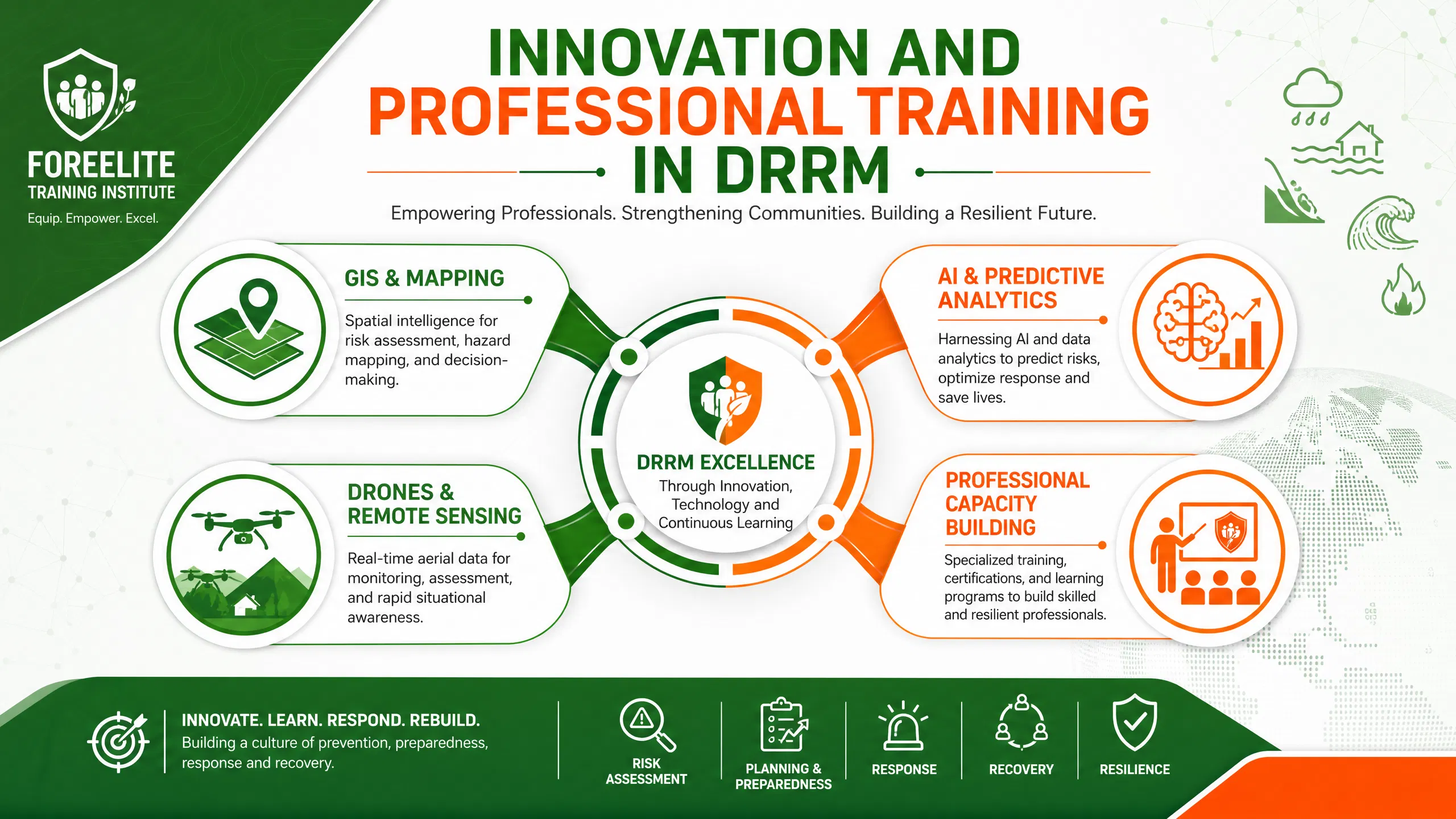
The increasing complexity of disasters has created a growing demand for professionals who possess specialized knowledge and practical skills in disaster risk reduction and management. Today, managing disasters requires much more than emergency response abilities. Professionals must understand risk assessment, climate adaptation, data analysis, community engagement, leadership, communication, and technology applications.
Organizations involved in humanitarian assistance, government planning, environmental management, infrastructure development, public health, and international development require individuals who can design effective disaster preparedness strategies and coordinate responses during crises.
Therefore, continuous professional development has become a critical investment for institutions and individuals working in risk-sensitive environments. Training helps professionals move from reactive approaches toward proactive risk management practices that protect communities and organizational assets.
Key areas where disaster management professionals require expertise include:
- Risk assessment and vulnerability analysis to identify hazards and understand their potential impacts.
- Emergency preparedness planning to establish effective response systems before disasters occur.
- Crisis communication to ensure accurate information reaches communities during emergencies.
- Project management to coordinate disaster response and recovery programmes.
- Monitoring and evaluation to measure the effectiveness of interventions.
- GIS and spatial analysis to support evidence-based decision-making.
- Climate change adaptation to address emerging environmental risks.
Professional training institutions such as ForeElite Training Institute provide opportunities for practitioners to develop these competencies through structured learning programmes designed around workplace requirements.
A well-trained workforce strengthens disaster resilience because knowledge influences every stage of disaster management. A trained professional can identify risks before they escalate, organize resources effectively, communicate clearly during emergencies, and support communities throughout recovery.
Integrating Disaster Risk Reduction into Organizations
Disaster risk reduction is not only relevant to government agencies and humanitarian organizations. Businesses, universities, healthcare institutions, financial organizations, and non-governmental organizations must also integrate risk management into their operations.
Every organization faces potential disruptions, whether from natural hazards, cyber incidents, health emergencies, infrastructure failures, or supply chain interruptions. Without proper planning, a single unexpected event can affect operations, financial stability, employee safety, and organizational reputation.
Organizational disaster risk management involves developing systems that allow institutions to continue functioning during and after disruptions. This approach is often known as business continuity management.
Important elements include:
- Risk identification and assessment.
- Emergency response procedures.
- Business continuity planning.
- Data protection strategies.
- Communication protocols.
- Staff training and awareness.
- Recovery planning.
For example, a company operating in a flood-prone area may develop emergency evacuation procedures, protect important equipment, establish backup data systems, and create alternative operational arrangements.
Similarly, healthcare institutions must prepare for disease outbreaks, equipment failures, and sudden increases in patient demand. Schools and universities require emergency plans that protect students and staff while maintaining educational activities.
The integration of disaster risk reduction into organizational strategies creates stronger institutions capable of adapting to uncertainty. Instead of viewing risk management as an additional responsibility, successful organizations consider resilience a core part of effective leadership and planning.
The Role of Leadership in Disaster Risk Management
Strong leadership is essential during every stage of disaster risk reduction and management. Leaders influence decisions, coordinate resources, build partnerships, and create a culture of preparedness within organizations and communities.
During emergencies, effective leaders must make decisions quickly while managing uncertainty. They need to communicate clearly, maintain public confidence, and coordinate multiple stakeholders with different responsibilities.
However, disaster leadership is not only about managing crises. It also involves creating systems that reduce risks before emergencies happen.
Effective disaster leaders:
- Promote preparedness and resilience.
- Encourage collaboration between stakeholders.
- Support evidence-based decision-making.
- Invest in training and capacity building.
- Prioritize vulnerable populations.
- Encourage continuous improvement.
Leadership development is therefore closely connected with disaster resilience. Professionals in management positions benefit from strengthening their skills in strategic planning, communication, negotiation, and crisis management.
Organizations interested in developing leadership competencies alongside technical disaster management skills can explore professional development resources available through ForeElite Training Institute Leadership and Management Training.
Future Trends in Disaster Risk Reduction and Management
The future of disaster risk reduction will be shaped by technology, climate adaptation, collaboration, and innovative approaches to resilience building. As global risks continue to evolve, organizations must adopt flexible strategies that respond to new challenges.
Several trends are expected to influence the future of disaster management.
Artificial Intelligence and Predictive Analytics
Artificial intelligence will continue transforming how disasters are predicted and managed. AI systems can analyze enormous volumes of information from satellites, weather stations, sensors, and historical records to identify emerging risks.
Predictive analytics allows organizations to anticipate potential disasters before they occur. Instead of waiting for damage to happen, authorities can use forecasts to prepare resources, warn communities, and implement preventive measures.
For example, AI models can help predict flood patterns by analyzing rainfall intensity, river levels, soil conditions, and historical flood records. Similar technologies can support wildfire prediction, disease surveillance, and infrastructure risk assessment.
As these technologies develop, professionals will need stronger digital literacy and data interpretation skills to use them effectively.
Climate Resilience and Adaptation Planning
Climate change will remain one of the biggest influences on disaster risk management. Rising temperatures, changing rainfall patterns, and extreme weather events require communities and organizations to adapt continuously.
Future disaster strategies will increasingly focus on:
- Climate-resilient infrastructure.
- Sustainable land management.
- Renewable energy solutions.
- Water security.
- Ecosystem restoration.
- Climate-smart agriculture.
Rather than treating climate change as a separate environmental issue, modern disaster management recognizes it as a central factor influencing global risks.
Professionals involved in environmental management, agriculture, infrastructure planning, and development projects require knowledge of climate adaptation strategies. Relevant learning opportunities are available through specialized professional courses offered by ForeElite Training Institute Environmental and Climate Training Courses.
Digital Transformation and Disaster Resilience
Digital transformation is changing how organizations prepare for and respond to disasters. Cloud computing, mobile applications, digital communication platforms, and automated systems are improving accessibility to information and strengthening coordination.
In particular, digital platforms allow organizations to:
- Collect real-time information.
- Share emergency updates.
- Coordinate response teams.
- Monitor recovery progress.
- Store important records securely.
Technology also improves collaboration between governments, humanitarian organizations, and communities. Digital tools make it easier to share information, track resources, and evaluate outcomes.
Organizations supporting digital transformation play an important role in creating resilient systems. Technology partners such as Nexera Digital Solutions help organizations adopt digital solutions that improve efficiency, information management, and operational resilience.
The Importance of Continuous Learning and Knowledge Sharing
Disaster risks are constantly changing. New technologies emerge, climate conditions shift, and communities face new types of challenges. As a result, continuous learning is essential for anyone involved in disaster risk management.
Knowledge sharing allows professionals and organizations to learn from previous experiences, improve strategies, and develop better solutions.
Successful disaster risk reduction depends on collaboration between:
- Researchers studying hazards and vulnerabilities.
- Government agencies developing policies.
- Communities implementing local solutions.
- Businesses supporting innovation.
- Training institutions developing professional capacity.
Ultimately, resilience is built through shared knowledge and collective action.
A society where individuals understand risks, organizations have preparedness systems, and institutions invest in capacity building is better positioned to face future challenges.
Conclusion
Disaster risk reduction and management has become one of the most important disciplines for creating safer and more sustainable societies. As disasters become more frequent and complex, communities and organizations can no longer rely only on emergency response. They must invest in prevention, preparedness, technology, education, and resilience-building strategies.
The most effective disaster management approaches recognize that disasters are not caused only by hazards. They occur when hazards interact with vulnerabilities. By reducing vulnerabilities, improving infrastructure, strengthening institutions, and empowering communities, societies can significantly reduce disaster impacts.
Technology has opened new opportunities for better disaster prediction, response coordination, and recovery planning. GIS, artificial intelligence, remote sensing, and data analytics are helping professionals make more informed decisions. At the same time, human skills remain essential because effective disaster management depends on leadership, communication, collaboration, and community participation.
Professional development plays a central role in strengthening disaster resilience. Skilled practitioners are needed to assess risks, design preparedness plans, coordinate emergency responses, and support sustainable recovery. Through specialized training programmes, professionals can gain the knowledge required to address current and future disaster challenges.
Organizations such as ForeElite Training Institute support capacity building by providing professional learning opportunities that equip individuals with practical skills for modern workplace challenges.
Building a disaster-resilient future requires collective responsibility. Governments, businesses, communities, and individuals must work together to understand risks, invest in preparedness, and create systems that protect lives and livelihoods.
Frequently Asked Questions (FAQs)
1. What is the main goal of disaster risk reduction?
The main goal of disaster risk reduction is to reduce vulnerabilities, minimize disaster impacts, and strengthen the ability of communities and organizations to prepare for, respond to, and recover from hazards. It focuses on prevention and resilience rather than only reacting after disasters occur.
2. What are the four main phases of disaster management?
The four main phases of disaster management are prevention and mitigation, preparedness, response, and recovery. Together, these phases create a continuous cycle that helps organizations reduce risks and improve resilience.
3. How does technology support disaster risk management?
Technology supports disaster risk management through early warning systems, GIS mapping, artificial intelligence, remote sensing, digital communication platforms, and data analysis tools. These technologies improve prediction, planning, coordination, and emergency response.
4. Why is professional training important in disaster management?
Professional training helps individuals develop the technical, analytical, and leadership skills required to manage disaster risks effectively. It prepares professionals to conduct risk assessments, coordinate emergencies, use technology, and develop resilience strategies.
5. How can communities become more resilient to disasters?
Communities can improve resilience through awareness programmes, emergency planning, education, strong communication systems, sustainable development practices, and active participation in disaster preparedness activities.