


Leadership is one of the most valuable skills in any workplace. Whether you manage a small team, oversee an entire department, or aspire to take on a leadership role, your ability to inspire, guide, and support others directly affects organizational success. Businesses today operate in rapidly changing environments where employee expectations, technology, and market demands continue to evolve. As a result, leadership is no longer about simply giving instructions. Instead, it involves building trust, fostering collaboration, and helping people perform at their best.
Recent workplace studies consistently show that employees are more likely to stay with organizations where they trust their leaders and feel valued. Strong leadership contributes to higher employee engagement, improved productivity, and better organizational performance. Companies that invest in leadership development often experience stronger team cohesion and higher retention rates. Leadership training programs such as those offered through ForElite Training Institute’s Leadership and Management Skills programs help professionals develop practical workplace leadership capabilities that improve both individual and organizational outcomes.
The workplace is much like a ship navigating through unpredictable waters. Employees look to leaders for direction, stability, and confidence during both calm and turbulent periods. A good leader serves as the captain who keeps everyone aligned with a shared vision while ensuring that every crew member feels supported and motivated. Understanding how to become that type of leader requires a combination of skills, self-awareness, and continuous growth.
Understanding Leadership in Today’s Workplace
Leadership has evolved significantly over the past decade. Traditional command-and-control approaches are becoming less effective as organizations embrace collaboration, diversity, and innovation. Modern leaders are expected to act as coaches, mentors, and facilitators who help employees unlock their potential. The emphasis has shifted from authority to influence.
Why Leadership Matters More Than Ever
Workplaces are increasingly complex. Remote work, global teams, digital transformation, and changing employee expectations require leaders to adapt quickly. Effective leadership helps organizations maintain focus and productivity despite uncertainty. Leaders who communicate clearly, build trust, and support employee development create environments where people can thrive.
Organizations worldwide continue to prioritize leadership development because strong leadership directly impacts performance. ForElite Training Institute highlights leadership, executive coaching, strategic leadership, and middle-management development as essential areas for organizational growth and capacity building.
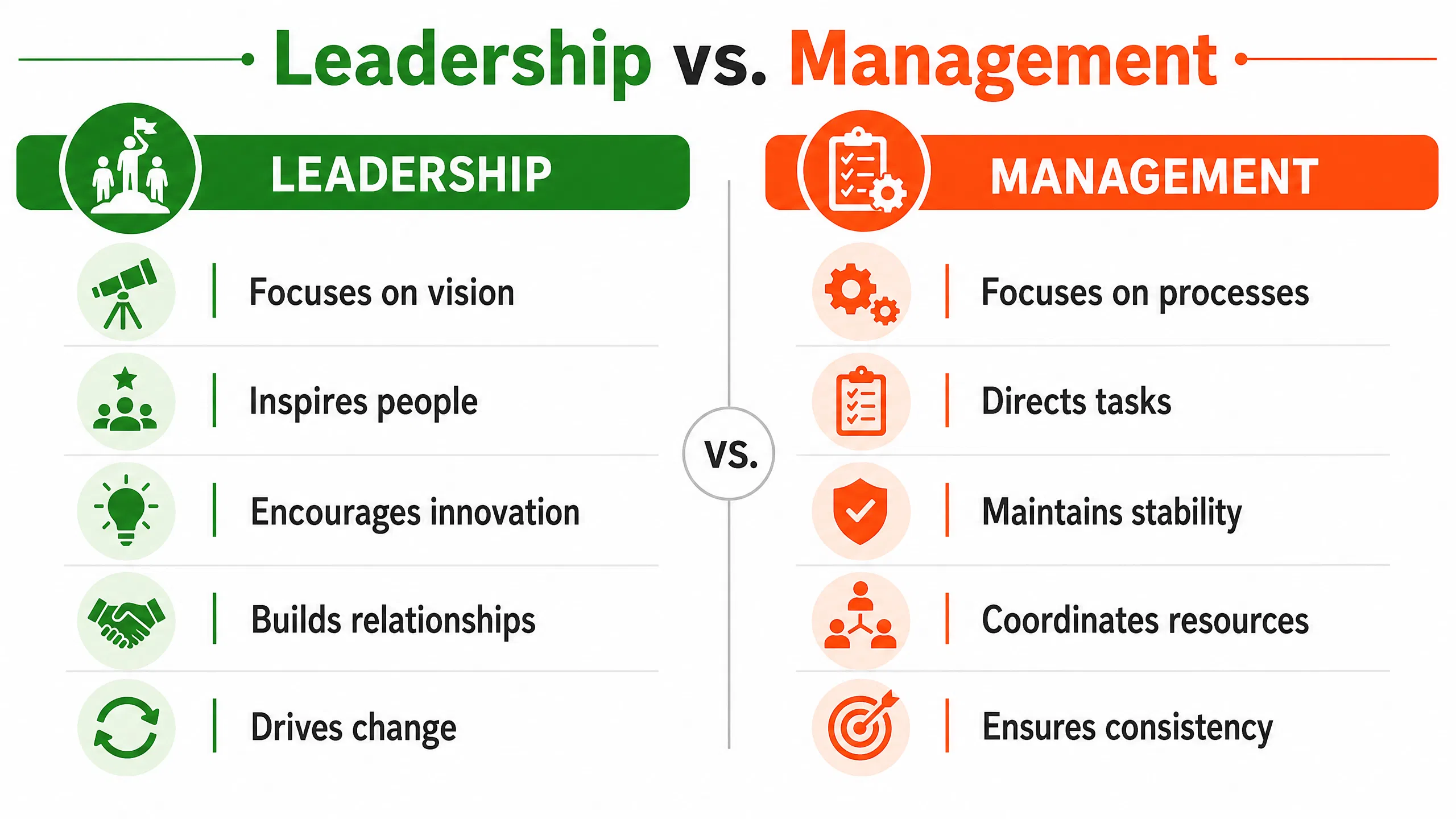
Leadership vs. Management: Understanding the Difference
Many people mistakenly believe leadership and management are the same thing. While the two concepts overlap, they serve different purposes.
| Leadership | Management |
|---|---|
| Focuses on vision | Focuses on processes |
| Inspires people | Directs tasks |
| Encourages innovation | Maintains stability |
| Builds relationships | Coordinates resources |
| Drives change | Ensures consistency |
A good workplace leader often combines both leadership and management skills. They inspire employees while also ensuring goals, deadlines, and performance standards are achieved.
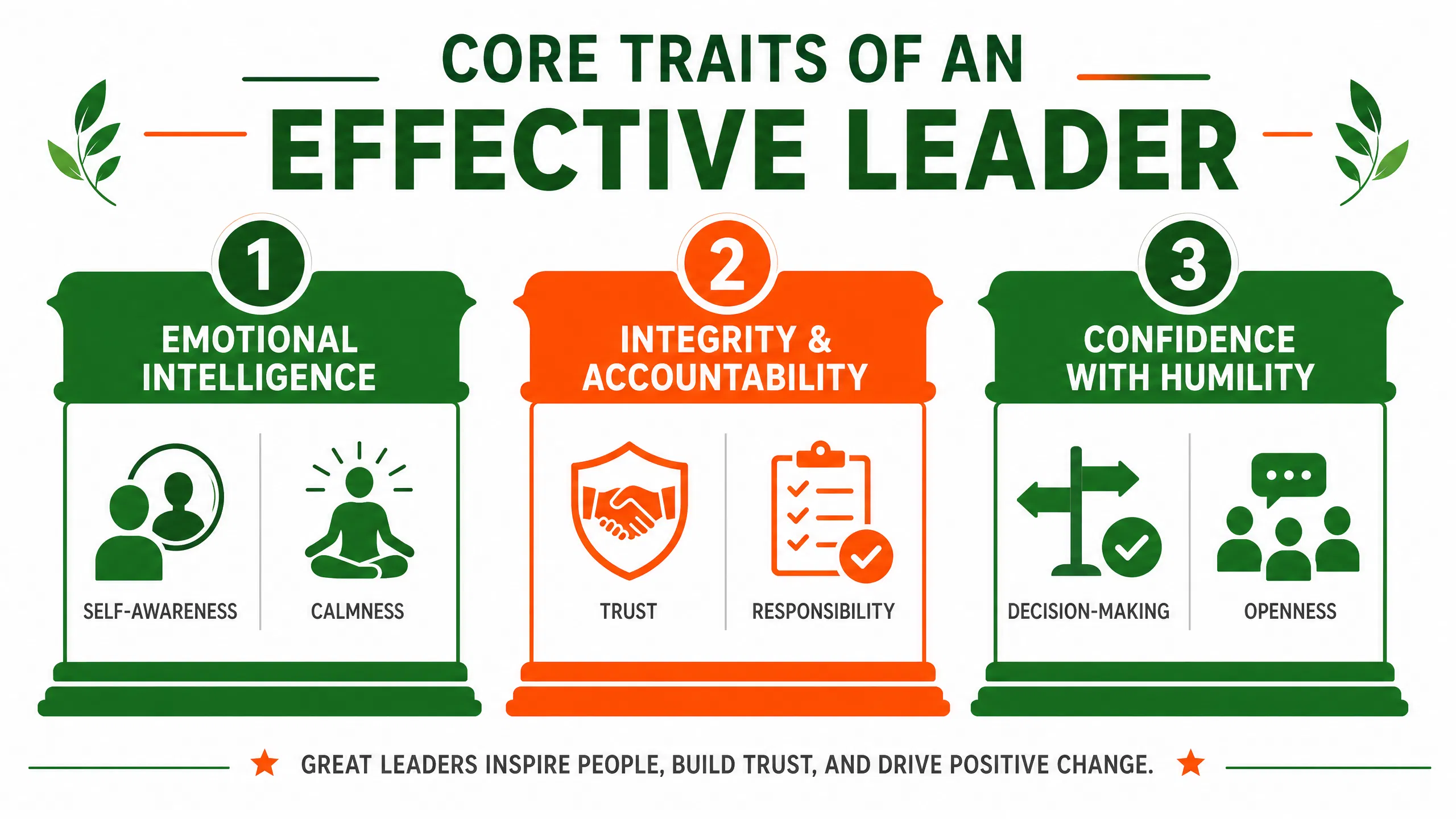
The Core Traits of an Effective Leader
Leadership is not defined by job titles. Instead, it is reflected through behaviors, attitudes, and actions that influence others positively.
Emotional Intelligence and Self-Awareness
One of the strongest predictors of leadership success is emotional intelligence. This involves understanding your emotions, recognizing how they affect others, and managing interpersonal relationships effectively. Leaders with high emotional intelligence remain calm during stressful situations and respond thoughtfully rather than react impulsively.
Self-awareness also plays a crucial role. Leaders who understand their strengths and weaknesses are more likely to seek feedback, learn from mistakes, and improve continuously. They are comfortable admitting when they do not have all the answers, which often increases credibility rather than diminishing it.
Integrity and Accountability
Trust forms the foundation of effective leadership. Employees want leaders who are honest, reliable, and consistent. Integrity means doing the right thing even when nobody is watching. Accountability means taking responsibility for decisions and outcomes.
When leaders demonstrate accountability, employees feel encouraged to take ownership of their work as well. This creates a culture where people focus on solutions instead of assigning blame. Teams become more resilient because individuals are willing to learn from setbacks rather than hide mistakes.
Confidence Without Arrogance
Confidence helps leaders make decisions and inspire trust. However, confidence must be balanced with humility. Arrogant leaders often dismiss valuable input and create environments where employees hesitate to share ideas. Effective leaders remain confident while staying open to different perspectives.
Building Trust Within Your Team
Trust is not built overnight. It develops through consistent actions over time. Without trust, communication breaks down, collaboration suffers, and employee engagement declines.
The Power of Transparent Communication
Employees appreciate honesty, especially during periods of uncertainty. Leaders who communicate openly help reduce anxiety and confusion. Transparency does not mean sharing every detail of every decision. Rather, it means providing clear explanations, setting realistic expectations, and keeping employees informed about important developments.
Open communication also encourages employees to voice concerns, ask questions, and contribute ideas. When people feel heard, they become more engaged and invested in organizational success.
Creating a Culture of Respect
Respect is one of the most powerful leadership tools available. Leaders who treat employees with dignity create positive workplace cultures where collaboration flourishes. Respect involves recognizing contributions, valuing diverse perspectives, and supporting individual growth.
A respectful workplace encourages innovation because employees feel safe expressing ideas without fear of criticism. This psychological safety becomes especially important in today’s knowledge-driven economy.
Developing Strong Communication Skills
Communication is often described as the lifeblood of leadership. Even the best strategies fail if leaders cannot communicate effectively.
Active Listening as a Leadership Tool
Many leaders focus heavily on speaking but overlook the importance of listening. Active listening involves paying full attention, asking thoughtful questions, and demonstrating genuine interest in what others have to say.
When leaders listen effectively, they gain valuable insights, strengthen relationships, and improve decision-making. Employees are more likely to trust leaders who take time to understand their perspectives.
Giving Constructive Feedback
Feedback helps employees grow and improve performance. Effective leaders provide feedback that is specific, actionable, and balanced. They focus on behaviors rather than personal characteristics and emphasize opportunities for development.
Constructive feedback should feel like guidance rather than criticism. The goal is to help employees succeed, not simply point out mistakes.
Leading by Example
Employees pay close attention to what leaders do, not just what they say. Actions carry far more weight than words.
Modeling Workplace Values
If leaders expect punctuality, professionalism, and accountability, they must demonstrate those behaviors consistently. Employees quickly notice discrepancies between stated values and actual conduct.
Leading by example creates credibility. It shows employees that workplace standards apply to everyone, regardless of position. This consistency strengthens trust and reinforces organizational culture.
Demonstrating Professionalism Under Pressure
Challenges reveal true leadership character. During difficult situations, employees look to leaders for guidance and reassurance. Leaders who remain calm, focused, and solution-oriented help teams navigate uncertainty more effectively.
Think of leadership like a lighthouse during a storm. The stronger the storm becomes, the more important that steady source of guidance becomes for everyone involved.
Empowering Employees for Better Performance
The most successful leaders do not try to control every detail. Instead, they empower employees to take initiative and contribute meaningfully.
Delegation and Ownership
Delegation is more than assigning tasks. It involves entrusting employees with responsibility and authority. Effective delegation helps employees develop skills while allowing leaders to focus on strategic priorities.
When employees feel ownership over their work, they become more engaged and motivated. They view success as a shared achievement rather than merely fulfilling instructions.
Encouraging Innovation and Creativity
Innovation thrives in environments where people feel safe experimenting with new ideas. Leaders who encourage creativity help organizations remain competitive and adaptable.
Global leadership programs increasingly emphasize innovation, cross-cultural collaboration, and strategic thinking as essential leadership competencies for modern workplaces.
Organizations that encourage employee-driven innovation often uncover valuable solutions and improvements that might otherwise remain hidden.
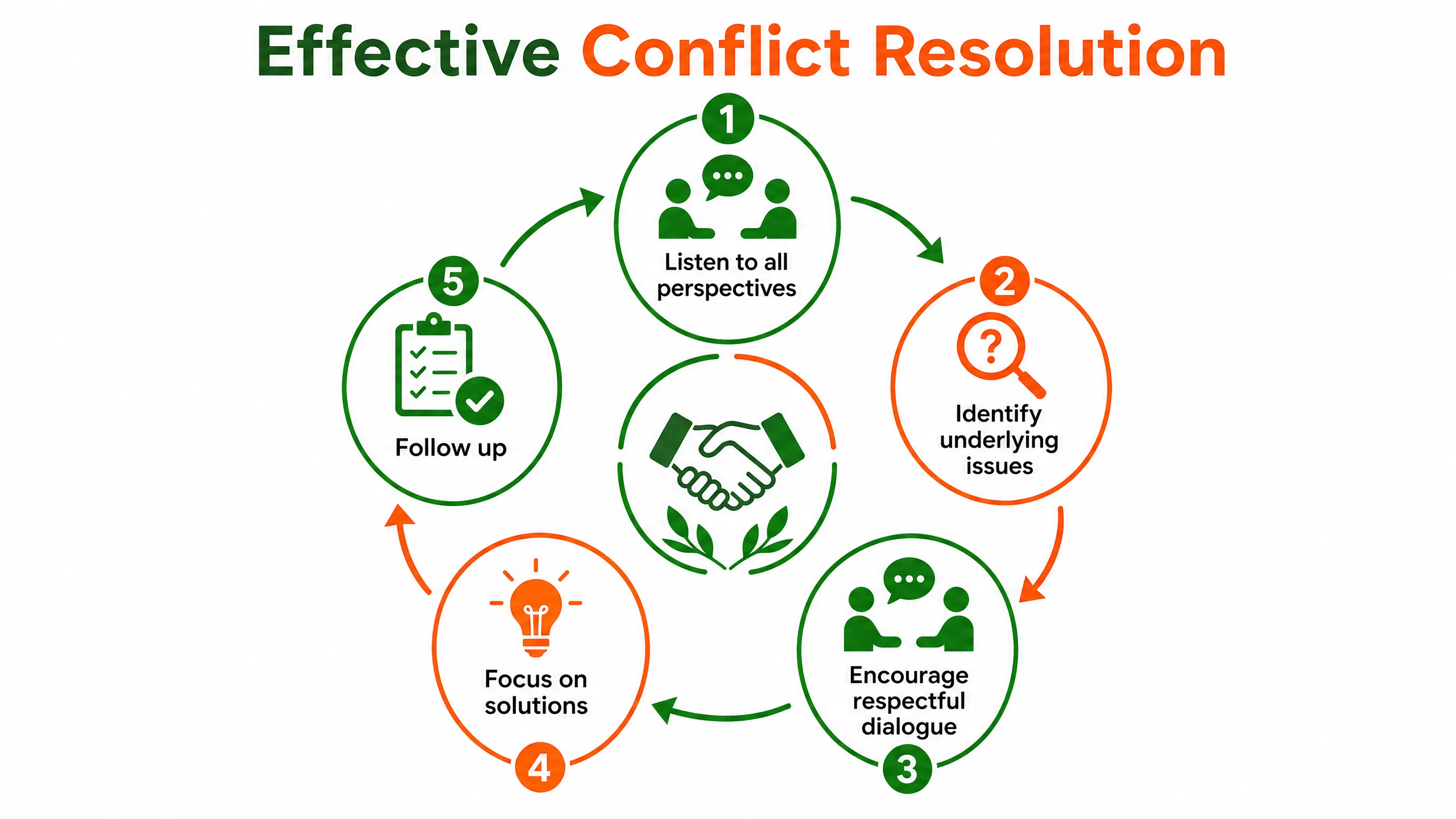
Managing Conflict and Difficult Situations
Conflict is unavoidable in any workplace. Different personalities, priorities, and perspectives naturally create disagreements.
Conflict Resolution Strategies
Effective leaders address conflicts promptly and fairly. Ignoring issues rarely makes them disappear. Instead, unresolved conflicts often escalate and affect team morale.
Successful conflict resolution involves:
- Listening to all perspectives.
- Identifying underlying issues.
- Encouraging respectful dialogue.
- Focusing on solutions rather than blame.
- Following up to ensure resolution.
Leaders who handle conflict effectively create stronger teams because employees learn how to collaborate despite differences.
Turning Challenges into Growth Opportunities
Every challenge presents an opportunity for learning and improvement. Effective leaders view setbacks as valuable experiences rather than failures. They encourage teams to analyze what happened, identify lessons learned, and apply those insights moving forward.
This growth mindset helps organizations become more resilient and adaptable in changing environments.
Continuous Learning and Leadership Development
Great leaders never stop learning. Leadership is not a destination; it is an ongoing journey of development.
Leadership Training and Professional Development
Leadership skills can be learned and strengthened through training, mentorship, coaching, and practical experience. Professional development programs provide valuable frameworks, tools, and strategies for improving leadership effectiveness.
Organizations increasingly invest in specialized programs such as:
- Leadership and Management Skills for New Managers
- Global Leadership Training
- Strategic Leadership Development
- Middle Managers Leadership Programs
- Executive Coaching Initiatives
These programs help professionals strengthen communication, decision-making, performance management, and team leadership capabilities.
Professionals interested in leadership development can explore resources from ForElite Training Institute, including:
- Leadership and Management Skills for New Managers and Supervisors
- Global Leadership Training
- Leadership and Executive Coaching Programs
- Public Sector Leadership and Management Courses
- Performance Management and Talent Development Courses
The Future of Leadership in a Digital Workplace
Technology continues to reshape how organizations operate. Leaders must now manage hybrid teams, leverage digital tools, and navigate rapid technological change. Digital literacy has become an important leadership competency alongside traditional skills such as communication and decision-making.
At the same time, organizations increasingly rely on digital marketing, online collaboration, and technology-driven growth strategies. Companies such as Nexera Digital Solutions demonstrate how strategic digital solutions can support organizational growth and performance in today’s competitive environment.
Future leaders will need to balance technological expertise with human-centered leadership approaches. While technology can improve efficiency, people remain the driving force behind innovation, collaboration, and long-term success.
Conclusion
Being a good leader in the workplace is not about authority, status, or control. It is about influence, trust, and service. Effective leaders communicate clearly, build strong relationships, empower employees, and continuously seek opportunities for growth. They lead by example, navigate challenges with resilience, and create environments where people can perform at their best.
Leadership is a skill that develops over time through experience, reflection, and continuous learning. Every interaction presents an opportunity to strengthen your leadership abilities. By focusing on integrity, communication, emotional intelligence, and employee development, you can become the kind of leader people genuinely want to follow. As workplaces continue to evolve, those leadership qualities will remain essential for building successful teams and thriving organizations.
FAQs
1. What is the most important quality of a good leader?
Trustworthiness is often considered the most important quality because trust forms the foundation of effective leadership and team performance.
2. Can leadership skills be learned?
Yes. Leadership skills can be developed through training, coaching, mentorship, self-reflection, and practical workplace experience.
3. How can leaders motivate employees?
Leaders motivate employees by recognizing achievements, providing growth opportunities, communicating clearly, and creating supportive work environments.
4. Why is emotional intelligence important for leaders?
Emotional intelligence helps leaders understand emotions, manage relationships effectively, resolve conflicts, and build stronger teams.
5. How can organizations develop future leaders?
Organizations can develop future leaders through structured leadership training, mentoring programs, coaching, job rotations, and succession planning initiatives.