
Project Management in Marketing: A Strategic Approach to Delivering Successful Campaigns

Marketing today is more complex than ever before. Teams manage multiple campaigns across different channels, coordinate with various stakeholders, work with tight deadlines, and strive to achieve measurable business outcomes. As a result, project management has become an essential discipline within modern marketing departments.
Project management in marketing involves planning, organizing, executing, monitoring, and controlling marketing activities to ensure campaigns are delivered on time, within budget, and according to objectives. Whether launching a new product, running a digital advertising campaign, or implementing a content marketing strategy, effective project management helps marketers stay organized and achieve better results.
Why Project Management Matters in Marketing
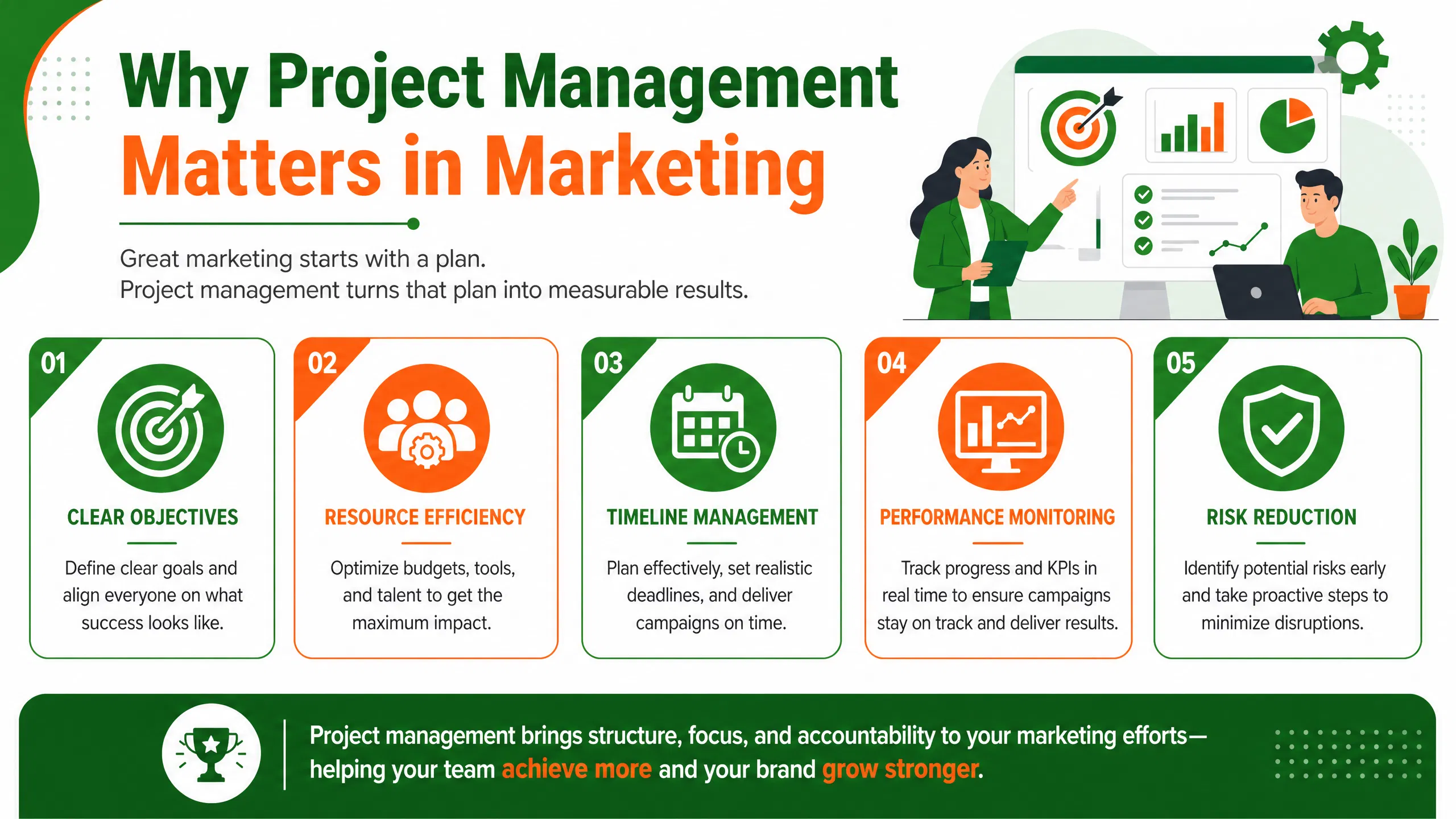
Marketing projects often involve numerous moving parts. Content creators, designers, SEO specialists, social media managers, sales teams, and external vendors frequently collaborate on the same initiative. Without a structured project management approach, campaigns can easily experience delays, budget overruns, communication breakdowns, and missed opportunities.
Therefore, project management provides a framework that helps marketing teams:
- Define clear objectives and deliverables.
- Allocate resources efficiently.
- Manage timelines effectively.
- Monitor campaign performance.
- Reduce risks and bottlenecks.
- Improve team collaboration.
- Ensure accountability across stakeholders.
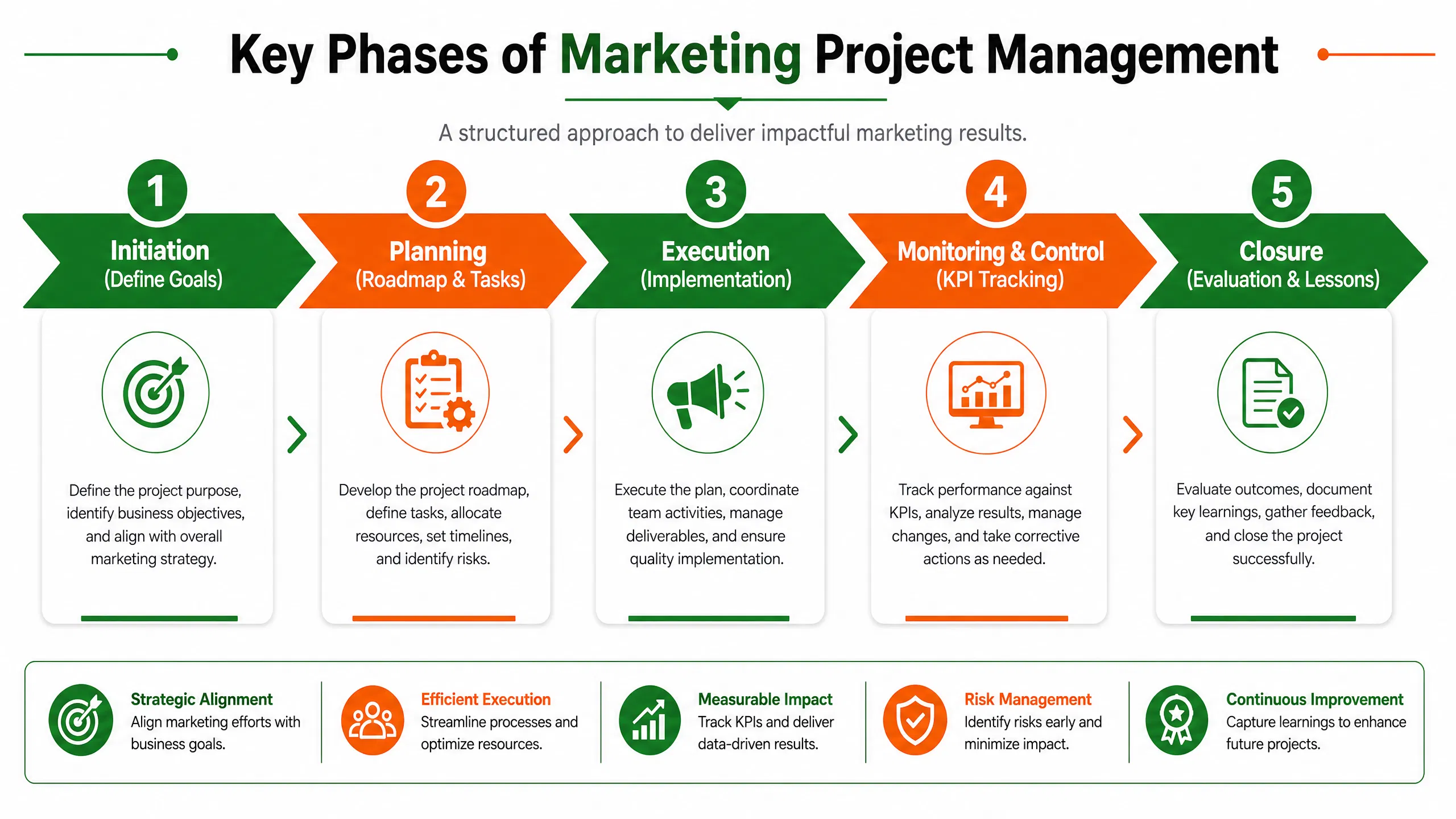
According to project management best practices, successful projects follow a structured lifecycle that includes initiation, planning, execution, monitoring, and closure. Organizations seeking to strengthen these capabilities can benefit from specialized programs such as the Training on Introduction to Project Management, which provides foundational knowledge for managing projects effectively.
Key Phases of Marketing Project Management
1. Project Initiation
Every successful marketing campaign begins with a clear understanding of its purpose. During the initiation phase, marketers define:
- Campaign goals
- Target audience
- Expected outcomes
- Budget requirements
- Success metrics
For example, a company launching a new product may aim to generate brand awareness, increase website traffic, and achieve a specific number of leads within a set timeframe.
At this stage, stakeholders must align on expectations and establish project priorities.
2. Project Planning
Planning is often considered the most critical stage of marketing project management. During this phase, teams create a detailed roadmap outlining tasks, responsibilities, timelines, and resource allocation.
Important planning activities include:
- Developing a work breakdown structure (WBS)
- Creating campaign timelines
- Assigning team responsibilities
- Establishing communication channels
- Identifying risks and mitigation strategies
Organizations seeking advanced planning methodologies can explore the Training on Advanced Project Management Techniques, which covers advanced scheduling, stakeholder management, agile methodologies, and risk mitigation strategies.
3. Project Execution
During execution, marketing teams implement planned activities. These may include:
- Content creation
- Social media campaigns
- Search engine optimization
- Email marketing
- Paid advertising
- Public relations initiatives
- Website development
Meanwhile, project managers coordinate resources, monitor progress, and ensure deliverables meet quality standards.
Effective communication becomes particularly important during this phase. Team members need regular updates to stay aligned and address issues quickly.
4. Monitoring and Control
Marketing campaigns generate significant amounts of data. Project managers must continuously monitor performance to determine whether objectives are being achieved.
Key performance indicators (KPIs) may include:
- Website traffic
- Lead generation
- Conversion rates
- Social media engagement
- Return on investment (ROI)
- Customer acquisition costs
Continuous monitoring allows teams to identify underperforming activities and make adjustments before problems escalate.
Professionals interested in strengthening monitoring capabilities may benefit from the Training on Project Management, Monitoring and Evaluation, which emphasizes data-driven decision-making, performance tracking, and stakeholder accountability.
Similarly, the Training on Project Monitoring and Evaluation with Data Management and Analysis helps professionals build stronger data management and analytical capabilities for project success.
5. Project Closure
Once campaign objectives have been achieved, the project enters the closure phase. Teams evaluate results, document lessons learned, and identify opportunities for future improvement.
A proper project review helps organizations:
- Understand what worked well.
- Identify challenges encountered.
- Improve future campaign planning.
- Enhance resource utilization.
- Increase overall marketing effectiveness.
Essential Project Management Skills for Marketing Professionals
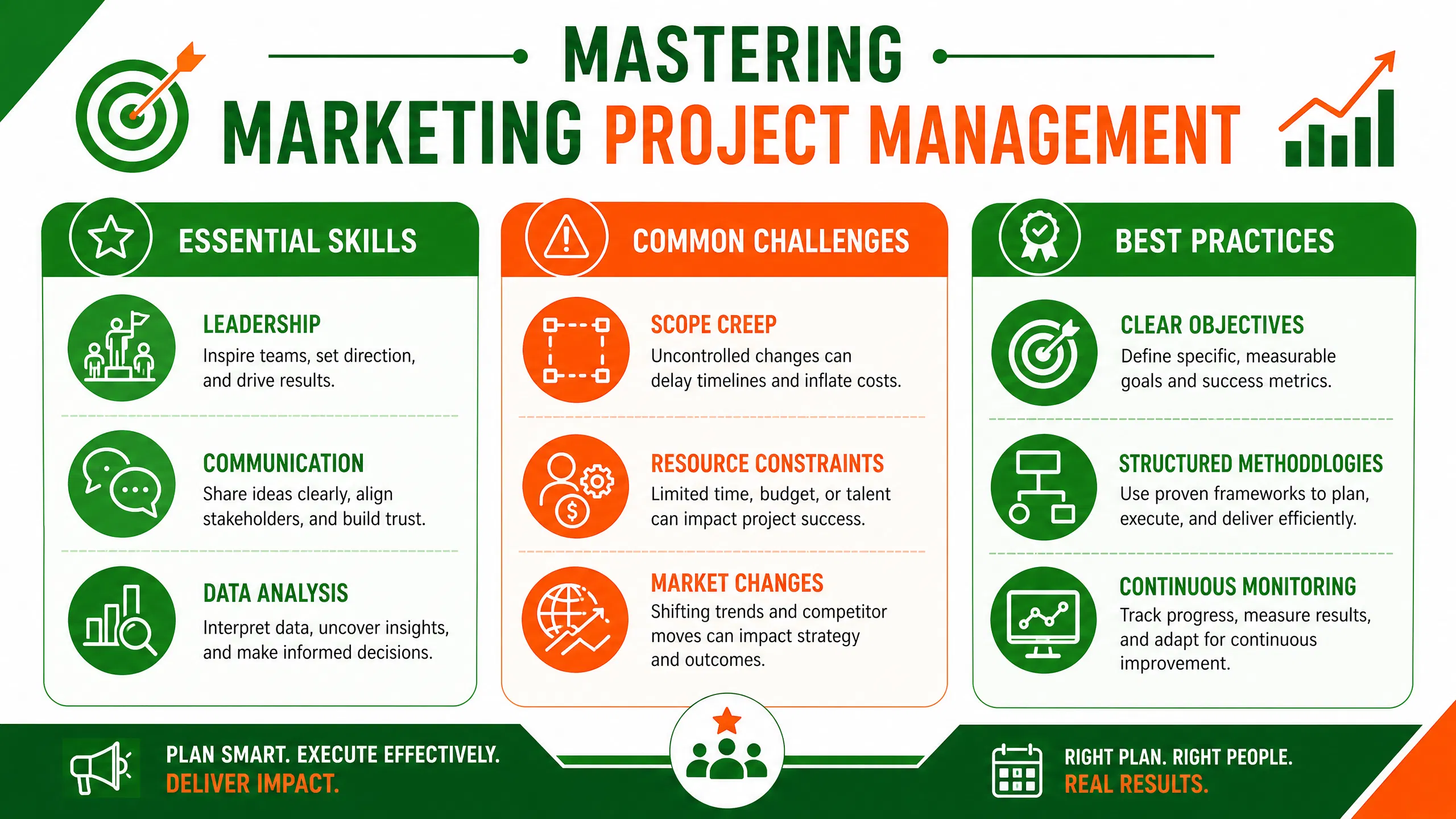
Marketing professionals increasingly require project management competencies to succeed in today’s competitive environment.
Leadership
Marketing projects often involve cross-functional teams. Strong leadership ensures everyone remains focused on shared goals.
The Training on Project Management for Leaders helps professionals strengthen strategic decision-making, leadership, and project execution skills.
Communication
Clear communication reduces misunderstandings and keeps projects moving forward. Marketing managers must communicate effectively with internal teams, executives, clients, and vendors.
Risk Management
Unexpected challenges such as budget constraints, shifting priorities, or market changes can disrupt campaigns. Effective risk management helps teams anticipate and address potential obstacles before they impact project outcomes.
Time Management
Marketing campaigns often operate under strict deadlines. Proper scheduling and prioritization ensure critical tasks are completed on time.
Data Analysis
Modern marketing relies heavily on performance data. Project managers must interpret metrics and use insights to optimize campaigns continuously.
Technology and Marketing Project Management
Technology has transformed how marketing projects are managed. Project management software enables teams to:
- Track tasks in real time
- Manage workflows
- Collaborate remotely
- Monitor deadlines
- Share documents efficiently
- Generate performance reports
Digital transformation has also increased the importance of integrating marketing technology with project management frameworks.
Companies looking to improve their digital marketing execution can leverage the expertise of Nexera Digital Solutions, a digital marketing consulting agency that helps businesses develop integrated online strategies, improve visibility, generate leads, and achieve measurable growth.
Common Challenges in Marketing Project Management
Despite the benefits, marketing teams often encounter several challenges:
Scope Creep
Projects frequently expand beyond their original objectives. New requests, additional deliverables, and changing stakeholder expectations can increase complexity and strain resources.
Resource Constraints
Limited budgets, insufficient staffing, and competing priorities can affect project performance.
Communication Gaps
Poor communication can lead to duplicated work, missed deadlines, and misunderstandings.
Rapid Market Changes
Consumer behavior, industry trends, and competitive dynamics can change quickly, requiring project plans to remain flexible.
Data Overload
Marketing teams collect vast amounts of information. Distinguishing meaningful insights from irrelevant data can be challenging without proper analytical processes.
Best Practices for Successful Marketing Project Management
Organizations can improve project outcomes by adopting several proven practices:
Establish Clear Objectives
Define measurable goals before launching any campaign.
Use Structured Methodologies
Frameworks such as Agile, Scrum, and traditional project management methodologies provide consistency and accountability.
Prioritize Stakeholder Engagement
Regular communication keeps stakeholders informed and aligned.
Monitor Performance Continuously
Track KPIs throughout the campaign lifecycle and make data-driven adjustments when necessary.
Invest in Training
Developing project management skills across marketing teams improves efficiency and campaign effectiveness.
Organizations seeking comprehensive project management development opportunities can explore the broad range of professional training programs available through ForElite Training Institute, including courses focused on project management, leadership, monitoring and evaluation, and organizational effectiveness.
Conclusion
Project management has become a critical success factor in modern marketing. As campaigns become increasingly complex, organizations need structured processes to manage resources, coordinate teams, control budgets, and achieve strategic objectives.
Ultimately, effective project management helps marketing teams deliver campaigns more efficiently, improve collaboration, reduce risks, and maximize return on investment. By combining strong project management practices with data-driven decision-making and digital marketing expertise, organizations can achieve sustainable growth and maintain a competitive advantage in an evolving marketplace.