

1. Introduction: The Imperative of Change-Driven Leadership in 2026
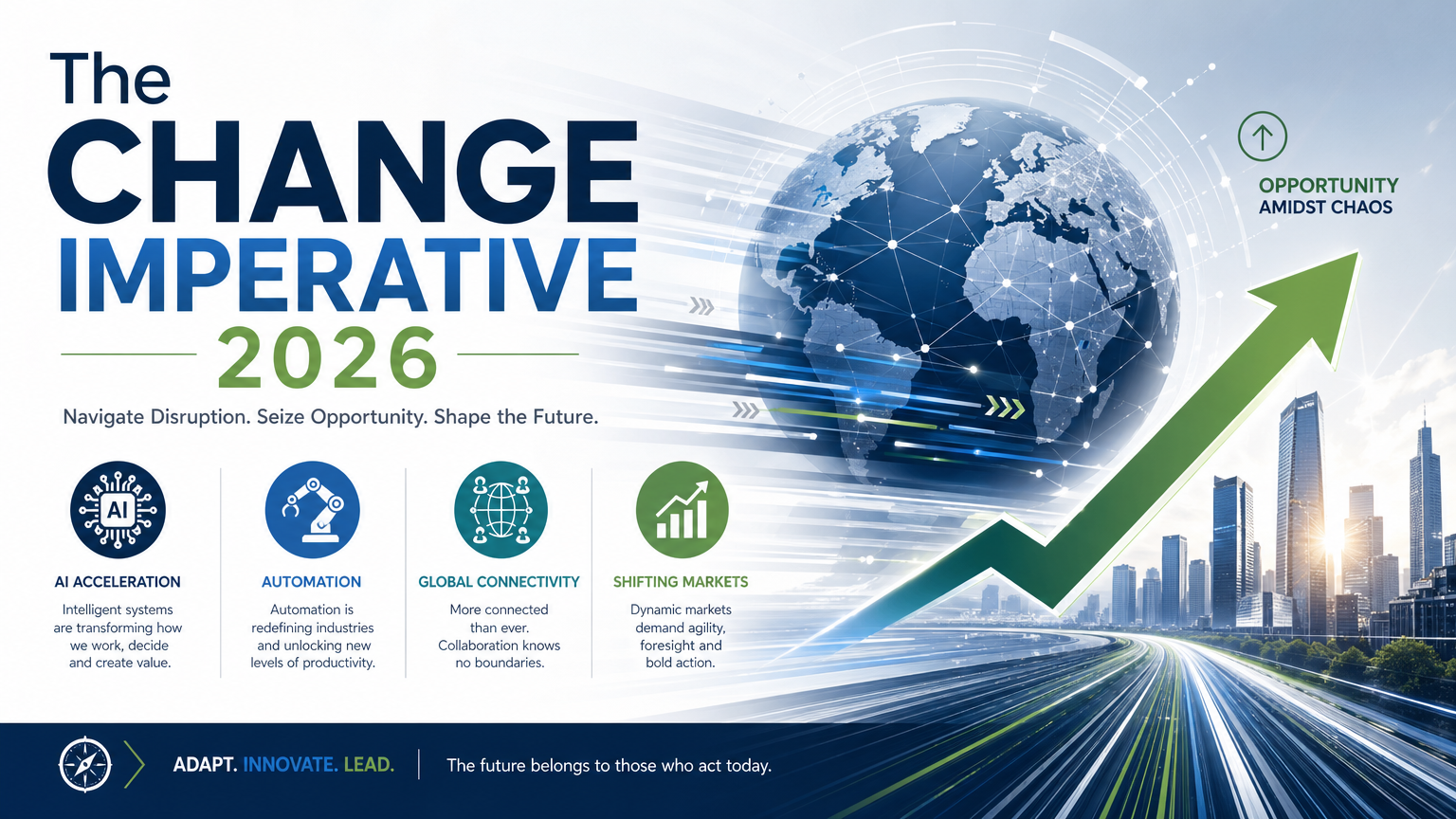
The year 2026 stands as a testament to an era defined by relentless change. From rapid technological advancements like AI and automation to shifting global markets and evolving workforce dynamics, disruption is not merely an event but a constant state. In this volatile landscape, traditional leadership paradigms, often rooted in stability and predictability, are proving insufficient. The ability to merely manage change is no longer enough; senior leaders must embody it, becoming the architects of transformation rather than just its administrators.
This article delves into the profound shift required for senior leaders to not only navigate but also to drive meaningful, sustainable change. We introduce the concept of the “change-driven mindset” as the critical differentiator for those at the helm of successful organizations. This mindset transcends conventional management practices, fostering an environment where innovation thrives, resistance is transformed into opportunity, and long-term vision is seamlessly integrated with agile execution. We will explore the core tenets, psychological underpinnings, and actionable strategies that empower senior leaders to cultivate this unstoppable change-driven mindset, ensuring sustained organizational success in 2026 and beyond.
2. Beyond Management: The Psychology of the Change-Driven Leader
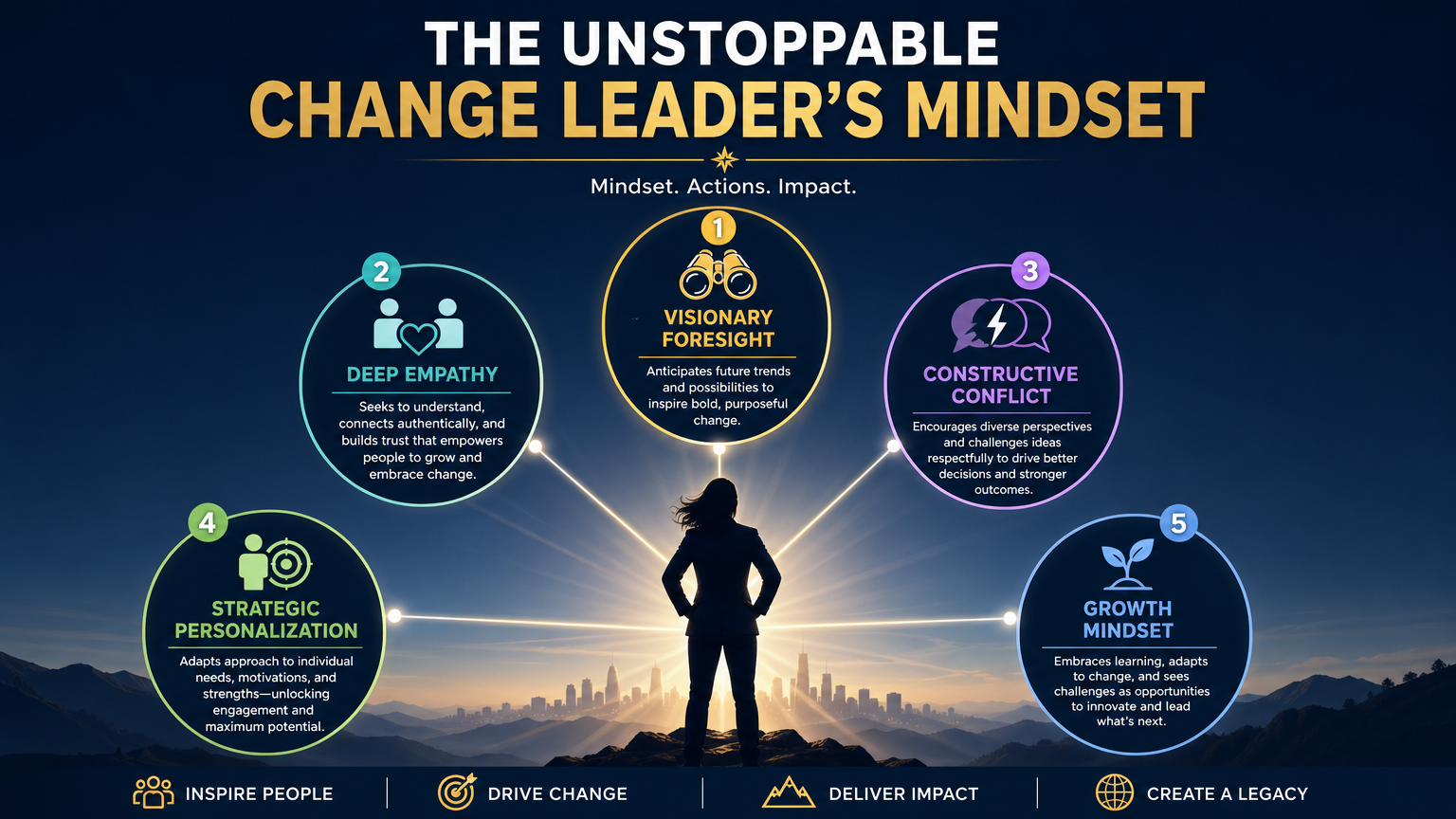
At its heart, change-driven leadership is less about a set of skills and more about a fundamental way of thinking and being. It’s a mindset that recognizes change not as an external threat to be mitigated, but as an intrinsic force to be harnessed. Senior leaders who excel in this environment don’t just implement new policies; they inspire new ways of thinking, challenging norms and fostering a culture of continuous evolution. This requires a deep understanding of human psychology, organizational dynamics, and a personal commitment to growth.
Key traits define these exceptional leaders:
Visionary Foresight with Agile Execution:
These leaders possess an uncanny ability to peer into the future, anticipating trends and envisioning possibilities that others might miss. Yet, their vision is not rigid. They couple this foresight with an unparalleled capacity for agile execution, making informed decisions in the present while remaining flexible enough to pivot as new information emerges. This balance allows them to lead with both strategic direction and tactical responsiveness. For leaders looking to enhance their team’s adaptability and drive, consider exploring resources on Empowering Middle Managers to Lead with Confidence.
Deep Empathy & Bold Expectations:
Transformational leaders understand that change impacts people at a fundamental level. They cultivate deep empathy, actively listening to concerns, building trust, and understanding the motivations of their teams. However, empathy does not equate to a lack of rigor. They combine compassion with bold expectations, creating environments where individuals feel supported yet challenged to reach their full potential. Feedback is direct and constructive, and progress is celebrated alongside outcomes.
Constructive Conflict Engagement:
In any significant change initiative, conflict is inevitable. What distinguishes change-driven leaders is their approach to disagreement. They don’t shy away from competing priorities or tough conversations; instead, they embrace them as opportunities to uncover better ideas and strengthen collective commitment. They foster a culture where healthy debate is welcomed, and diverse perspectives are sought out, leading to more robust decisions and greater alignment across the organization.
Strategic Personalization:
While strategic planning involves technical analysis and resource allocation, the most effective leaders treat strategy as deeply personal. Their decisions are not just about market share or profit margins; they are about shaping the organization’s identity, its values, and the legacy it will leave behind. This personal investment imbues their leadership with authenticity and inspires others to take ownership of the shared vision.
Unwavering Growth Mindset:
Even with decades of experience, change-driven leaders remain perpetual learners. They actively seek out new perspectives, welcome feedback from all levels of the organization, and view setbacks as invaluable learning opportunities. This commitment to continuous growth permeates the culture they lead, encouraging innovation, experimentation, and resilience throughout the entire enterprise.

3. The Agility-Vision Matrix: A Framework for Strategic Adaptation
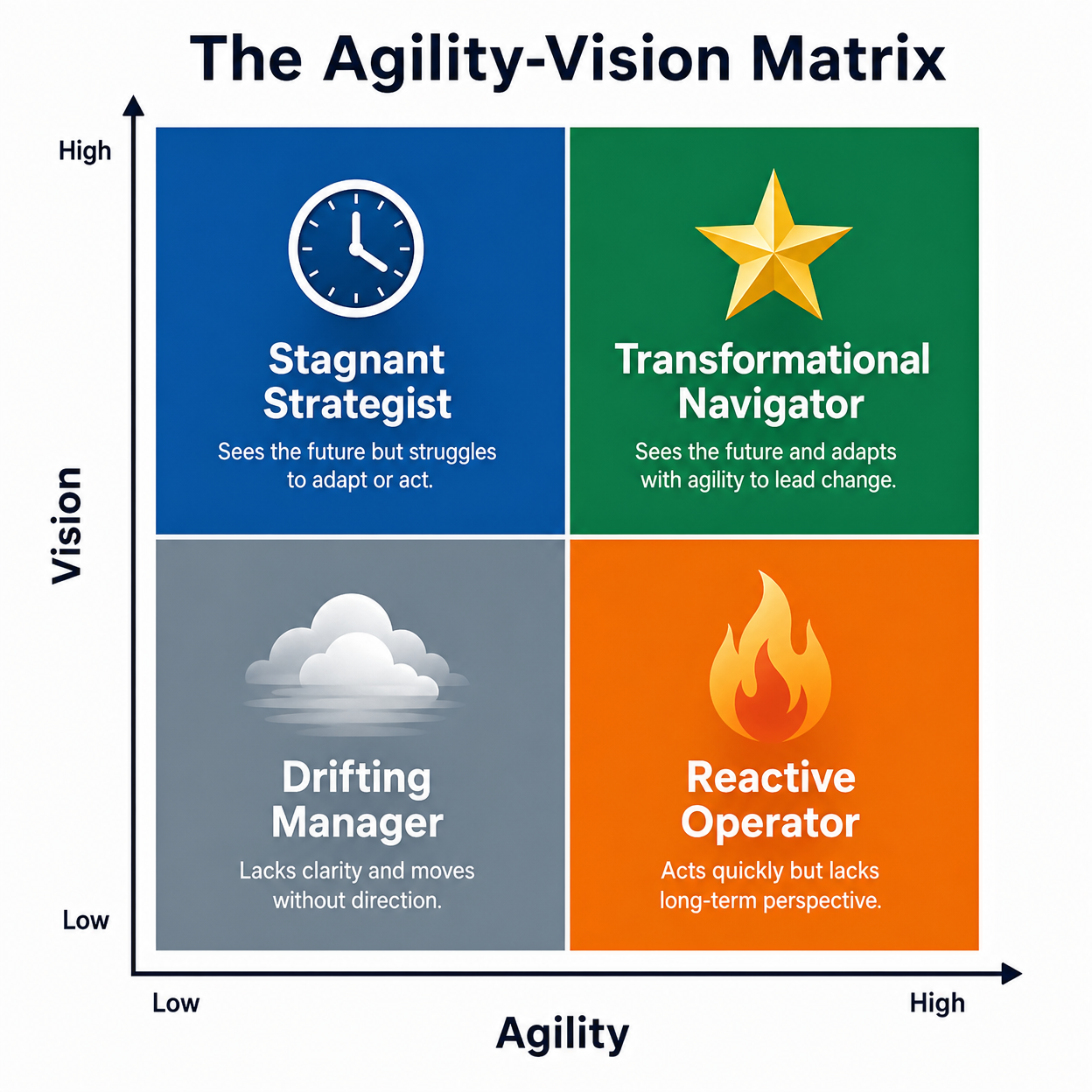
To effectively navigate the complexities of modern business, senior leaders require frameworks that enable both strategic clarity and operational flexibility. The Agility-Vision Matrix provides a powerful tool for assessing a leader’s current approach and guiding them toward optimal performance in a change-driven environment. This infographic illustrates how balancing long-term vision with short-term agility is paramount for sustained success.
Quadrant Breakdown:
High Vision, High Agility: The “Transformational Navigator”
These leaders possess a clear, compelling long-term vision and the dynamic capability to adapt and execute swiftly. They anticipate change, proactively shape their environment, and guide their organizations through disruption with confidence. This is the ideal state for change-driven leadership.
High Vision, Low Agility: The “Stagnant Strategist”
Leaders in this quadrant have grand visions but struggle to translate them into action or adapt to evolving circumstances. Their strategies, however brilliant, become rigid and are often outpaced by the speed of change, leading to missed opportunities and organizational inertia.
Low Vision, High Agility: The “Reactive Operator”
These leaders are adept at responding quickly to immediate challenges and opportunities. However, without a guiding long-term vision, their actions can be disjointed, leading to a lack of strategic direction and a constant state of firefighting rather than proactive growth.
Low Vision, Low Agility: The “Drifting Manager”
This quadrant represents a dangerous state where leaders lack both a clear future direction and the ability to adapt effectively. Organizations led by “Drifting Managers” often experience stagnation, declining relevance, and an inability to respond to competitive pressures.
Actionable Steps to Become a “Transformational Navigator”:
1.Cultivate Strategic Foresight: Regularly engage in scenario planning, trend analysis, and cross-industry learning to sharpen your long-term vision.
2.Embrace Iterative Planning: Break down large strategic goals into smaller, adaptable initiatives. Foster a culture of continuous learning and adjustment.
3.Empower Decentralized Decision-Making: Delegate authority to teams closest to the action, enabling faster responses and greater agility.
4.Invest in Continuous Learning: Encourage personal and organizational development in areas of adaptability, innovation, and strategic thinking.
4. Cultivating an Empathetic & Accountable Culture: The Dual Pillars of Change
Driving change is fundamentally a human endeavor. Even the most brilliant strategies will falter without a culture that supports and empowers its people. Senior leaders who master change understand that fostering an environment of both deep empathy and unwavering accountability is critical. These two pillars, seemingly contradictory, are in fact synergistic, creating a robust foundation for successful transformation.

Strategies for Building a Dual-Pillar Culture:
•Transparent Communication: In times of change, uncertainty breeds anxiety. Leaders must commit to open, honest, and frequent communication. This means sharing the “why” behind decisions, acknowledging challenges, and providing clear updates on progress. Transparency builds trust, reduces speculation, and ensures everyone feels informed and valued. For those seeking to master the art of conveying change effectively, specialized Change Communication and Employee Engagement Training can be invaluable.
•Empowerment & Ownership: A change-driven culture thrives when individuals feel empowered to contribute and take ownership of their roles in the transformation. This involves delegating authority, providing necessary resources, and trusting teams to innovate and problem-solve. When employees feel a sense of ownership, they become active participants rather than passive recipients of change. Further insights into fostering this can be found in resources dedicated to [Empowering Middle Managers to Lead with Confidence][1].
•Feedback Loops & Continuous Improvement: Establishing robust feedback mechanisms is essential for learning and adaptation. Leaders should actively solicit input from all levels, creating safe spaces for constructive criticism and new ideas. This continuous loop of feedback and improvement ensures that strategies are refined, challenges are addressed promptly, and the organization remains agile. It also reinforces the growth mindset discussed earlier.
•Ethical Leadership: The foundation of any resilient culture is ethical leadership. In times of change, when decisions can have far-reaching consequences, leaders must operate with unwavering integrity, fairness, and transparency. Ethical behavior builds profound trust, which is indispensable for navigating difficult transitions and maintaining employee loyalty. For a deeper dive into this crucial aspect, exploring programs like Advanced Ethics and Responsible Leadership is highly recommended.
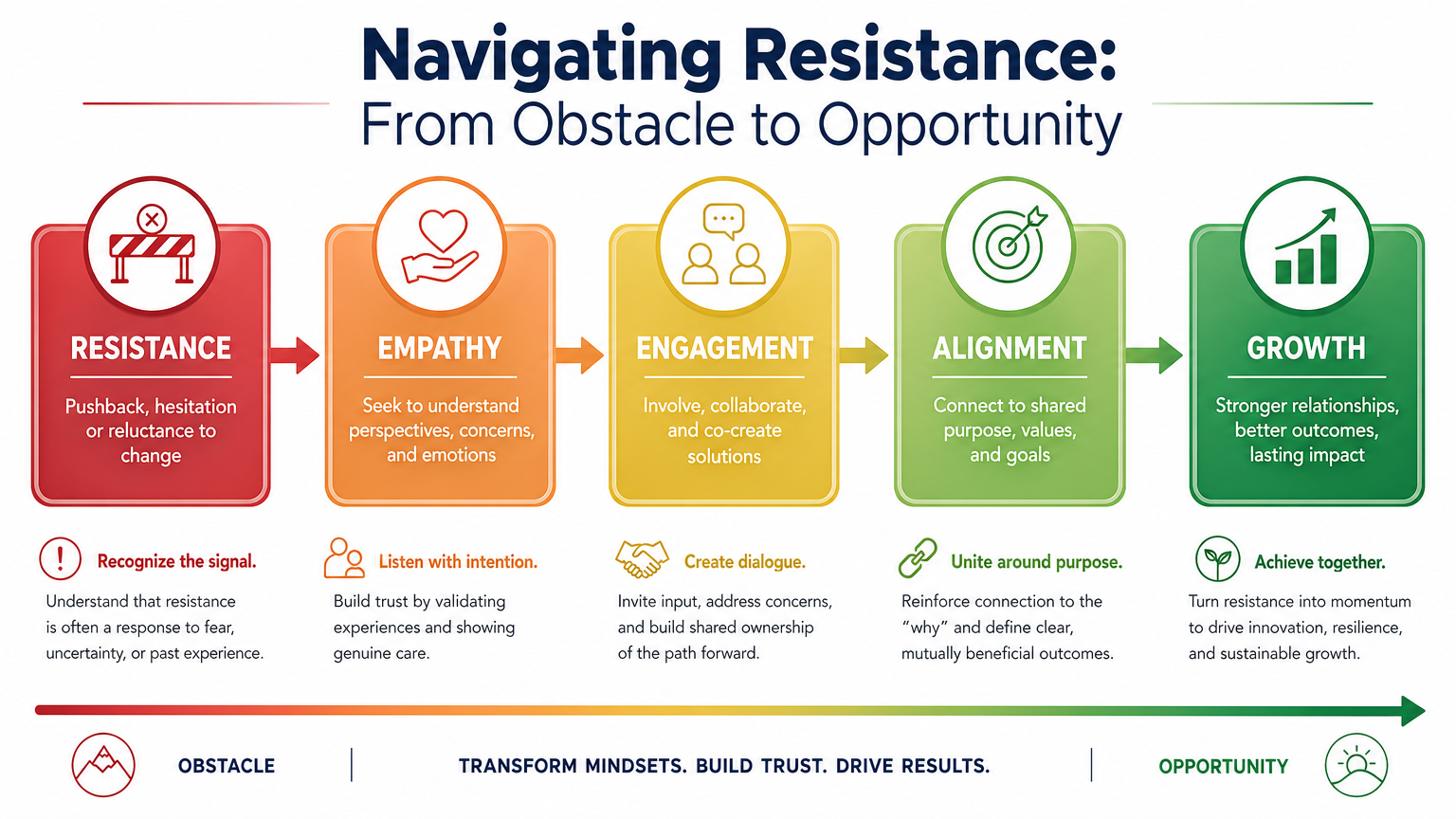
5. Navigating Resistance: From Obstacle to Opportunity
Resistance to change is a natural human response, often stemming from fear of the unknown, loss of control, or perceived threats to established routines. For senior leaders, understanding and effectively navigating this resistance is not about eliminating it, but about transforming it from an obstacle into an opportunity for deeper engagement and stronger outcomes. Ignoring resistance only allows it to fester and undermine change initiatives.
Understanding Resistance:
Common sources of resistance include:
•Fear of the Unknown: People naturally prefer predictability. Change introduces uncertainty, which can be unsettling.
•Loss of Control: New processes or structures can make individuals feel disempowered.
•Self-Interest: Concerns about how change will personally affect roles, status, or workload.
•Misunderstanding: Lack of clear communication about the purpose and benefits of the change.
•Low Trust: A history of poorly managed changes can lead to skepticism and cynicism.
Proactive Strategies for Transformation:
•Stakeholder Engagement: Early and continuous engagement with all key stakeholders is paramount. This involves identifying who will be affected by the change, understanding their perspectives, and involving them in the planning and implementation process. By making them part of the solution, leaders can gain buy-in and transform potential resistors into advocates. The importance of aligning board-level vision with ground-level clarity is further elaborated in Bridging the Divide: How Board-Level Vision Fuels Ground-Level Clarity.
•Conflict Resolution Techniques: Rather than suppressing conflict, change-driven leaders utilize it constructively. This involves facilitating open dialogue, mediating disagreements, and helping teams find common ground. Techniques such as active listening, reframing challenges, and focusing on shared objectives can turn contentious discussions into opportunities for innovative solutions.
•Building Coalitions: Successful change rarely happens in isolation. Leaders must actively build coalitions of support, identifying influential individuals and groups who can champion the change and help persuade others. These champions act as internal advocates, reinforcing the message and demonstrating the benefits of the new direction.
6. The Future of Change Leadership: AI, Data, and Human-Centricity
As we advance further into the 21st century, the landscape of leadership is being reshaped by powerful forces: artificial intelligence (AI) and the ever-increasing availability of data. These technologies offer unprecedented opportunities for senior leaders to make more informed decisions, optimize processes, and predict future trends. However, the true mastery of change leadership in this new era lies not just in leveraging technology, but in harmonizing it with an unwavering commitment to human-centricity.

Leveraging Technology for Change:
•AI-Powered Insights: AI and machine learning can analyze vast datasets to identify patterns, predict market shifts, and even forecast potential resistance points within an organization. Leaders can use these insights to refine strategies, personalize communication, and allocate resources more effectively.
•Data-Driven Decision Making: Real-time data analytics provides leaders with a clear, objective view of organizational performance and the impact of change initiatives. This allows for rapid adjustments and evidence-based leadership, moving beyond intuition to informed action.
•Automation of Routine Tasks: By automating repetitive processes, leaders can free up human capital to focus on higher-value, strategic tasks that require creativity, critical thinking, and emotional intelligence.
The Irreplaceable Human Element:
Despite the power of technology, the human element remains paramount. AI can provide data, but it cannot inspire, empathize, or build trust. These are uniquely human leadership qualities that become even more critical in a technologically advanced world.
•Emotional Intelligence: Understanding and managing emotions, both one’s own and those of others, is vital for navigating the human side of change. Leaders must be able to connect with their teams, address anxieties, and foster a sense of psychological safety.
•Ethical Decision-Making: As AI becomes more integrated into business, ethical considerations become more complex. Senior leaders must guide their organizations with a strong moral compass, ensuring that technology is used responsibly and for the greater good.
•Adaptability and Learning Agility: The pace of technological change demands that leaders and their teams continuously learn and adapt. Fostering a culture of lifelong learning is essential for staying relevant and competitive.
This imperative for continuous development is underscored by programs like Mastering Leadership: The Ultimate Guide to Senior Management Courses in 2026, which equip leaders with the skills to thrive at this intersection of technology and humanity.
7. Conclusion: Your Path to Becoming an Unstoppable Change Leader
The journey to becoming an unstoppable change leader in 2026 and beyond is not a destination but a continuous evolution. It demands a profound shift in mindset, moving beyond mere management to actively embodying and driving transformation. We have explored the critical psychological traits that set these leaders apart: visionary foresight coupled with agile execution, deep empathy balanced with bold expectations, constructive engagement with conflict, strategic personalization, and an unwavering commitment to a growth mindset.
By embracing frameworks like the Agility-Vision Matrix, cultivating cultures of empathy and accountability, and skillfully navigating resistance, senior leaders can transform their organizations. Furthermore, by strategically integrating AI and data while prioritizing the irreplaceable human element, they can build resilient, innovative, and future-proof enterprises.
Your path to elite leadership in this dynamic era begins with a conscious decision to cultivate this change-driven mindset. It requires continuous learning, courageous decision-making, and a steadfast belief in the power of people. Embrace the imperative of change, and you will not only lead your organization through disruption but also inspire a legacy of sustained success and meaningful impact.

Frequently Asked Questions (FAQs)
What is a change-driven mindset in senior leadership?
A change-driven mindset is a leadership approach where senior executives not only manage organizational change but actively embody and champion it. It involves a proactive stance towards disruption, leveraging it as an opportunity for growth and innovation, rather than a threat to stability. This mindset integrates long-term vision with agile execution, deep empathy with bold expectations, and a continuous commitment to learning.
Why is a change-driven mindset crucial for leaders in 2026?
In 2026, characterized by rapid technological advancements (like AI), global market shifts, and evolving workforce dynamics, traditional leadership methods are often insufficient. A change-driven mindset enables leaders to anticipate and adapt to disruption, foster a culture of continuous evolution, and maintain organizational relevance and competitiveness in a volatile business environment.
How can senior leaders balance long-term vision with short-term agility?
Balancing long-term vision with short-term agility involves cultivating strategic foresight through scenario planning and trend analysis, while simultaneously embracing iterative planning and decentralized decision-making. This allows leaders to maintain a clear future direction while remaining flexible and responsive to immediate challenges and opportunities, effectively becoming “Transformational Navigators.”
What role does empathy play in change-driven leadership?
Empathy is a critical component of change-driven leadership, enabling leaders to understand and address the human impact of change. By actively listening, building trust, and acknowledging concerns, empathetic leaders create a supportive environment. This, combined with bold expectations, fosters psychological safety and encourages teams to embrace challenges and grow, rather than resist change.
How can leaders effectively navigate resistance to change?
Effective navigation of resistance involves transforming it from an obstacle into an opportunity. This is achieved through proactive stakeholder engagement, involving affected parties in the planning process, and utilizing constructive conflict resolution techniques. By fostering open dialogue, mediating disagreements, and building coalitions of support, leaders can gain buy-in and turn potential resistors into advocates for change.
References
[1]: Empowering Middle Managers to Lead with Confidence: A Strategic Imperative for 2026
[2]: Change Communication and Employee Engagement Training
[3]: Advanced Ethics and Responsible Leadership
[4]: Bridging the Divide: How Board-Level Vision Fuels Ground-Level Clarity
[5]: Mastering Leadership: The Ultimate Guide to Senior Management Courses in 2026