
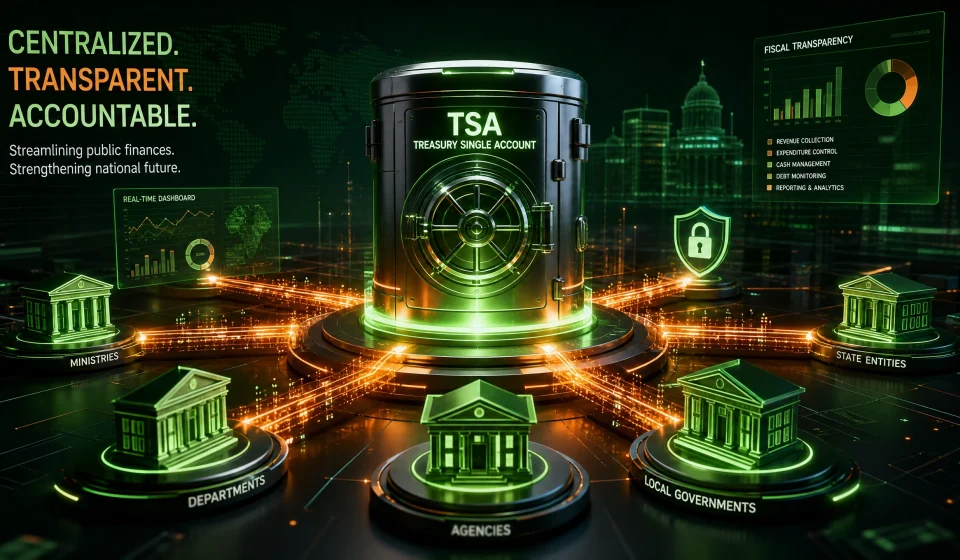
Treasury Single Account Implementation: 15 Powerful Benefits, Challenges, and Best Practices for Financial Transparency

Treasury Single Account implementation has become one of the most important financial reforms in modern public sector management. Governments around the world are adopting this centralized banking structure to improve accountability, eliminate leakages, and strengthen cash management systems. In many developing economies, the Treasury Single Account (TSA) has transformed the way public funds are collected, managed, and monitored.
As governments face increasing pressure to ensure transparency and efficient resource utilization, Treasury Single Account implementation provides a practical solution for consolidating government revenues into a unified account structure. This reform not only improves fiscal discipline but also reduces corruption and wasteful spending.
Organizations and public sector professionals seeking advanced financial management skills can benefit from programs offered by Forelite Training, which provides professional courses in treasury management, public finance, procurement, and governance.
Introduction to Treasury Single Account Implementation
Treasury Single Account implementation refers to the establishment of a unified structure of government bank accounts that consolidates all public funds into a single account or a set of linked accounts managed by the treasury.
Traditionally, many government agencies maintained multiple accounts across different commercial banks. This fragmented approach often created inefficiencies, encouraged corruption, and made financial oversight difficult. Treasury Single Account implementation addresses these issues by centralizing cash management and ensuring that all government receipts and payments pass through a controlled system.
The adoption of TSA systems has become a global trend because governments now recognize the need for improved accountability and financial efficiency.
Understanding the Concept of Treasury Single Account
Definition and Core Principles
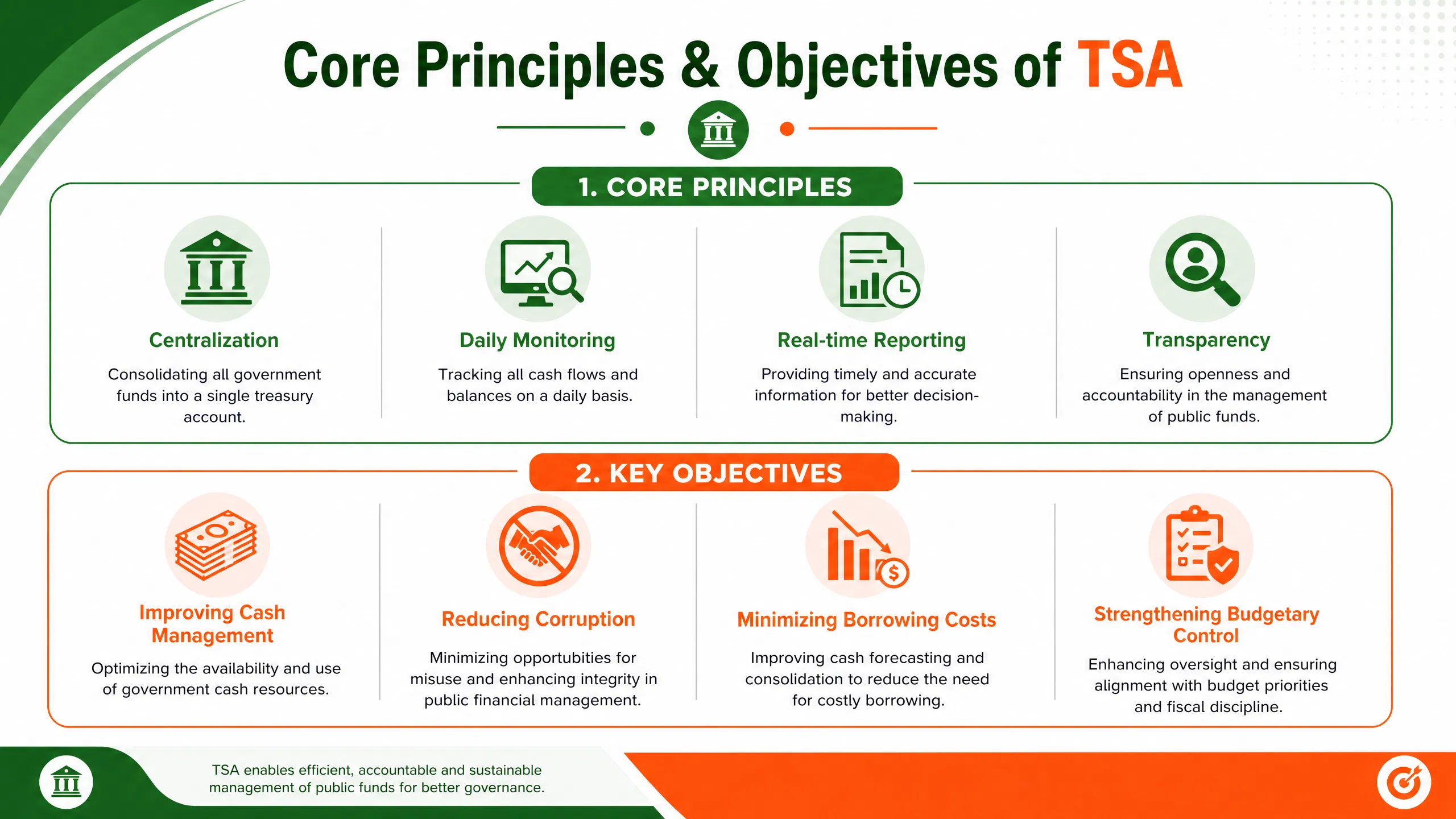
A Treasury Single Account is a unified banking arrangement that consolidates government cash balances into one account structure. The primary objective is to ensure efficient cash management and reduce unnecessary borrowing.
Core principles of Treasury Single Account implementation include:
- Centralization of government funds
- Daily cash position monitoring
- Real-time financial reporting
- Transparent revenue collection
- Improved expenditure control
These principles help governments optimize available resources while maintaining accountability.
Objectives of Treasury Single Account Systems
The key objectives include:
- Improving government cash management
- Enhancing fiscal transparency
- Reducing corruption and financial leakages
- Minimizing borrowing costs
- Strengthening budgetary control
- Improving public financial reporting
Many financial professionals improve their expertise in these areas through specialized programs such as those offered by Public Financial Management Training Courses.
Historical Development of Treasury Single Account Implementation
Global Adoption Trends
Treasury Single Account systems have existed for decades in developed economies. Countries such as France, the United Kingdom, and Australia pioneered centralized treasury systems to improve public financial management.
International organizations including the International Monetary Fund (IMF) and the World Bank strongly advocate Treasury Single Account implementation because it supports fiscal discipline and economic stability.
Treasury Reforms in Developing Economies
Many developing countries adopted TSA reforms to combat corruption and improve revenue collection. African countries, in particular, have embraced TSA systems as part of broader public sector reforms.
Nigeria’s implementation remains one of the most discussed examples because it significantly increased government revenue visibility and reduced financial leakages.
Key Components of Treasury Single Account Implementation
Centralized Government Banking Structure
A centralized banking structure ensures all government funds are consolidated under treasury oversight. This reduces unauthorized spending and improves accountability.
The structure typically includes:
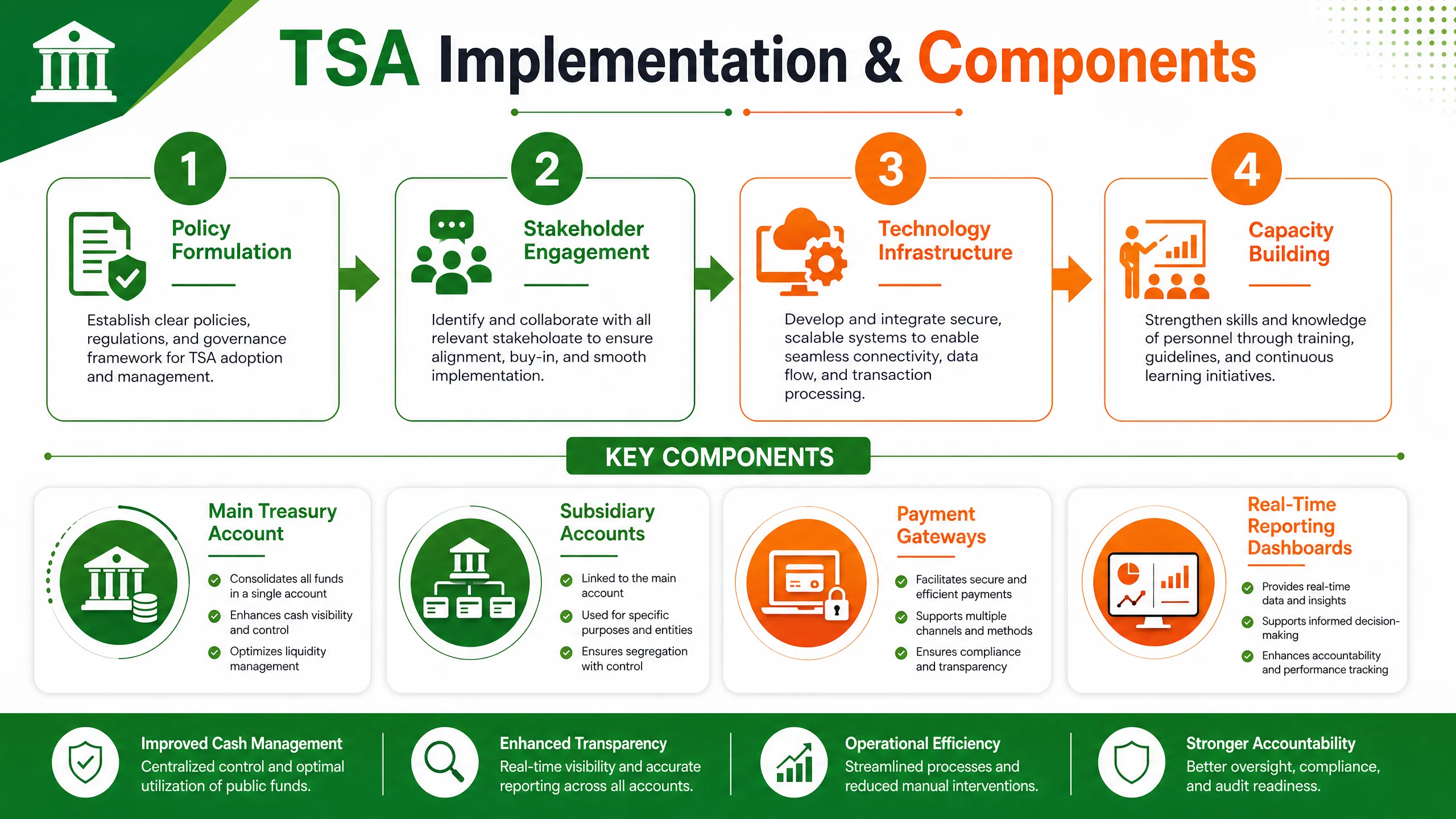
- Main treasury account
- Subsidiary transaction accounts
- Collection accounts
- Payment gateways
Revenue Collection and Payment Systems
Modern Treasury Single Account implementation relies heavily on electronic payment systems. Digital platforms ensure secure and efficient revenue collection.
Government institutions increasingly integrate TSA systems with e-payment technologies and enterprise resource planning systems.
Organizations seeking digital transformation expertise can explore Corporate Training Programs for specialized financial technology and governance solutions.
Real-Time Financial Reporting
Real-time reporting allows treasury authorities to monitor government cash flows instantly. This capability improves financial planning and decision-making.
Benefits include:
- Accurate forecasting
- Faster reconciliation
- Reduced fraud
- Better audit readiness
Importance of Treasury Single Account Implementation
Enhancing Financial Accountability
Treasury Single Account implementation improves accountability by ensuring all public funds are visible within one framework.
This transparency discourages fraudulent practices and improves trust in government financial systems.
Reducing Government Borrowing Costs
Without TSA systems, governments may borrow funds unnecessarily while idle balances remain scattered across multiple accounts.
By consolidating resources, governments can reduce borrowing requirements and save money on interest payments.
Eliminating Idle Public Funds
Idle balances in commercial banks represent inefficiencies in public finance management. Treasury Single Account implementation ensures that available resources are effectively utilized.
Treasury Single Account Implementation Process
Policy Formulation and Legal Framework
Successful implementation begins with strong policies and legal backing. Governments must establish regulations that define:
- Account structures
- Roles and responsibilities
- Reporting requirements
- Compliance standards
Stakeholder Engagement and Institutional Coordination
Stakeholder involvement is critical for smooth implementation. Ministries, departments, agencies, banks, and technology providers must collaborate effectively.
Resistance from institutions accustomed to financial autonomy can create implementation barriers.
Technology and Banking Infrastructure
Technology plays a central role in TSA operations. Governments need reliable systems capable of supporting:
- Electronic payments
- Integrated banking platforms
- Automated reconciliations
- Financial reporting dashboards
Digital transformation providers such as Nexera Digital Solutions support organizations in building modern technology infrastructures for financial management and operational efficiency.
Role of Digital Transformation in Treasury Management
Automation and Financial Systems
Automation improves treasury efficiency by reducing manual processes and minimizing errors.
Key technologies include:
- Enterprise resource planning systems
- Integrated financial management information systems
- Cloud-based reporting platforms
- Artificial intelligence tools
Professionals seeking expertise in automation and governance may benefit from Governance, Risk and Compliance Training.
Cybersecurity and Data Protection
Since TSA systems manage large volumes of financial data, cybersecurity is essential.
Governments must protect treasury systems from:
- Cyberattacks
- Data breaches
- Unauthorized access
- Financial fraud
Robust cybersecurity frameworks help maintain trust in digital financial systems.
Major Challenges of Treasury Single Account Implementation
Resistance from Government Agencies
Some agencies resist Treasury Single Account implementation because they fear losing financial independence.
This resistance can delay reforms and reduce operational efficiency during transition periods.
Banking Sector Concerns
Commercial banks often oppose TSA reforms because government deposits represent a significant source of liquidity.
The withdrawal of public funds from commercial banks can affect lending capacity and profitability.
Technical and Operational Difficulties
Implementation challenges may include:
- Poor ICT infrastructure
- Inadequate staff training
- Weak internet connectivity
- Data migration issues
Capacity development programs from Forelite Training Consulting Services can support institutions during financial reform transitions.
Best Practices for Successful Treasury Single Account Implementation
Strong Political Commitment
Political leadership is essential for successful Treasury Single Account implementation. Government leaders must support reforms consistently and ensure compliance across all agencies.
Capacity Building and Training
Training treasury staff and public finance professionals is crucial.
Areas requiring training include:
- Treasury operations
- Financial reporting
- Digital systems management
- Risk management
- Audit compliance
Specialized learning opportunities are available through Professional Development Training Courses.
Effective Change Management
Governments must communicate clearly with stakeholders and address concerns proactively.
Effective change management strategies include:
- Awareness campaigns
- Technical workshops
- Pilot testing
- Continuous stakeholder engagement
Treasury Single Account Implementation in Africa
Nigeria’s Treasury Single Account Journey
Nigeria’s Treasury Single Account reform significantly improved government revenue transparency.
The system helped:
- Increase accountability
- Reduce corruption
- Improve cash management
- Strengthen fiscal discipline
Despite early resistance, the reform became one of Africa’s most important public finance initiatives.
Lessons from Kenya, Ghana, and Tanzania
Other African countries have also adopted Treasury Single Account systems with varying levels of success.
Key lessons include:
- Strong legal frameworks matter
- Technology infrastructure is critical
- Stakeholder engagement improves adoption
- Continuous monitoring supports sustainability
Economic Impact of Treasury Single Account Implementation
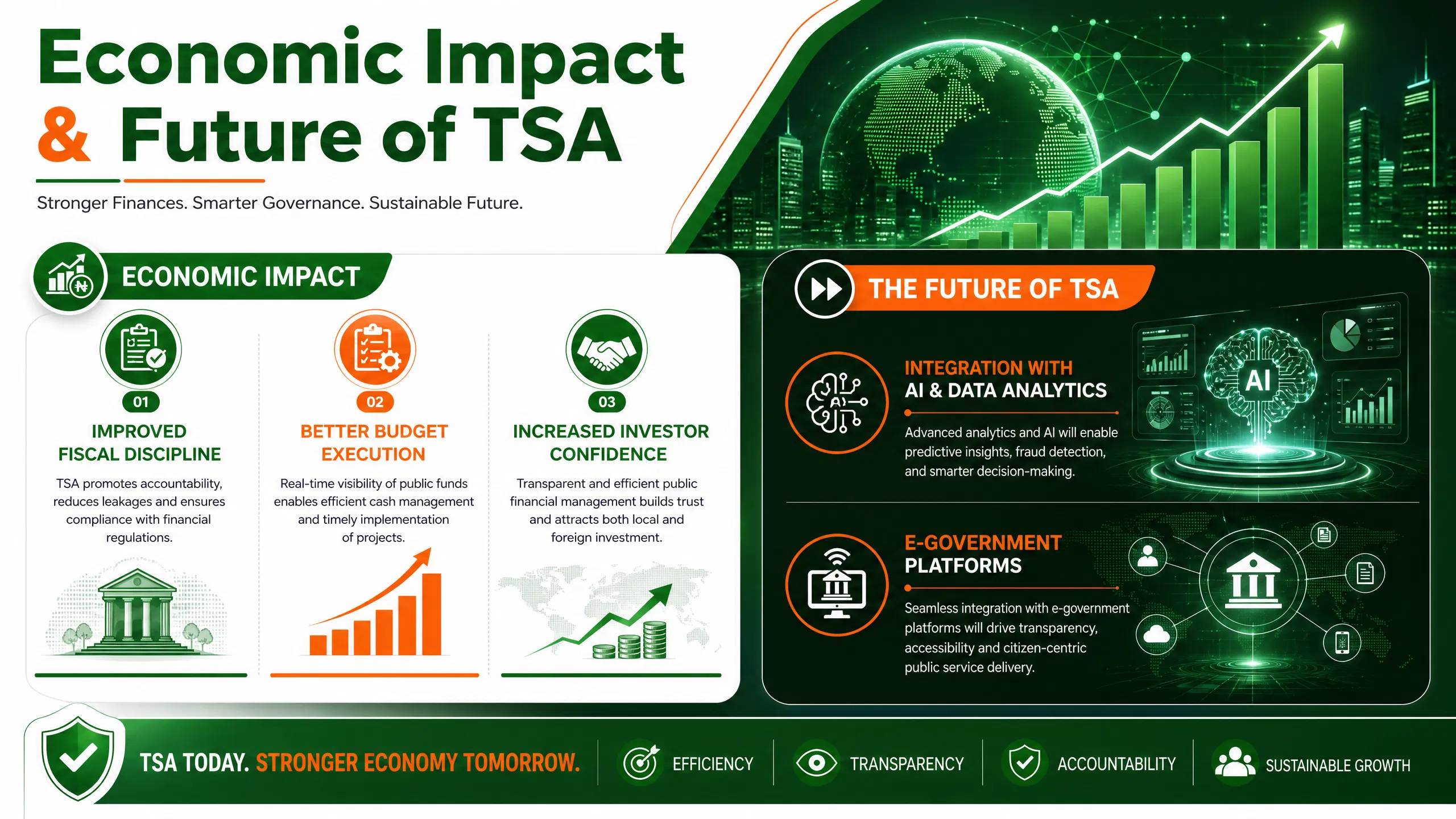
Improved Fiscal Discipline
Treasury Single Account implementation strengthens government control over public finances.
This leads to:
- Better spending oversight
- Reduced budget deficits
- Improved accountability
Better Budget Execution
Governments can allocate resources more effectively when accurate cash balances are available.
This improves service delivery and infrastructure development.
Increased Investor Confidence
Transparent financial systems improve investor trust and strengthen economic stability.
Investors prefer countries with strong public financial management frameworks because they reduce financial risks.
Professionals interested in economic governance and financial strategy can explore Leadership and Management Training Courses.
The Future of Treasury Single Account Systems
Artificial Intelligence and Data Analytics
Artificial intelligence is expected to transform Treasury Single Account implementation by improving:
- Fraud detection
- Cash forecasting
- Risk analysis
- Financial reporting
Advanced analytics can help governments make smarter financial decisions.
Integration with E-Government Platforms
Future TSA systems will likely integrate fully with digital government services.
This integration will improve:
- Revenue collection efficiency
- Public service delivery
- Transparency
- Citizen engagement
Digital transformation will continue to shape the future of treasury management worldwide.
Frequently Asked Questions
1. What is Treasury Single Account implementation?
Treasury Single Account implementation is the process of consolidating all government revenues and payments into a unified treasury-controlled banking system.
2. Why is Treasury Single Account important?
It improves transparency, enhances accountability, reduces corruption, and strengthens government cash management.
3. Which countries use Treasury Single Account systems?
Many countries including Nigeria, Kenya, Ghana, France, and the United Kingdom use TSA systems.
4. What are the main challenges of Treasury Single Account implementation?
Common challenges include institutional resistance, weak technology infrastructure, and banking sector opposition.
5. How does Treasury Single Account implementation reduce corruption?
By centralizing government funds and improving financial visibility, TSA systems reduce opportunities for unauthorized transactions and hidden accounts.
6. What role does technology play in Treasury Single Account implementation?
Technology enables electronic payments, automated reconciliations, real-time reporting, and secure financial management.
Conclusion
Treasury Single Account implementation remains one of the most effective public financial management reforms in modern governance. By centralizing government funds, improving transparency, and enhancing fiscal discipline, TSA systems help governments manage public resources more efficiently.
Although implementation challenges exist, strong political commitment, robust technology infrastructure, effective stakeholder engagement, and continuous capacity building can ensure success.
As digital transformation continues to reshape public finance, Treasury Single Account systems will become even more advanced through automation, artificial intelligence, and integrated e-government platforms. Governments that embrace these innovations will strengthen accountability, improve service delivery, and build greater public trust.
For organizations and professionals seeking to improve expertise in treasury management, governance, and financial systems, Forelite Training Official Website offers a wide range of specialized training and consulting services.