AI Fluency and Augmented Leadership: 9 Powerful Strategies to Build Transparent Human-AI Teams

The conversation around artificial intelligence has changed dramatically over the last few years. Businesses are no longer asking simple questions like, “How do we use AI tools?” Instead, leaders are asking deeper and more strategic questions about governance, accountability, and trust. The new challenge is leading a blended workforce where humans and AI systems work side by side.
This shift has created a growing demand for AI fluency for managers, stronger human-AI collaboration strategy, and more responsible AI ethical oversight. Organizations now need leaders who can guide teams through AI adoption while protecting transparency, creativity, and accountability.
One of the most effective ways to achieve this is by creating an AI Charter. An AI Charter acts as a framework that explains how AI should be used within a company, who is responsible for decisions, and how ethical standards will be maintained.
Businesses investing in leadership development and workforce readiness are increasingly turning to professional training providers such as Forelite Training for guidance on digital transformation, leadership, and future workforce capabilities. Likewise, organizations seeking scalable technology implementation strategies often collaborate with Nexera Digital Solutions to modernize operations responsibly.
Understanding the Shift From AI Usage to AI Leadership
In the early days of workplace AI adoption, companies focused heavily on tools. Teams experimented with chatbots, automation platforms, and predictive systems. But as AI became embedded into daily workflows, the leadership challenge grew more complex.
Today, organizations must answer critical questions:
- Who is accountable for AI-generated decisions?
- How should AI outputs be reviewed?
- What happens when AI recommendations conflict with human judgment?
- How do companies maintain fairness and transparency?
These concerns have moved AI discussions from the IT department into the executive boardroom.
Leaders are now expected to understand:
- AI capabilities
- AI limitations
- Ethical risks
- Human collaboration dynamics
- Governance requirements
This broader leadership responsibility defines the era of AI-augmented leadership.
Why AI Fluency for Managers Matters More Than Ever
Managers no longer need to become software engineers, but they do need practical AI fluency. That means understanding how AI impacts workflows, communication, productivity, and decision-making.
The Difference Between AI Literacy and AI Fluency
AI literacy means understanding basic AI concepts. AI fluency goes much further. It involves confidently applying AI in real-world business situations while recognizing ethical and operational risks.
An AI-fluent manager can:
- Evaluate AI recommendations critically
- Communicate AI policies clearly
- Balance automation with human oversight
- Encourage responsible AI experimentation
- Identify bias or misinformation risks
Organizations that prioritize leadership training often explore programs through Forelite Training Leadership Courses to strengthen managerial readiness for digital transformation.
Key Skills Modern Leaders Need
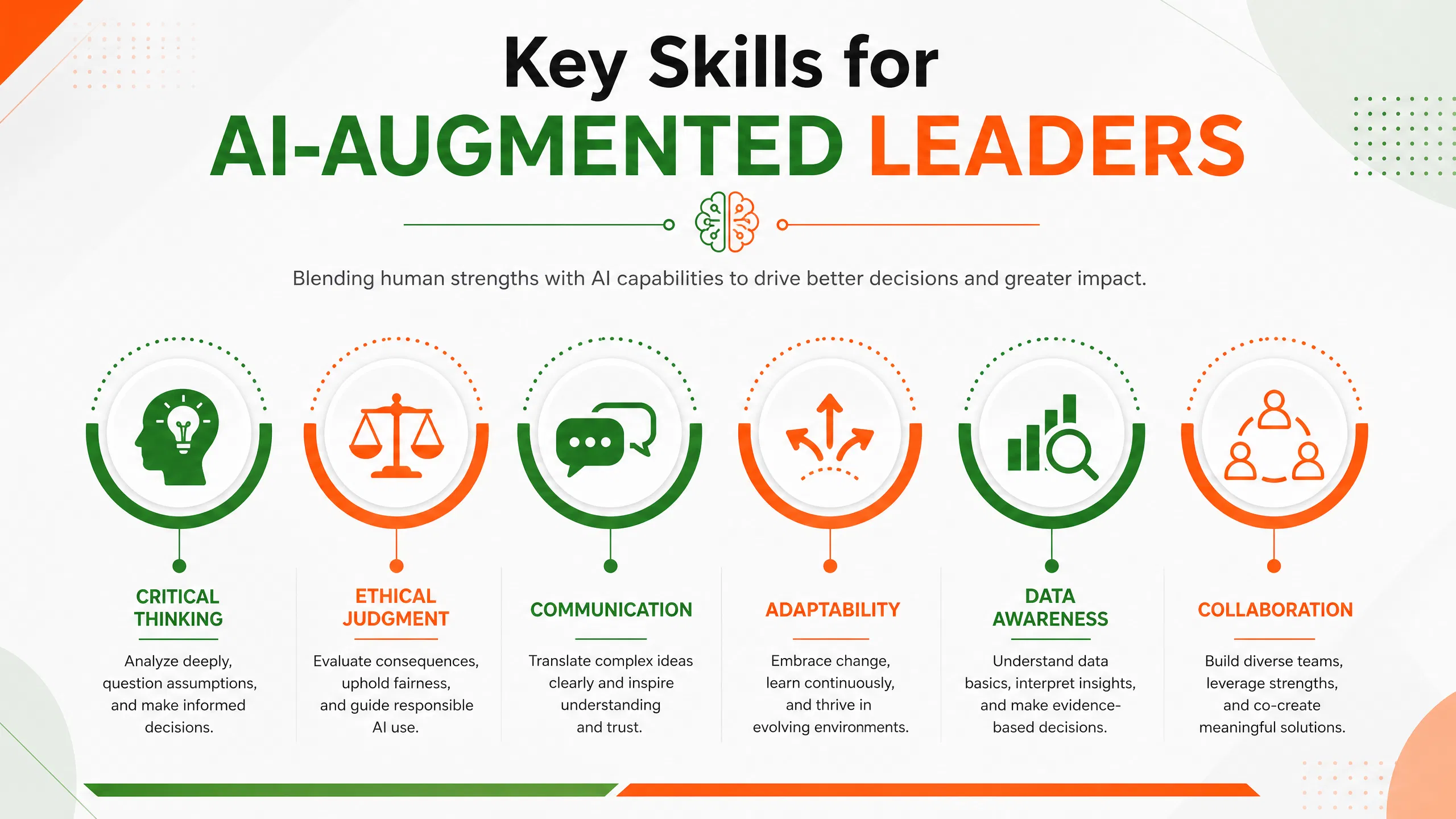
The future manager requires a blend of technical awareness and human-centered leadership skills, including:
| Skill | Why It Matters |
|---|---|
| Critical Thinking | AI outputs still require validation |
| Ethical Judgment | Prevents misuse and bias |
| Communication | Builds trust across teams |
| Adaptability | AI systems evolve rapidly |
| Data Awareness | Supports informed decisions |
| Collaboration | Encourages human-AI teamwork |
Without these skills, organizations risk confusion, inefficiency, and mistrust.
What Is AI-Augmented Leadership?
AI-augmented leadership refers to leadership models where managers use AI systems as collaborative tools rather than replacements for human expertise.
In this approach:
- AI supports data analysis
- Humans guide strategic decisions
- Teams combine automation with creativity
- Managers oversee ethical implementation
This model is not about replacing employees. Instead, it focuses on empowering workers with intelligent systems that improve efficiency and insight.
Managing Hybrid Human-AI Workforces
Modern teams may include:
- Human employees
- AI copilots
- Automation systems
- Intelligent workflow tools
- Predictive analytics engines
Leaders must coordinate all these elements effectively.
This requires clear expectations about:
- When AI should assist
- When humans must intervene
- Who owns final decisions
- How transparency is maintained
Building Trust Between Humans and AI Systems
Trust is the foundation of successful AI adoption.
Employees become skeptical when:
- AI decisions seem hidden
- Automation affects job security
- Managers cannot explain AI outputs
- Accountability is unclear
Transparent leadership reduces fear and resistance. Organizations that prioritize workforce transformation initiatives often leverage resources from Forelite Training Corporate Learning Solutions to support employee confidence during technological change.
The Rise of Human-AI Collaboration Strategy
A strong human-AI collaboration strategy helps organizations define how people and AI systems interact productively.
Instead of viewing AI as competition, companies should treat AI as a collaborative partner.
Redefining Team Roles
AI changes how teams operate. Repetitive administrative tasks can be automated, allowing employees to focus on:
- Creativity
- Strategic thinking
- Relationship building
- Innovation
- Problem solving
For example:
- AI may draft reports
- Humans review and refine insights
- AI analyzes trends
- Humans decide business direction
This balanced model creates stronger outcomes.
Balancing Automation With Human Judgment
Automation should never eliminate accountability.
Managers must ensure:
- Humans retain final decision authority
- Sensitive decisions receive manual review
- AI-generated recommendations are validated
- Employees understand AI limitations
A healthy collaboration strategy treats AI as an advisor, not a replacement for leadership.
What Is an AI Charter?
An AI Charter is a formal organizational framework that outlines how AI technologies should be used responsibly within a business.
Think of it as a “constitution” for AI usage.
It defines:
- Ethical standards
- Governance structures
- Transparency expectations
- Human oversight requirements
- Data protection principles
- Accountability processes
Why Every Organization Needs One
Without clear guidelines, AI adoption becomes chaotic.
Teams may:
- Use unauthorized AI tools
- Share sensitive information
- Rely too heavily on automation
- Produce inconsistent outputs
- Create legal or compliance risks
An AI Charter creates alignment across departments.
Core Principles of an Effective AI Charter
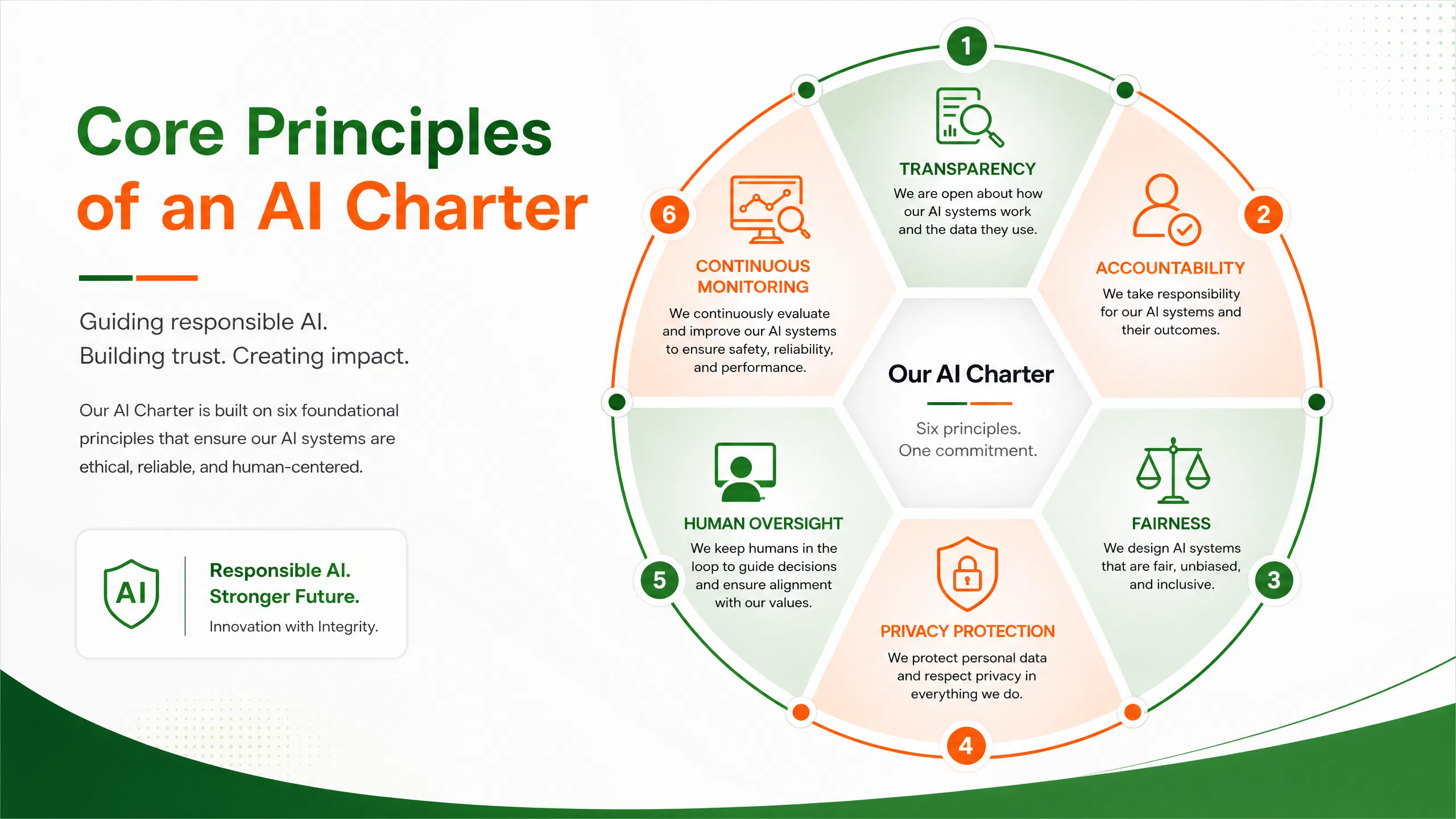
A strong AI Charter should include:
| Principle | Purpose |
|---|---|
| Transparency | Explains when AI is used |
| Accountability | Assigns decision ownership |
| Fairness | Reduces bias risks |
| Privacy Protection | Safeguards sensitive data |
| Human Oversight | Maintains human authority |
| Continuous Monitoring | Supports improvement |
Organizations developing governance frameworks often combine leadership education with technology advisory services from partners like Nexera Digital Solutions.
Building an AI Charter for Transparency and Accountability
Creating an AI Charter requires more than writing policies. Leaders must actively involve employees, legal teams, technology specialists, and department managers.
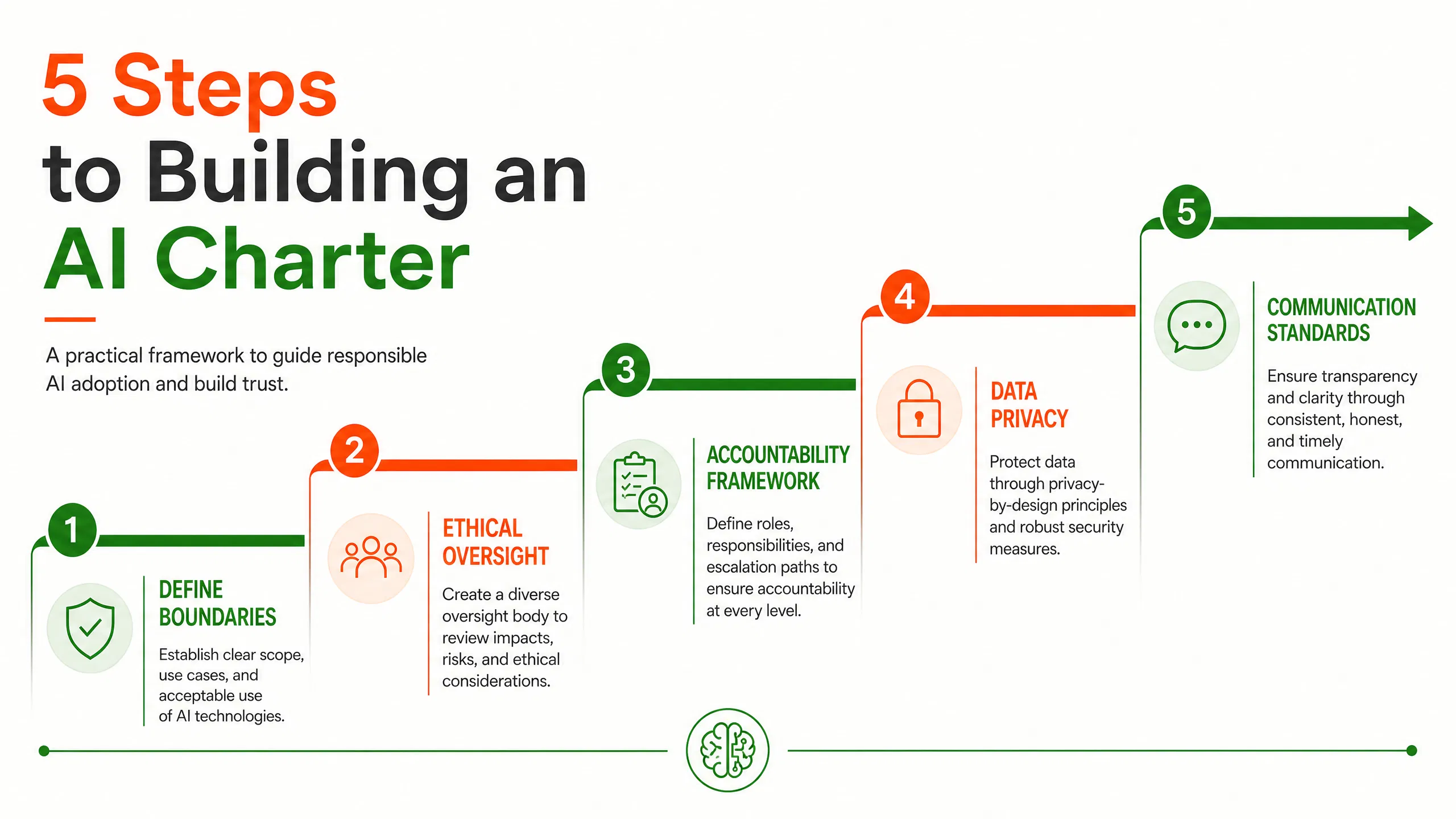
Here’s a practical framework organizations can follow.
Step 1: Define AI Usage Boundaries
Start by clarifying:
- Which AI tools are approved
- Which tasks AI may perform
- Which activities require human approval
- Which data can be entered into AI systems
This prevents confusion and reduces security risks.
For example:
- AI may assist with drafting content
- AI may not independently approve legal contracts
- AI may support analytics
- AI may not replace performance evaluations
Clear boundaries improve accountability.
Step 2: Create Ethical Oversight Policies
AI ethical oversight is essential.
Organizations must define:
- Bias review procedures
- Fairness standards
- Escalation processes
- Compliance responsibilities
- Ethical review committees
Leaders should also establish procedures for reporting AI concerns safely and confidentially.
Companies seeking governance and leadership education may benefit from programs available through Forelite Training Professional Development Programs.
Step 3: Establish Accountability Frameworks
One of the biggest AI risks is unclear responsibility.
Your AI Charter should answer:
- Who approves AI deployment?
- Who reviews outputs?
- Who handles errors?
- Who communicates AI policies?
Every AI-driven process should have a clearly identified human owner.
Step 4: Protect Data Privacy and Security
AI systems often process sensitive information.
Your charter should define:
- Data handling rules
- Storage requirements
- Access controls
- Vendor compliance expectations
- Cybersecurity standards
Managers should understand that AI convenience should never override privacy protections.
Step 5: Build Employee Communication Standards
Transparency reduces fear.
Employees should know:
- When AI is being used
- Why AI is being used
- How decisions are reviewed
- What protections exist
Regular communication builds confidence and trust.
AI Ethical Oversight in Modern Organizations
Ethical oversight is no longer optional. Governments, consumers, and employees increasingly expect responsible AI governance.
Preventing Bias and Misinformation
AI systems can unintentionally generate:
- Biased recommendations
- Incorrect outputs
- Misleading summaries
- Incomplete analyses
Human review remains essential.
Managers should encourage employees to:
- Verify AI-generated content
- Cross-check important information
- Challenge questionable outputs
- Report ethical concerns
Human Review and Decision Authority
The most effective organizations maintain clear “human-in-the-loop” structures.
This means:
- AI assists
- Humans decide
Final authority should always remain with accountable individuals, especially in:
- Hiring
- Finance
- Legal matters
- Healthcare
- Compliance decisions
Leadership workshops and governance training from Forelite Training Digital Transformation Programs can help organizations strengthen ethical oversight practices.
Common Challenges in AI-Augmented Leadership
Even well-planned AI initiatives face obstacles.
Resistance to AI Adoption
Employees may fear:
- Job displacement
- Reduced autonomy
- Increased monitoring
- Skill obsolescence
Transparent communication and upskilling opportunities reduce these concerns.
Over-Reliance on Automation
Some organizations mistakenly assume AI is always accurate.
This creates risks such as:
- Poor decision-making
- Loss of human expertise
- Reduced creativity
- Blind trust in algorithms
Balanced oversight is essential.
Compliance and Governance Risks
AI regulations are evolving rapidly across industries and countries.
Organizations without governance frameworks may face:
- Legal exposure
- Data privacy violations
- Reputation damage
- Operational disruptions
This is why AI Charters are becoming a best practice for modern enterprises.
Best Practices for AI Fluency for Managers
Managers play a central role in shaping responsible AI adoption.
Encourage Continuous Learning
AI evolves quickly. Leaders should promote:
- Ongoing workshops
- AI ethics training
- Scenario-based learning
- Cross-functional collaboration
Educational platforms like Forelite Training Workforce Readiness Solutions can help organizations maintain long-term learning strategies.
Promote Responsible Experimentation
Innovation matters, but experimentation must occur within clear guardrails.
Managers should encourage teams to:
- Test AI carefully
- Share lessons learned
- Document risks
- Evaluate outcomes transparently
Develop Cross-Functional AI Teams
Successful AI governance requires collaboration between:
- HR
- IT
- Legal
- Compliance
- Operations
- Leadership teams
Cross-functional oversight improves decision quality and accountability.
How Training Programs Support AI Leadership
Training is one of the strongest investments organizations can make during AI transformation.
Effective AI leadership programs help managers:
- Understand AI limitations
- Build ethical oversight frameworks
- Improve communication strategies
- Create governance policies
- Strengthen digital confidence
Businesses preparing for long-term workforce transformation frequently explore professional education resources from Forelite Training to improve leadership readiness in evolving industries.
Real-World Examples of Human-AI Collaboration Strategy
Across industries, organizations are already implementing hybrid workforce models.
Customer Service
AI chatbots answer routine questions while human agents handle complex emotional situations.
Marketing
AI tools generate content drafts, but human marketers refine messaging and strategy.
Healthcare
AI assists with diagnostics while medical professionals maintain final clinical authority.
Finance
AI analyzes trends and detects anomalies, but financial experts validate investment decisions.
These examples demonstrate that AI works best when paired with human judgment.
The Future of AI-Augmented Leadership
The future workplace will not be fully automated. Instead, it will become increasingly collaborative.
Leaders who succeed in this new environment will:
- Embrace AI responsibly
- Build transparent governance systems
- Prioritize ethical oversight
- Maintain human-centered leadership
- Foster trust and accountability
AI fluency will soon become as important as digital literacy is today.
Organizations that fail to prepare may struggle with:
- Employee resistance
- Ethical failures
- Governance gaps
- Competitive disadvantages
Those that invest early in AI leadership frameworks and AI Charters will build stronger, more adaptable organizations.
Frequently Asked Questions
What is AI-augmented leadership?
AI-augmented leadership is a leadership approach where managers work alongside AI systems to improve decision-making, productivity, and collaboration while maintaining human oversight.
Why is AI fluency for managers important?
AI fluency helps managers understand AI capabilities, risks, and ethical responsibilities so they can guide teams effectively in AI-powered workplaces.
What is an AI Charter?
An AI Charter is a governance framework that outlines how AI should be used responsibly within an organization, including rules for transparency, accountability, ethics, and oversight.
How does human-AI collaboration strategy improve businesses?
A strong human-AI collaboration strategy allows organizations to combine automation with human creativity, improving efficiency while maintaining critical thinking and accountability.
What is AI ethical oversight?
AI ethical oversight refers to the policies, processes, and governance structures used to ensure AI systems are fair, transparent, accountable, and compliant with regulations.
How can organizations build trust in AI systems?
Organizations can build trust by maintaining transparency, involving employees in AI decisions, implementing human review processes, and communicating AI policies clearly.
Conclusion
The age of simply “using AI tools” is over. Today’s organizations must focus on leading blended workforces where humans and AI systems collaborate responsibly.
This shift requires a new generation of leaders skilled in:
- AI fluency for managers
- Human-AI collaboration strategy
- AI ethical oversight
- Transparent governance
An effective AI Charter provides the structure needed to maintain accountability, fairness, and trust across teams.
Organizations that invest in ethical AI leadership today will be far better prepared for tomorrow’s increasingly intelligent workplace.
As AI adoption accelerates, the most successful leaders will not be those who automate the fastest. They will be the ones who create environments where humans and AI work together transparently, ethically, and effectively.