Managerial Accounting and Cost Analysis: 15 Powerful Insights to Boost Business Profitability

Introduction to Managerial Accounting
Managerial accounting and cost analysis are essential tools that help businesses make informed decisions, control costs, and improve profitability. Unlike financial accounting, which focuses on external reporting, managerial accounting is used internally to guide managers in planning and operations.
At its core, managerial accounting provides insights into business performance by analyzing financial data, forecasting trends, and identifying opportunities for improvement. According to Managerial Accounting Training Course, it plays a critical role in planning, controlling, and decision-making processes across organizations.
Role in Decision-Making
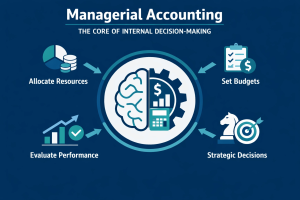
Managerial accounting empowers managers to:
- Allocate resources efficiently
- Set realistic budgets
- Evaluate business performance
- Make strategic decisions
It transforms raw financial data into actionable insights, enabling organizations to stay competitive and profitable.
Understanding Cost Analysis
Cost analysis is a vital component of managerial accounting. It involves evaluating all costs associated with production or service delivery to determine efficiency and profitability.
Types of Costs
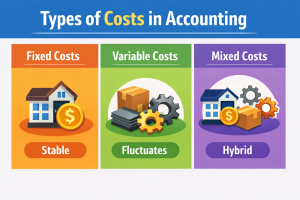
Costs are generally classified into:
- Fixed Costs: Do not change with production levels (e.g., rent)
- Variable Costs: Fluctuate with output (e.g., raw materials)
- Mixed Costs: Contain both fixed and variable elements
Understanding these cost types helps managers predict expenses and optimize pricing strategies.
Cost Behavior Patterns
Cost behavior analysis identifies how costs change in response to business activities. This is crucial for:
- Budgeting
- Forecasting
- Strategic planning
Costing Systems in Managerial Accounting
Different costing systems are used depending on the nature of the business.
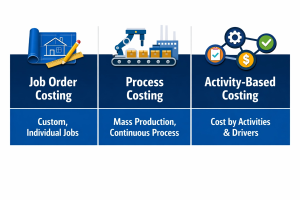
Job Order Costing
Used for customized products or services, such as construction projects or consulting services.
Process Costing
Ideal for mass production industries like manufacturing, where products are identical.
Activity-Based Costing (ABC)
ABC assigns costs based on activities, providing more accurate cost allocation. It is especially useful in complex organizations with multiple cost drivers.
Budgeting and Forecasting
Budgeting is the backbone of financial planning. It helps organizations set goals and monitor performance.
Types of Budgets
- Operating budgets
- Capital budgets
- Cash flow budgets
Advanced Budgeting Techniques
Modern approaches include:
- Zero-based budgeting
- Flexible budgeting
- Rolling forecasts
These techniques enhance adaptability in dynamic business environments.
Cost-Volume-Profit (CVP) Analysis
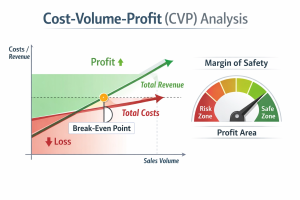
CVP analysis examines how costs and volume affect profits. It helps determine the break-even point—the level at which total revenue equals total costs.
Margin of Safety
This measures how much sales can drop before a business incurs losses, helping assess risk levels.
Variance Analysis
Variance analysis compares actual performance with budgeted figures.
Types of Variances
- Cost variance
- Revenue variance
- Efficiency variance
This analysis helps identify inefficiencies and improve performance.
Strategic Decision-Making
Managerial accounting supports critical decisions such as:
- Make-or-buy choices
- Pricing strategies
- Investment decisions
These decisions are guided by accurate cost analysis and financial data.
Technology in Managerial Accounting
Digital tools and analytics have transformed managerial accounting by:
- Automating data analysis
- Improving accuracy
- Enhancing real-time decision-making
Businesses can now leverage advanced software to gain deeper insights.
Linking Cost Analysis with Digital Growth
Modern businesses don’t just rely on accounting—they integrate it with marketing strategies. For example, using data-driven insights alongside services like SEO Services helps companies optimize both financial and online performance.
Additionally, agencies like Digital Marketing Services offer tools such as SEO, PPC, and content marketing to enhance visibility and ROI.
Businesses can further leverage:
- Digital Advertising Solutions for targeted campaigns
- Affiliate Marketing Services to expand revenue streams
Training and Professional Development
Professionals can enhance their skills through programs like:
- Managerial Accounting Course Overview
- Budgeting and Financial Planning Training
- Cost Behavior and Analysis Modules
- Variance Analysis Training
- Strategic Decision-Making Courses
These programs provide practical knowledge on cost structures, budgeting, and performance analysis, enabling professionals to improve organizational efficiency.
Benefits of Managerial Accounting and Cost Analysis
- Better decision-making
- Improved cost control
- Enhanced profitability
- Efficient resource allocation
- Strategic business growth
Challenges in Cost Analysis
- Data inaccuracies
- Complex cost structures
- Changing market conditions
Organizations must adopt modern tools and skilled professionals to overcome these challenges.
Real-World Applications
Managerial accounting is widely used in:
- Manufacturing
- Healthcare
- Retail
- Service industries
It helps businesses optimize operations and remain competitive.
Frequently Asked Questions (FAQs)
What is managerial accounting and cost analysis?
It involves analyzing financial data to support internal decision-making and improve efficiency.
Why is cost analysis important?
It helps businesses control expenses and maximize profitability.
What are the main types of costs?
Fixed, variable, and mixed costs.
What is activity-based costing?
A method that assigns costs based on activities to improve accuracy.
How does budgeting help businesses?
It provides a financial roadmap for planning and performance evaluation.
What skills are needed for managerial accounting?
Analytical thinking, financial knowledge, and decision-making skills.
Conclusion
Managerial accounting and cost analysis are powerful tools that drive business success. By understanding costs, implementing effective budgeting, and leveraging modern technologies, organizations can make smarter decisions and achieve sustainable growth.