
10 Powerful Strategies for Workplace Skills Development That Drive Career Growth

In today’s rapidly changing business world, workplace skills development has become one of the most important investments organizations can make. Companies that focus on employee learning and professional growth are more likely to succeed, innovate, and remain competitive in their industries.
Employees also benefit greatly from learning opportunities. Strong workplace skills help workers improve performance, adapt to new technologies, communicate effectively, and advance in their careers. Whether someone is starting a new job or leading a department, continuous learning plays a vital role in long-term success.
Modern businesses now understand that training is no longer optional. Organizations that ignore employee development often struggle with low productivity, poor morale, and high turnover rates. On the other hand, companies that prioritize workplace learning create motivated teams and stronger business outcomes.
For organizations looking to improve staff competencies and leadership capabilities, professional training providers such as Forelite Training offer specialized corporate learning solutions designed to meet modern workforce demands.
Understanding Workplace Skills Development
Workplace skills development refers to the process of improving employees’ abilities, knowledge, and competencies to help them perform their jobs effectively. These skills may include technical expertise, leadership abilities, communication skills, digital literacy, and problem-solving capabilities.
The primary goal is to equip employees with tools that enhance both individual and organizational performance. Skills development can happen through:
- Formal training programs
- Workshops and seminars
- Mentorship programs
- Online courses
- Coaching sessions
- On-the-job experiences
Companies that invest in learning initiatives create an environment where employees feel valued and empowered.
Organizations seeking professional workplace training can explore programs like to strengthen workforce capabilities and improve overall business performance.
Why Workplace Skills Development Matters in Modern Organizations
The Impact on Employee Productivity
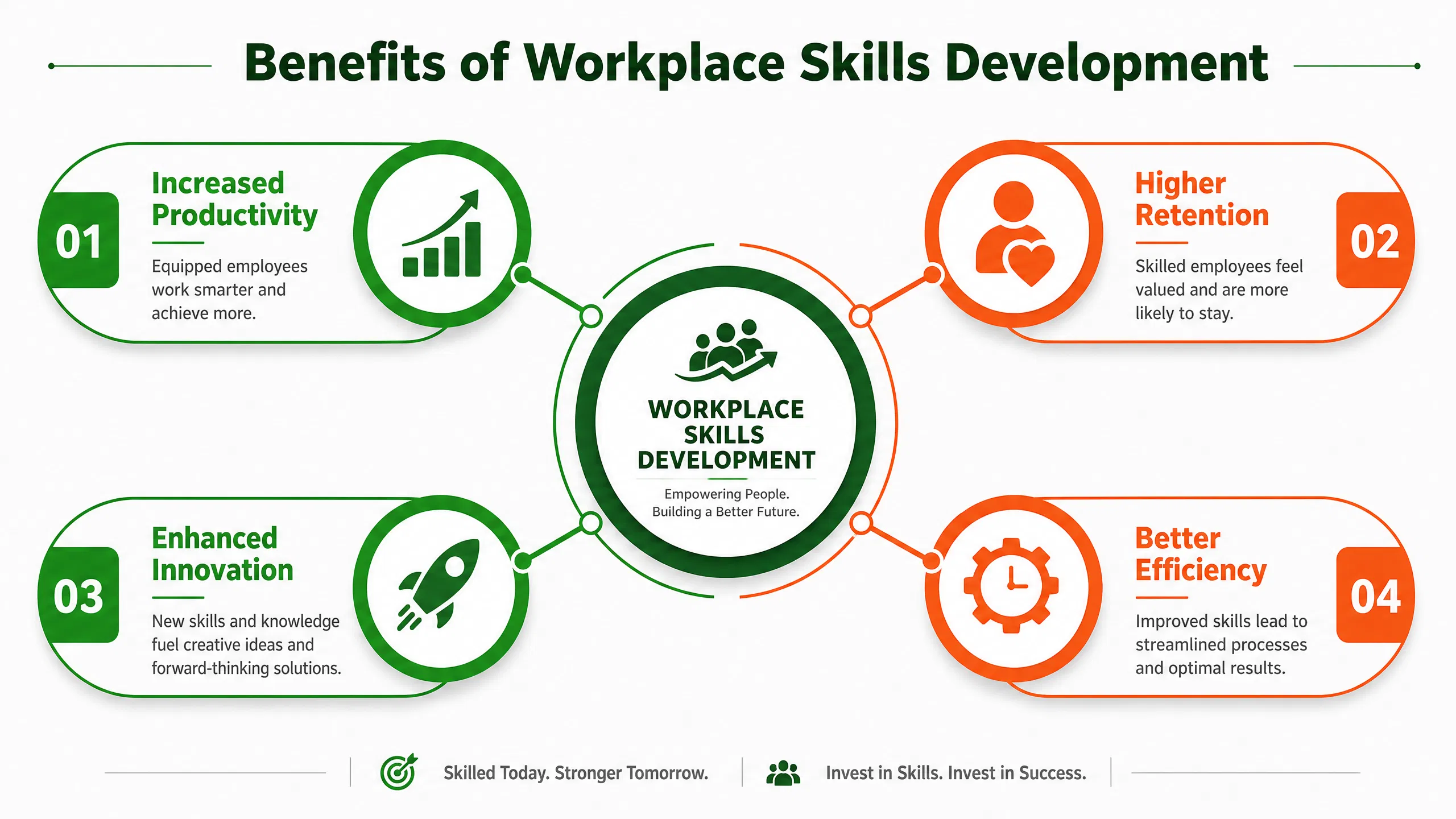
Employees perform better when they possess the right skills and knowledge. Proper training helps workers complete tasks faster, make fewer mistakes, and deliver higher-quality work.
For example, customer service teams with strong communication skills can resolve issues more effectively, leading to better customer satisfaction.
Similarly, employees trained in project management can organize workflows efficiently and meet deadlines consistently.
Improving Employee Retention
One of the biggest reasons employees leave organizations is the lack of growth opportunities. Workers want employers who support career advancement and continuous learning.
When organizations provide learning opportunities, employees feel appreciated and motivated to stay longer. This reduces recruitment costs and improves workplace morale.
Training initiatives like can help organizations build stronger internal talent pipelines while preparing future leaders.
Enhancing Organizational Competitiveness
Industries evolve quickly due to technological advancements and changing market trends. Businesses that continuously train employees adapt faster to these changes.
A highly skilled workforce gives organizations a competitive edge by improving:
- Innovation
- Customer service
- Productivity
- Decision-making
- Operational efficiency
Companies that embrace learning are more likely to survive economic shifts and industry disruptions.
Essential Types of Workplace Skills
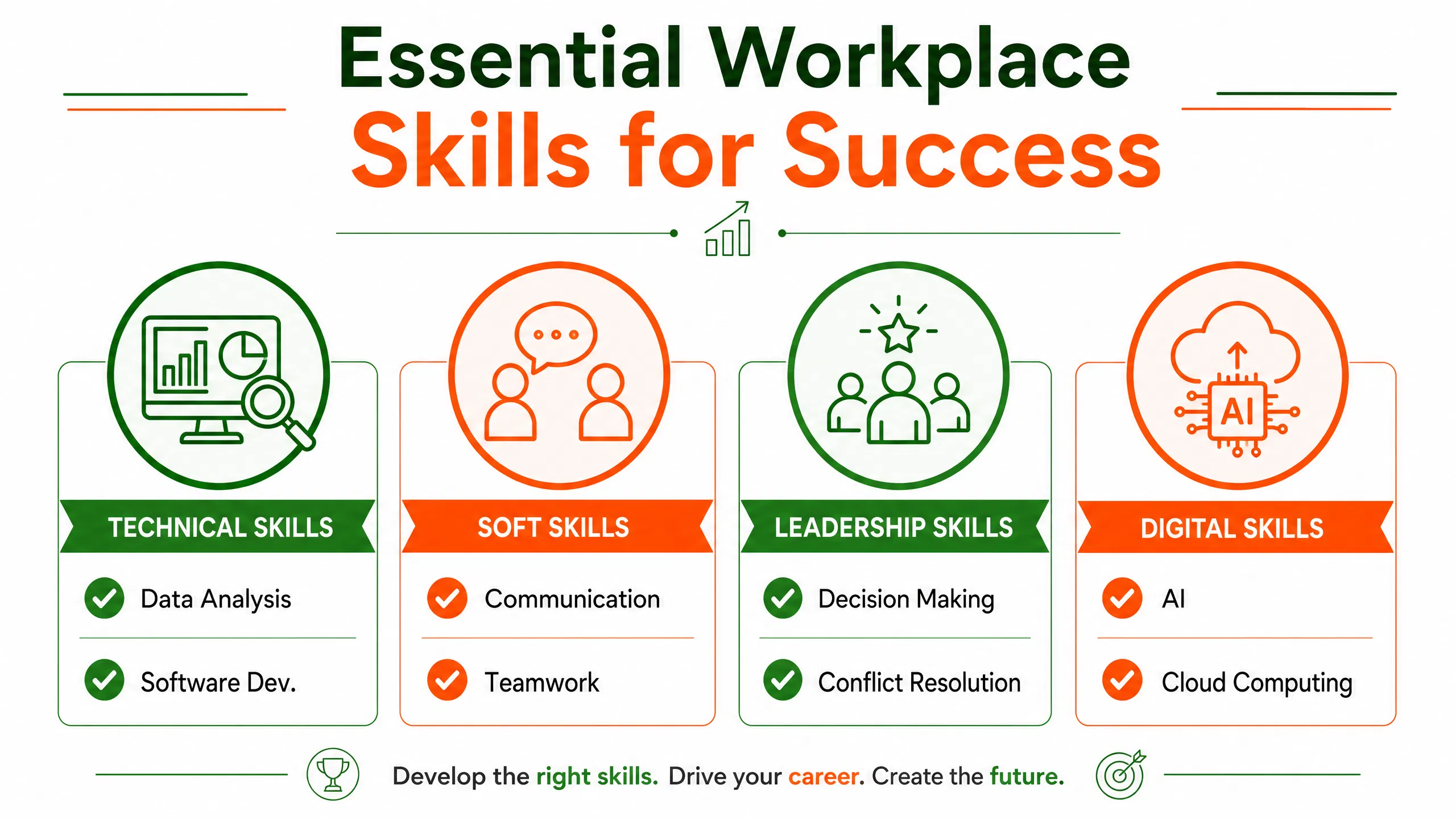
Technical Skills
Technical skills involve job-specific knowledge required to perform specialized tasks. Examples include:
- Data analysis
- Accounting
- Software development
- Machinery operation
- Cybersecurity
As industries become more digital, technical expertise continues to grow in importance.
Soft Skills
Soft skills are personal attributes that improve workplace interactions. These include:
- Communication
- Teamwork
- Emotional intelligence
- Time management
- Problem-solving
Soft skills are often just as important as technical abilities because they influence teamwork and workplace culture.
Organizations can strengthen employee interpersonal capabilities through programs like .
Leadership and Management Skills
Strong leaders help organizations achieve strategic goals. Leadership training improves:
- Decision-making
- Conflict resolution
- Team motivation
- Strategic thinking
- Performance management
Businesses benefit greatly when managers know how to inspire and guide teams effectively.
Digital and Technology Skills
Digital transformation has made technology skills essential across almost every industry. Employees now need to understand:
- Cloud computing
- Data analytics
- Digital marketing
- Artificial intelligence
- Remote collaboration tools
Continuous digital learning helps businesses remain innovative and efficient.
Top Benefits of Workplace Skills Development
Increased Employee Confidence
Employees who receive training feel more competent and confident in their roles. Confidence improves performance and encourages employees to take initiative.
Confident workers are also more willing to share ideas and contribute to organizational growth.
Better Team Collaboration
Training programs often improve communication and teamwork. Employees learn how to work together effectively, resolve conflicts, and support one another.
Collaboration creates stronger relationships and leads to improved workplace harmony.
Higher Workplace Efficiency
Well-trained employees complete tasks accurately and efficiently. This reduces costly mistakes and improves workflow management.
Organizations with highly skilled teams often experience:
| Benefit | Impact |
|---|---|
| Faster project completion | Improved productivity |
| Reduced errors | Lower operational costs |
| Better customer service | Higher client satisfaction |
| Improved innovation | Business growth |
Greater Innovation and Creativity
Employees exposed to new ideas and learning opportunities are more creative. Training encourages problem-solving and critical thinking.
Innovative workplaces adapt more easily to industry changes and customer demands.
Effective Strategies for Workplace Skills Development
Conducting Skills Gap Assessments
Before launching a training program, organizations should identify skill gaps. This helps businesses understand which competencies employees lack.
A skills assessment may involve:
- Employee surveys
- Performance reviews
- Skills testing
- Manager evaluations
Once gaps are identified, companies can create targeted learning plans.
Creating Personalized Learning Plans
Every employee has unique strengths and weaknesses. Personalized training plans improve learning effectiveness by focusing on individual needs.
Customized learning may include:
- Online modules
- Coaching sessions
- Mentorship opportunities
- Department-specific workshops
Organizations that personalize training often achieve better employee engagement.
Implementing On-the-Job Training
Hands-on learning is one of the most effective training methods. Employees gain practical experience while performing real tasks.
Examples include:
- Job shadowing
- Apprenticeships
- Cross-department training
- Peer coaching
On-the-job learning helps employees apply new knowledge immediately.
Encouraging Continuous Learning
Learning should not stop after one workshop. Successful organizations build cultures of continuous improvement.
Ways to encourage continuous learning include:
- Offering educational incentives
- Providing access to online courses
- Hosting regular workshops
- Supporting professional certifications
Businesses can also explore industry-focused training resources through .
Leveraging Online Training Platforms
Digital learning platforms provide flexibility and convenience. Employees can learn anytime and anywhere.
Benefits of e-learning include:
- Reduced training costs
- Self-paced learning
- Easy progress tracking
- Scalable training programs
Online learning has become especially valuable for remote and hybrid workplaces.
The Role of Leadership in Employee Development
Building a Learning Culture
Leadership strongly influences workplace learning culture. Managers should encourage curiosity, experimentation, and professional growth.
Organizations with learning cultures typically experience:
- Higher employee engagement
- Better innovation
- Improved retention
- Increased adaptability
Supporting Career Advancement
Employees value leaders who invest in their future. Career development conversations help workers understand growth opportunities within the organization.
Leaders should regularly discuss:
- Career goals
- Skills improvement
- Leadership opportunities
- Training needs
Providing Constructive Feedback
Feedback helps employees identify strengths and areas for improvement. Constructive feedback should be:
- Specific
- Timely
- Supportive
- Action-oriented
Employees grow faster when they receive meaningful guidance from supervisors.
For management-focused learning, organizations may benefit from .
How Technology Supports Workplace Skills Development
E-Learning Platforms
E-learning systems allow organizations to deliver training efficiently across multiple locations.
Features often include:
- Video tutorials
- Interactive quizzes
- Learning dashboards
- Progress tracking
These platforms support consistent and scalable employee development.
Virtual Workshops and Webinars
Virtual learning has become increasingly popular due to remote work trends. Webinars allow employees to learn from experts regardless of location.
Benefits include:
- Lower travel costs
- Flexible participation
- Access to global expertise
- Recorded sessions for future learning
AI and Data-Driven Learning
Artificial intelligence is transforming workplace training. AI-powered systems can:
- Recommend personalized courses
- Analyze learning progress
- Identify skill gaps
- Predict future training needs
This creates more efficient and targeted development strategies.
Common Challenges in Skills Development
Limited Time and Resources
Many organizations struggle to allocate enough time and budget for employee training.
Solutions may include:
- Short microlearning sessions
- Flexible online courses
- Blended learning models
- Internal mentorship programs
Resistance to Change
Some employees resist learning new systems or processes. Organizations can reduce resistance by:
- Explaining training benefits
- Involving employees in planning
- Offering incentives
- Creating supportive learning environments
Measuring Training Effectiveness
It can be difficult to determine whether training programs are successful.
Organizations should track metrics such as:
- Employee performance improvements
- Productivity increases
- Retention rates
- Customer satisfaction scores
Clear measurement strategies improve future training decisions.
Best Practices for Successful Training Programs
Setting Clear Goals
Training initiatives should align with business objectives. Clear goals help organizations measure progress effectively.
Examples include:
- Improving sales performance
- Enhancing customer service
- Developing leadership skills
- Increasing digital literacy
Using Interactive Learning Methods
Interactive training improves engagement and retention. Effective methods include:
- Role-playing
- Simulations
- Group discussions
- Case studies
Employees learn better when actively participating in training activities.
Monitoring Progress and Results
Organizations should continuously evaluate learning outcomes.
Helpful evaluation methods include:
| Evaluation Method | Purpose |
|---|---|
| Employee feedback surveys | Measure satisfaction |
| Skills assessments | Evaluate learning progress |
| Performance reviews | Track workplace improvements |
| Productivity metrics | Assess business impact |
Continuous monitoring ensures training programs remain effective and relevant.
Workplace Skills Development Trends in 2026
Microlearning
Microlearning delivers content in short, focused lessons. Employees can learn quickly without disrupting work schedules.
This method improves retention and flexibility.
Hybrid Learning Models
Many organizations now combine:
- In-person workshops
- Online learning
- Virtual coaching
- Self-paced modules
Hybrid learning provides greater accessibility and convenience.
Personalized Employee Training
Modern learning platforms use data and AI to customize training experiences for each employee.
Personalized learning increases engagement and improves outcomes.
Organizations that adapt to these trends will remain more competitive in the future workforce.
Frequently Asked Questions
What is workplace skills development?
Workplace skills development is the process of improving employees’ knowledge, competencies, and abilities to enhance job performance and career growth.
Why is workplace skills development important?
It improves employee productivity, increases retention, boosts innovation, and helps organizations remain competitive.
What are the most important workplace skills?
Key workplace skills include communication, leadership, teamwork, problem-solving, technical expertise, and digital literacy.
How can companies improve employee skills?
Organizations can improve employee skills through training programs, mentorship, workshops, online learning, and hands-on experience.
What are soft skills in the workplace?
Soft skills are interpersonal abilities such as communication, teamwork, emotional intelligence, and time management.
How does technology support workplace learning?
Technology supports workplace learning through e-learning platforms, virtual workshops, AI-driven training systems, and online collaboration tools.
Conclusion
Workplace skills development is no longer just a business advantage, it is a necessity for organizational success and career growth. Companies that invest in employee learning create stronger teams, improve productivity, and remain competitive in rapidly changing industries.
Employees also benefit significantly by gaining confidence, expanding career opportunities, and adapting to workplace changes more effectively.
From technical training to leadership development, organizations must embrace continuous learning as part of their long-term strategy. By using modern technologies, personalized learning plans, and effective leadership support, businesses can create high-performing and future-ready workforces.
Professional learning providers such as Forelite Training continue to play an important role in helping organizations build skilled and capable employees for the modern workplace.