Capacity Building: The Complete Guide to Developing Skills, Organizations, and Sustainable Growth

Capacity building has become one of the most important drivers of organizational success in today’s rapidly evolving world. Whether an organization is trying to improve employee performance, strengthen leadership, adopt new technologies, or expand into new markets, building capacity creates the foundation for long-term growth. Governments, businesses, educational institutions, and non-governmental organizations continue to invest heavily in capacity-building initiatives because they understand that sustainable development depends on knowledgeable people, effective systems, and resilient institutions. Kenya, for example, continues to prioritize workforce development and strategic public service training to improve service delivery and economic competitiveness.
Additionally, the increasing adoption of artificial intelligence, automation, and digital transformation has made continuous learning more essential than ever. Organizations can no longer rely on one-time employee training because industries change quickly and new skills emerge almost every year. Reports from labour market analysts consistently show growing demand for technical, leadership, digital, and problem-solving skills across multiple sectors. Therefore, capacity building is no longer an optional investment but a strategic necessity for organizations that want to remain competitive in the future.
What Is Capacity Building?
Capacity building refers to the deliberate process of improving the knowledge, skills, competencies, systems, resources, and structures that enable individuals and organizations to achieve their objectives effectively. While many people associate capacity building with employee training alone, the concept is much broader. It encompasses leadership development, institutional strengthening, technology adoption, policy improvement, knowledge management, coaching, mentoring, and organizational transformation. Essentially, capacity building equips people with the ability to solve problems independently rather than relying on external assistance. It is about creating lasting capabilities that continue generating value long after a training session has ended.
Today, organizations operate in highly competitive environments characterized by rapid technological change, evolving customer expectations, stricter regulations, and increasing global competition. Capacity building provides the flexibility needed to adapt to these changes while maintaining productivity and service quality. For example, a healthcare institution may strengthen its workforce through digital health training, while a manufacturing company may invest in lean production techniques and automation skills. Government agencies may focus on public financial management, procurement compliance, and policy implementation, whereas NGOs often prioritize project management, monitoring and evaluation, fundraising, and community engagement. Although the sectors differ, the underlying objective remains the same: empowering people and institutions to perform better and deliver sustainable results.
Why Capacity Building Matters More Than Ever
Modern organizations face challenges that did not exist a decade ago. Artificial intelligence is transforming workplaces, cybersecurity threats continue increasing, remote work has become mainstream, and digital collaboration tools are now essential. Consequently, organizations that fail to continuously develop their workforce risk becoming obsolete. Capacity building enables employees to remain productive despite technological disruption while helping organizations embrace innovation instead of fearing it. Rather than viewing change as a threat, organizations with strong learning cultures see it as an opportunity for growth.
Equally important, capacity building strengthens resilience during crises. The COVID-19 pandemic demonstrated that organizations with adaptable employees, digital systems, and effective leadership recovered much faster than those without these capabilities. Businesses capable of quickly transitioning to online operations survived significant disruptions, while governments with strong digital service delivery maintained essential public services. NGOs with effective project management systems continued supporting vulnerable communities despite movement restrictions. These experiences reinforced the importance of investing in people before crises occur instead of reacting after problems emerge.
Capacity building also contributes significantly to employee engagement and retention. Professionals increasingly seek employers who invest in their personal and career development. Organizations offering continuous learning opportunities typically experience higher employee satisfaction, stronger innovation cultures, and lower turnover rates. Employees who feel valued through training and mentorship often become more motivated, productive, and committed to organizational goals. As a result, capacity building becomes both a human resource strategy and a competitive business advantage.
The Three Levels of Capacity Building
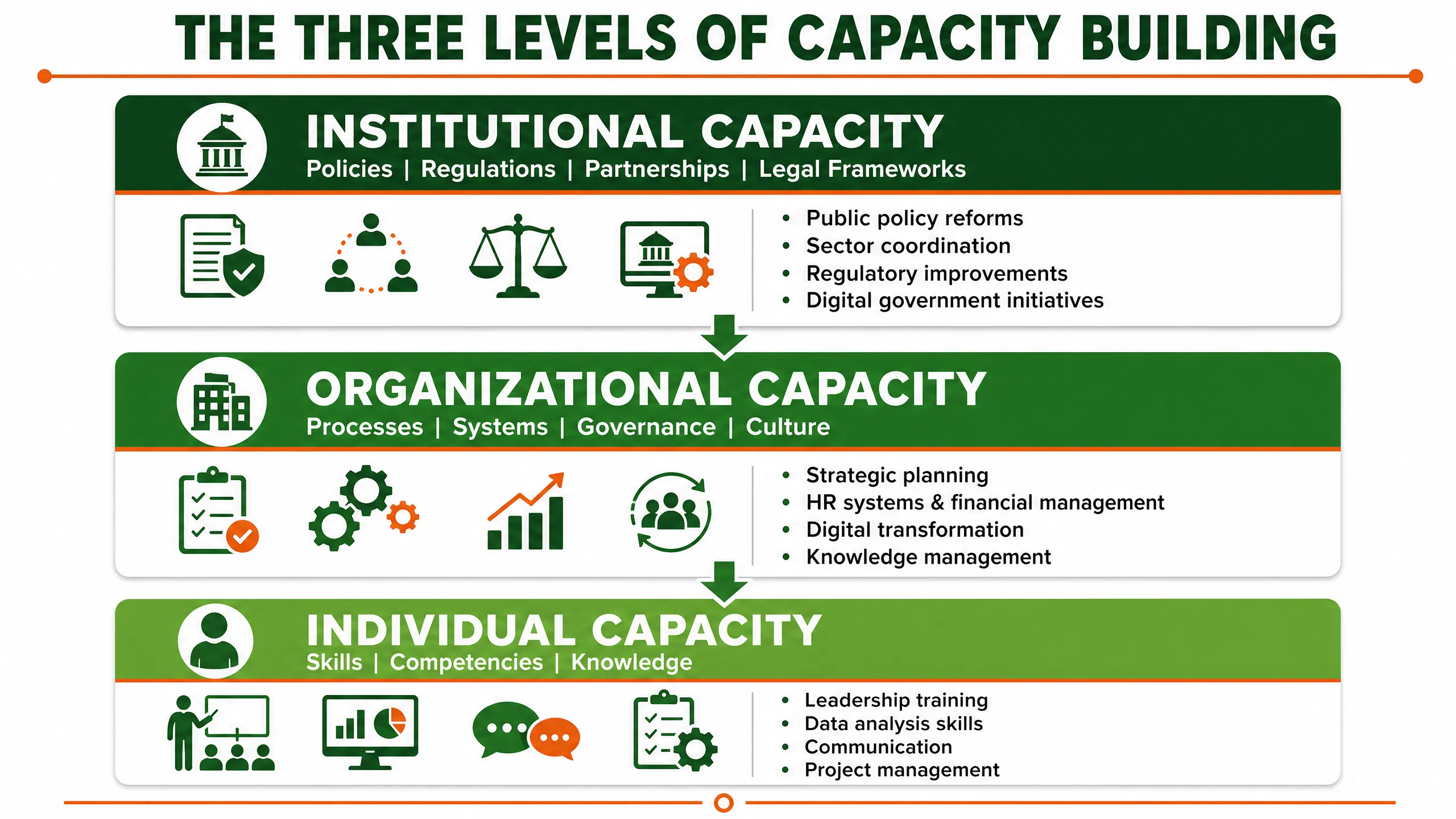
Capacity building operates at multiple interconnected levels, each contributing to sustainable organizational performance. Understanding these levels helps organizations design comprehensive development strategies rather than focusing solely on technical training.
| Level | Primary Focus | Examples |
|---|---|---|
| Individual Capacity | Skills, competencies, and knowledge | Leadership training, data analysis, communication, project management |
| Organizational Capacity | Processes, systems, governance, culture | Strategic planning, HR systems, financial management, digital transformation |
| Institutional Capacity | Policies, regulations, partnerships, legal frameworks | Public policy reforms, sector coordination, regulatory improvements |
These three dimensions complement one another. An organization may have highly skilled employees, but if internal systems are inefficient, productivity will remain limited. Likewise, effective systems cannot compensate for employees lacking the competencies needed to implement them. Sustainable success therefore requires investment across all three areas.
Individual Capacity Development
Individual capacity development focuses on improving the competencies of employees, managers, entrepreneurs, and professionals. Rather than limiting learning to technical expertise, modern capacity-building programs emphasize a balanced combination of technical, managerial, interpersonal, and digital skills. Employees are encouraged to become lifelong learners who continuously adapt to changing workplace requirements. Organizations increasingly recognize that investing in people produces returns through improved productivity, innovation, customer satisfaction, and operational efficiency.
Professional development can take many forms, including classroom training, virtual learning, executive coaching, mentoring, certifications, workshops, simulations, conferences, and experiential learning. Among these, blended learning approaches have become particularly effective because they combine instructor-led sessions with self-paced online learning and workplace application. Employees retain knowledge more effectively when learning is immediately applied to real organizational challenges. Continuous feedback and performance coaching further reinforce long-term behavioural change, making learning an ongoing journey rather than a one-time event.
Organizations seeking structured professional development opportunities often partner with recognized training providers offering specialized courses across multiple industries. Platforms such as ForElite Institute provide practical short courses designed for professionals in leadership, project management, monitoring and evaluation, finance, procurement, ICT, and many other disciplines. These structured learning programs help employees acquire industry-relevant competencies while supporting organizational performance improvement.
Organizational Capacity Development
While individual learning is essential, organizational capacity determines whether newly acquired skills translate into measurable performance improvements. Organizational capacity involves strengthening governance structures, operational processes, financial management systems, technology infrastructure, communication channels, knowledge management practices, and organizational culture. Without these supporting systems, even highly trained employees may struggle to perform effectively.
Successful organizations continuously evaluate their internal processes to identify inefficiencies and opportunities for improvement. Digital transformation initiatives often accompany organizational capacity building by automating repetitive tasks, improving collaboration, and enabling better decision-making through data analytics. Strategic planning becomes more effective when supported by reliable information systems, performance measurement frameworks, and strong leadership commitment. Organizations also benefit from establishing learning cultures where employees openly share knowledge, mentor colleagues, and continuously improve processes.
Corporate leadership plays a vital role in organizational capacity building. Leaders must communicate a clear vision, allocate adequate resources for learning, reward innovation, and create environments where employees feel empowered to experiment and improve. Capacity building becomes sustainable only when it is embedded within organizational strategy rather than treated as an isolated HR initiative.
Institutional Capacity Development
Institutional capacity extends beyond individual organizations to include policies, legal frameworks, governance structures, and collaborative networks that support development across entire sectors. Governments frequently undertake institutional capacity-building initiatives to improve public service delivery, strengthen accountability, modernize regulatory frameworks, and enhance policy implementation. Similarly, international development agencies invest in institutional strengthening to improve education systems, healthcare delivery, agricultural productivity, environmental management, and economic governance.
Strong institutions provide stability during periods of uncertainty by ensuring that rules, procedures, and accountability mechanisms continue functioning effectively. They also facilitate collaboration among government agencies, private sector organizations, civil society groups, and development partners. Institutional capacity building often involves leadership development, policy analysis, legislative reforms, organizational restructuring, and digital government initiatives aimed at improving efficiency and transparency.
Education institutions contribute significantly to institutional capacity by producing skilled graduates equipped for evolving labour market demands. Partnerships between universities, professional training providers, and industry ensure curricula remain aligned with practical workplace requirements. This collaboration creates stronger ecosystems that continuously generate skilled professionals capable of supporting national development objectives.
Benefits of Capacity Building
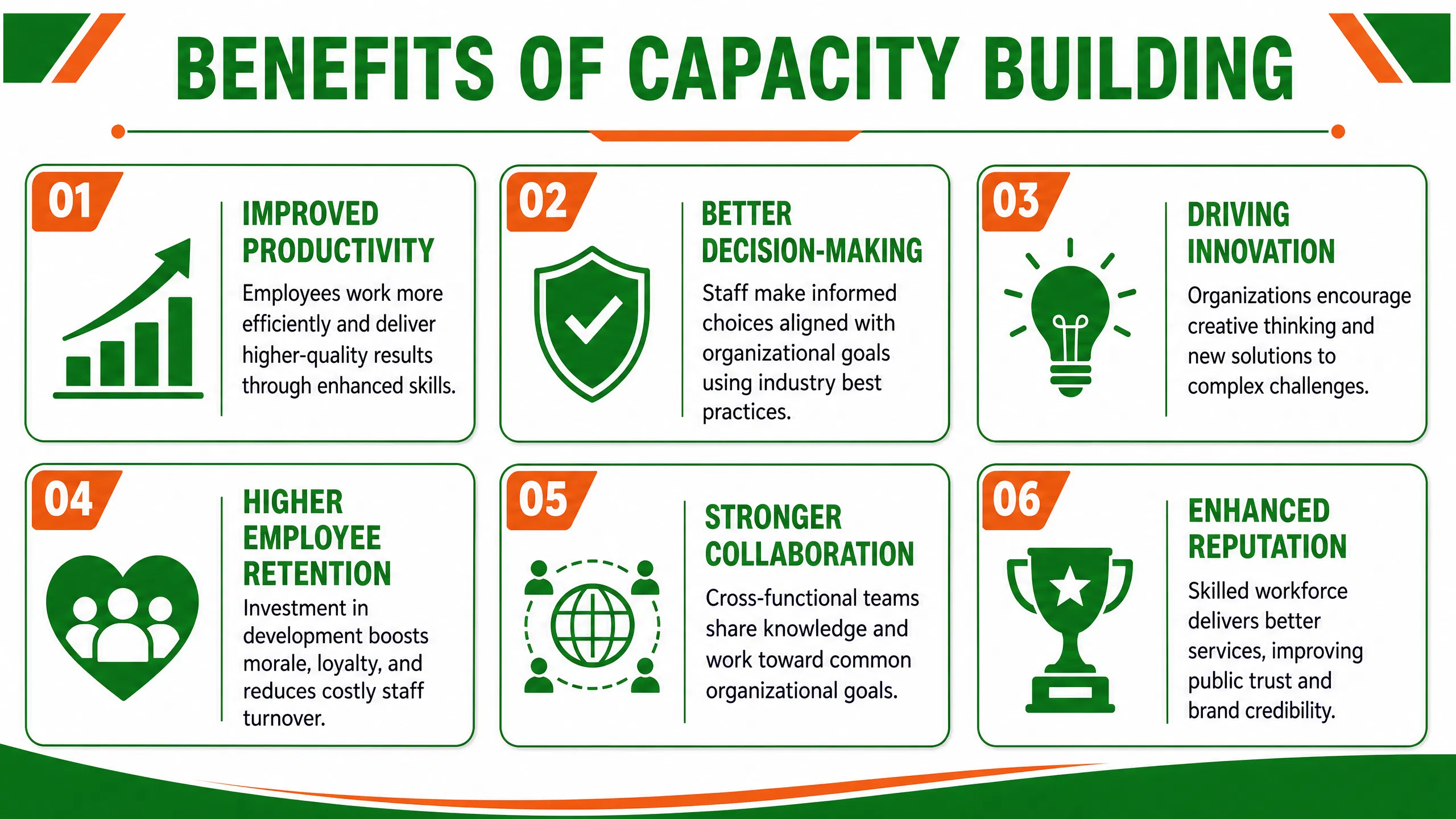
Capacity building delivers value that extends far beyond improved technical knowledge. When organizations commit to continuous learning, they create an environment where employees become more confident, adaptable, and innovative. Instead of simply reacting to challenges as they arise, well-equipped teams anticipate problems, develop practical solutions, and implement improvements before issues escalate. This proactive mindset strengthens organizational resilience and creates a culture where continuous improvement becomes part of everyday operations. Over time, the benefits compound, leading to better customer satisfaction, stronger financial performance, and improved organizational reputation.
Another significant advantage is enhanced decision-making. Employees who understand industry best practices, emerging technologies, and strategic planning principles make more informed choices that align with organizational objectives. Managers become better equipped to allocate resources efficiently, evaluate risks, and lead teams through periods of change. Capacity-building initiatives also encourage cross-functional collaboration, allowing departments to share knowledge and work together toward common goals. Consequently, organizations experience fewer operational silos and greater alignment between strategy and execution.
The benefits also extend to innovation. Organizations that prioritize learning encourage employees to question existing processes, explore new technologies, and propose creative solutions. This openness to experimentation often leads to improved products, streamlined workflows, and enhanced customer experiences. At the same time, investing in employee development sends a strong message that people are valued, increasing morale and loyalty. Employees who feel supported are more likely to remain with the organization, reducing recruitment costs and preserving institutional knowledge. Capacity building therefore contributes not only to operational excellence but also to long-term organizational sustainability.
Capacity Building in Business and Corporate Organizations
In the private sector, capacity building is a strategic investment that directly influences profitability, competitiveness, and customer satisfaction. Businesses operate in increasingly dynamic environments where technological disruption, evolving consumer expectations, and global competition demand constant adaptation. Organizations that regularly upgrade employee skills are better positioned to introduce innovative products, improve operational efficiency, and respond quickly to market changes. Rather than viewing training as an expense, successful companies recognize it as an investment that generates measurable returns through improved productivity and business growth.
Leadership development remains one of the most valuable forms of corporate capacity building. Strong leaders inspire teams, manage change effectively, and foster cultures of accountability and innovation. Many organizations therefore invest in executive coaching, management development programs, and succession planning to ensure future leadership continuity. Technical training is equally important, particularly in areas such as digital transformation, cybersecurity, artificial intelligence, project management, financial management, and customer relationship management. As industries continue embracing automation and data-driven decision-making, employees require continuous upskilling to remain relevant.
Organizations seeking professional development solutions often rely on specialized training institutions offering industry-recognized programs. The Corporate Training Solutions are designed to help organizations strengthen employee competencies through customized learning interventions. Additionally, professionals can explore the Short Professional Courses to gain practical skills aligned with current industry demands. These flexible programs enable organizations to address skill gaps efficiently while supporting employee career growth.
Capacity Building in Government and Public Institutions
Government institutions play a critical role in national development, making capacity building essential for improving public service delivery, policy implementation, and institutional accountability. Public sector organizations manage complex responsibilities ranging from healthcare and education to infrastructure development and environmental protection. Therefore, civil servants require continuous professional development to keep pace with changing regulations, technological advancements, and evolving citizen expectations. Capacity building helps governments deliver services more efficiently while strengthening transparency, accountability, and public trust.
Digital transformation has become a central focus of public sector capacity building. Governments around the world are implementing e-government systems that improve service accessibility, reduce administrative costs, and enhance operational efficiency. These initiatives require employees to develop competencies in digital literacy, cybersecurity, data management, and online service delivery. Leadership training also supports public sector reforms by equipping managers with strategic planning, performance management, and change management skills. As governments increasingly adopt data-driven decision-making, capacity building becomes indispensable for achieving sustainable development goals.
Cross-sector collaboration further strengthens institutional capacity. Partnerships involving government agencies, universities, private organizations, and development partners facilitate knowledge sharing, technical assistance, and policy innovation. Capacity-building programs focusing on procurement, financial management, monitoring and evaluation, governance, and leadership contribute significantly to improved institutional performance. Ultimately, stronger public institutions create better outcomes for citizens through improved service delivery, efficient resource utilization, and evidence-based policymaking.
Capacity Building in NGOs and Development Organizations
Non-governmental organizations operate in environments where resources are often limited while community expectations remain high. Capacity building enables NGOs to maximize impact by strengthening project management, financial accountability, fundraising, stakeholder engagement, and monitoring and evaluation systems. Rather than relying solely on donor funding, well-developed organizations establish sustainable management practices that improve operational efficiency and long-term resilience. Capacity building also enhances credibility, making NGOs more attractive to donors, government agencies, and development partners.
Monitoring and evaluation (M&E) has become one of the most important capacity-building priorities within the development sector. Organizations increasingly depend on evidence-based decision-making to demonstrate program effectiveness, improve accountability, and guide strategic planning. Staff trained in data collection, analysis, reporting, and impact assessment are better equipped to measure outcomes and communicate results to stakeholders. Likewise, project management training strengthens planning, budgeting, scheduling, risk management, and stakeholder coordination, ensuring projects are completed successfully within available resources.
Professionals working in the development sector can enhance their expertise through specialized training programs. The Monitoring and Evaluation Courses provide practical skills in results-based management, impact evaluation, and data analysis. Similarly, organizations implementing complex development initiatives may benefit from the Project Management Courses. These programs equip professionals with internationally recognized methodologies that improve project performance and organizational effectiveness.
Capacity Building in Education and Training Institutions
Educational institutions occupy a unique position within the capacity-building ecosystem because they both develop talent and continuously strengthen their own organizational capabilities. Schools, colleges, universities, and vocational institutions must regularly update curricula, teaching methodologies, digital infrastructure, and faculty competencies to meet changing labour market requirements. Otherwise, graduates risk entering the workforce without the practical skills employers expect. Capacity building ensures educational institutions remain responsive to technological advancement and industry evolution while maintaining high academic standards.
Faculty development is one of the most significant investments educational institutions can make. Instructors require ongoing exposure to modern teaching methods, digital learning technologies, curriculum design, and assessment techniques. Professional development opportunities help educators integrate practical applications into classroom instruction, making learning more engaging and relevant. At the same time, educational institutions increasingly collaborate with industry partners to align academic programs with emerging workforce needs. Internship programs, industry certifications, guest lectures, and collaborative research projects create stronger links between education and employment.
Digital learning has also transformed educational capacity building. Learning management systems, virtual classrooms, online assessments, and artificial intelligence-powered educational tools enable institutions to deliver flexible, accessible, and personalized learning experiences. These technologies expand educational access while supporting lifelong learning for working professionals seeking career advancement. Capacity building within education therefore benefits not only institutions but also employers, governments, and society by producing graduates equipped with the competencies needed for future economic growth.
Professional Training as a Foundation for Sustainable Capacity Building
Professional training remains one of the most practical approaches to strengthening organizational capacity because it combines theoretical knowledge with workplace application. However, training delivers the greatest value when integrated into broader organizational development strategies that include coaching, mentoring, performance management, and continuous improvement. Isolated workshops may temporarily improve knowledge, but sustained capacity building requires long-term commitment supported by leadership and organizational culture.
Organizations should prioritize training based on strategic objectives rather than selecting courses randomly. Skills gap assessments, performance evaluations, and organizational needs analyses help identify the competencies that will generate the greatest impact. Once priorities have been established, organizations can design structured learning pathways that progressively build employee expertise. Equally important, learning outcomes should be measured using performance indicators that demonstrate improvements in productivity, service quality, innovation, and customer satisfaction.
Professionals looking to expand their expertise across multiple disciplines can explore the comprehensive course catalogue available at website. The platform offers specialized programs in leadership, ICT, finance, procurement, agriculture, monitoring and evaluation, engineering, data analytics, and many other sectors. Additionally, organizations seeking support beyond employee training can strengthen their digital presence through professional web development, branding, and digital marketing services offered by Nexera Digital Solutions. Combining workforce development with digital transformation creates a powerful foundation for sustainable organizational growth.
Strategies for Effective Capacity Building
Effective capacity building does not happen by accident. It requires careful planning, clear objectives, adequate resources, and continuous evaluation. Before launching any capacity-building initiative, organizations need to understand their current capabilities, identify existing gaps, and define the skills and systems required to achieve their strategic goals. A successful approach begins with a comprehensive needs assessment that examines employee competencies, organizational processes, technology infrastructure, leadership capabilities, and institutional requirements. This assessment acts as a roadmap, ensuring that investments are directed toward areas with the greatest potential impact.
One of the most important strategies is developing a culture of continuous learning. Organizations that treat learning as an ongoing process rather than an occasional activity are better positioned to adapt to change. This involves encouraging employees to participate in professional courses, knowledge-sharing sessions, coaching programs, industry conferences, and mentorship opportunities. Leaders play a central role in creating this culture by demonstrating commitment to their own development and supporting employees who seek new knowledge. When learning becomes part of everyday organizational life, employees naturally become more curious, innovative, and solution-oriented.
Another effective strategy is adopting customized training approaches. Every organization has unique challenges, goals, and operational environments. A generic training program may provide useful information, but customized programs produce stronger results because they address specific organizational needs. For example, a financial institution may require advanced risk management training, while an NGO may need stronger monitoring and evaluation capabilities. Similarly, a government agency may focus on public sector leadership, digital governance, and policy implementation. Customized capacity-building programs ensure that learning directly contributes to improved workplace performance.
Organizations should also integrate technology into capacity-building initiatives. Digital learning platforms, virtual classrooms, online collaboration tools, and knowledge management systems make training more accessible and scalable. Employees can learn at their own pace while organizations reduce costs associated with traditional classroom-based training. Additionally, digital tools allow organizations to track participation, measure progress, and identify areas where additional support may be required. This combination of technology and human expertise creates flexible learning environments suitable for modern workplaces.
The Role of Digital Transformation in Capacity Building
Digital transformation has completely changed how organizations approach capacity building. Today, digital skills are no longer limited to IT professionals; they have become essential competencies for employees across nearly every industry. Marketing teams use analytics platforms to understand customers, managers rely on digital dashboards for decision-making, and administrative teams use automation tools to improve efficiency. As technology continues evolving, organizations must continuously develop digital capabilities to remain competitive.
One major area of digital capacity building is data literacy. Organizations generate enormous amounts of information every day, but data only becomes valuable when employees know how to interpret and use it effectively. Professionals who understand data analysis can identify trends, improve decision-making, and support evidence-based strategies. Training in tools such as spreadsheets, business intelligence platforms, geographic information systems, statistical software, and database management has become increasingly important across sectors.
Artificial intelligence is also creating new opportunities and challenges for capacity building. Employees need to understand how to use AI responsibly, evaluate generated information, automate repetitive tasks, and improve productivity through intelligent technologies. However, organizations must balance technological adoption with ethical considerations, including data privacy, cybersecurity, and responsible AI usage. Capacity building ensures employees are not simply users of technology but informed participants who can maximize its benefits while managing associated risks.
Digital platforms have also expanded access to professional learning. Professionals no longer need to leave their workplaces or travel long distances to acquire new skills. Online courses, virtual workshops, and hybrid learning programs allow employees to continue developing while maintaining their professional responsibilities. Training institutions such as Forelite Training Institute provide flexible learning opportunities through online and onsite professional development programs designed to meet the needs of modern professionals.
Monitoring and Evaluation of Capacity-Building Programs
Measuring the effectiveness of capacity-building initiatives is essential for ensuring that investments generate meaningful results. Without proper monitoring and evaluation, organizations may struggle to determine whether training programs have improved employee performance or contributed to strategic objectives. Evaluation allows organizations to identify what worked, what requires improvement, and how future initiatives can deliver greater impact.
A strong evaluation framework should measure both immediate and long-term outcomes. Immediate indicators may include training attendance, participant satisfaction, knowledge acquisition, and completion rates. However, the most valuable measurements focus on workplace application, such as improved productivity, reduced errors, stronger decision-making, increased innovation, and enhanced service delivery. For instance, after implementing project management training, an organization may evaluate whether projects are completed more efficiently, budgets are better controlled, and stakeholder satisfaction has improved.
Organizations can use various evaluation models to measure learning effectiveness. Surveys, interviews, performance assessments, workplace observations, and organizational performance indicators provide valuable insights into capacity-building outcomes. Furthermore, collecting feedback from participants helps identify challenges and opportunities for improvement. Employees often provide practical perspectives on whether training content is relevant and how it can be enhanced.
Monitoring and evaluation should not only happen after training but throughout the entire capacity-building process. Continuous monitoring helps organizations adjust programs based on emerging needs and changing circumstances. This approach transforms capacity building from a one-time intervention into a dynamic system of improvement. Professionals interested in strengthening their expertise in this area can explore specialized Monitoring and Evaluation Training Programs.
Challenges Affecting Capacity Building
Although capacity building provides significant benefits, organizations often face challenges when implementing development initiatives. One common challenge is limited financial resources. Training, technology upgrades, consulting support, and organizational improvements require investment, and some organizations struggle to allocate sufficient budgets. Smaller institutions, startups, and community organizations may find it particularly difficult to sustain long-term capacity-building programs without external support.
Another challenge is resistance to change. Some employees may view new technologies, processes, or training requirements as additional burdens rather than opportunities for growth. This resistance can reduce participation and limit the effectiveness of capacity-building initiatives. Therefore, organizations must communicate the purpose and benefits of change clearly while involving employees in planning and implementation. When people understand how development initiatives improve their work and career opportunities, they are more likely to embrace them.
A shortage of qualified trainers and facilitators can also affect capacity-building outcomes. Effective training requires instructors who understand both theoretical concepts and practical workplace applications. Poorly designed programs may provide information without creating meaningful behavioural change. Organizations should therefore partner with experienced training providers that understand industry requirements and can deliver practical, outcome-focused learning experiences.
Another challenge is the failure to align capacity building with organizational strategy. Some organizations conduct training because it is popular or required by external stakeholders without considering whether it addresses actual performance gaps. As a result, employees may gain new knowledge that is never applied in their workplace. Effective capacity building requires strategic alignment between learning objectives and organizational priorities.
Solutions to Capacity-Building Challenges
Organizations can overcome these challenges by adopting structured and strategic approaches. First, leadership commitment is essential. Senior managers must actively support capacity-building initiatives by allocating resources, participating in learning activities, and encouraging employees to apply new skills. When leaders demonstrate commitment, employees recognize that development is a priority rather than an optional activity.
Second, organizations should embrace partnerships and collaboration. Working with professional training institutions, industry experts, universities, and technology providers can provide access to specialized knowledge and resources. Strategic partnerships enable organizations to benefit from external expertise while developing internal capabilities. This approach is particularly valuable for organizations that lack sufficient internal training resources.
Third, organizations should prioritize practical application. Training programs should include real workplace projects, case studies, simulations, and problem-solving activities that allow participants to immediately apply what they learn. Knowledge becomes more valuable when employees can connect concepts to real challenges within their organizations.
Finally, organizations should establish long-term development plans. Capacity building should be viewed as a continuous journey rather than a short-term project. Regular skills assessments, updated training programs, mentoring systems, and performance reviews help organizations maintain momentum and ensure continuous improvement.
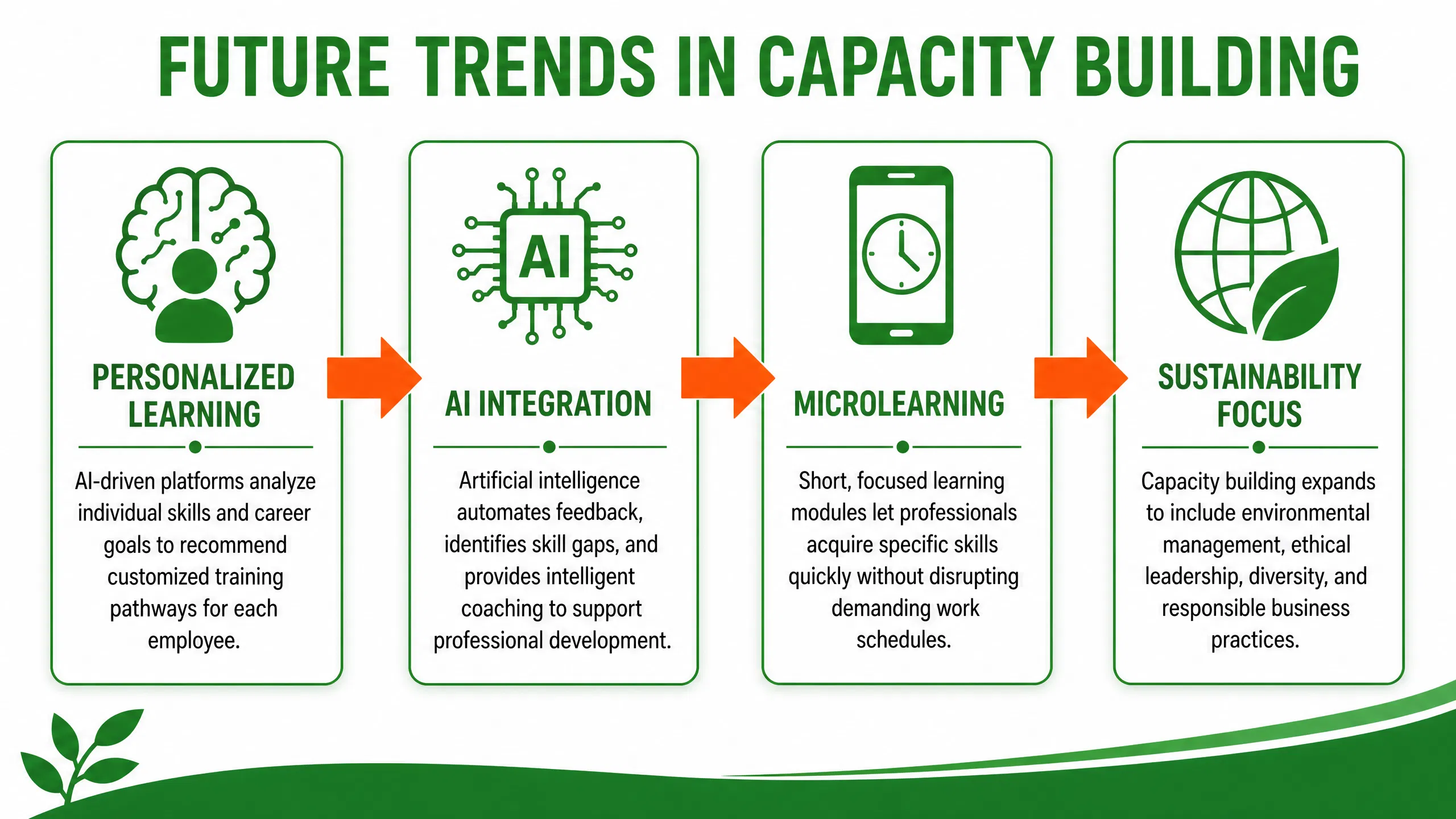
Future Trends in Capacity Building
The future of capacity building will be shaped by technology, changing workplace expectations, and the increasing need for adaptability. One emerging trend is personalized learning, where technology uses data and artificial intelligence to recommend training experiences based on individual skills, career goals, and organizational needs. Instead of offering identical programs to all employees, organizations will increasingly provide customized learning pathways.
Another important trend is the integration of artificial intelligence into professional development. AI-powered platforms can analyze skills gaps, recommend learning resources, provide automated feedback, and support personalized coaching. However, human interaction will remain essential because leadership, communication, creativity, and emotional intelligence require experiences that technology alone cannot provide.
Microlearning will also become increasingly popular. Professionals often struggle to dedicate several days to traditional training programs due to demanding work schedules. Short, focused learning modules allow employees to acquire specific skills quickly while maintaining productivity. Mobile learning platforms will further increase accessibility by enabling professionals to learn anytime and anywhere.
Organizations will also place greater emphasis on sustainability and social impact. Capacity building will increasingly focus on developing skills related to environmental management, ethical leadership, diversity and inclusion, and responsible business practices. These areas reflect the growing expectation that organizations contribute positively to society while achieving financial and operational objectives.
Ultimately, the organizations that succeed in the future will be those that continuously develop their people, strengthen their systems, and embrace innovation. Capacity building will remain a critical foundation for sustainable growth in an increasingly complex world.
Conclusion: Building Stronger People, Organizations, and Institutions Through Capacity Building
Capacity building has become a fundamental requirement for individuals and organizations seeking sustainable growth in an increasingly competitive and changing world. It goes beyond traditional training by focusing on the development of people, systems, processes, and institutions that enable long-term success. By investing in knowledge, skills, leadership, technology, and organizational improvement, businesses, governments, and development organizations create stronger foundations for innovation, resilience, and better performance.
The importance of capacity building continues to grow as organizations face new challenges driven by digital transformation, globalization, changing customer expectations, and evolving workplace demands. Employees need continuous opportunities to upgrade their skills, while organizations must strengthen their internal systems to support productivity and innovation. Therefore, capacity building should be viewed as an ongoing strategic process rather than a one-time activity. Organizations that prioritize continuous improvement are better prepared to adapt, compete, and achieve their long-term objectives.
Additionally, effective capacity building creates benefits that extend beyond individual organizations. When professionals develop stronger competencies, they contribute to improved industries, stronger communities, and national development. Skilled employees deliver better services, innovative organizations create economic opportunities, and capable institutions improve social outcomes. This interconnected impact demonstrates why capacity building remains essential for sustainable development across all sectors.
Successful capacity-building initiatives require a combination of strategic planning, quality training, leadership commitment, technology adoption, and continuous evaluation. Organizations must identify their specific needs, invest in relevant learning opportunities, and create environments where employees can apply and share their knowledge. Most importantly, capacity building should empower people to become problem solvers, innovators, and leaders who can confidently navigate future challenges.
As workplaces continue evolving, the organizations that invest in developing their human capital will maintain a significant advantage. Capacity building is not simply about improving skills today; it is about creating the capabilities required to succeed tomorrow.
Frequently Asked Questions About Capacity Building
1. What is capacity building in simple terms?
Capacity building is the process of improving the skills, knowledge, systems, and resources that enable individuals and organizations to perform better and achieve their goals. It involves activities such as professional training, leadership development, technology adoption, organizational improvement, and institutional strengthening. Simply put, capacity building helps people and organizations become more capable, independent, and effective.
Unlike basic training that may focus on teaching a specific skill, capacity building takes a broader approach by improving overall capability. For example, an organization may train employees on project management while also improving its planning systems, leadership structures, reporting processes, and technology tools. This comprehensive approach creates sustainable improvements rather than temporary solutions.
2. Why is capacity building important for organizations?
Capacity building helps organizations improve performance, adapt to change, encourage innovation, and remain competitive. In today’s environment, organizations must continuously develop their workforce because industries, technologies, and customer expectations change rapidly.
Through capacity building, employees gain new skills that improve productivity and decision-making, while organizations develop stronger systems that support growth. It also improves employee engagement because professionals appreciate workplaces that invest in their career development. Over time, capacity building helps organizations reduce inefficiencies, strengthen leadership, and achieve better results.
3. What are examples of capacity-building activities?
Capacity-building activities can take many forms depending on organizational needs. Common examples include:
- Professional skills training and certification programs.
- Leadership and management development.
- Digital skills training.
- Coaching and mentoring programs.
- Strategic planning workshops.
- Monitoring and evaluation training.
- Project management development.
- Technology adoption programs.
- Knowledge management initiatives.
- Organizational restructuring and process improvement.
For example, a nonprofit organization may strengthen its capacity through monitoring and evaluation training, while a business may focus on digital transformation and leadership development. The specific activities depend on the challenges and objectives of the organization.
4. How can organizations measure the success of capacity-building programs?
Organizations can measure capacity-building success by evaluating improvements in knowledge, skills, workplace performance, and organizational outcomes. Effective measurement should look beyond attendance numbers and assess whether participants are applying what they learned.
Key indicators may include improved productivity, increased employee confidence, better decision-making, improved service delivery, reduced operational errors, and stronger organizational performance. Additionally, organizations can use surveys, performance reviews, assessments, and feedback mechanisms to determine whether programs are achieving their intended objectives.
A strong monitoring and evaluation framework ensures that capacity-building investments create measurable value and allows organizations to continuously improve future initiatives.
5. How can organizations start a capacity-building program?
Organizations can begin by conducting a skills and organizational needs assessment to identify existing gaps and development priorities. After that, they should define clear objectives, select appropriate training methods, allocate resources, and develop an implementation plan.
The most effective programs combine professional training with practical application, coaching, and continuous evaluation. Organizations may also partner with experienced training providers to access specialized expertise and customized learning solutions.
For organizations seeking professional development support, training platforms such as Forelite Training Institute provide courses designed to strengthen workplace competencies across different sectors, including leadership, project management, ICT, finance, monitoring and evaluation, and technical skills. More information is available at the website.