Skip to content
-
Subscribe to our newsletter & never miss our best posts. Subscribe Now!
ForElite Resource Center ForElite Resource Center ForElite Resource Center

Innovate Your Mind. Illuminate Your Future.

ForElite Resource Center ForElite Resource Center ForElite Resource Center

Innovate Your Mind. Illuminate Your Future.

  • Training Categories
  • About Us
  • Contact Us
  • Training Categories
  • About Us
  • Contact Us
Close

Search

  • https://www.facebook.com/
  • https://twitter.com/
  • https://t.me/
  • https://www.instagram.com/
  • https://youtube.com/
Subscribe
ForElite Resource Center ForElite Resource Center ForElite Resource Center

Innovate Your Mind. Illuminate Your Future.

ForElite Resource Center ForElite Resource Center ForElite Resource Center

Innovate Your Mind. Illuminate Your Future.

  • Training Categories
  • About Us
  • Contact Us
  • Training Categories
  • About Us
  • Contact Us
Close

Search

  • https://www.facebook.com/
  • https://twitter.com/
  • https://t.me/
  • https://www.instagram.com/
  • https://youtube.com/
Subscribe
Home/Leadership/Beyond the Boardroom: Bridging the Trillion-Dollar Gap Between Vision and Ground-Level Reality
Beyond the Boardroom: Bridging the Trillion-Dollar Gap Between Vision and Ground-Level Reality
Leadership

Beyond the Boardroom: Bridging the Trillion-Dollar Gap Between Vision and Ground-Level Reality

By ForElite
March 28, 2026 8 Min Read
0

Introduction: The Invisible Wall in Modern Leadership
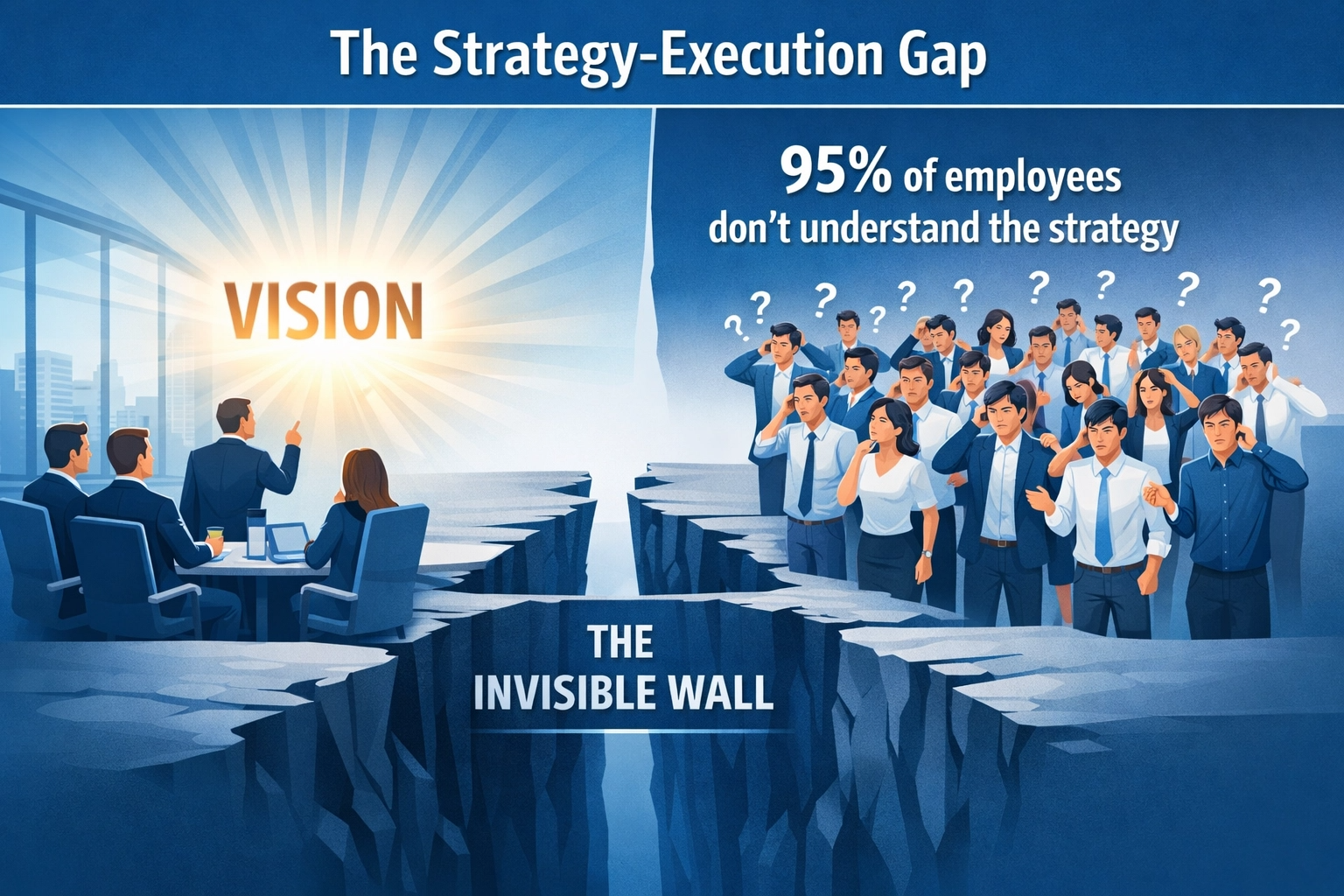
In the dynamic landscape of modern business, a compelling vision articulated at the board level is often hailed as the cornerstone of success. Yet, a significant and often invisible wall exists between this high-level strategic foresight and its tangible execution on the ground. This disconnect represents what many experts term the “Trillion-Dollar Problem” of organizational misalignment . Startling statistics reveal the extent of this challenge: research by Harvard Business Review indicates that, on average, 95% of a company’s employees are unaware of, or do not understand, its strategy . This profound gap transforms board-level vision from a powerful directive into little more than a corporate daydream. True leadership, therefore, extends beyond merely casting a vision; it necessitates the meticulous construction of an infrastructure that ensures ground-level clarity and empowers seamless execution. This article will delve into the critical importance of bridging this gap, exploring why vision without clarity breeds confusion, how to translate strategic intent into actionable language, the pivotal role of middle management, and the necessity of aligning organizational culture with strategic goals.
Beyond the Boardroom: Bridging the Trillion-Dollar Gap Between Vision and Ground-Level Reality

Why Vision Alone Fails: The Psychology of Misalignment
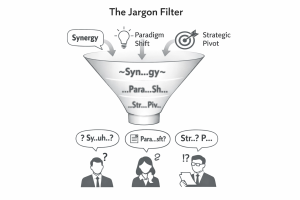
The illusion of strategic alignment is a pervasive issue in many organizations. Leaders often operate under the assumption that their strategic directives are clearly understood throughout the hierarchy. However, studies by LSA Global reveal a stark contrast: teams are 50% less clear than their bosses on the company’s strategy for success . This “Strategic Alignment Illusion” is frequently exacerbated by the use of abstract, jargon-laden language at the board level. While such terminology may be commonplace in executive discussions, it often creates significant “organizational friction” when disseminated to employees. Complex, high-level frameworks, devoid of practical context, alienate the very individuals responsible for implementation, leading to misinterpretation, hesitation, and even resistance. For boards to truly be effective, their vision must transcend the confines of the boardroom and be translated into a language that resonates with every employee. Understanding the nuances of effective governance, particularly in ensuring strategic messages permeate all organizational layers, is crucial. For comprehensive insights into this, consider exploring courses on Corporate Governance and Board Effectiveness.

Translating Strategy into “Ground-Level” Language
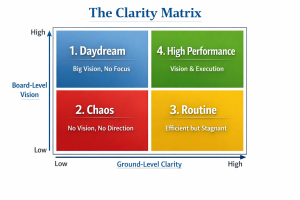
To bridge the chasm between vision and execution, leaders must master the art of translating strategic intent into actionable, ground-level language. This involves moving beyond mere Key Performance Indicators (KPIs) and crafting compelling narratives that resonate with employees’ daily tasks and motivations. The goal is to define what “winning” looks like not just for the organization as a whole, but for each individual employee, connecting their efforts directly to the broader strategic objectives. When strategic vision is articulated in a way that feels relevant and personal, it empowers individuals to take ownership and make decisions aligned with the company’s direction. Effective internal communication is paramount in this translation process, ensuring that every team member understands their role in the bigger picture. Enhancing communication channels and fostering employee engagement are vital for achieving this clarity. To develop these essential skills, consider programs focused on Internal Communication and Employee Engagement. This ensures that the strategic message is not just heard, but truly understood and embraced across all levels.

The Middle Manager: The Critical Bridge

Often referred to as the “forgotten layer,” middle managers play an indispensable role in bridging the strategy-execution gap. They are the crucial link between the board’s strategic directives and the day-to-day operations of frontline employees. Middle managers are uniquely positioned to translate abstract visions into concrete tasks, provide context, and motivate their teams to achieve strategic goals. However, their effectiveness is often hampered by a lack of information or empowerment. Equipping these managers with the necessary tools, training, and autonomy to interpret and disseminate strategic information is vital. When middle managers are actively involved in the strategic process and understand how to articulate the vision to their teams, they become powerful catalysts for change. Investing in their development through programs like Leadership and Executive Coaching can transform them into adept “translators” and motivators, capable of fostering a deep understanding of strategic objectives throughout their departments. Their ability to guide and support their teams directly impacts the successful realization of board-level vision.

Aligning Culture with Strategic Intent
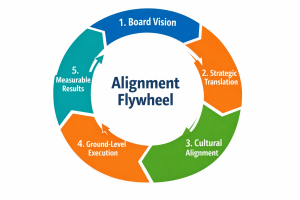
Even the most brilliant strategy is destined to fail if it clashes with the prevailing organizational culture. As management guru Peter Drucker famously stated, “Culture eats strategy for breakfast” . This adage holds true, especially when culture and strategy are misaligned. An organizational environment that contradicts strategic goals—through outdated practices, poor communication, or a lack of accountability—will inevitably cause the vision to falter. Leaders must intentionally cultivate a culture that actively supports and reinforces strategic objectives. This involves modeling behaviors aligned with the vision, recognizing and rewarding outcomes that contribute to strategic success, and establishing fair and consistent accountability mechanisms. Culture, far from being a soft aspect of business, is a strategic asset that, when properly aligned, becomes the engine driving the vision forward. Successfully navigating organizational shifts and fostering a supportive environment requires a deep understanding of change dynamics. Training in Change Management and Organizational Development can provide leaders with the frameworks and tools needed to effectively align culture with strategic intent, ensuring that the organizational environment propels, rather than impedes, progress.

Practical Steps to Close the Gap

Closing the vision-execution gap requires a proactive and multi-faceted approach. One critical step is establishing robust feedback loops that invite voices from the ground up. This “Reverse Visioning” process allows leaders to gain invaluable insights into operational realities, identify potential roadblocks, and refine strategic approaches based on the experiences of those directly involved in execution. When employees feel heard and valued, their commitment to the vision deepens. Furthermore, increasing transparency regarding strategic goals is essential. The statistic that only 27% of employees have access to their company’s strategy highlights a significant area for improvement. Leaders should actively communicate strategic plans, ensuring they are accessible and understandable to everyone. Finally, transforming vision into a living performance framework is key. This involves not just setting goals, but continuously monitoring progress, adapting to feedback, and ensuring that daily activities are directly linked to strategic outcomes. For a deeper dive into creating such a framework, exploring resources on Strategic Planning and Performance Management can provide invaluable guidance.

Frequently Asked Questions (FAQs)

What is the “trillion-dollar gap” in organizational leadership?

The “trillion-dollar gap” refers to the massive economic cost of misalignment between boardroom vision and ground-level execution. Research indicates that when strategies are not clearly understood or effectively implemented across an organization, the resulting inefficiencies, missed opportunities, and failed initiatives collectively amount to trillions in lost value. Studies show that up to 95% of employees are unaware of or do not understand their company’s strategy, highlighting the scale of this disconnect.

Why does vision alone often fail to drive results?

Vision alone fails because it remains abstract without a clear pathway to execution. Leaders often suffer from the “Strategic Alignment Illusion”—assuming their directives are understood throughout the organization when, in reality, teams are 50% less clear than their bosses on company strategy. This gap is exacerbated by jargon-heavy communication that creates organizational friction. Without translation into actionable, ground-level language, a compelling vision becomes little more than a corporate daydream.

What role do middle managers play in bridging the strategy-execution gap?

Middle managers serve as the critical bridge between boardroom strategy and frontline execution. They are uniquely positioned to translate abstract visions into concrete tasks, provide context, and motivate teams to achieve strategic goals. However, their effectiveness is often hampered by a lack of information or empowerment. When equipped with the right tools, training, and autonomy, middle managers become powerful catalysts for change, transforming strategic directives into daily operational reality.

How does organizational culture impact strategy execution?

As Peter Drucker famously stated, “Culture eats strategy for breakfast.” Even the most brilliant strategy will fail if it clashes with prevailing organizational culture. When culture through outdated practices, poor communication, or lack of accountability contradicts strategic goals, execution falters. Leaders must intentionally cultivate a culture that supports and reinforces strategic objectives by modeling desired behaviors, recognizing aligned outcomes, and establishing consistent accountability mechanisms.

What practical steps can leaders take to close the strategy-execution gap?

 Leaders can close the gap by implementing several key practices:

  • Establish Reverse Visioning: Create robust feedback loops that invite insights from ground-level employees to inform strategic refinement.

  • Increase Transparency: Ensure strategy is accessible to all employees—currently only 27% have access to their company’s strategy.

  • Translate into Ground-Level Language: Move beyond abstract KPIs to craft narratives that connect daily tasks to strategic objectives.

  • Empower Middle Managers: Provide training and autonomy to those serving as the critical link between vision and execution.

  • Align Culture with Strategy: Intentionally shape organizational culture to support and propel strategic goals forward.

Conclusion: From Daydream to Reality

The journey from board-level vision to ground-level clarity is not a passive one; it demands intentionality, effective communication, and a commitment to fostering an aligned organizational ecosystem. Leaders must evolve from mere visionaries to skilled architects, meticulously designing the pathways through which strategic intent flows seamlessly across all organizational layers. By prioritizing clear communication, empowering middle management, and cultivating a supportive culture, organizations can transform abstract aspirations into tangible realities. The goal is to build the road together, ensuring that every employee understands their role, feels connected to the larger purpose, and is empowered to contribute to the collective success. Only then can the trillion-dollar gap be bridged, turning strategic daydreams into a vibrant, shared reality.

References

[1] LSA Global. (n.d.). The absence of alignment is a trillion-dollar problem. 
[2] Kaplan, R. S., & Norton, D. P. (2005, October). The Office of Strategy Management. Harvard Business Review. Retrieved from
[3] LSA Global. (n.d.). Strategic Alignment Illusion: How to Avoid this Leadership Mistake. 
[4] Drucker, P. F. (n.d.). Peter Drucker Quotes. 
[5] LinkedIn. (2026, January 28). Only 27% of Employees Have Access to Company Strategy. 
Author

ForElite

Follow Me
Other Articles
The Ultimate Guide to Corporate Governance Courses in 2026: Navigating Modern Business Ethics and Leadership
Previous

The Ultimate Guide to Corporate Governance Courses in 2026: Navigating Modern Business Ethics and Leadership

Carbon Capture: 7 Powerful Benefits and Shocking Truths About Climate Solutions
Next

Carbon Capture: 7 Powerful Benefits and Shocking Truths About Climate Solutions

No Comment! Be the first one.

Leave a Reply Cancel reply

Your email address will not be published. Required fields are marked *

Recent Posts

  • The Agility Mandate: How Anticipatory Leadership Drives Business Success in a Changing World
  • GIS Industry Trends and Applications: How Geospatial Technology Is Transforming Businesses in 2026
  • Leadership in the Workplace: How to Be a Good Leader
  • The 2026 Blueprint: Master Supply chain trends 2026 with Power, Speed, and Unshakable Resilience
  • AI Training Courses Every Corporate Team Should Explore: 10 Powerful Programs for Business Growth

Recent Comments

  1. tgwsproxy on The Career Development Imperative: What Africa and MENA Leaders Must Invest In Before 2027
  2. heictopng on The Career Development Imperative: What Africa and MENA Leaders Must Invest In Before 2027
  3. aiimagechecker on The Career Development Imperative: What Africa and MENA Leaders Must Invest In Before 2027
  4. heictopng on The Ultimate Guide to Climate Finance Courses: Boost Your Career and Drive Sustainability in 2026
  5. bachvideoai on The Career Development Imperative: What Africa and MENA Leaders Must Invest In Before 2027

Archives

  • June 2026
  • May 2026
  • April 2026
  • March 2026

Categories

  • About Training and ForElite
  • Accounting and Econometrics
  • AI and Emerging Tech
  • Data
  • Environment and Pollution
  • Finanance
  • GJLO
  • Health and Workplace Safety
  • Industry Specific
  • Leadership
  • Operations
  • SDGs
  • Soft Skills
Your subscription could not be saved. Please try again.
Your subscription has been successful.

SECURE YOUR COMPETITIVE ADVANTAGE TODAY.

Subscribe to the Premier Intel newsletter for weekly market insights and training updates.

We use Brevo as our marketing platform. By submitting this form you agree that the personal data you provided will be transferred to Brevo for processing in accordance with Brevo's Privacy Policy.

Copyright 2026 — ForElite Resource Center. All rights reserved.