

Carbon Capture: 7 Powerful Benefits and Shocking Truths About Climate Solutions

Introduction to Carbon Capture
What is Carbon Capture?
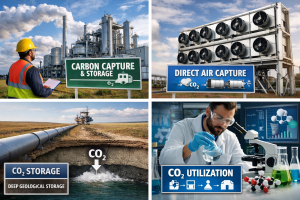
Carbon capture is a technology designed to trap carbon dioxide (CO₂) emissions before they enter the atmosphere. Instead of releasing harmful gases from factories or power plants, the system captures them at the source and either stores them underground or repurposes them.
This process plays a crucial role in reducing greenhouse gas emissions and slowing climate change. In simple terms, think of it as a “filter” that prevents pollution from reaching the air.
Why Carbon Capture Matters Today
Global temperatures have been rising steadily due to increasing CO₂ levels. Industries like cement, steel, and energy production are among the biggest contributors. Carbon capture helps tackle emissions from these “hard-to-abate” sectors where switching to renewable energy alone isn’t enough.
Moreover, carbon capture supports global climate goals by working alongside renewable energy, not replacing it.
How Carbon Capture Works
Capture Stage Explained
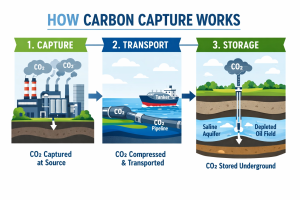
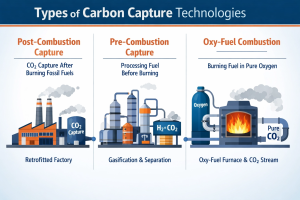
The first step involves capturing CO₂ at the emission source. This can happen during or after fuel combustion. There are three main approaches:
- Post-combustion capture
- Pre-combustion capture
- Oxy-fuel combustion
Each method separates CO₂ from other gases, making it easier to handle and process.
Transport and Storage Process
Once captured, CO₂ is compressed into a liquid-like state and transported via pipelines or ships. It is then injected deep underground into geological formations such as:
- Depleted oil fields
- Saline aquifers
- Coal beds
These storage sites can safely hold carbon for thousands of years.
Utilization of Captured Carbon
Instead of storing all captured carbon, some of it can be reused. This is known as carbon capture and utilization (CCU). Applications include:
- Fuel production
- Building materials
- Chemical manufacturing
Types of Carbon Capture Technologies
Post-Combustion Capture
This method captures CO₂ after fossil fuels are burned. It is widely used because it can be added to existing facilities.
Pre-Combustion Capture
Here, fuel is processed before burning, separating CO₂ early. It is more efficient but requires new infrastructure.
Oxy-Fuel Combustion
Fuel is burned in pure oxygen, producing a concentrated CO₂ stream that is easier to capture.
Benefits of Carbon Capture
Reducing Greenhouse Gas Emissions
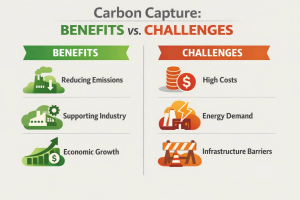
Carbon capture directly reduces emissions by preventing CO₂ from entering the atmosphere. This helps slow global warming and climate change.
Supporting Hard-to-Decarbonize Industries
Industries like cement and steel rely heavily on fossil fuels. Carbon capture allows them to continue operating while reducing emissions.
Economic Opportunities
Carbon capture opens new markets, including:
- Carbon-based fuels
- Sustainable materials
- Job creation in green industries
Challenges of Carbon Capture
High Costs and Energy Demand
One of the biggest barriers is cost. Capturing and storing carbon requires expensive equipment and significant energy.
Environmental Concerns
Some critics argue that carbon capture may encourage continued fossil fuel use instead of transitioning to cleaner energy.
Policy and Infrastructure Barriers
Lack of clear regulations and infrastructure makes large-scale adoption difficult.
Carbon Capture vs Renewable Energy
Complementary Roles
Carbon capture and renewable energy work best together. While renewables reduce emissions, carbon capture deals with existing emissions.
Key Differences
| Carbon Capture | Renewable Energy |
|---|---|
| Reduces emissions after production | Prevents emissions entirely |
| Used in industrial sectors | Used in power generation |
| Requires storage systems | Requires energy infrastructure |
Real-World Applications
Power Plants
Many power plants use carbon capture to reduce emissions from burning fossil fuels.
Industrial Use
Industries like cement and steel benefit greatly from this technology.
Direct Air Capture
Advanced systems can even remove CO₂ directly from the air using large-scale filters.
Future of Carbon Capture
Innovation Trends
New technologies are making carbon capture more efficient and cost-effective, including:
- Advanced solvents
- AI-based monitoring
- Modular capture systems
Global Adoption
Countries worldwide are investing in carbon capture as part of their climate strategies.
Learning Carbon Capture Skills
If you want to gain practical expertise, consider professional training programs like:
- Carbon Capture, Utilization and Storage (CCUS) Fundamentals Course
- CCUS Training Overview and Modules
- Enroll in Carbon Capture Training Program
- Download CCUS Course Brochure
- Request Custom Carbon Capture Training
These programs teach key skills like project planning, technology selection, and policy understanding.
FAQs About Carbon Capture
What is carbon capture used for?
It is used to reduce CO₂ emissions from industries and power plants.
Is carbon capture effective?
Yes, but its effectiveness depends on cost, technology, and scale.
Where is captured carbon stored?
Typically underground in geological formations.
Can carbon capture replace renewable energy?
No, it complements renewable energy rather than replacing it.
What industries benefit most from carbon capture?
Cement, steel, oil & gas, and chemical industries.
Is carbon capture expensive?
Yes, high costs remain one of the main challenges.
Conclusion
Carbon capture is a powerful tool in the fight against climate change. While it is not a complete solution, it plays a vital role in reducing emissions from industries that cannot easily switch to renewable energy. With continued innovation, investment, and training, carbon capture could become a cornerstone of a sustainable, low-carbon future.