

Construction Law: The Complete Guide for Contractors, Developers, and Property Owners
Construction projects involve massive investments, multiple stakeholders, strict regulations, and tight deadlines. Whether you are a contractor, engineer, architect, developer, or property owner, understanding construction law is critical for protecting your business and avoiding costly legal disputes.
Construction law governs every phase of a building project from planning and contract drafting to safety regulations and dispute resolution. Without proper legal knowledge, even a small misunderstanding can lead to delays, penalties, lawsuits, or financial loss.
In this comprehensive guide, you’ll learn everything about construction law, including contracts, liabilities, workplace safety, licensing, payment disputes, risk management, and emerging legal trends in the construction industry.
What Is Construction Law?
Construction law is a specialized branch of law that regulates building projects, infrastructure development, engineering works, and related activities. It combines elements of contract law, labor law, environmental law, safety regulations, and commercial law.
The primary purpose of construction law is to ensure that construction projects are completed legally, safely, fairly, and according to agreed contractual terms.
Construction law applies to:
- Residential buildings
- Commercial projects
- Industrial facilities
- Roads and bridges
- Infrastructure developments
- Renovation and remodeling projects
This legal field governs relationships among contractors, subcontractors, suppliers, architects, engineers, developers, and government authorities.
Importance of Construction Law
Construction projects are complex and involve many moving parts. Without legal rules and regulations, disputes and confusion would be common.
Construction law helps:
- Protect contractual rights
- Ensure worker safety
- Regulate payments
- Prevent fraud
- Resolve disputes fairly
- Maintain construction standards
- Enforce environmental regulations
For professionals seeking deeper knowledge in project compliance and safety, resources from Forelite Training provide valuable industry education and certification opportunities.
Main Areas Covered Under Construction Law
Contract Law
Contracts form the foundation of every construction project. A construction contract outlines:
- Scope of work
- Timeline
- Budget
- Payment terms
- Responsibilities
- Liability clauses
- Dispute resolution methods
Poorly drafted contracts are one of the leading causes of construction disputes.
Professionals can improve their contract management skills through specialized programs available at Forelite Training Construction Courses.
Employment and Labor Law
Construction companies must comply with labor laws related to:
- Employee wages
- Working hours
- Overtime
- Workplace discrimination
- Employee benefits
- Union agreements
Violations can result in lawsuits, fines, and reputational damage.
Safety Regulations
Construction sites are among the most dangerous workplaces. Safety laws require employers to provide:
- Proper protective equipment
- Safe working conditions
- Employee training
- Hazard communication
- Emergency procedures
Training programs such as those offered by Forelite Training Health and Safety Programs help companies remain compliant and reduce accidents.
Environmental Compliance
Construction projects must also comply with environmental laws concerning:
- Waste management
- Air pollution
- Water contamination
- Noise control
- Hazardous materials
Failure to comply can lead to project shutdowns and heavy penalties.
Key Parties Involved in Construction Law
Several stakeholders participate in construction projects, including:
| Party | Role |
|---|---|
| Property Owners | Fund and approve projects |
| Contractors | Execute construction work |
| Subcontractors | Perform specialized tasks |
| Architects | Design structures |
| Engineers | Ensure structural safety |
| Suppliers | Provide materials |
| Government Agencies | Enforce regulations |
| Construction Lawyers | Handle legal matters |
Each party has specific legal rights and obligations.
Understanding Construction Contracts
Construction contracts are legally binding agreements between project stakeholders.
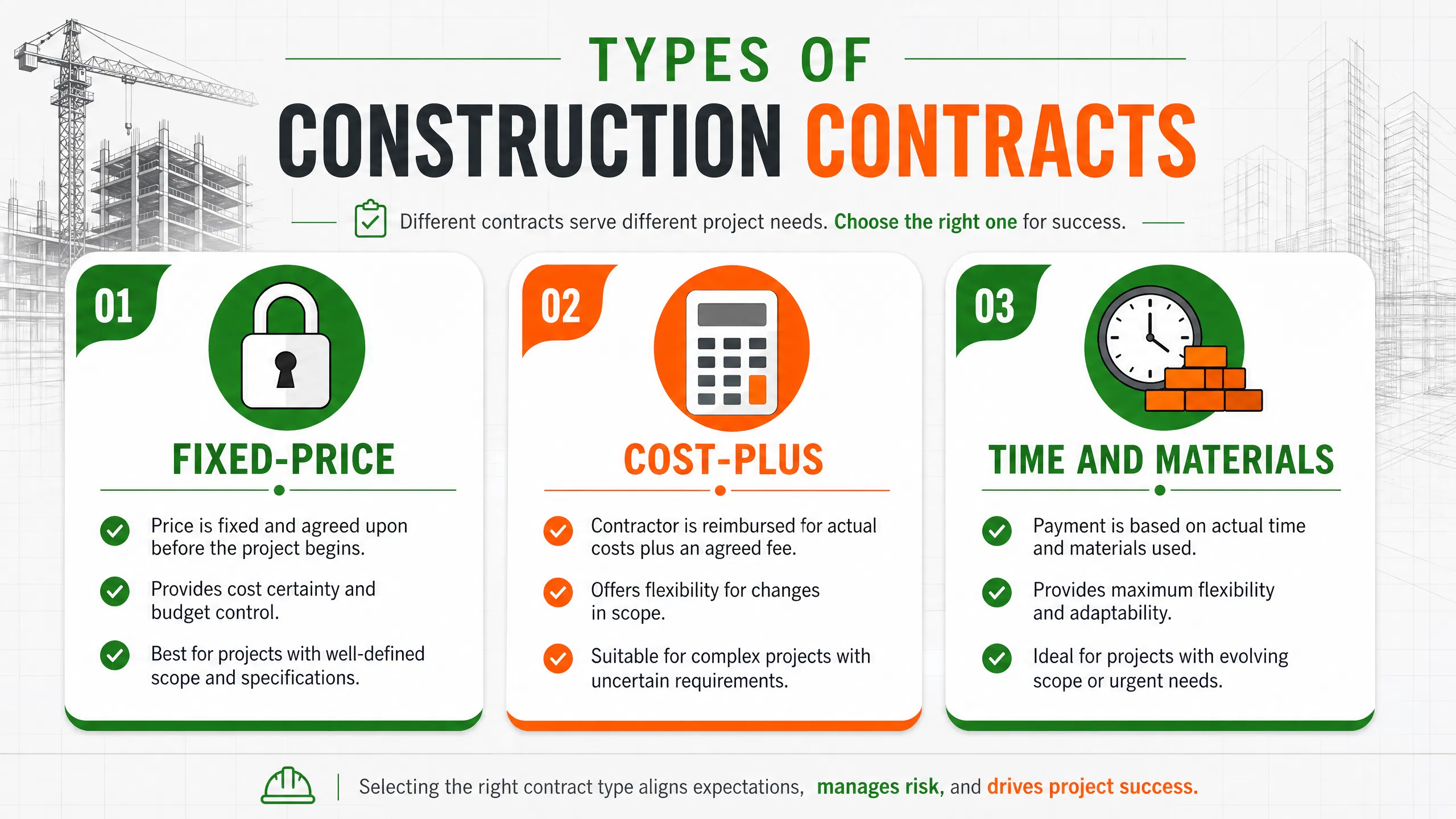
Fixed-Price Contracts
Under a fixed-price contract, the contractor agrees to complete the project for a predetermined amount.
Advantages:
- Predictable costs
- Reduced owner risk
Disadvantages:
- Contractor may cut corners
- Limited flexibility
Cost-Plus Contracts
In cost-plus contracts, the owner pays actual project costs plus an agreed profit margin.
Benefits:
- Greater project flexibility
- Better quality control
Drawbacks:
- Budget uncertainty
- Increased owner risk
Time and Materials Contracts
This contract type pays contractors based on labor hours and material costs.
It works best when project details are unclear at the beginning.
Essential Clauses in Construction Contracts
Every construction contract should contain several critical clauses.
| Clause | Purpose |
|---|---|
| Scope of Work | Defines project tasks |
| Payment Terms | Explains payment schedules |
| Change Orders | Handles project modifications |
| Delay Provisions | Addresses scheduling problems |
| Indemnification | Allocates liability |
| Termination Clause | Explains contract cancellation |
| Dispute Resolution | Defines legal procedures |
Strong contracts reduce confusion and protect all parties.
Professionals seeking project documentation expertise can explore Forelite Training Professional Development Programs.
Licensing and Regulatory Compliance
Most jurisdictions require contractors and construction professionals to obtain licenses.
Licensing laws ensure contractors:
- Meet competency standards
- Carry insurance
- Follow building codes
- Understand legal obligations
Operating without proper licensing can lead to severe legal penalties.
Additionally, projects often require permits related to:
- Electrical systems
- Plumbing
- Zoning
- Environmental approvals
Construction Site Safety Laws
Worker safety is a major focus of construction law.
Employers must:
- Conduct safety inspections
- Provide training
- Maintain equipment
- Report accidents
- Follow occupational safety standards
Failure to comply may result in:
- Fines
- Criminal charges
- Lawsuits
- Project shutdowns
To strengthen workplace compliance, many organizations rely on Forelite Training Occupational Safety Courses.
Payment Disputes and Mechanic’s Liens
Payment disputes are extremely common in construction projects.
Common causes include:
- Delayed payments
- Poor workmanship claims
- Contract misunderstandings
- Unauthorized changes
One legal remedy is a mechanic’s lien, which allows contractors or suppliers to claim an interest in the property until payment is received.
Mechanic’s liens can:
- Delay property sales
- Create financing issues
- Trigger lawsuits
Proper documentation is essential when filing lien claims.
Common Construction Law Disputes
Construction disputes can quickly become expensive and time-consuming.
Breach of Contract
This occurs when one party fails to fulfill contractual obligations.
Examples include:
- Failure to complete work
- Nonpayment
- Missed deadlines
- Poor-quality performance
Defective Workmanship
Defective construction can involve:
- Structural problems
- Plumbing failures
- Electrical defects
- Roofing leaks
Contractors may face repair costs and legal liability.
Project Delays
Delays are often caused by:
- Weather conditions
- Material shortages
- Labor disputes
- Design changes
Contracts typically include clauses explaining how delays are handled.
Construction Insurance and Risk Management
Insurance plays a critical role in construction projects.
Common policies include:
| Insurance Type | Coverage |
|---|---|
| General Liability | Injury and property damage |
| Builder’s Risk | Project damage |
| Workers’ Compensation | Employee injuries |
| Professional Liability | Design errors |
| Commercial Auto | Vehicle accidents |
Risk management strategies help reduce legal exposure and financial losses.
Arbitration and Mediation in Construction
Construction disputes are often resolved outside court.
Arbitration
Arbitration involves a neutral third party making a binding decision.
Benefits:
- Faster resolution
- Lower legal costs
- Confidentiality
Mediation
Mediation is less formal and encourages negotiation between parties.
Advantages:
- Preserves relationships
- Flexible solutions
- Lower expenses
Many contracts now require mediation before litigation.
Role of Construction Lawyers
Construction lawyers provide valuable legal guidance throughout projects.
They assist with:
- Drafting contracts
- Reviewing agreements
- Resolving disputes
- Managing claims
- Ensuring compliance
- Handling litigation
Hiring an experienced lawyer can prevent costly mistakes.
Technology and Modern Construction Law
Technology is changing the construction industry rapidly.
Modern legal issues now involve:
- Building Information Modeling (BIM)
- Drones
- Artificial intelligence
- Smart contracts
- Digital project management
These technologies create new legal questions regarding:
- Data ownership
- Cybersecurity
- Intellectual property
- Liability
Construction professionals must stay updated on evolving legal standards.
International Construction Law
Large infrastructure projects often involve international parties.
International construction law addresses:
- Cross-border contracts
- Currency risks
- International arbitration
- Import/export regulations
- Foreign labor laws
Organizations working globally must understand international legal frameworks.
How to Avoid Legal Problems in Construction Projects
Preventing disputes is always better than resolving them later.
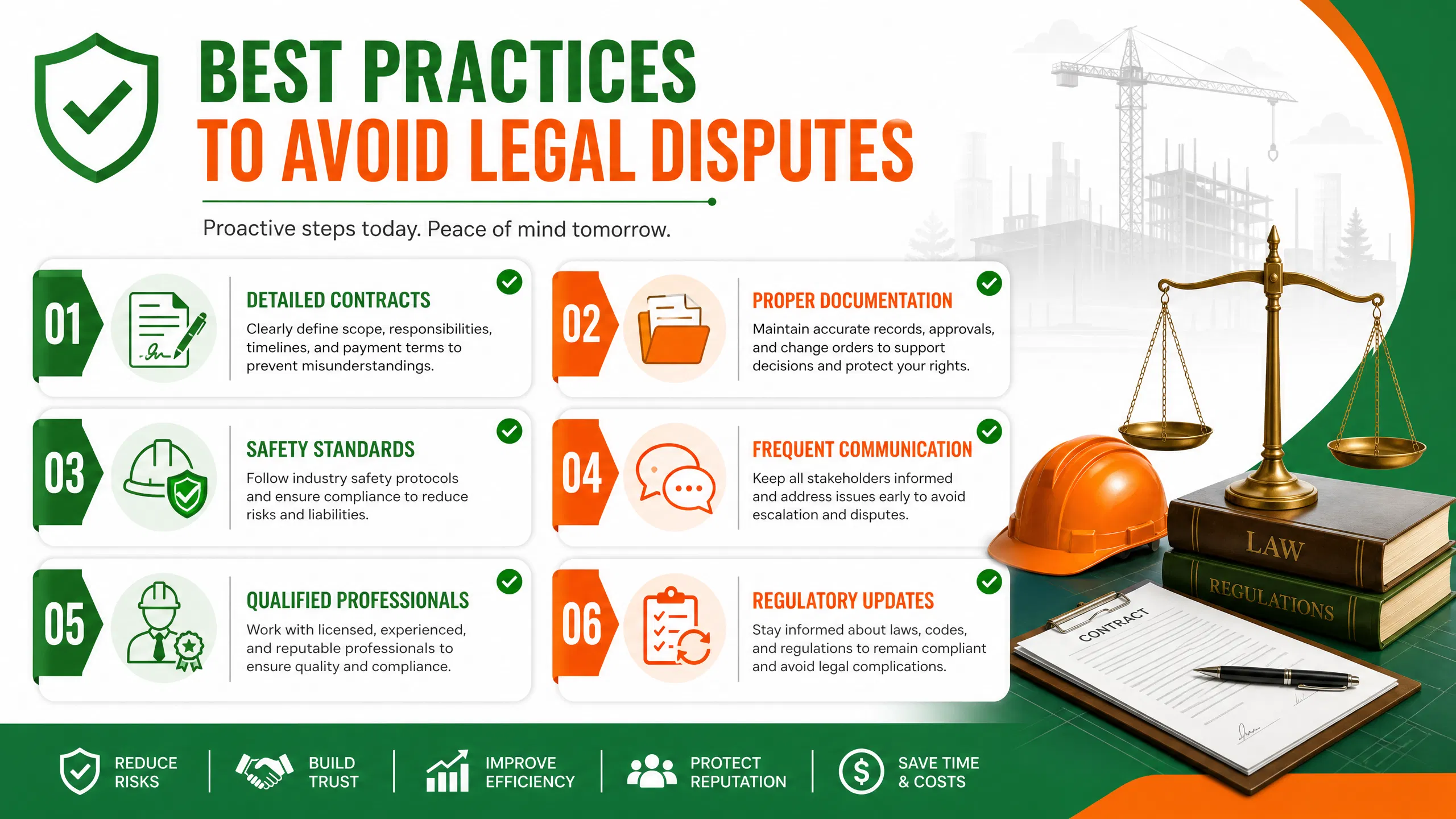
Best Practices
1. Use Detailed Written Contracts
Clear contracts reduce misunderstandings.
2. Maintain Proper Documentation
Keep records of:
- Emails
- Invoices
- Change orders
- Safety inspections
3. Follow Safety Standards
Regular training reduces accidents and liability.
4. Communicate Frequently
Strong communication prevents confusion.
5. Hire Qualified Professionals
Experienced contractors and consultants improve project outcomes.
6. Stay Updated on Regulations
Construction laws constantly evolve.
Future Trends in Construction Law
The future of construction law is being shaped by several important trends.
Sustainability Regulations
Governments are increasing environmental requirements for:
- Energy efficiency
- Green buildings
- Carbon reduction
Digital Construction Contracts
Smart contracts powered by blockchain technology may automate payments and compliance.
Increased Safety Enforcement
Regulators continue strengthening workplace safety laws.
Cybersecurity Concerns
As construction becomes more digital, cybersecurity laws are becoming increasingly important.
Frequently Asked Questions About Construction Law
What does construction law cover?
Construction law covers contracts, safety regulations, labor laws, licensing, dispute resolution, environmental compliance, and payment issues related to construction projects.
Why are construction contracts important?
Construction contracts define project responsibilities, timelines, payment terms, and legal protections for all parties involved.
What is a mechanic’s lien?
A mechanic’s lien is a legal claim against property for unpaid construction work or materials.
How can contractors avoid legal disputes?
Contractors can reduce disputes by using detailed contracts, maintaining documentation, following safety laws, and communicating effectively.
What happens if a contractor works without a license?
Unlicensed contractors may face fines, lawsuits, contract invalidation, and even criminal penalties.
Is arbitration better than court litigation?
Arbitration is often faster, less expensive, and more private than traditional litigation.
Conclusion
Construction law plays a vital role in ensuring construction projects are completed safely, legally, and efficiently. From contracts and licensing to safety regulations and dispute resolution, legal compliance protects everyone involved in the construction process.
As the construction industry evolves with new technologies and stricter regulations, understanding construction law becomes even more important. Contractors, developers, engineers, and property owners who invest in legal knowledge reduce risks, improve project success, and strengthen professional relationships.
Continuous education and professional training are essential for staying compliant and competitive in the modern construction industry. Resources like Forelite Training offer valuable learning opportunities for construction professionals looking to enhance their expertise.