


Introduction to Public Private Partnership
A public private partnership is one of the most effective ways governments and businesses work together to improve public services and infrastructure. Around the world, countries are using these partnerships to build roads, hospitals, schools, airports, and energy systems more efficiently. As populations grow and economic needs increase, governments often struggle to fund large projects on their own. That’s where private organizations step in to provide expertise, technology, and investment.
Today, public private partnership models are widely used because they create opportunities for innovation, reduce project delays, and improve service delivery. Whether in transportation, healthcare, education, or technology, PPPs help communities gain access to better facilities and services.
In developing countries like Kenya, PPPs are becoming increasingly important for economic growth and sustainable development. Organizations and professionals involved in these projects require strong leadership, financial planning, procurement skills, and project management knowledge. Training institutions such as Forelite Training provide valuable programs that help professionals develop the expertise needed for successful PPP implementation.
Understanding the Meaning of Public Private Partnership
Definition and Core Principles
A public private partnership is a long-term agreement between a government agency and a private company to finance, design, build, or manage public projects and services. Both parties share responsibilities, risks, and rewards throughout the project lifecycle.
The government usually focuses on public interest and regulation, while the private sector contributes innovation, funding, and operational efficiency. This collaboration helps improve service quality while reducing pressure on public budgets.
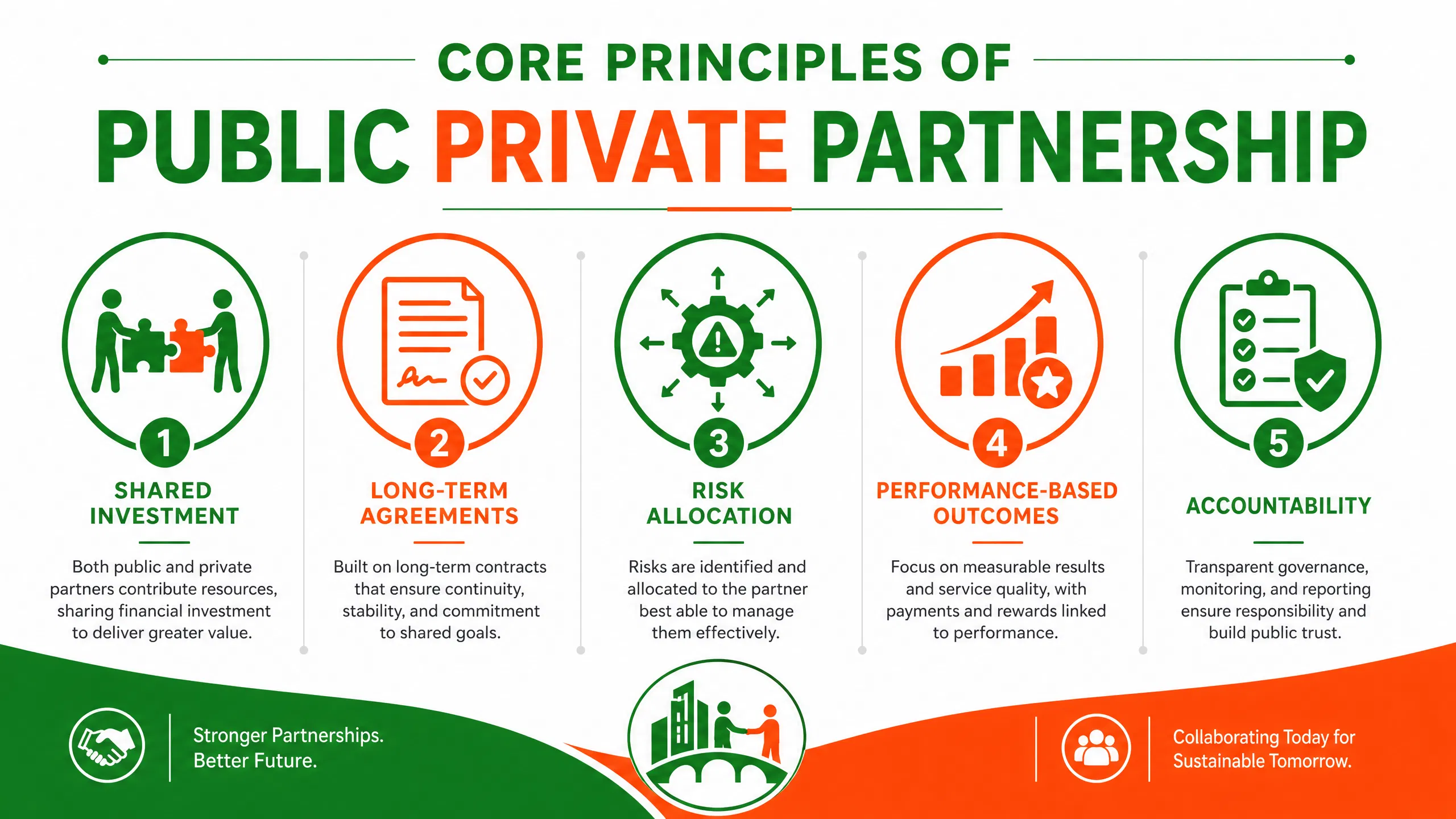
Core principles of PPPs include:
- Shared investment and responsibility
- Long-term contractual agreements
- Risk allocation between public and private entities
- Performance-based outcomes
- Accountability and transparency
Why Governments Use PPP Models
Governments use PPP models for several reasons:
- Limited public funds for infrastructure projects
- Need for faster project completion
- Access to specialized private-sector skills
- Improved operational efficiency
- Better maintenance of public assets
For example, instead of waiting years for government funding to construct a highway, a private company may finance and build the road while collecting toll fees for a specified period.
History and Evolution of Public Private Partnership
Early Examples of PPPs
The concept of public private partnership dates back centuries. Governments historically worked with private merchants to build ports, roads, and railways. However, modern PPPs became more structured during the late 20th century.
Countries like the United Kingdom pioneered formal PPP frameworks through initiatives such as the Private Finance Initiative (PFI). These programs encouraged private investment in public infrastructure.
Growth of PPPs in Developing Economies
Developing countries adopted PPPs to address infrastructure shortages and stimulate economic development. Africa, Asia, and Latin America have increasingly relied on PPPs for transportation, healthcare, and energy projects.
Kenya, for example, has embraced PPPs in road construction, energy production, and urban development. These projects create employment opportunities while improving public services.
Professionals working in these sectors often benefit from specialized procurement and project management training programs such as those offered through Forelite Training’s procurement courses.
Types of Public Private Partnership Models
Different PPP structures exist depending on project goals, financing, and ownership arrangements.
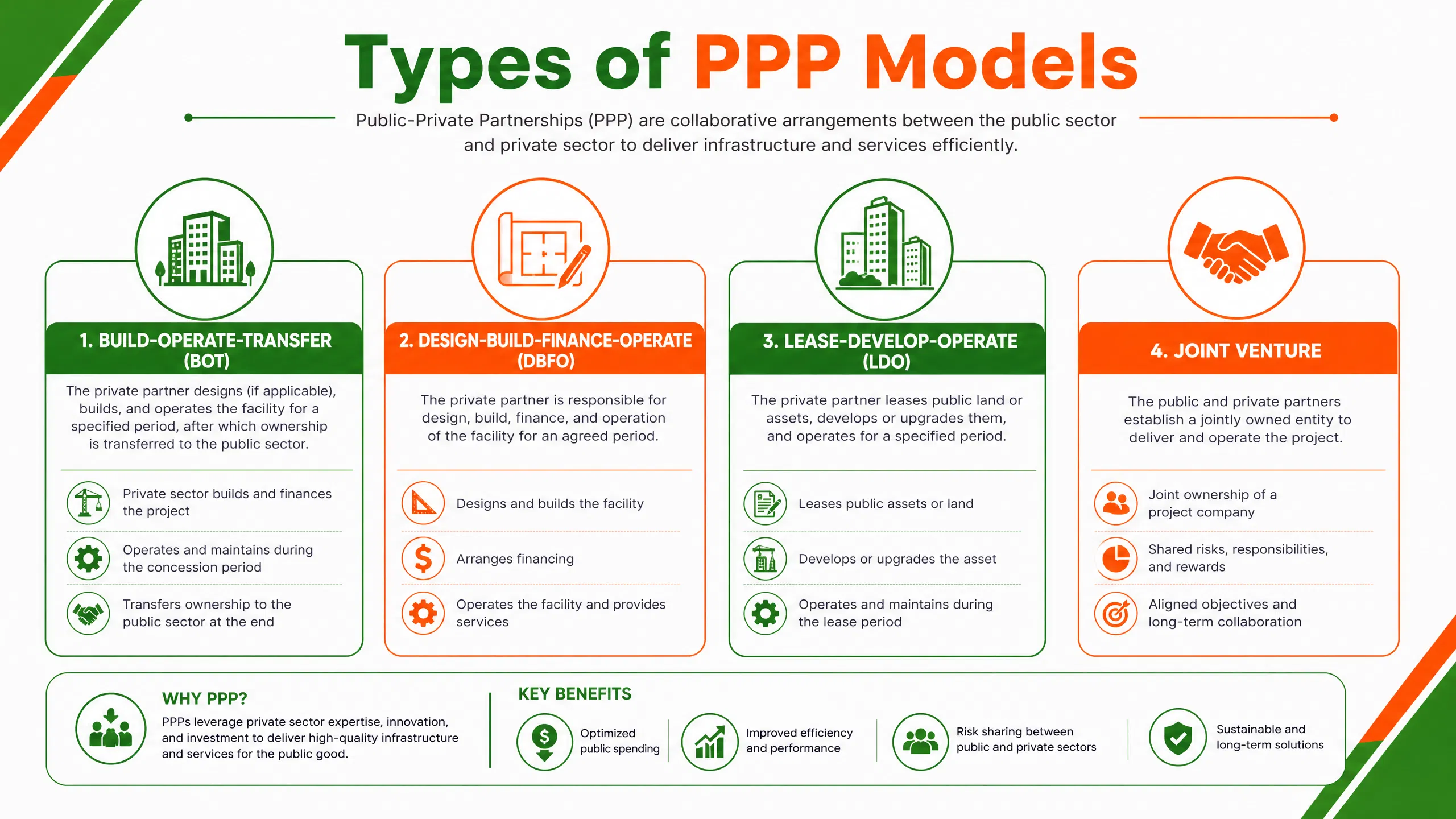
Build-Operate-Transfer (BOT)
In the BOT model, a private company finances and builds a project, operates it for a specific period, and later transfers ownership to the government.
This model is common in:
- Toll roads
- Airports
- Power plants
Design-Build-Finance-Operate (DBFO)
Under DBFO agreements, the private sector handles nearly every stage of the project:
- Design
- Construction
- Financing
- Operation
Governments supervise performance while the private entity manages execution.
Lease-Develop-Operate (LDO)
In this structure, a private company leases public property, upgrades it, and operates it efficiently.
Examples include:
- Railway systems
- Water treatment facilities
- Public housing
Joint Venture Partnerships
Joint ventures involve shared ownership between government and private organizations. Both parties contribute resources and participate in decision-making.
Key Benefits of Public Private Partnership
Improved Infrastructure Development
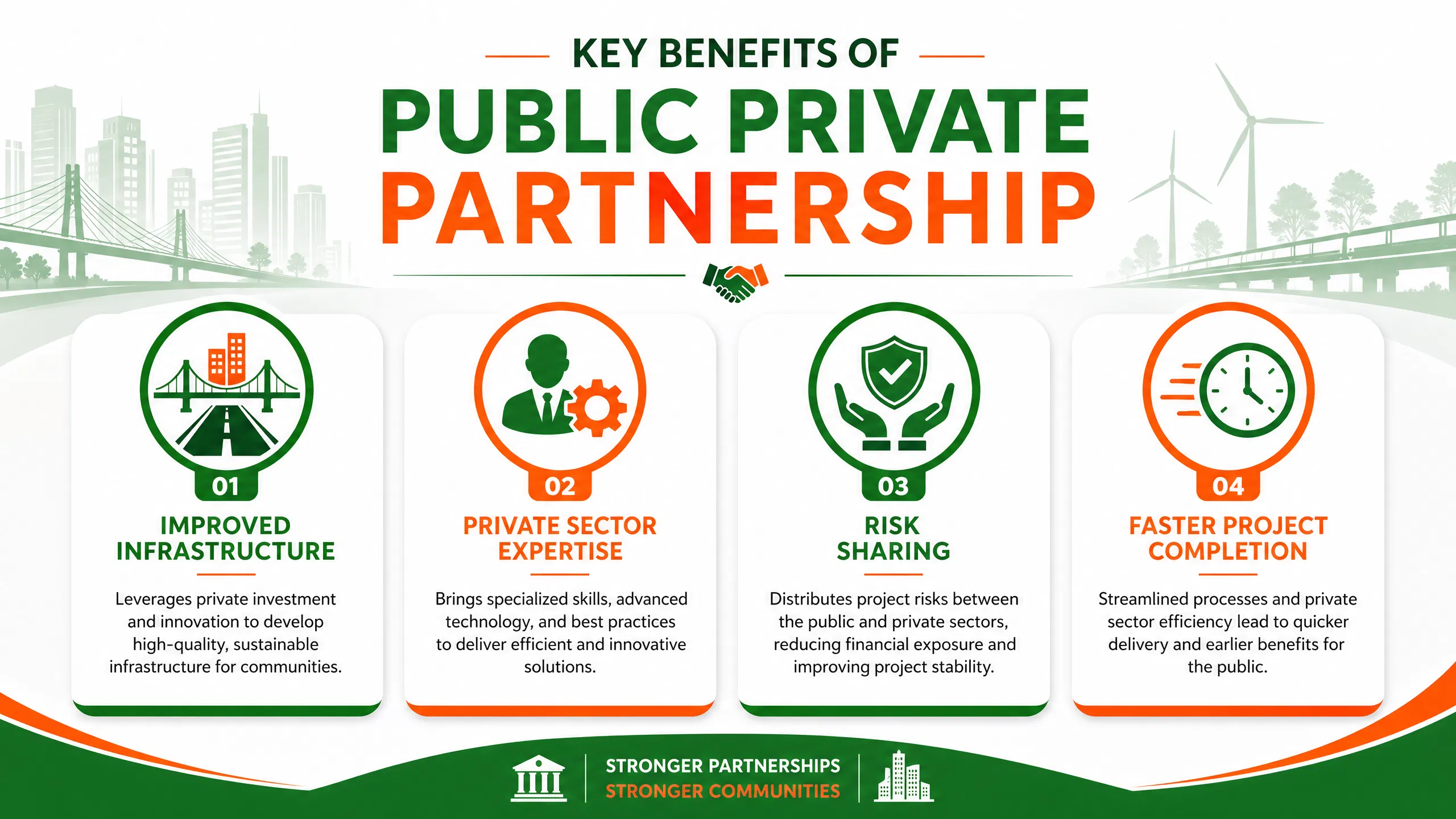
One major advantage of public private partnership is faster infrastructure development. Private investors bring funding that allows projects to begin sooner.
Examples include:
- Highways
- Bridges
- Rail systems
- Airports
Efficient infrastructure supports trade, tourism, and economic productivity.
Access to Private Sector Expertise
Private companies often possess advanced technical knowledge and management expertise. Their involvement improves project efficiency and innovation.
For example, technology firms may introduce digital systems that improve transportation or healthcare management.
Professionals seeking expertise in project execution can explore project management training programs to strengthen their leadership and operational skills.
Risk Sharing Between Parties
PPPs distribute risks between governments and private investors. Construction, operational, and financial risks are shared according to contractual agreements.
This arrangement reduces the burden on taxpayers while encouraging accountability.
Faster Project Completion
Private firms usually operate under strict timelines and performance targets. As a result, projects are often completed faster compared to traditional government-managed systems.
Challenges of Public Private Partnership
Financial Risks
Despite many benefits, PPPs can involve financial uncertainties. Revenue projections may fail, causing losses for investors or governments.
Economic instability and inflation can also impact project sustainability.
Legal and Regulatory Issues
Complex legal frameworks sometimes create delays or disputes. Governments must establish clear regulations and transparent procurement systems.
Organizations involved in procurement can benefit from courses like those available through Forelite Training’s leadership and governance programs.
Political and Public Concerns
Political changes may affect PPP agreements. Public resistance can also arise if citizens believe services are becoming too expensive or privatized.
Transparency and community engagement are essential for maintaining public trust.
Public Private Partnership in Education
Training and Skill Development
Education is one of the most important sectors benefiting from PPPs. Governments collaborate with private institutions to improve training facilities, curriculum development, and digital learning tools.
Professional development institutions such as Forelite Training help bridge skill gaps by offering industry-focused training programs.
Technology Integration in Schools
Private technology firms often support schools by:
- Providing internet connectivity
- Supplying digital devices
- Developing e-learning systems
This partnership improves access to quality education, especially in rural communities.
Public Private Partnership in Healthcare
Hospital Management Partnerships
Healthcare PPPs help governments improve medical infrastructure and service delivery. Private companies may build hospitals or manage specialized departments.
Benefits include:
- Better equipment
- Improved patient care
- Reduced waiting times
Affordable Healthcare Services
PPPs can increase healthcare accessibility through subsidized treatment programs and efficient hospital operations.
In many countries, partnerships between governments and pharmaceutical companies improve vaccine distribution and emergency healthcare services.
Public Private Partnership in Infrastructure
Roads and Transportation
Transportation PPPs improve national connectivity and economic activity. Governments frequently partner with construction firms to build:
- Highways
- Railways
- Airports
- Urban transit systems
Efficient transportation systems reduce travel time and encourage business growth.
Energy and Water Projects
Public private partnership models are widely used in:
- Renewable energy projects
- Water treatment plants
- Electricity generation systems
Private investment helps governments expand essential services more rapidly.
Public Private Partnership in Kenya
Major PPP Projects in Kenya
Kenya has implemented several successful PPP initiatives in:
- Transportation
- Energy
- Housing
- Healthcare
Projects such as highways, geothermal power plants, and urban housing developments demonstrate the country’s commitment to economic modernization.
Economic Impact on Local Communities
PPPs create:
- Employment opportunities
- Business growth
- Improved infrastructure
- Increased investment
Communities benefit from better services and stronger economic activity.
To support growing industries, many professionals pursue advanced training through programs like monitoring and evaluation courses to improve project oversight and accountability.
Skills Needed for PPP Project Management
Leadership and Communication
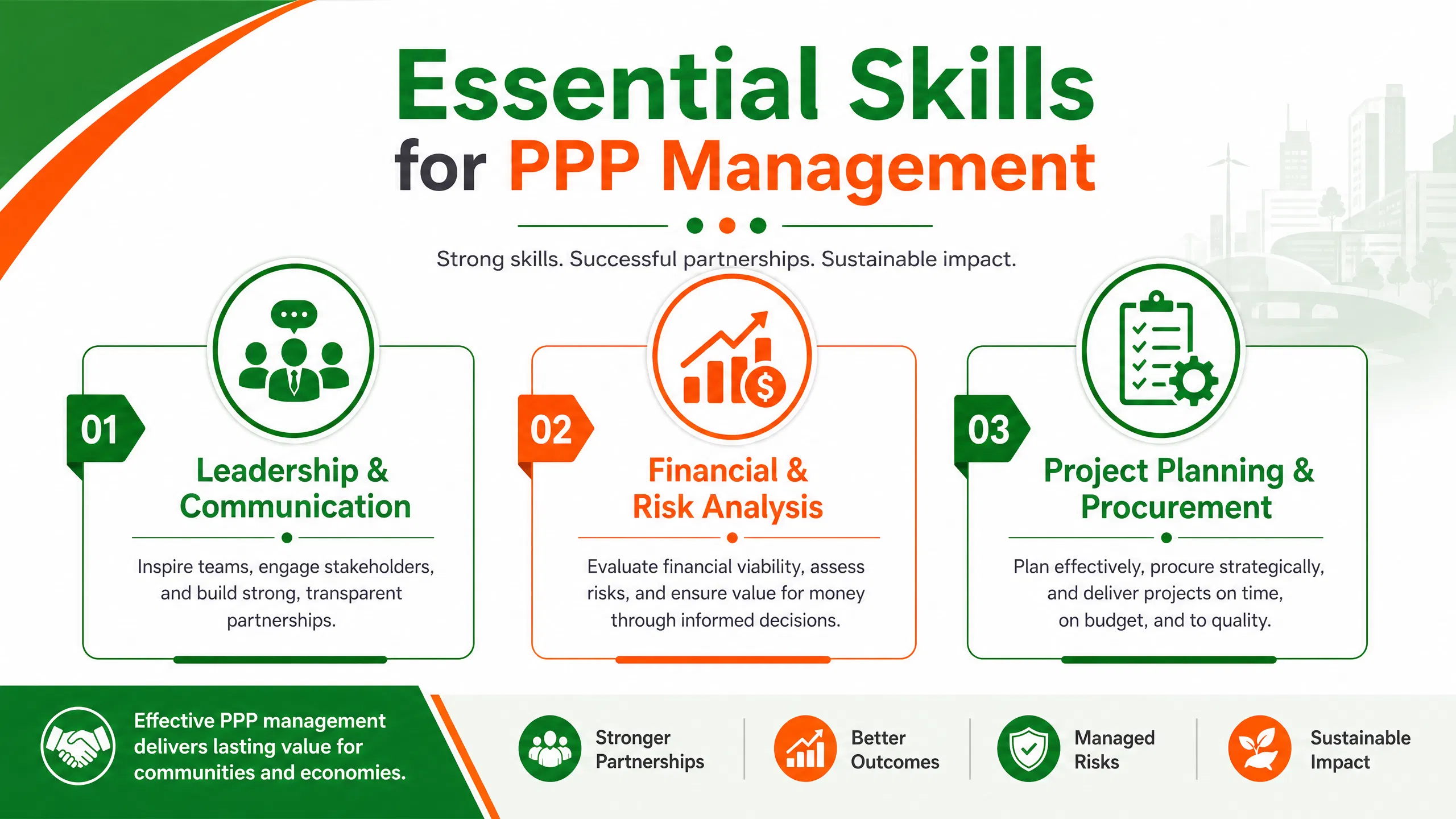
Successful PPP projects require strong leadership and teamwork. Managers must coordinate stakeholders from both public and private sectors.
Important communication skills include:
- Negotiation
- Conflict resolution
- Public engagement
Financial and Risk Analysis
PPP professionals must understand:
- Budgeting
- Financial forecasting
- Investment analysis
- Risk management
These skills help ensure project sustainability and profitability.
Project Planning and Procurement
Efficient procurement systems improve transparency and reduce corruption risks.
Professionals interested in procurement excellence can strengthen their expertise through supply chain and procurement training.
How Training Supports Successful PPP Projects
Professional Development Opportunities
Training programs improve technical and managerial skills required for complex PPP environments.
Areas of training include:
- Project management
- Procurement
- Leadership
- Financial analysis
- Monitoring and evaluation
Importance of Certified Training Programs
Certified training programs improve credibility and career advancement opportunities. Skilled professionals contribute to:
- Better project outcomes
- Increased accountability
- Improved service delivery
Organizations such as Forelite Training provide specialized learning opportunities that support professionals involved in public and private sector projects.
Future Trends in Public Private Partnership
Digital Transformation and Smart Cities
Technology is transforming how PPP projects operate. Smart city initiatives use:
- Artificial intelligence
- Internet of Things (IoT)
- Digital monitoring systems
These technologies improve efficiency and sustainability.
Sustainability and Green Infrastructure
Governments and private investors increasingly prioritize environmentally friendly infrastructure.
Future PPP projects will focus on:
- Renewable energy
- Green transportation
- Sustainable housing
- Climate resilience
Sustainability initiatives help countries meet environmental goals while supporting economic growth.
Frequently Asked Questions
What is a public private partnership?
A public private partnership is a collaboration between government agencies and private companies to finance, build, or manage public projects and services.
What are the advantages of public private partnership?
PPPs improve infrastructure development, reduce government spending pressure, increase efficiency, and encourage innovation.
What sectors commonly use PPP models?
Common sectors include:
- Transportation
- Healthcare
- Education
- Energy
- Water management
Why are PPPs important in developing countries?
They help governments address infrastructure shortages, attract private investment, and stimulate economic growth.
What skills are important for PPP professionals?
Important skills include:
- Project management
- Procurement
- Financial analysis
- Leadership
- Risk management
How can professionals prepare for PPP careers?
Professionals can enroll in specialized training and certification programs offered by institutions like Forelite Training.
Conclusion
Public private partnership models continue to shape modern economies by improving infrastructure, healthcare, education, and public services. These collaborations allow governments and private companies to combine resources, expertise, and innovation to achieve long-term development goals.
Although PPPs come with financial, legal, and political challenges, their benefits often outweigh the risks when projects are carefully planned and managed. As countries continue investing in sustainable development and smart infrastructure, PPPs will remain essential tools for economic transformation.
Success in PPP projects depends heavily on skilled professionals who understand procurement, leadership, project management, and financial planning. Continuous learning through trusted institutions such as Forelite Training helps individuals and organizations stay competitive in today’s evolving economic environment.