


Monitoring and Evaluation (M&E) are indispensable pillars for any initiative aiming to achieve measurable impact and sustainable success. In an increasingly data-driven world, these processes provide the critical insights needed to track progress, assess effectiveness, and ensure accountability across projects, programs, and policies. This comprehensive guide delves into the core concepts of M&E, exploring their definitions, processes, objectives, and the nuanced differences that distinguish them. We will also examine the strategic importance of M&E, delve into modern frameworks, and highlight the transformative role of digital tools and Artificial Intelligence (AI) in shaping the future of M&E in 2026 and beyond.
What is Monitoring?
What is Evaluation?
The Strategic Importance of M&E
The M&E Lifecycle & Process
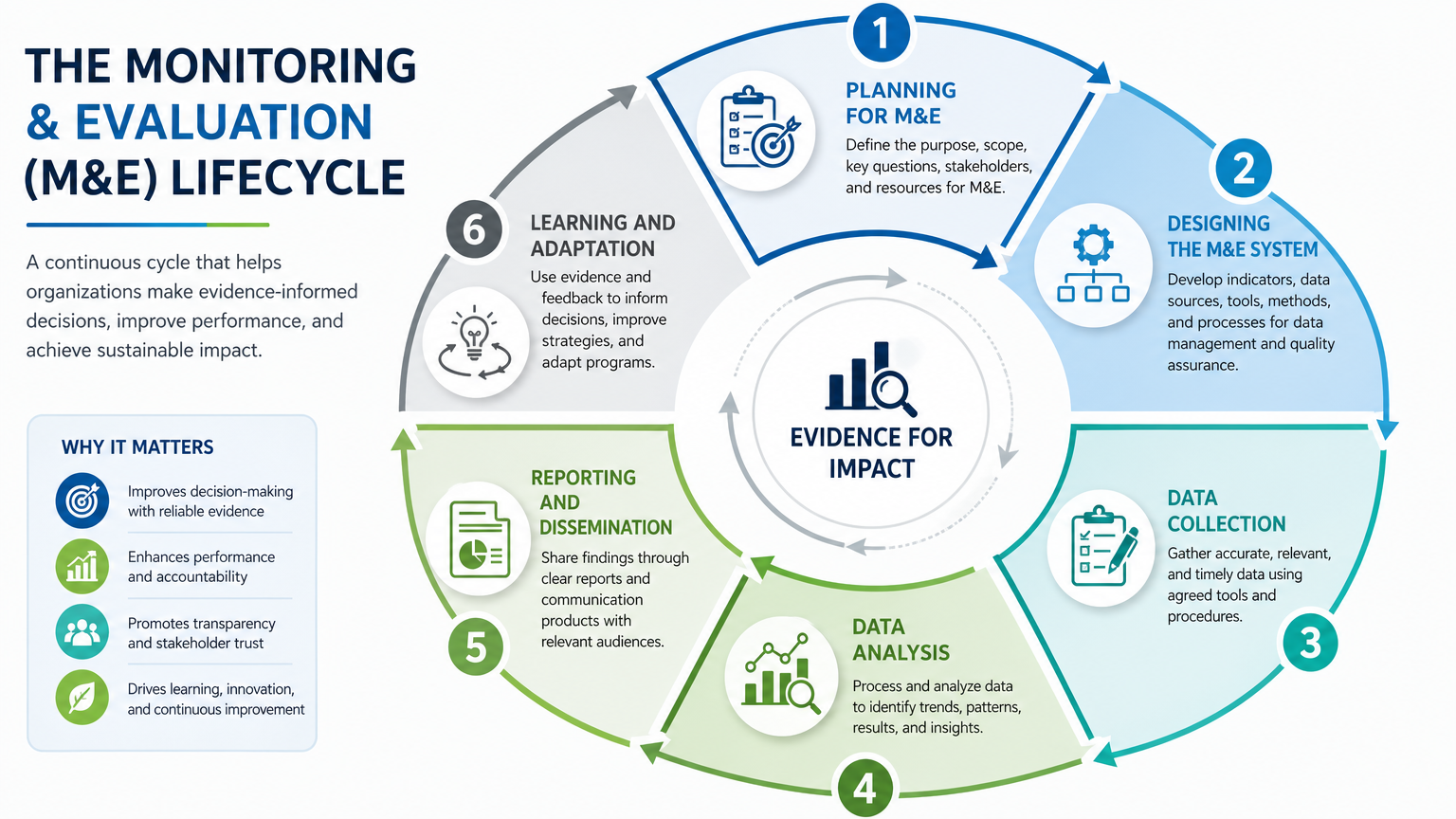
Planning for M&E:
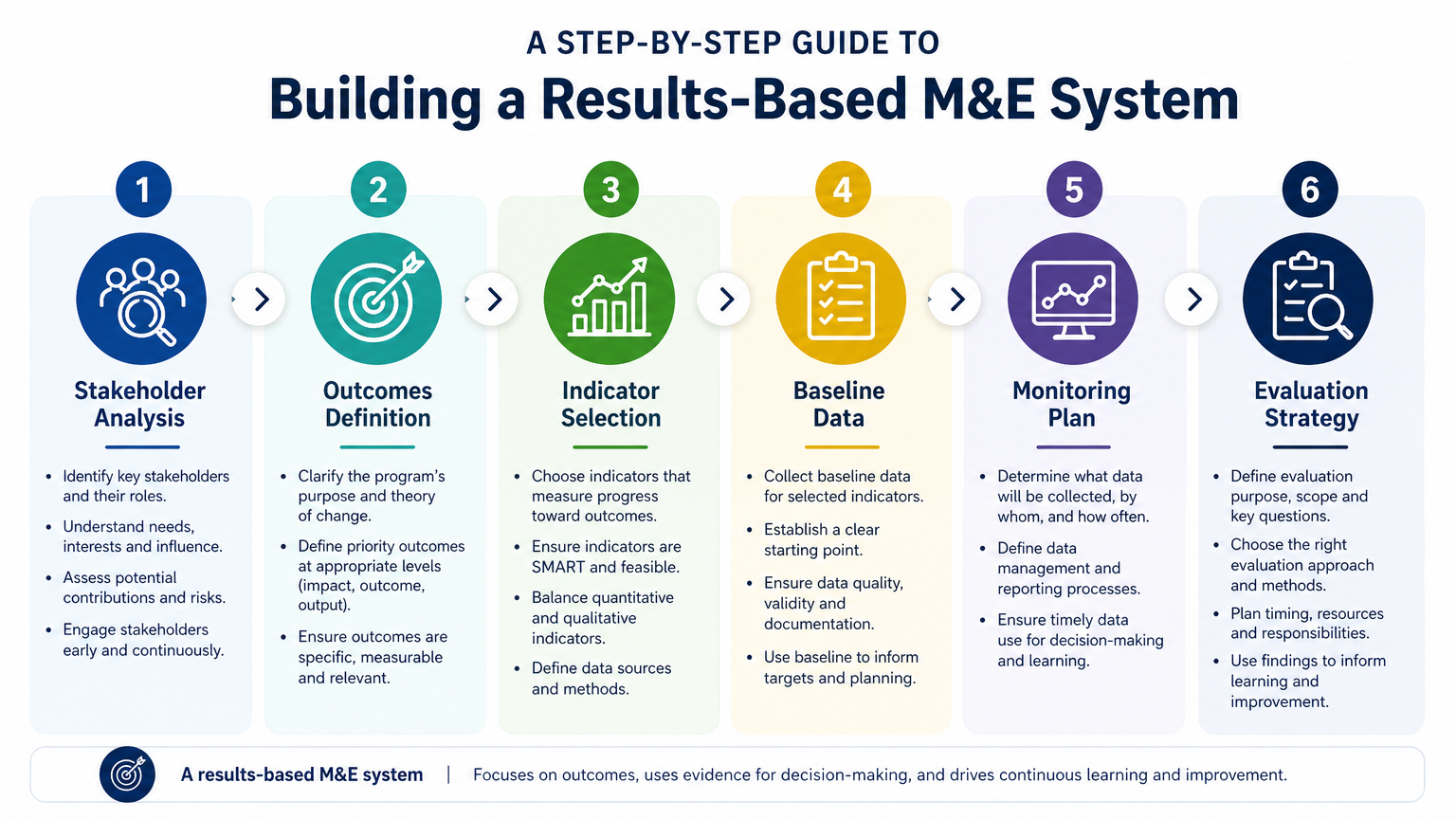
Designing the M&E System:
Based on the framework, a detailed M&E plan is developed. This plan specifies the operational aspects, such as roles and responsibilities, budget allocation for M&E activities, data collection tools (e.g., surveys, focus group discussions, observation checklists), and data management protocols. This is where the practical implementation of M&E is mapped out.
Data Collection:
Data Analysis:
Reporting and Dissemination:
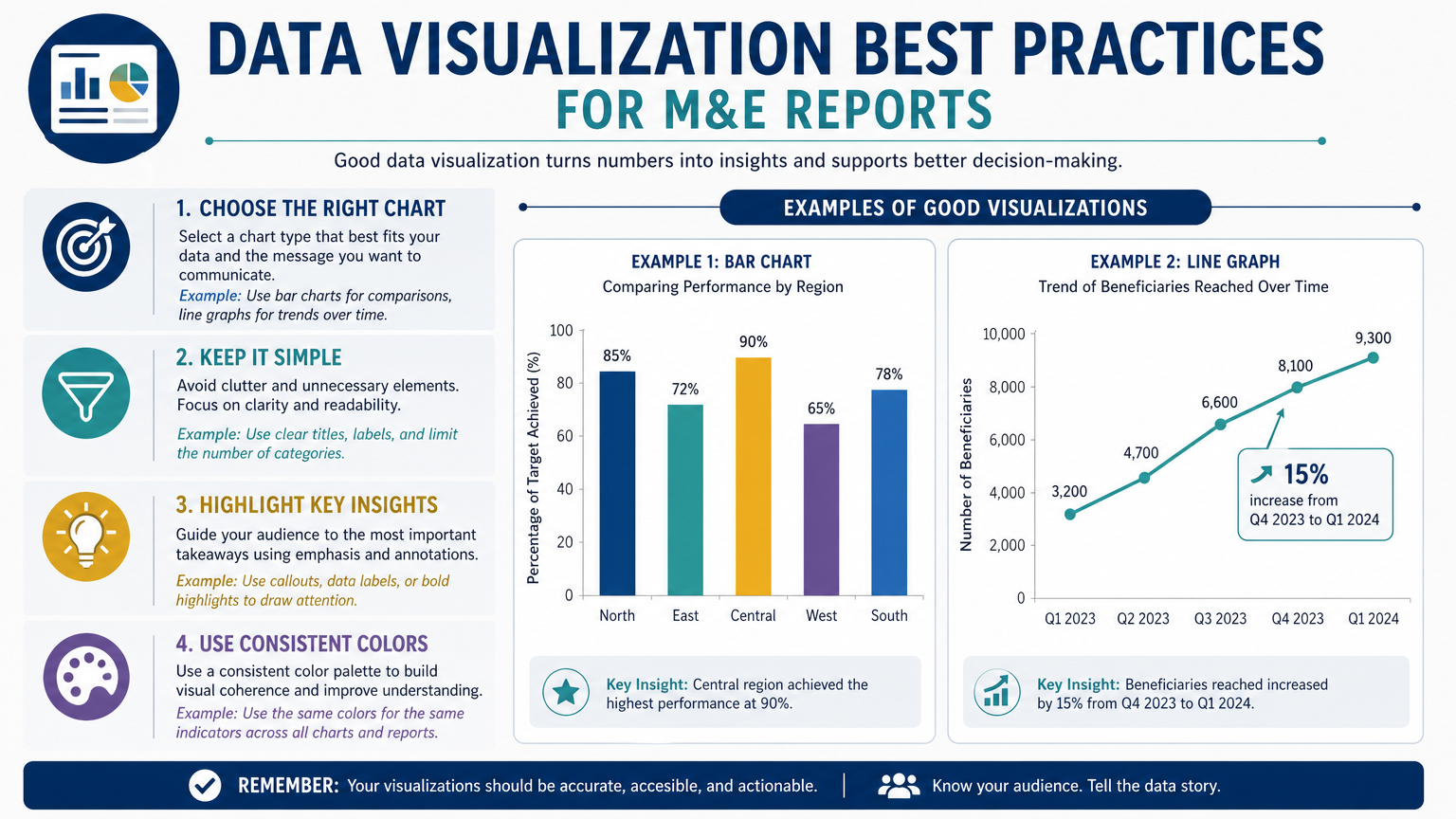
Learning and Adaptation:
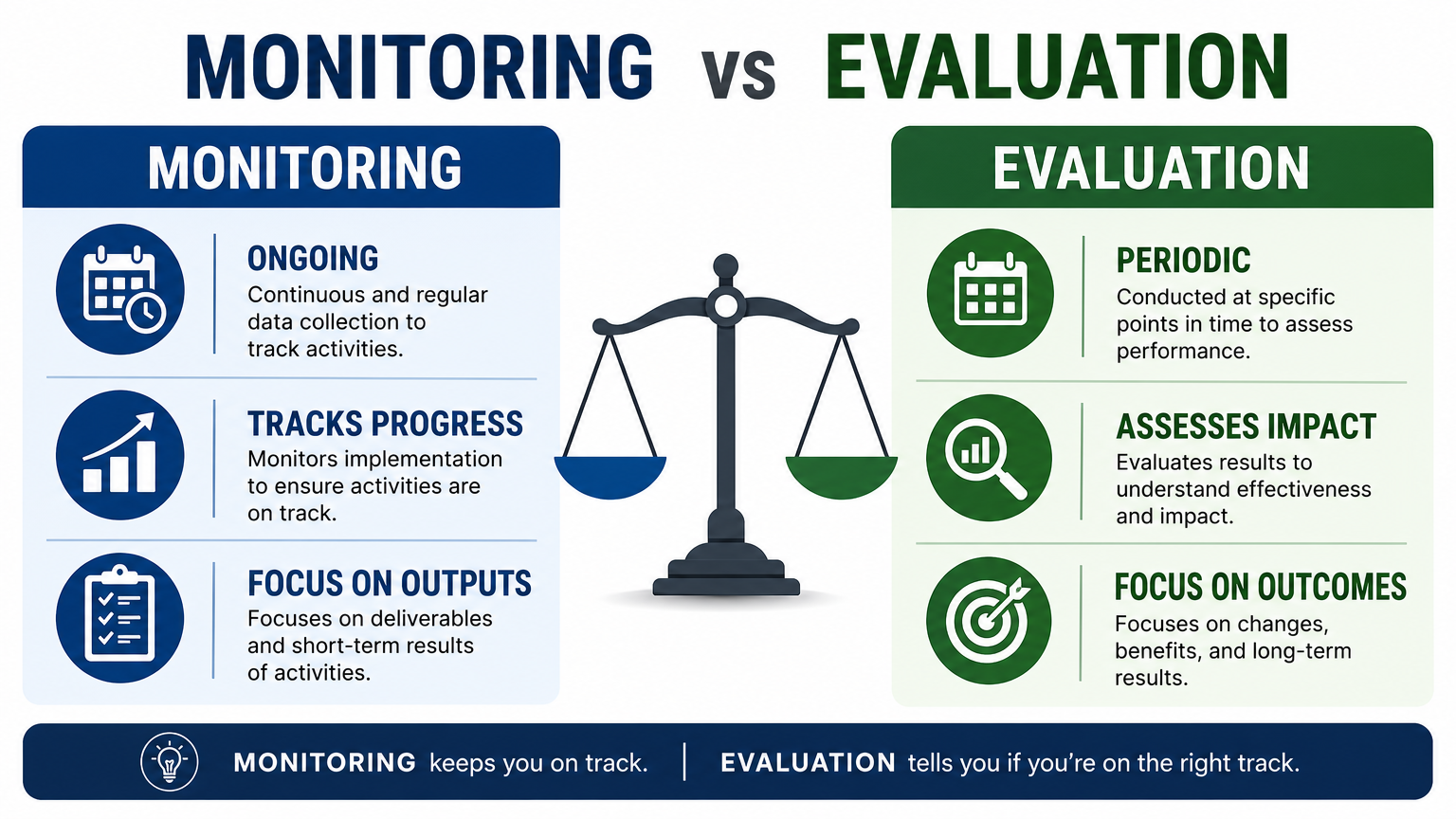
Monitoring vs. Evaluation: The Definitive Comparison
|
Aspect
|
Monitoring
|
Evaluation
|
|
Purpose
|
To track progress and ensure activities are on track.
|
To assess overall value, impact, and lessons learned.
|
|
Timing
|
Ongoing, continuous throughout the project lifecycle.
|
Periodic, at specific milestones (mid-term, end-term) or after completion.
|
|
Focus
|
Inputs, activities, and outputs.
|
Outcomes, impacts, relevance, efficiency, effectiveness, and sustainability.
|
|
Questions
|
Are we doing things right? Are we on schedule? Are we within budget?
|
Did we do the right things? What difference did we make? Why?
|
|
Users
|
Project managers, implementers, operational staff.
|
Donors, policymakers, senior management, external stakeholders.
|
|
Methodology
|
Routine data collection, tracking indicators, progress reports.
|
In-depth studies, surveys, interviews, case studies, comparative analysis.
|
|
Flexibility
|
High, allows for real-time adjustments.
|
Lower, provides strategic insights for future planning.
|
Designing Robust M&E Frameworks: Logic Models and Theory of Change
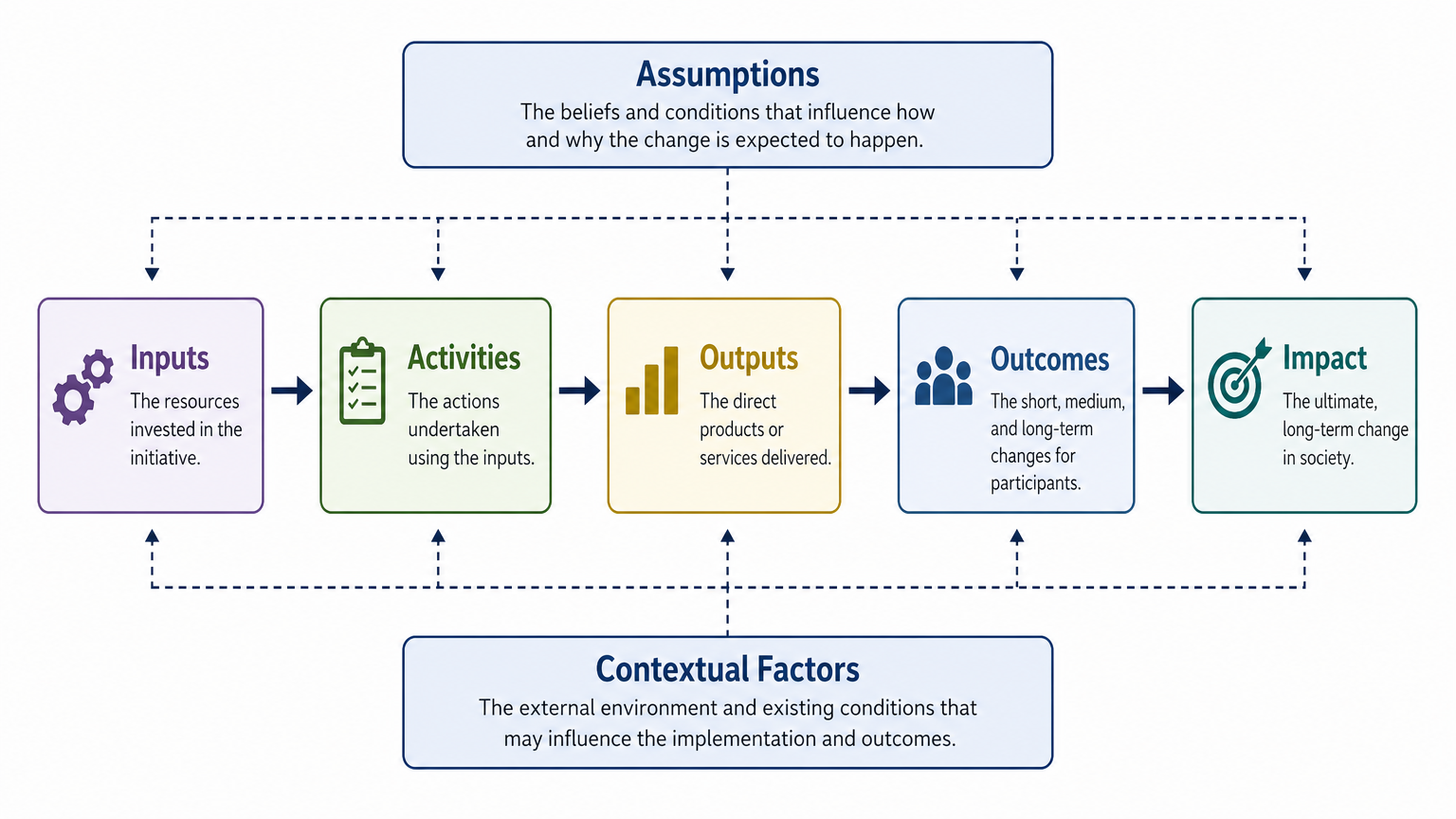
The Logic Model
The Theory of Change (ToC)
M&E Framework vs. M&E Plan
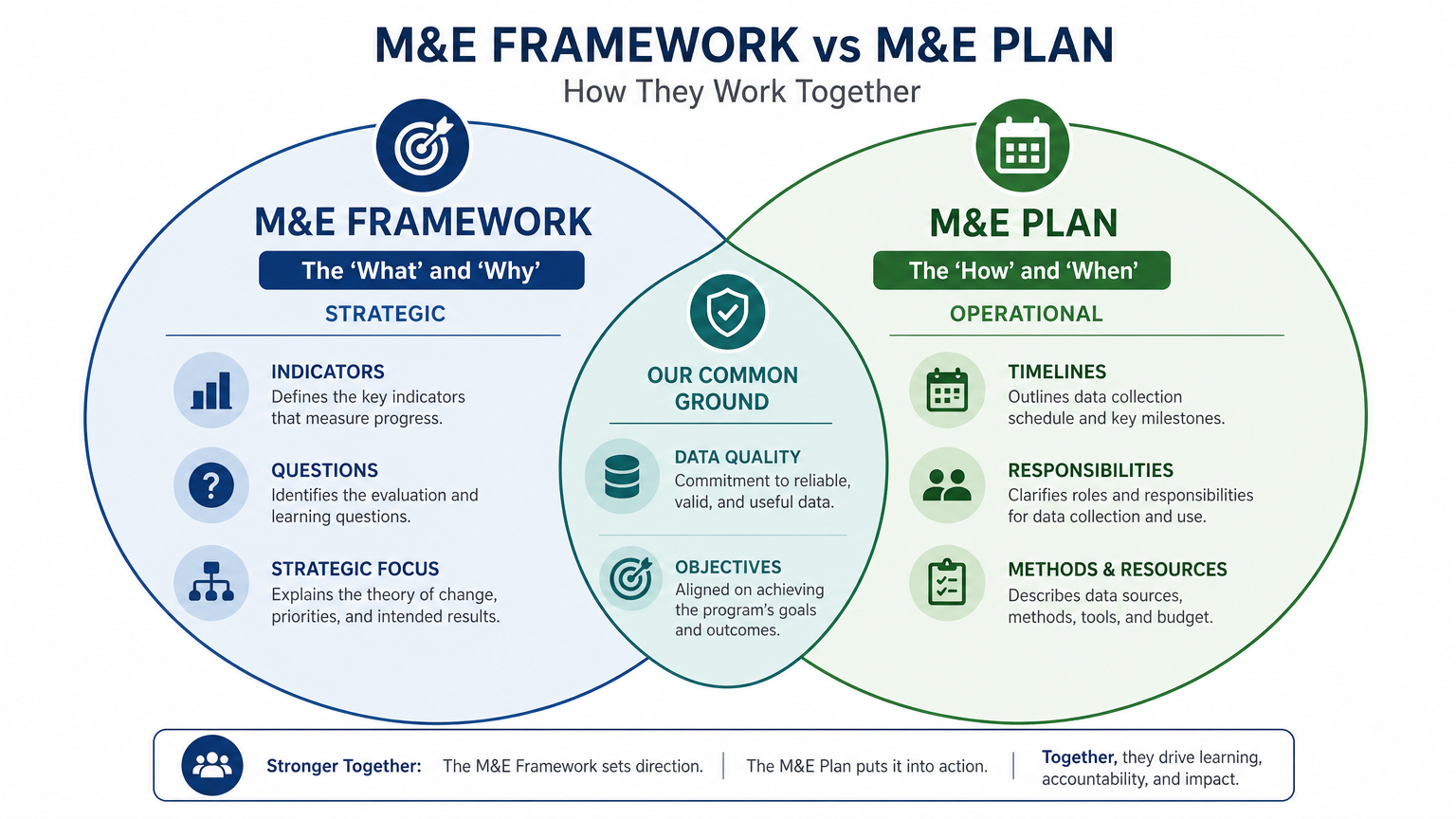
M&E Framework
M&E Plan
Digital M&E & AI Trends in 2026
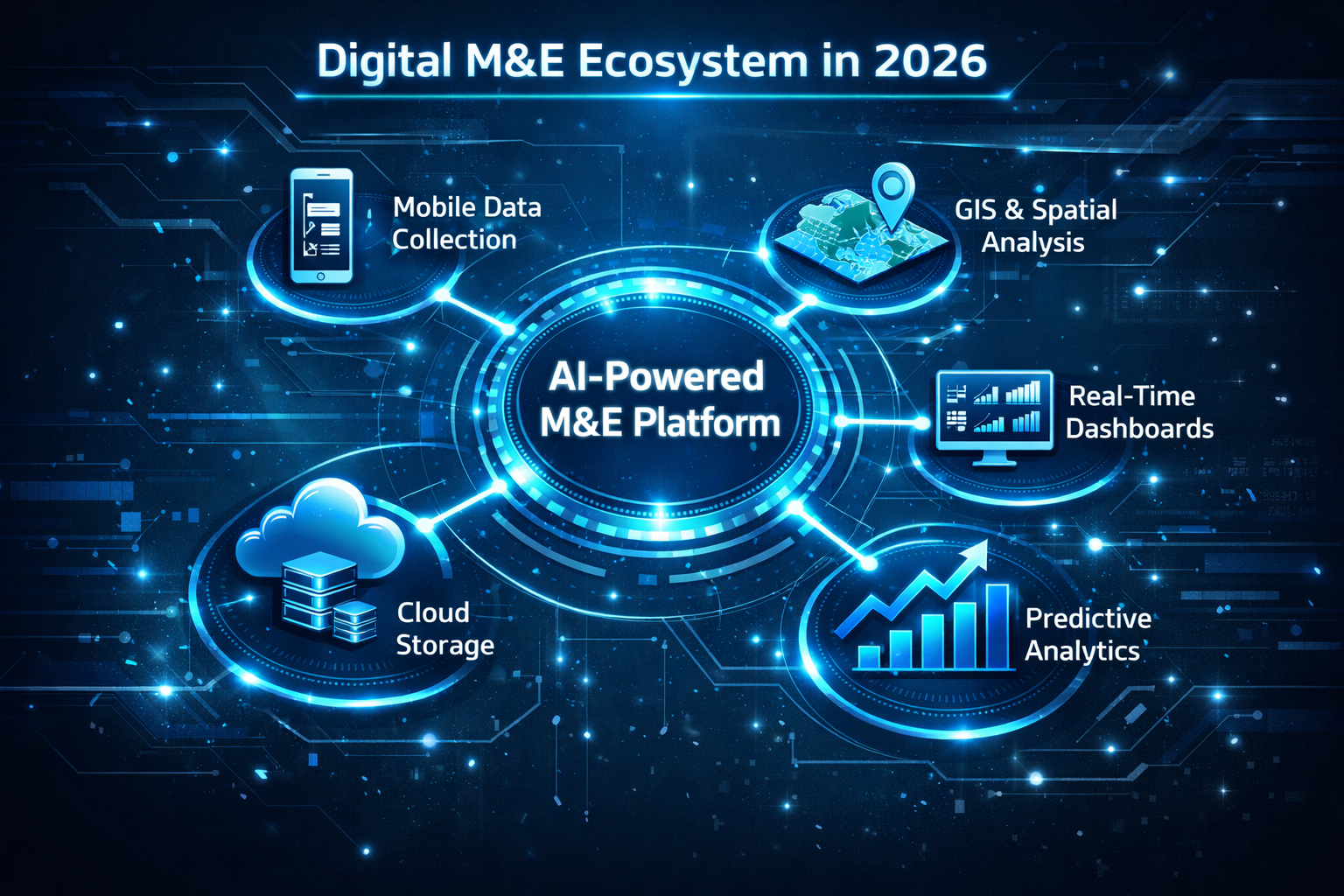
Key Digital M&E Trends:
The Role of Artificial Intelligence (AI) in M&E:
Best Practices for Effective Monitoring and Evaluation
Conclusion
FAQs About Monitoring and Evaluation
What is the primary difference between monitoring and evaluation?
Monitoring is an ongoing process that tracks the progress of activities and outputs to ensure an initiative stays on track, while evaluation is a periodic assessment that examines the overall value, impact, and lessons learned from an intervention.
Why is M&E important for project success?
M&E is crucial for project success because it enables evidence-based decision-making, improves resource allocation, enhances accountability to stakeholders, fosters continuous learning, and helps demonstrate the actual impact of an intervention.
How do Logic Models and Theories of Change contribute to M&E?
Logic Models provide a linear representation of how a program’s inputs and activities lead to outputs and outcomes, aiding in operational tracking. Theories of Change offer a broader, more complex explanation of the causal pathways and assumptions underlying an intervention, guiding strategic planning and evaluation design.
What role does AI play in modern M&E?
AI significantly enhances modern M&E by automating data validation and cleaning, analyzing qualitative data through Natural Language Processing, providing predictive analytics for future outcomes, and assisting in automated report generation, thereby increasing efficiency and depth of insight.
What are SMART indicators in M&E?
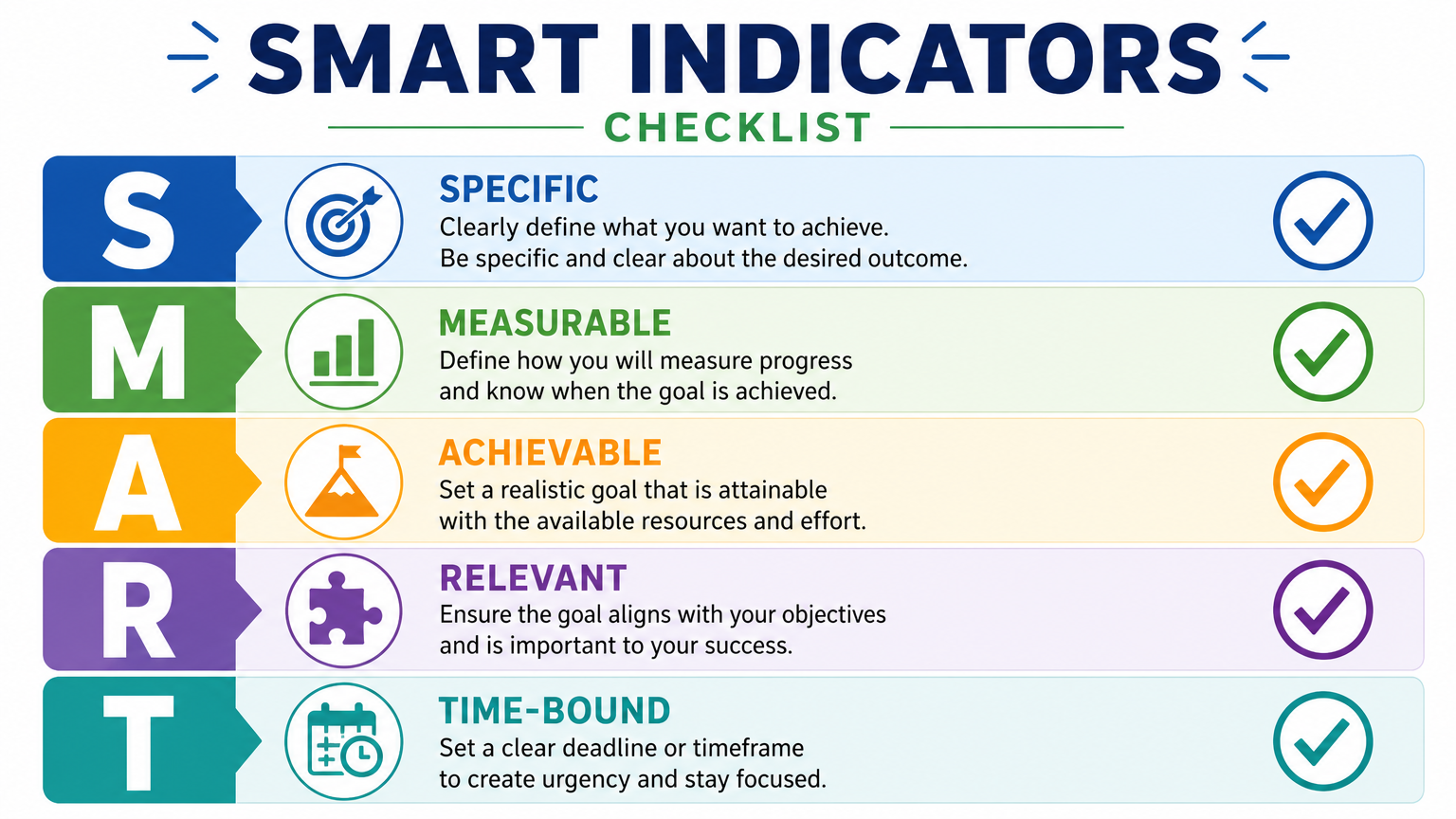
SMART indicators are metrics that are Specific, Measurable, Achievable, Relevant, and Time-bound. They are essential for objectively tracking progress and results, ensuring that M&E efforts are focused and effective.
Can M&E be conducted without digital tools?
While M&E can be conducted without digital tools, leveraging technology significantly enhances efficiency, accuracy, and the depth of analysis, especially for large or complex projects. Digital tools facilitate mobile data collection, real-time reporting, and advanced data visualization.
How often should evaluations be conducted?
The frequency of evaluations depends on the project’s scope, duration, and funding requirements. They are typically conducted at key milestones, such as mid-term or end-term, or after the project’s completion to assess overall impact and gather lessons learned.
Who is responsible for M&E in a project?
Responsibility for M&E often involves a collaborative effort. Project managers, dedicated M&E specialists, and sometimes external evaluators all play a role. Stakeholders, including beneficiaries and funders, are also engaged to ensure relevance and utility of the M&E process.