
Introduction: Why Senior Management Training Matters Now More Than Ever
In an era defined by rapid technological disruption, shifting global markets, and unprecedented organizational challenges, the role of a senior leader has never been more complex. While traditional management skills remain foundational, modern executives must navigate a landscape that demands agility, emotional intelligence, and visionary strategic thinking. This is where a comprehensive senior management course becomes not just beneficial, but essential for career survival and organizational success.
Recent data underscores this reality. The global corporate leadership training market, valued at approximately $42.92 billion in 2026, is projected to reach $73.67 billion by 2034, growing at a compound annual growth rate (CAGR) of 6.99% . Organizations are investing heavily in their top talent because the returns are undeniable: effective leadership development programs yield an average return on investment (ROI) of $7 for every $1 invested .
If you are looking to elevate your career, drive meaningful change, and outpace the competition, mastering leadership through a dedicated senior management course is your most strategic move. This guide explores everything you need to know about these transformative programs, from core components to measurable benefits, helping you choose the right path for your executive journey.
The ROI of Senior Management Training: By the Numbers
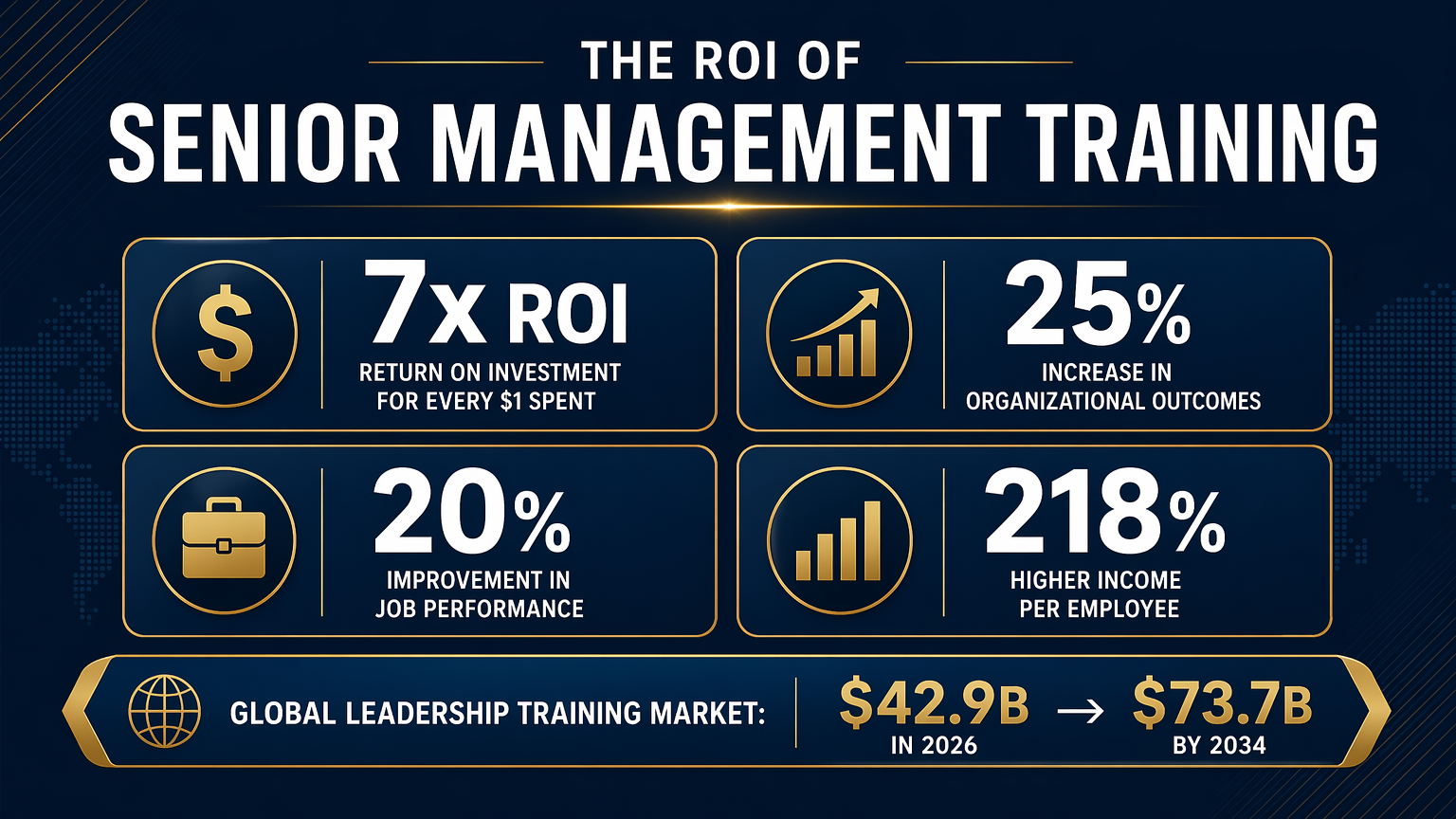
The financial case for senior management training is compelling. Organizations that invest in comprehensive leadership development programs experience transformative results across multiple dimensions:
•7x Return on Investment: For every dollar spent on leadership development, organizations see approximately $7 in returns . This figure rises significantly when leadership training is extended to personnel beneath senior levels.
•25% Increase in Organizational Outcomes: Structured programs produce measurable improvements in overall organizational performance metrics .
•20% Improvement in Job Performance: Trained leaders demonstrate significantly higher performance in their roles compared to untrained counterparts .
•218% Higher Income Per Employee: Organizations with comprehensive manager enablement see 218% higher income per employee than those without formal programs .
These statistics represent more than abstract numbers—they translate to tangible business results: improved productivity, higher retention rates, increased profitability, and enhanced competitive positioning. The question is no longer whether to invest in senior management training, but which program aligns best with your organization’s strategic objectives.
What is a Senior Management Course?
A senior management course is an advanced, specialized training program designed specifically for experienced professionals, department heads, and executives aspiring to or currently holding C-suite positions. Unlike entry-level management training that focuses on operational tasks and basic team supervision, senior management programs delve into high-level strategic oversight, enterprise risk management, and organizational transformation.
The primary objective of these courses is to transition leaders from tactical execution to strategic vision. Participants learn to synthesize complex information, anticipate market trends, and align departmental objectives with overarching corporate goals. For instance, the Training on Senior Management Essentials offered by ForElite Training Institute specifically targets these high-level competencies, equipping leaders with practical tools to foster innovation and build high-performing teams.
The Shift from Manager to Executive Leader
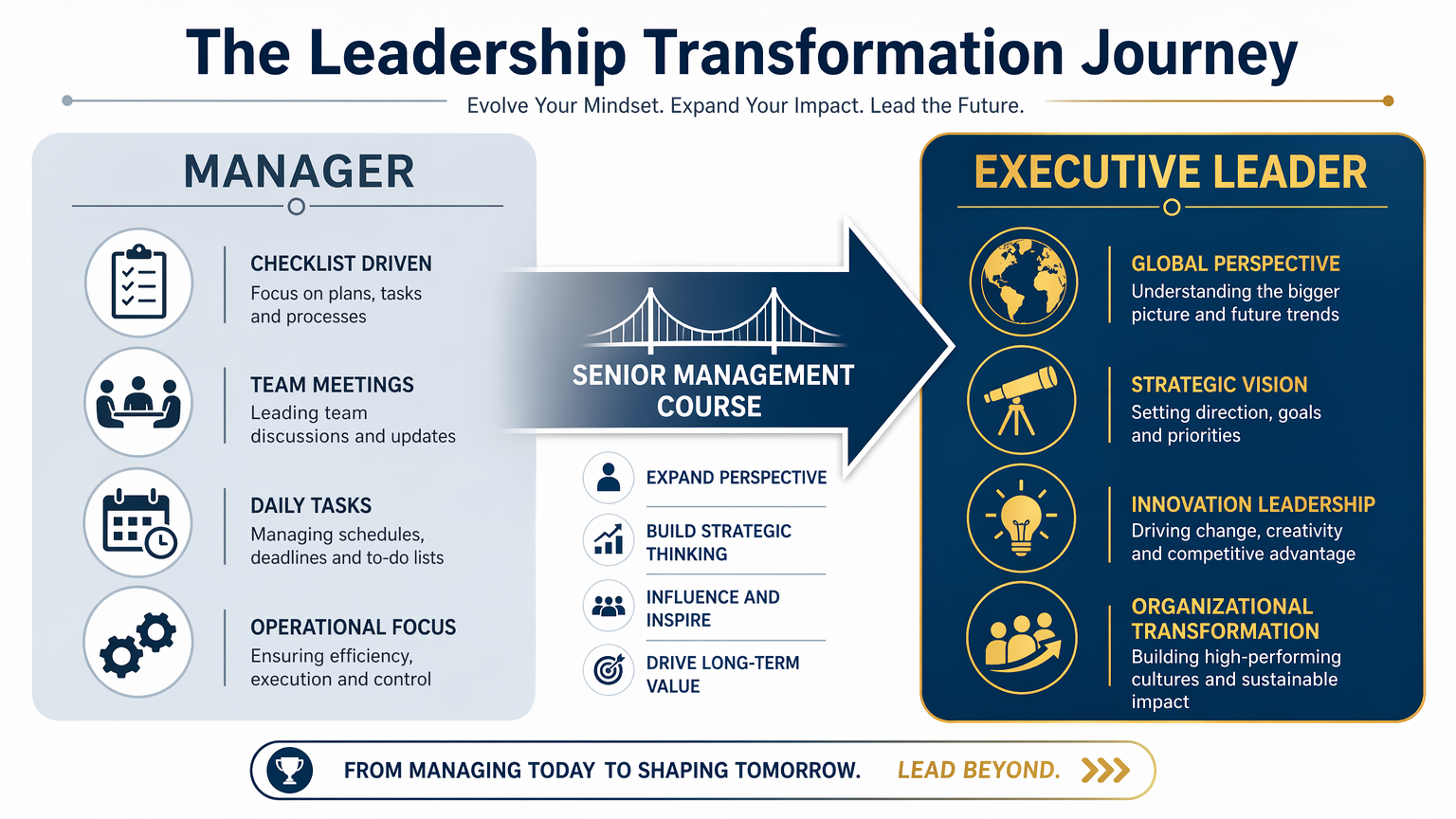
The transition from a mid-level manager to a senior executive requires a fundamental shift in mindset. Managers focus on doing things right; senior leaders focus on doing the right things. A robust senior management course facilitates this transition by challenging participants to look beyond their immediate silos and understand the interconnectedness of the entire enterprise.
This transformation involves developing new capabilities in strategic foresight, stakeholder management, and enterprise-wide decision-making. Managers typically work within defined parameters; executives shape those parameters. Managers execute plans; executives envision possibilities. This philosophical shift, combined with practical frameworks and peer learning, forms the foundation of effective senior management education.
The Leadership Transformation Journey
Why Senior Management Training is Non-Negotiable in 2026
The business environment of 2026 is characterized by volatility, uncertainty, complexity, and ambiguity (VUCA). In such a climate, relying on outdated leadership paradigms is a recipe for obsolescence. Here is why investing in a senior management course is critical today:
Navigating Digital Transformation and AI Integration
As artificial intelligence and automation reshape industries, senior leaders must understand how to leverage these technologies strategically. It is no longer sufficient to delegate digital transformation to the IT department; executives must champion these initiatives. Advanced training programs provide the frameworks necessary to integrate emerging technologies while managing the associated human capital transitions.
Leaders who understand AI’s strategic implications can make better decisions about resource allocation, competitive positioning, and organizational restructuring. They can anticipate disruption rather than merely react to it. This proactive stance is increasingly the differentiator between market leaders and followers.
Enhancing Strategic Decision-Making Under Pressure
Senior leaders frequently face high-stakes decisions with incomplete information. A senior management course sharpens analytical capabilities, teaching executives how to utilize data-driven insights while trusting their honed intuition. By engaging in complex case studies and boardroom simulations, participants practice evaluating risks and crafting effective solutions in a safe environment.
This skill becomes invaluable during crises, market downturns, or rapid industry shifts. Leaders trained in structured decision-making frameworks can navigate uncertainty with greater confidence and clarity, protecting organizational interests while seizing opportunities others miss.
Cultivating Emotional Intelligence and Resilience
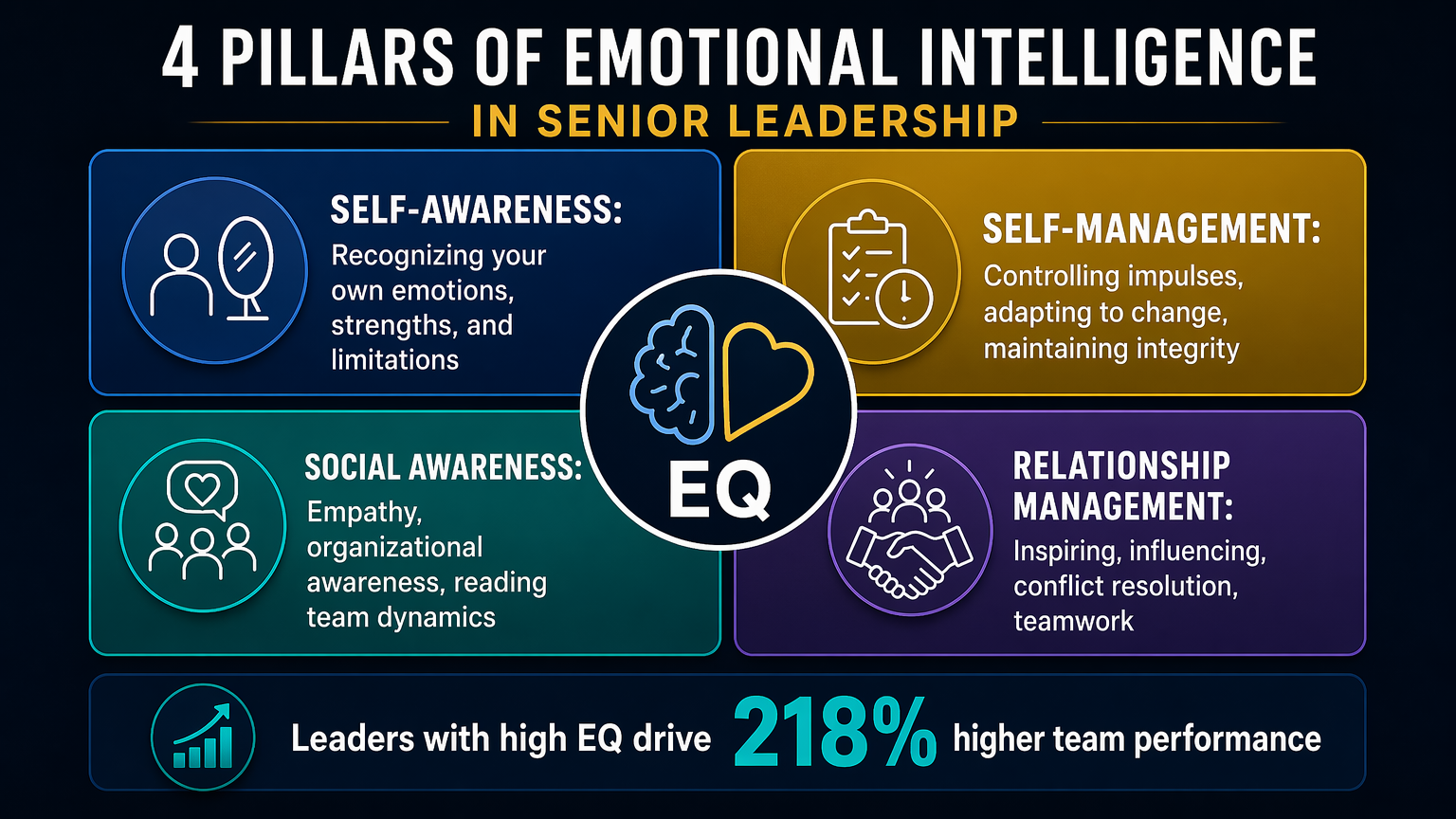
The modern workforce, comprising a significant percentage of Millennials and Gen Z professionals, demands empathetic, purpose-driven leadership. Emotional intelligence (EQ) is now recognized as a critical predictor of executive success. Programs that focus on Emotional Intelligence help leaders improve self-awareness, empathy, and cross-cultural communication, which are vital for managing diverse, global teams.
Leaders with high emotional intelligence drive superior team performance, foster psychological safety, and create cultures where innovation thrives. In an increasingly remote and distributed work environment, these soft skills have become as critical as technical expertise.
The Four Pillars of Emotional Intelligence in Senior Leadership
Core Competencies Developed in a Senior Management Course
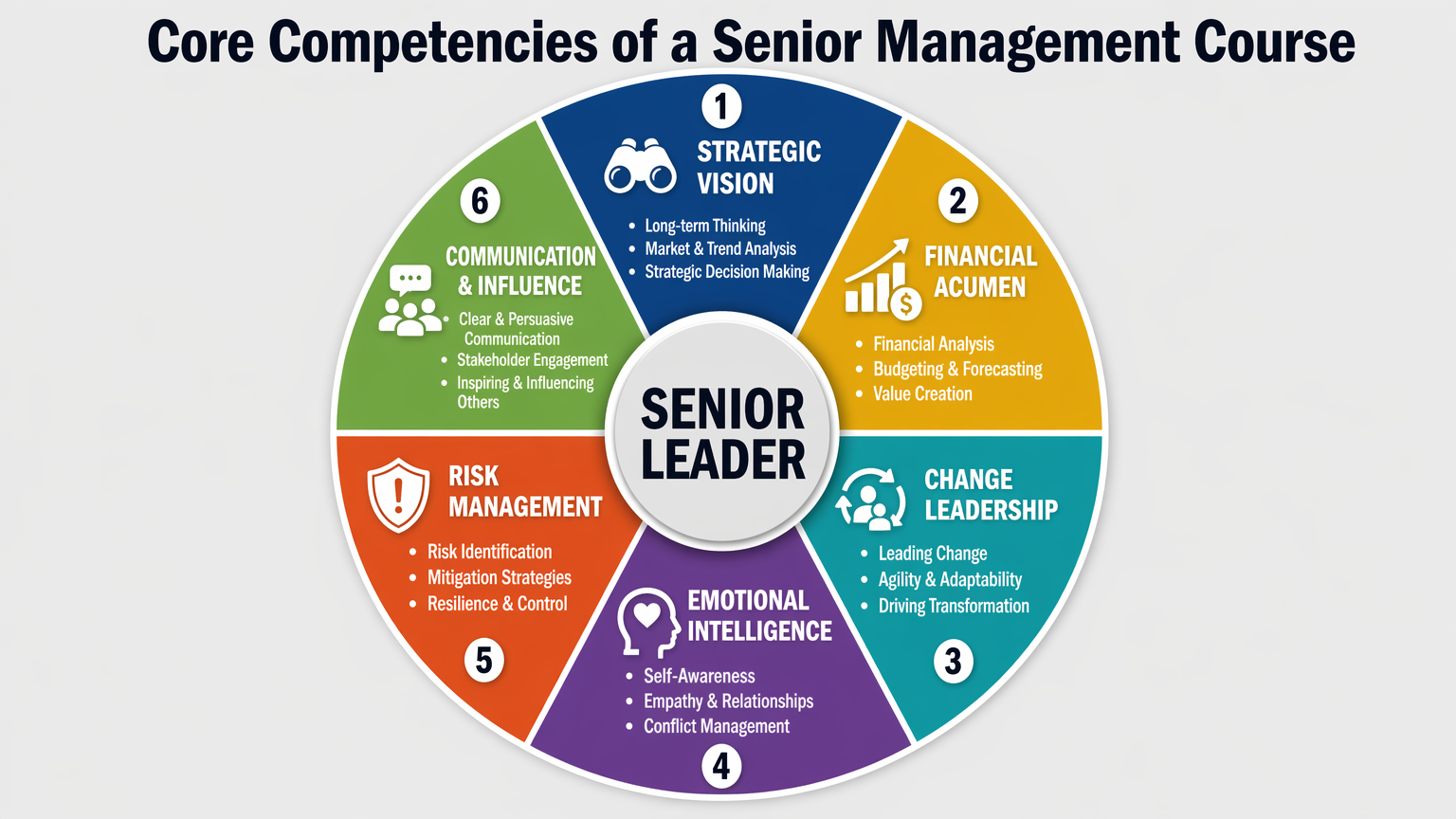
While curriculums vary by institution, the most effective senior management courses share several core components designed to build well-rounded executive capabilities.
Strategic Vision and Enterprise Planning
Participants learn to assess macroeconomic trends, analyze competitive landscapes, and develop long-term strategic plans. This involves mastering tools for scenario planning and foresight, ensuring the organization remains resilient against future shocks. Senior leaders must think in terms of decades, not quarters, while remaining agile enough to adjust course when conditions change.
Advanced Financial Acumen and Risk Management
Understanding the financial implications of strategic decisions is paramount. Senior leaders must be adept at interpreting complex financial statements, optimizing capital allocation, and implementing enterprise risk management frameworks. This ensures that growth initiatives do not compromise the organization’s financial stability. Many executives rise through operational or functional silos without developing deep financial literacy—senior management courses address this critical gap.
Organizational Change and Culture Leadership
Driving change is perhaps the most challenging aspect of senior leadership. Courses cover methodologies for leading organizational transitions—whether due to mergers, restructuring, or market shifts—while maintaining employee engagement and productivity. Leaders learn to architect corporate culture rather than merely inheriting it.
Board Dynamics and Corporate Governance
For those aiming for the highest echelons of leadership, understanding board relations is crucial. Programs like the Training on Advanced Leadership for Directors and Board Members focus on fiduciary duties, ethical decision-making, and balancing strategic oversight with executive management.
Core Competencies of a Senior Management Course
The Measurable Benefits of Executive Education
The impact of a senior management course extends far beyond the individual participant, creating a ripple effect throughout the entire organization.
For the Individual Executive
Accelerated Career Trajectory: Graduates of advanced leadership programs are frequently fast-tracked for promotions and board appointments. The credential signals to boards and investors that an executive has invested in continuous development and possesses contemporary leadership frameworks.
Expanded Professional Network: In-person and hybrid courses offer unparalleled opportunities to connect with peers across industries, fostering a valuable network of executive contacts. These relationships often lead to collaborations, partnerships, and knowledge-sharing that extend far beyond the course itself.
Heightened Confidence: Armed with advanced frameworks and validated strategies, leaders approach complex challenges with greater assurance and clarity. This confidence translates into more decisive action and better stakeholder communication.
Enhanced Leadership Effectiveness: Participants develop new tools for delegation, motivation, and strategic communication. They learn how to inspire teams, navigate political dynamics, and influence without authority.
For the Organization
Superior Financial Performance: Organizations with comprehensive manager enablement see 218% higher income per employee than those without formal programs . This translates directly to improved profitability and shareholder value.
Improved Employee Retention: Effective leadership directly correlates with employee satisfaction. When leaders are trained to engage and motivate their teams, turnover rates plummet. The cost savings from reduced recruitment and onboarding often exceed the training investment within the first year.
Enhanced Innovation: By fostering a culture of continuous improvement and psychological safety, trained leaders unlock the creative potential of their workforce. Organizations led by executives trained in innovation frameworks consistently outperform competitors in bringing new products and services to market.
Stronger Succession Planning: Senior management courses prepare the next generation of leaders, ensuring organizational continuity and reducing the risk of leadership vacuums during transitions.
Organizational Performance Metrics: With vs. Without Leadership Training
|
Metric
|
Organizations With Training
|
Organizations Without Training
|
Improvement
|
|
Income Per Employee
|
Higher baseline
|
Baseline
|
+218%
|
|
Employee Retention
|
85-90%
|
70-75%
|
+15-20%
|
|
Organizational Outcomes
|
+25% improvement
|
Baseline
|
+25%
|
|
Job Performance
|
+20% improvement
|
Baseline
|
+20%
|
|
Innovation Output
|
Significantly higher
|
Baseline
|
Varies
|
|
Leadership Effectiveness Scores
|
4.2/5.0 average
|
2.8/5.0 average
|
+50%
|
Who Should Enroll in a Senior Management Course?
Determining the right time to pursue advanced leadership training is crucial for maximizing its value. These programs are ideally suited for:
Current C-Suite Executives: CEOs, CFOs, and COOs looking to refresh their skills, gain new perspectives on emerging trends, or prepare for organizational scaling. Even the most experienced executives benefit from exposure to contemporary frameworks and peer learning.
Vice Presidents and Senior Directors: Leaders preparing to step into enterprise-wide roles who need to broaden their strategic perspective beyond their specific functional areas. This group often represents the “high-potential” talent that organizations are grooming for future C-suite positions.
Project Management Leaders: Professionals overseeing large-scale, high-stakes initiatives who require advanced skills in stakeholder alignment and resource optimization. The Training on Project Management for Leaders is specifically designed to bridge the gap between project execution and strategic leadership.
Founders and Entrepreneurs: Business owners transitioning from the startup phase to managing a mature, structured organization. Many founders excel at building from scratch but struggle with the governance and delegation required at scale.
Functional Leaders Aspiring to General Management: Experts in finance, operations, marketing, or technology who aspire to broader leadership roles must develop competencies outside their functional expertise. Senior management courses provide this well-rounded foundation.
Choosing the Right Format: In-Person vs. Virtual vs. Hybrid
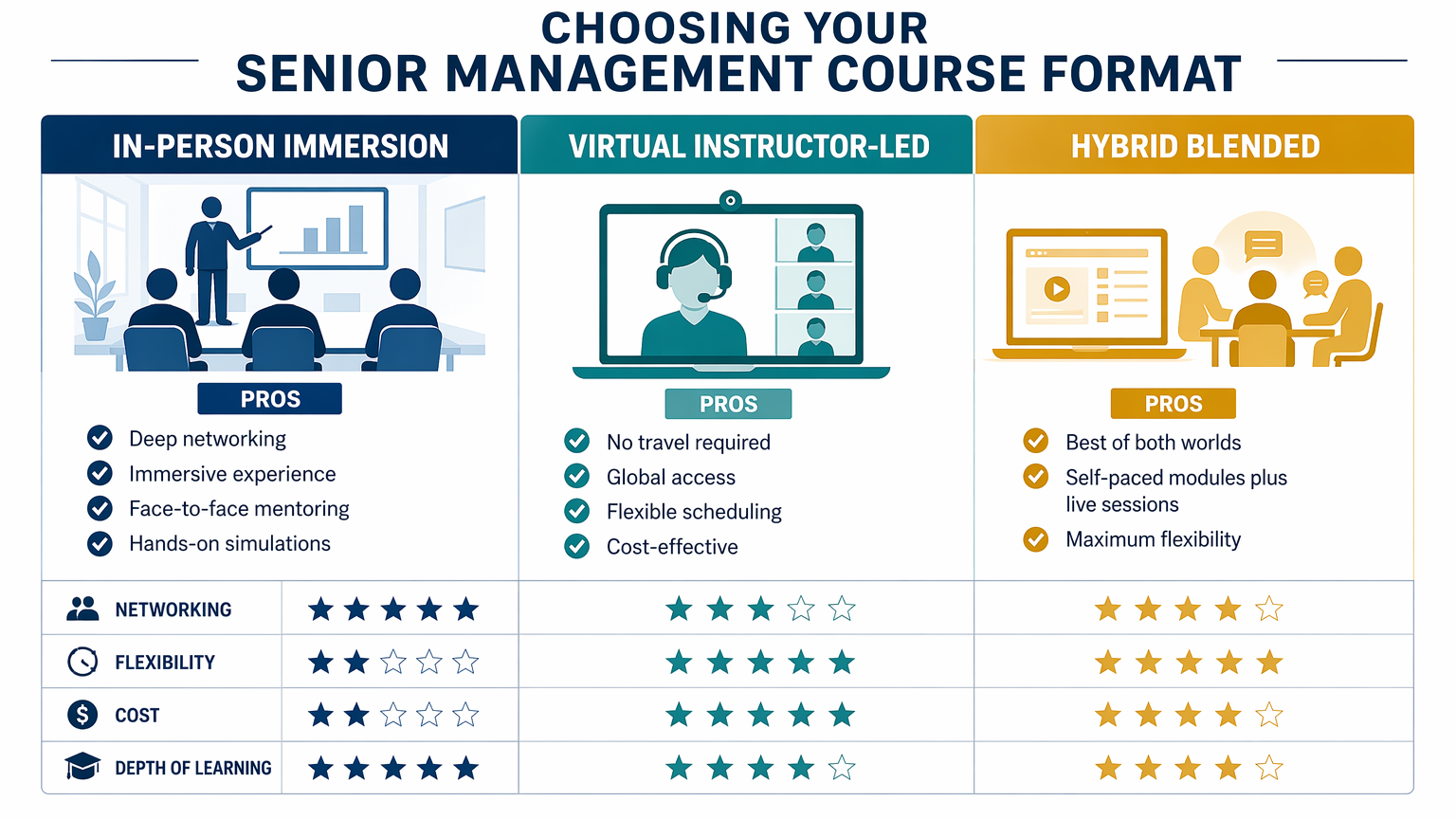
The delivery method of a senior management course can significantly impact the learning experience. Today’s top institutions offer flexible formats to accommodate demanding executive schedules.
In-Person Immersion Programs
Traditional face-to-face programs offer an immersive environment free from daily workplace distractions. They facilitate deep networking, spontaneous collaboration, and intensive group exercises. ForElite Training Institute, for example, hosts physical sessions in premium venues across global hubs like Dubai, Singapore, and Nairobi, providing a rich, cross-cultural learning context.
The immersive nature of in-person programs creates psychological safety and deeper peer bonding. Participants often report that the informal interactions—dinners, breaks, evening discussions—provide as much value as the formal curriculum. For leaders seeking transformational experiences and deep networking, in-person programs remain unmatched.
Virtual Instructor-Led Training (VILT)
For leaders who cannot commit to travel, high-definition virtual platforms offer a compelling alternative. Modern VILT incorporates breakout rooms, digital whiteboards, and real-time polling to maintain engagement. This format allows executives to integrate learning seamlessly into their ongoing responsibilities.
Virtual programs also democratize access, enabling participation from geographically dispersed leaders and reducing the environmental impact of travel. For organizations with distributed teams, VILT programs can be particularly effective.
Blended and Hybrid Approaches
Many comprehensive programs, such as the 10-day Training on Leadership and Management Essentials, offer hybrid options that combine self-paced digital modules with intensive live sessions, providing the optimal balance of flexibility and interaction.
Hybrid programs allow participants to digest complex concepts at their own pace, then engage in real-time discussions and simulations with peers and facilitators. This approach often produces superior learning outcomes compared to either pure virtual or pure in-person formats.
Comparing Senior Management Course Formats
How to Evaluate and Select the Best Program
With numerous options available, selecting the right senior management course requires careful consideration. Use the following criteria to evaluate potential programs:
1. Curriculum Relevance: Does the syllabus address the specific challenges your industry faces today? Look for modules on digital transformation, ESG (Environmental, Social, and Governance) criteria, and crisis leadership. The best programs customize content to reflect current business realities, not outdated case studies.
2. Faculty Expertise: Are the instructors purely academics, or do they possess real-world executive experience? The best programs feature facilitators who have successfully navigated the challenges they teach. Look for faculty who have held C-suite positions and can share battle-tested strategies.
3. Participant Profile: The value of executive education is heavily dependent on peer learning. Ensure the program targets professionals at a similar or slightly more advanced career stage than your own. Cohorts that are too diverse in experience level can dilute the learning experience.
4. Actionable Outcomes: Does the course focus solely on theory, or does it require participants to develop actionable strategies they can implement immediately upon returning to work? The best programs include capstone projects, peer consulting exercises, and real-world application components.
5. Alumni Network: What support and community does the program provide after graduation? Strong alumni networks facilitate ongoing peer learning and career advancement opportunities.
6. Program Duration and Intensity: Consider whether an intensive week-long program, a semester-long part-time program, or a distributed micro-credential approach best fits your schedule and learning style.
7. Cost and ROI: While price should not be the primary driver, ensure the program’s cost aligns with your organization’s training budget and the expected career advancement benefits.
Diverse Executives in a Modern Boardroom

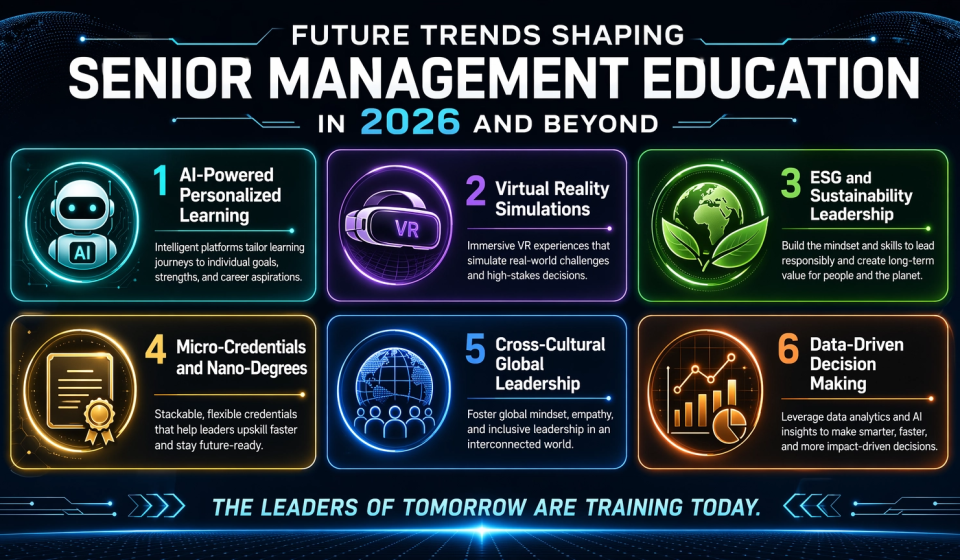
Future Trends Shaping Senior Management Education
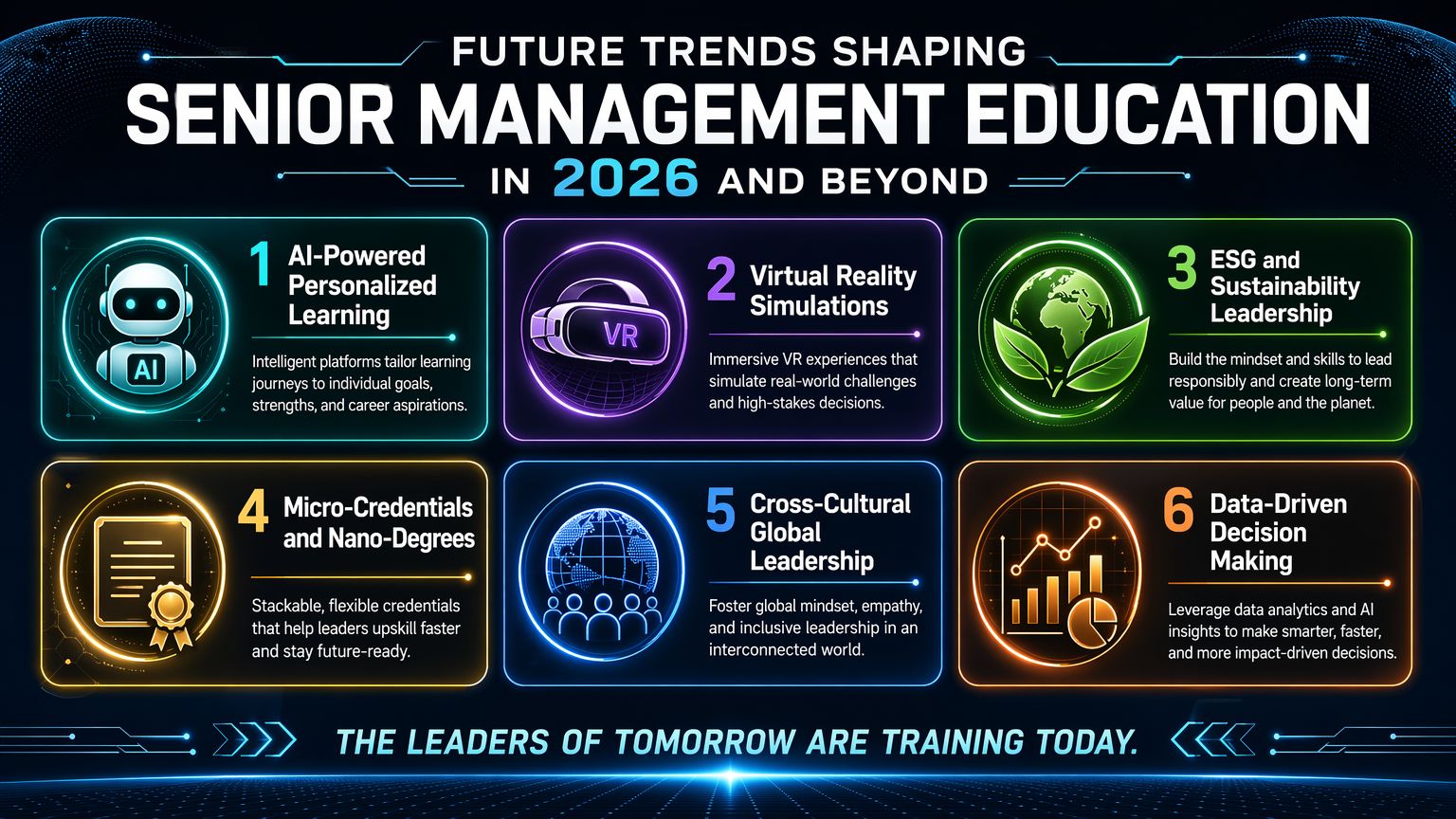
The landscape of executive education is evolving rapidly. Forward-thinking organizations are preparing their leaders for emerging challenges and opportunities:
AI-Powered Personalized Learning: Intelligent platforms now tailor learning journeys to individual goals, strengths, and career aspirations. Rather than one-size-fits-all curricula, participants receive customized content that accelerates their development in specific areas.
Virtual Reality Simulations: Immersive VR experiences allow leaders to practice high-stakes decisions—crisis management, M&A negotiations, board presentations—in realistic simulations before facing them in real situations.
ESG and Sustainability Leadership: As stakeholders increasingly demand corporate responsibility, senior management courses now emphasize building sustainable business models and leading with purpose.
Micro-Credentials and Nano-Degrees: Rather than pursuing lengthy traditional degrees, executives can now earn stackable credentials in specific competencies—strategic leadership, change management, digital transformation—that collectively build comprehensive expertise.
Cross-Cultural Global Leadership: Programs increasingly emphasize developing leaders who can operate effectively across cultural boundaries, manage globally distributed teams, and navigate international markets.
Data-Driven Decision Making: Advanced analytics and business intelligence are becoming core competencies. Leaders must understand how to leverage data insights while maintaining the human judgment that distinguishes great leaders from good ones.
Future Trends Shaping Senior Management Education in 2026 and Beyond
Frequently Asked Questions
How long does a typical senior management course take?
Programs vary widely. Intensive immersion programs may last 5-10 days, while part-time programs can span 3-6 months. Some organizations offer ongoing executive education spanning a year or more. The right duration depends on your schedule, learning style, and the depth of transformation you seek.
What is the typical cost of a senior management course?
Costs range from $5,000 to $50,000+ depending on program prestige, duration, location, and delivery format. While this represents a significant investment, the ROI—averaging $7 for every $1 spent—typically justifies the expense within 1-2 years.
Can I take a senior management course while employed?
Absolutely. Many programs are specifically designed for working executives, offering flexible scheduling, virtual options, and hybrid formats that accommodate ongoing responsibilities. Some organizations even encourage employees to pursue such training as part of their professional development.
Will a senior management course guarantee career advancement?
While the course itself does not guarantee promotion, it significantly increases your likelihood of advancement by equipping you with contemporary frameworks, expanding your professional network, and signaling to leadership that you are committed to continuous development. The credential carries weight in executive recruitment and board appointment processes.
How do I know if a program is accredited or recognized?
Look for programs offered by established institutions with strong reputations, faculty with real-world experience, and alumni who have achieved notable career success. Check whether the program is recognized by industry bodies or business schools. ForElite Training Institute, for example, offers programs with strong industry recognition and alumni networks.
What is the difference between a senior management course and an MBA?
An MBA is a comprehensive degree program typically requiring 2 years of full-time study (or 3-4 years part-time) and covering broad business disciplines. A senior management course is a focused, shorter program targeting specific executive competencies. Senior management courses are ideal for experienced professionals seeking targeted skill development, while MBAs suit those earlier in their careers seeking comprehensive business education.
Can I take multiple senior management courses?
Yes, many executives pursue multiple programs throughout their careers, each focusing on different competencies or challenges they face at different career stages. This approach of continuous learning is increasingly common among top performers.
Conclusion: Your Leadership Legacy Starts Today
The distinction between a good manager and an exceptional executive lies in the continuous pursuit of mastery. A senior management course is not merely an educational credential; it is a strategic investment in your leadership legacy and your organization’s future.
By equipping yourself with advanced strategic frameworks, refined emotional intelligence, and a global perspective, you position yourself to lead with confidence through the complexities of the modern business landscape. You transform from a manager who executes plans into a leader who shapes the future.
The leaders who will define the next decade are not waiting for the perfect moment to invest in their development—they are acting now. They are enrolling in programs like Senior Management Essentials, Leadership and Management Essentials, and Advanced Leadership for Directors and Board Members to ensure they possess the capabilities required to thrive in an uncertain future.
Do not wait for the next crisis to test your capabilities—proactively build the skills required to turn challenges into unprecedented opportunities. Your organization, your team, and your career will thank you.
References
[2] High5Test. (2025 ). 25+ Leadership Training and Development Statistics. Retrieved from
[3] Research.com. (2026 ). 2026 Leadership Training Statistics: Data, Insights & Predictions.
[4] Better With Oli. (2025 ). 100 Manager Training Program Statistics for 2025. Retrieved from
About This Article
This comprehensive guide was researched and written to provide senior executives, aspiring leaders, and organizational development professionals with an authoritative resource on senior management courses. The article synthesizes current industry data, best practices from leading training institutions, and insights from organizational psychology research to deliver actionable guidance for selecting and maximizing the value of executive education programs.
Key Features:
•Data-driven insights from 2024-2026 industry research
•Four strategically placed internal links to ForElite Training Institute courses
•Six custom infographics illustrating key concepts and statistics
•Practical evaluation criteria for program selection
•Forward-looking perspective on emerging trends in executive education



[…] cross-functional workflows. For leaders looking to enhance their strategic influence, courses like Mastering Leadership: Guide to Senior Management Courses can be highly beneficial. Set Higher Standards with Psychological Safety: With trust established, […]
[…] our Senior Management Course guide for a structured entry point into leadership development planning for […]