The Definitive Guide to Human Resource Information Systems (HRIS) in 2026: Beyond Basics

Human Resource Information Systems (HRIS) have evolved from simple record-keeping tools into indispensable strategic platforms that redefine how organizations manage their most valuable asset: human capital. In 2026, understanding the multifaceted capabilities and strategic implications of HRIS is not merely beneficial but essential for businesses aiming to optimize operations, enhance employee engagement, and drive data-driven decisions. This comprehensive guide delves into the core functionalities, transformative benefits, implementation best practices, and future trends shaping the HRIS landscape, providing a roadmap for businesses to harness its full potential.
What is HRIS? A Comprehensive Definition
At its core, a Human Resource Information System (HRIS) is a software solution designed to manage and automate core HR processes. It serves as a centralized repository for employee data, encompassing everything from personal information and demographics to compensation, benefits, and performance records. Beyond mere data storage, HRIS facilitates a wide array of HR functions, streamlining administrative tasks and providing HR professionals with the tools to manage their workforce more effectively. The primary goal of an HRIS is to improve efficiency, accuracy, and compliance within the HR department, ultimately contributing to better organizational outcomes.
HRIS vs. HRMS vs. HCM: Understanding the Nuances
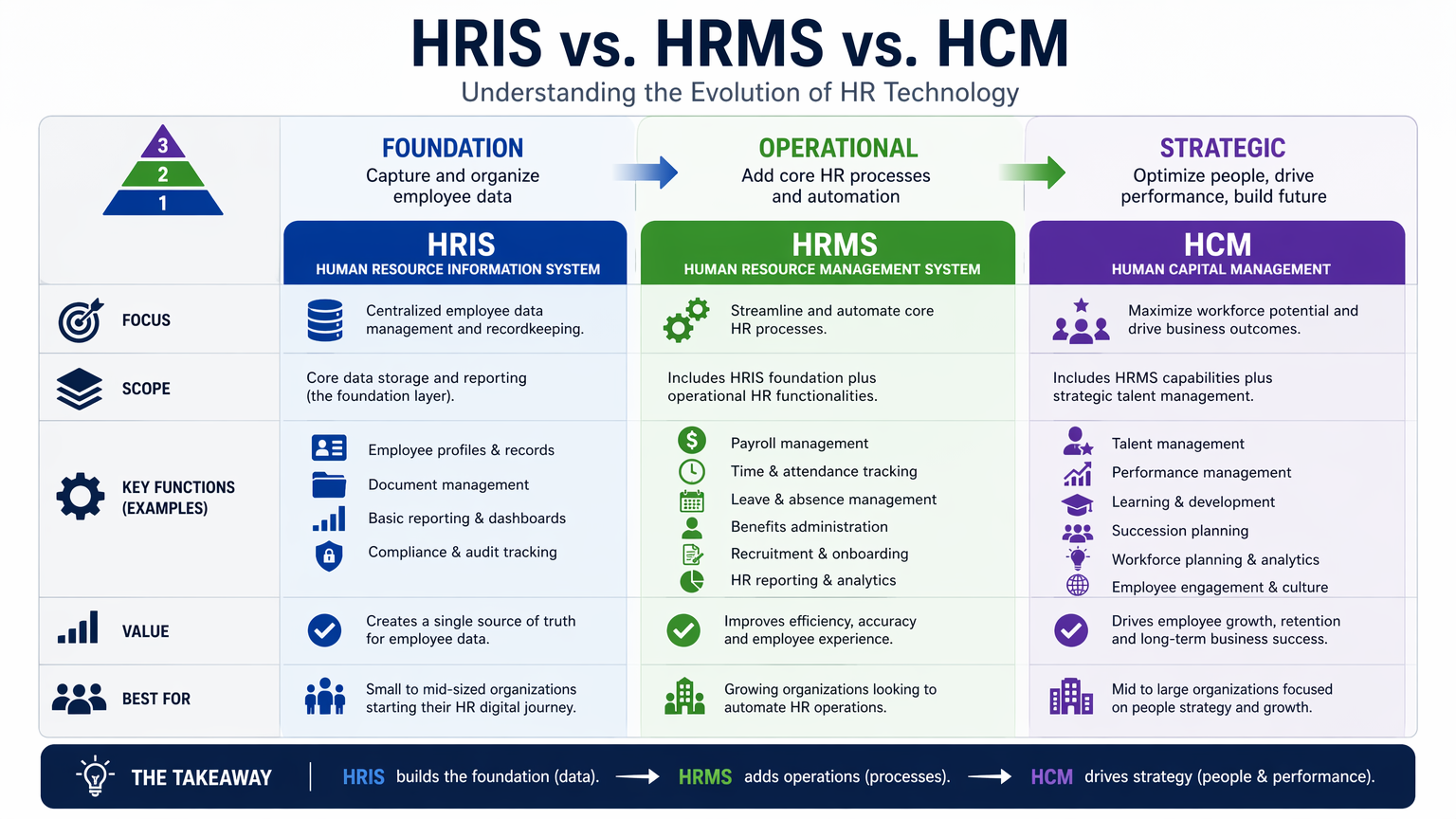
While often used interchangeably, HRIS, Human Resource Management Systems (HRMS), and Human Capital Management (HCM) represent distinct, albeit overlapping, levels of HR technology. Understanding these distinctions is crucial for selecting the right system for an organization’s specific needs.
•HRIS (Human Resource Information System): Focuses primarily on core HR functions and data management, including employee records, payroll, benefits administration, and compliance. It is the foundational layer for managing employee information.
•HRMS (Human Resource Management System): Encompasses all HRIS functionalities and expands to include broader operational HR functions such as time and attendance, talent acquisition, and performance management. HRMS systems are designed to manage the entire employee lifecycle from hire to retire.
•HCM (Human Capital Management): Represents the most comprehensive suite, integrating all HRIS and HRMS capabilities with strategic talent management functions. HCM solutions focus on optimizing the workforce’s value through advanced analytics, workforce planning, succession planning, and learning and development. HCM aims to align HR strategies with overall business objectives, treating employees as valuable capital to be nurtured and developed.
In essence, HRIS builds the foundation, HRMS adds operational processes, and HCM drives strategic people management. For organizations looking to master these distinctions and leverage HR technology effectively, specialized training can be invaluable. For instance, the Training on Modern HR Systems and Strategic Human Capital Informatics offered by ForElite Training Institute provides a solid understanding of HR principles that underpin these systems.
Key Components and Modules of a Modern HRIS
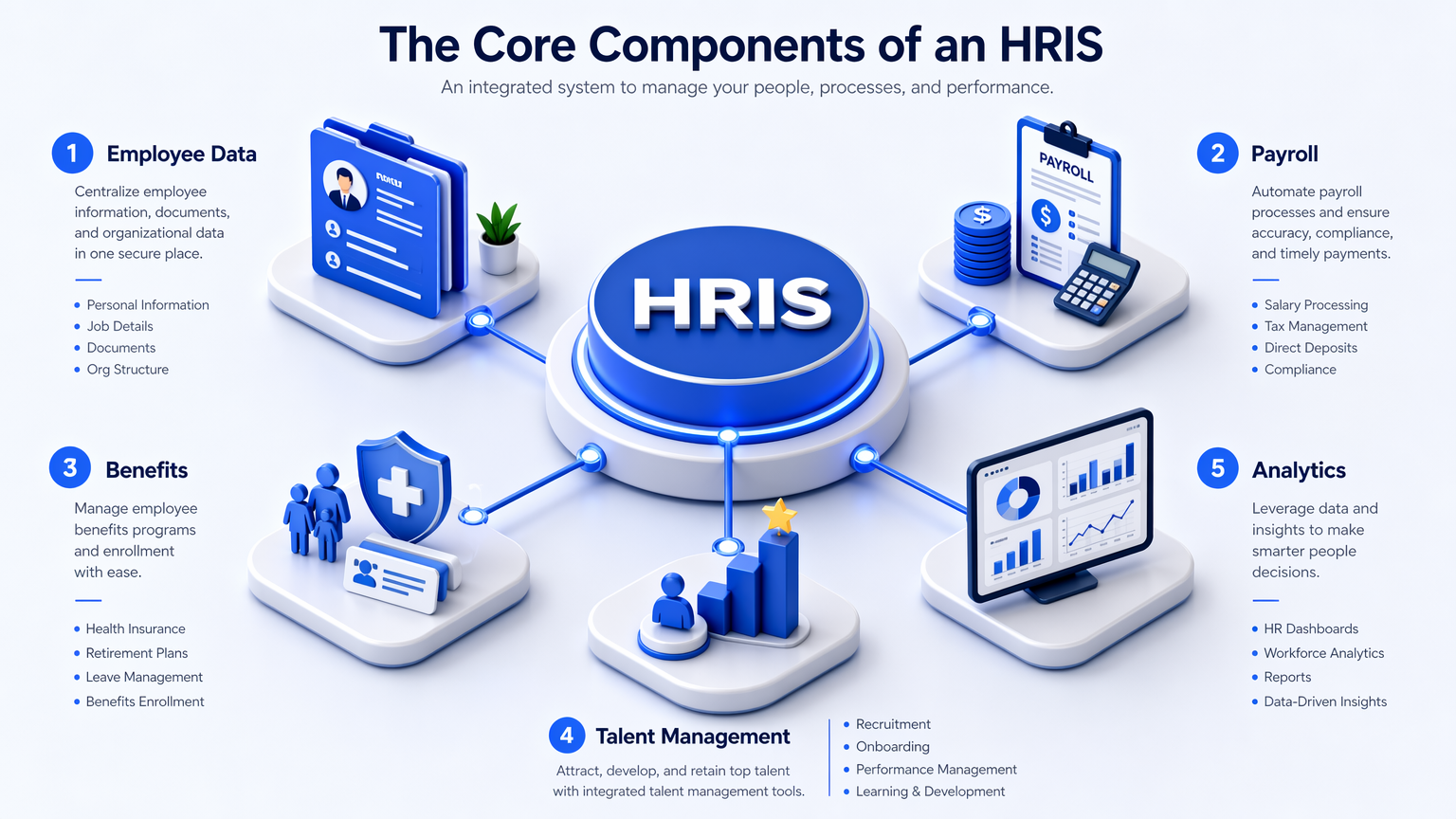
A robust HRIS is composed of several integrated modules, each designed to manage specific HR functions. These modules work in concert to provide a holistic view of the workforce and automate various HR processes. The typical components include:
Core HR Management
This foundational module centralizes all employee data, including personal details, job history, organizational structure, and contact information. It serves as the single source of truth for employee records, ensuring data accuracy and accessibility. This module also handles basic reporting and compliance requirements.
Payroll and Compensation
This module automates the complex process of payroll calculation, tax withholding, deductions, and direct deposits. It ensures timely and accurate compensation, reducing errors and ensuring compliance with local and national regulations. Compensation management also includes tracking salary structures, bonuses, and commissions.
Time and Attendance
Managing employee work hours, attendance, and leave is simplified with this module. It automates time tracking, calculates overtime, and manages various types of leave (e.g., vacation, sick leave, parental leave). This helps in accurate payroll processing and ensures adherence to labor laws.
Benefits Administration
This module streamlines the enrollment, management, and tracking of employee benefits programs, such as health insurance, retirement plans, and other perks. It facilitates communication with benefit providers and ensures employees are aware of and can access their benefits effectively.
Talent Acquisition and Management
This comprehensive module covers the entire talent lifecycle, from recruitment to employee development. It includes applicant tracking systems (ATS) for managing job applications, onboarding tools for new hires, performance management systems for goal setting and evaluations, and learning management systems (LMS) for employee training and development. Effective talent management is crucial for organizational growth and competitiveness.
Employee Self-Service (ESS) & Manager Self-Service (MSS)
ESS portals empower employees to access and update their personal information, view pay stubs, request leave, and manage benefits independently. MSS portals provide managers with tools to approve time-off requests, conduct performance reviews, and access team data. These self-service functionalities reduce the administrative burden on HR staff and enhance employee experience. To further enhance skills in managing HR data and making informed decisions, consider the Training on Data Analytics for Human Resource Managers using Power BI.
The Transformative Benefits of HRIS for Organizations
The adoption of an HRIS brings a multitude of benefits that extend beyond mere administrative convenience, impacting an organization’s efficiency, compliance, and overall strategic capabilities.
Streamlined HR Processes
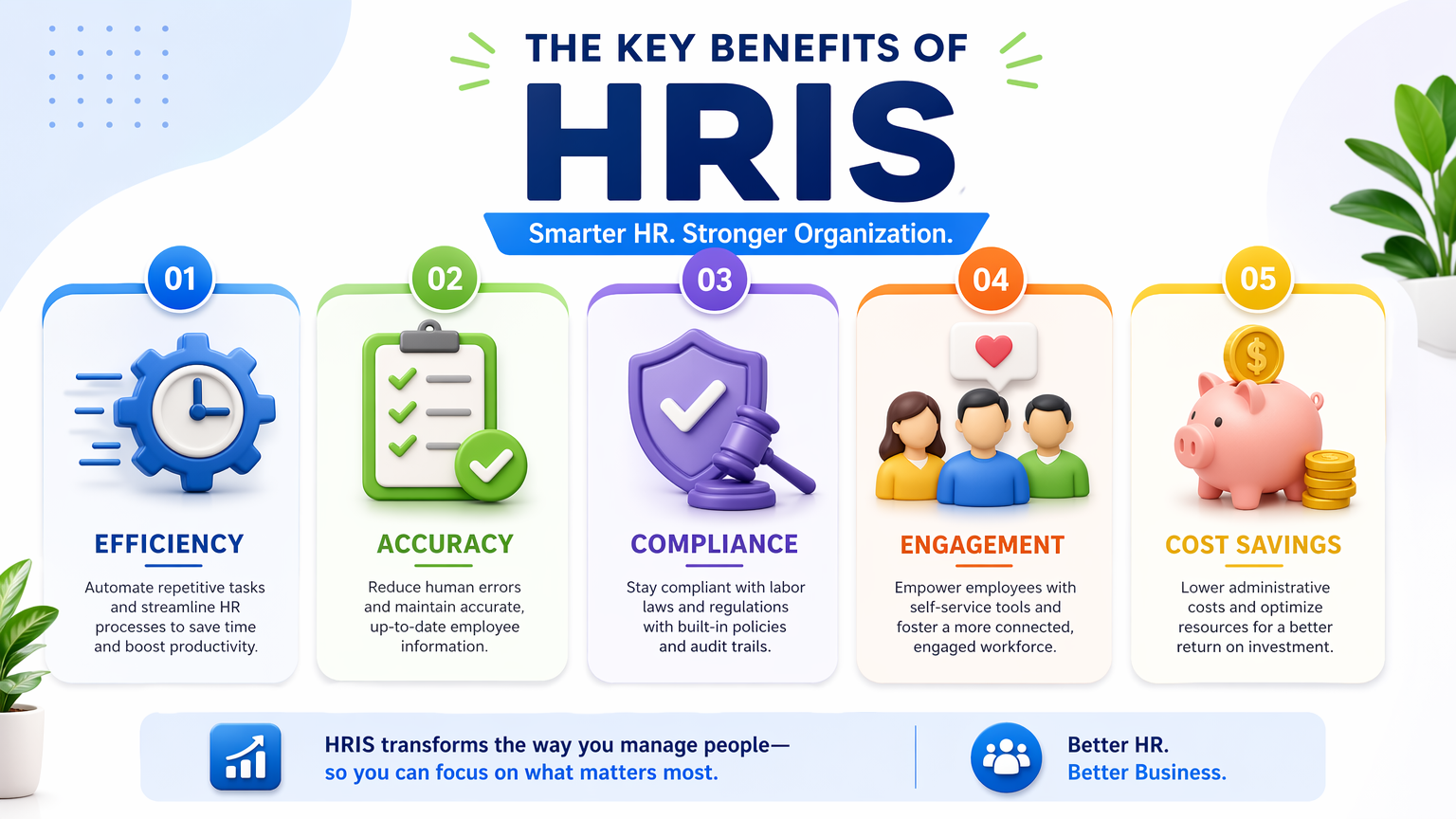
One of the most immediate advantages of HRIS is the automation of routine HR tasks. This includes everything from onboarding new employees and processing payroll to managing leave requests and updating employee records. By automating these processes, HR departments can significantly reduce manual workload, minimize errors, and free up valuable time for more strategic initiatives. This increased efficiency translates into faster turnaround times and a more productive HR team.
Enhanced Data Accuracy and Reporting
Centralizing employee data in a single system drastically improves data accuracy and consistency. With a unified database, HR professionals can generate comprehensive reports and analytics with ease. This data-driven approach enables organizations to gain deeper insights into workforce trends, identify areas for improvement, and make informed decisions regarding talent management, compensation, and resource allocation. The ability to analyze HR metrics is vital for strategic planning.
Improved Compliance and Risk Management
HRIS helps organizations stay compliant with complex labor laws, tax regulations, and industry-specific mandates. The system can be configured to track compliance requirements, generate necessary reports, and alert HR to potential issues. This proactive approach to compliance minimizes legal risks and avoids costly penalties. Robust security features within HRIS also protect sensitive employee data, ensuring privacy and reducing the risk of data breaches.
Increased Employee Engagement and Experience
Employee Self-Service (ESS) portals are a cornerstone of modern HRIS, empowering employees with direct access to their HR information. This autonomy fosters a sense of ownership and transparency, leading to increased satisfaction and engagement. Managers also benefit from Manager Self-Service (MSS) capabilities, allowing them to efficiently manage their teams. A positive employee experience, facilitated by easy access to HR services, contributes to higher morale and retention rates.
Cost Savings and ROI
While an initial investment is required, HRIS typically delivers significant cost savings over time. These savings come from reduced administrative overhead, fewer errors in payroll and benefits, optimized resource allocation, and improved productivity. The strategic insights gained from HR analytics can also lead to better talent decisions, further enhancing the return on investment. For those looking to optimize their use of tools like Microsoft Excel for HR data management, the Training on Microsoft Excel Skills for Human Resource (HR) Professionals can be highly beneficial.
Scalability and Flexibility
Modern HRIS solutions are designed to be scalable, accommodating the growth and evolving needs of an organization. Whether a business is expanding its workforce, opening new locations, or diversifying its operations, an HRIS can adapt to these changes without requiring a complete overhaul. This flexibility ensures that the HR system remains a valuable asset as the company evolves.
Choosing the Right HRIS: A Strategic Approach
Selecting the appropriate HRIS is a critical decision that can significantly impact an organization’s HR effectiveness and overall business performance. A strategic approach involves careful assessment of needs, thorough evaluation of options, and consideration of various deployment models.
Assessing Organizational Needs
The first step is to conduct a comprehensive needs assessment. This involves identifying current HR challenges, pain points, and future strategic goals. Key questions to consider include: What specific HR processes need automation? What kind of data and reporting capabilities are required? What is the size and complexity of the workforce? What are the budget constraints? Involving key stakeholders from HR, IT, and other departments is crucial to ensure all requirements are captured.
Evaluating Features and Vendors
Once needs are identified, organizations should evaluate different HRIS solutions based on their features, integration capabilities, user experience, and vendor reputation. Look for systems that offer robust functionalities across all required modules, seamless integration with existing systems (e.g., accounting, CRM), and an intuitive user interface. Vendor support, training, and ongoing maintenance are also critical factors. A thorough review of vendor track records and customer testimonials can provide valuable insights.
Deployment Options
HRIS solutions typically come in three deployment models:
•On-premise: The software is installed and maintained on the organization’s own servers. This offers maximum control and customization but requires significant IT resources and upfront investment.
•Cloud-based (SaaS): The software is hosted by the vendor and accessed via the internet. This model offers lower upfront costs, automatic updates, and scalability, making it popular for many businesses. It reduces the burden on internal IT teams.
•Hybrid: A combination of on-premise and cloud-based solutions, often used by organizations with specific data security or integration requirements.
Budget Considerations
Beyond the initial purchase or subscription cost, organizations must consider the total cost of ownership (TCO), which includes implementation fees, training costs, ongoing maintenance, and potential customization expenses. It is important to factor in both direct and indirect costs to avoid unexpected expenditures.
Successful HRIS Implementation: Best Practices
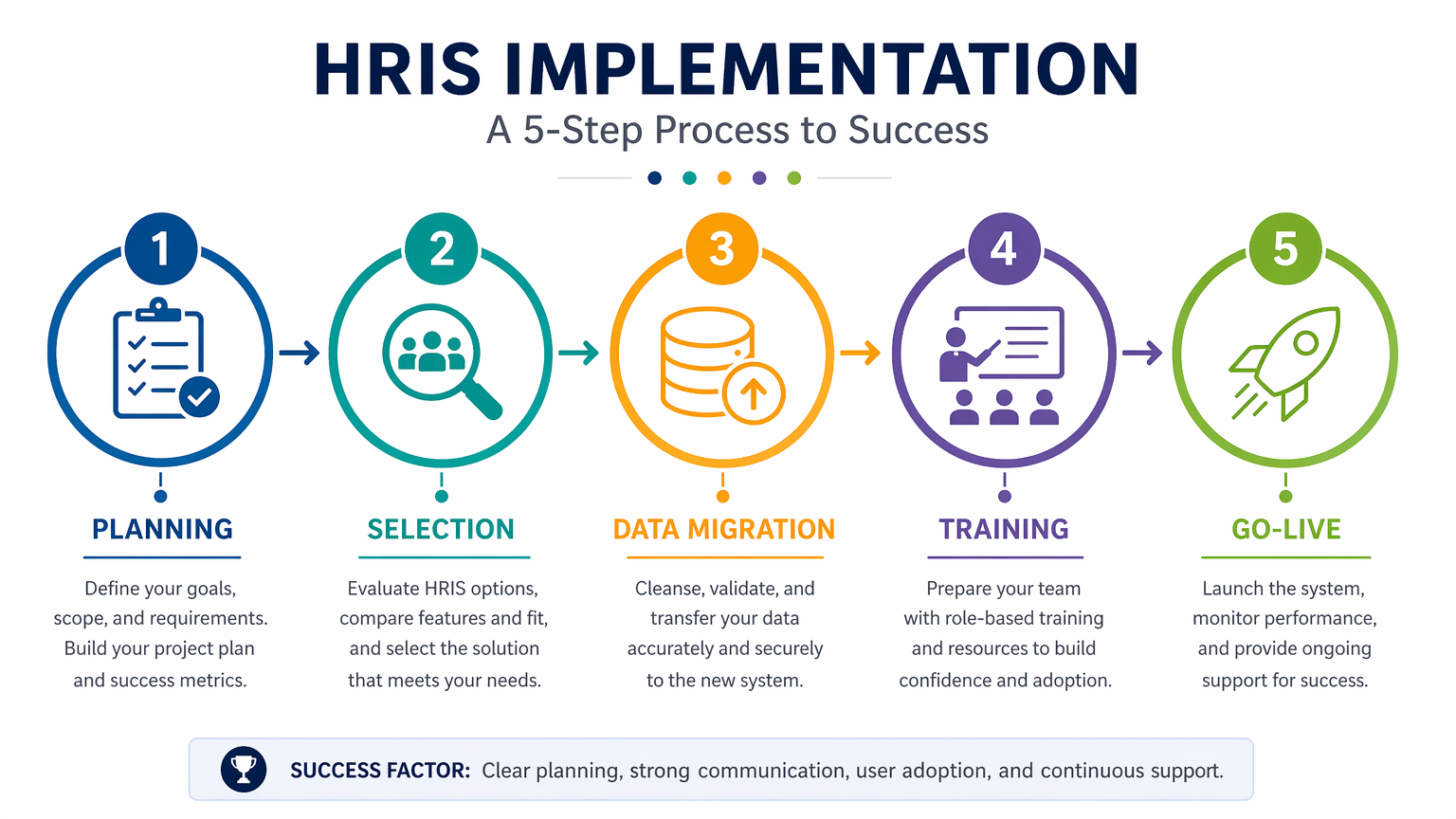
Implementing an HRIS is a complex project that requires careful planning and execution. Following best practices can significantly increase the chances of a successful rollout and maximize the system’s benefits.
Planning and Preparation
Before initiating the implementation, establish clear objectives, define project scope, and assemble a dedicated project team with representatives from HR, IT, and other relevant departments. Develop a detailed project plan with timelines, milestones, and assigned responsibilities. Effective communication with all stakeholders from the outset is vital to manage expectations and secure buy-in.
Data Migration and Integration
Accurate and secure data migration is paramount. This involves cleansing existing data, mapping it to the new HRIS structure, and transferring it with minimal disruption. Thorough testing of data integrity after migration is essential. Integration with other existing systems, such as ERP or accounting software, should also be carefully planned and executed to ensure seamless data flow and avoid silos.
Training and Change Management
User adoption is a key determinant of HRIS success. Provide comprehensive training to all users, including HR staff, managers, and employees, tailored to their specific roles and functionalities. Develop a robust change management strategy to address potential resistance to the new system, highlighting its benefits and providing ongoing support. For specialized training on HRIS, consider the Training on Human Resource Information Systems (HRIS) from ForElite Training Institute.
Monitoring, Optimization, and Ongoing Support
Post-implementation, continuously monitor the system’s performance, gather user feedback, and identify areas for optimization. Regular updates, maintenance, and ongoing technical support are crucial to ensure the HRIS remains efficient, secure, and aligned with evolving business needs. Establishing a feedback loop allows for continuous improvement and adaptation.
HRIS in a Global Context: Managing Diverse Workforces
For multinational organizations, HRIS plays an even more critical role in managing diverse workforces across different geographies. A global HRIS must be capable of handling multiple currencies, languages, time zones, and legal frameworks.
Managing Multinational Teams
A global HRIS centralizes data for employees worldwide, providing a unified view of the global workforce. This facilitates consistent HR policies, talent management strategies, and reporting across all locations. It also helps in identifying global talent pools and optimizing resource allocation on an international scale.
Compliance with International Regulations
Navigating the complex web of international labor laws, tax regulations, and data privacy mandates (e.g., GDPR) is a significant challenge for global businesses. A robust HRIS can be configured to ensure compliance with these diverse regulations, automating reporting and alerting HR to country-specific requirements. This minimizes legal risks and ensures ethical operations worldwide.
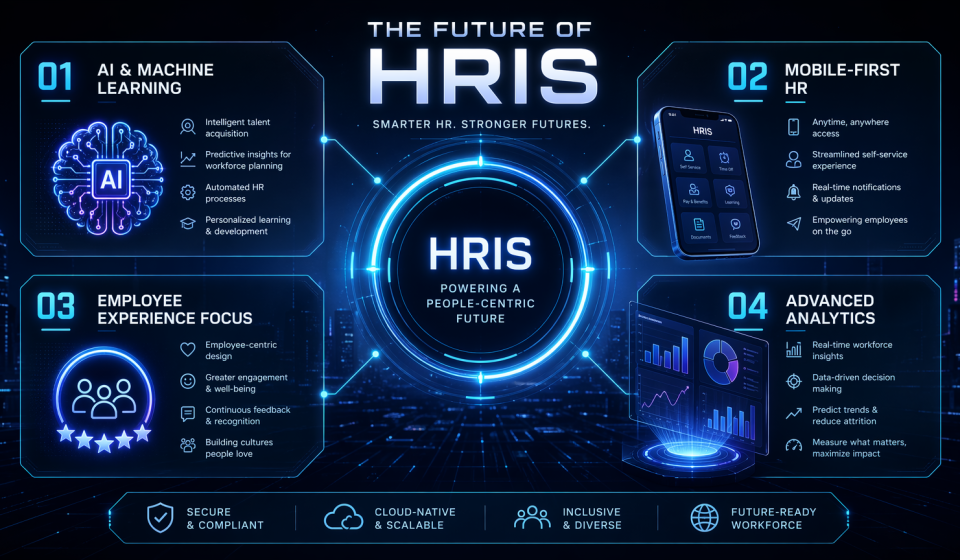
Emerging Trends and the Future of HRIS
The HRIS landscape is continuously evolving, driven by technological advancements and changing workforce dynamics. Several key trends are shaping the future of HRIS:
Artificial Intelligence (AI) and Machine Learning (ML)
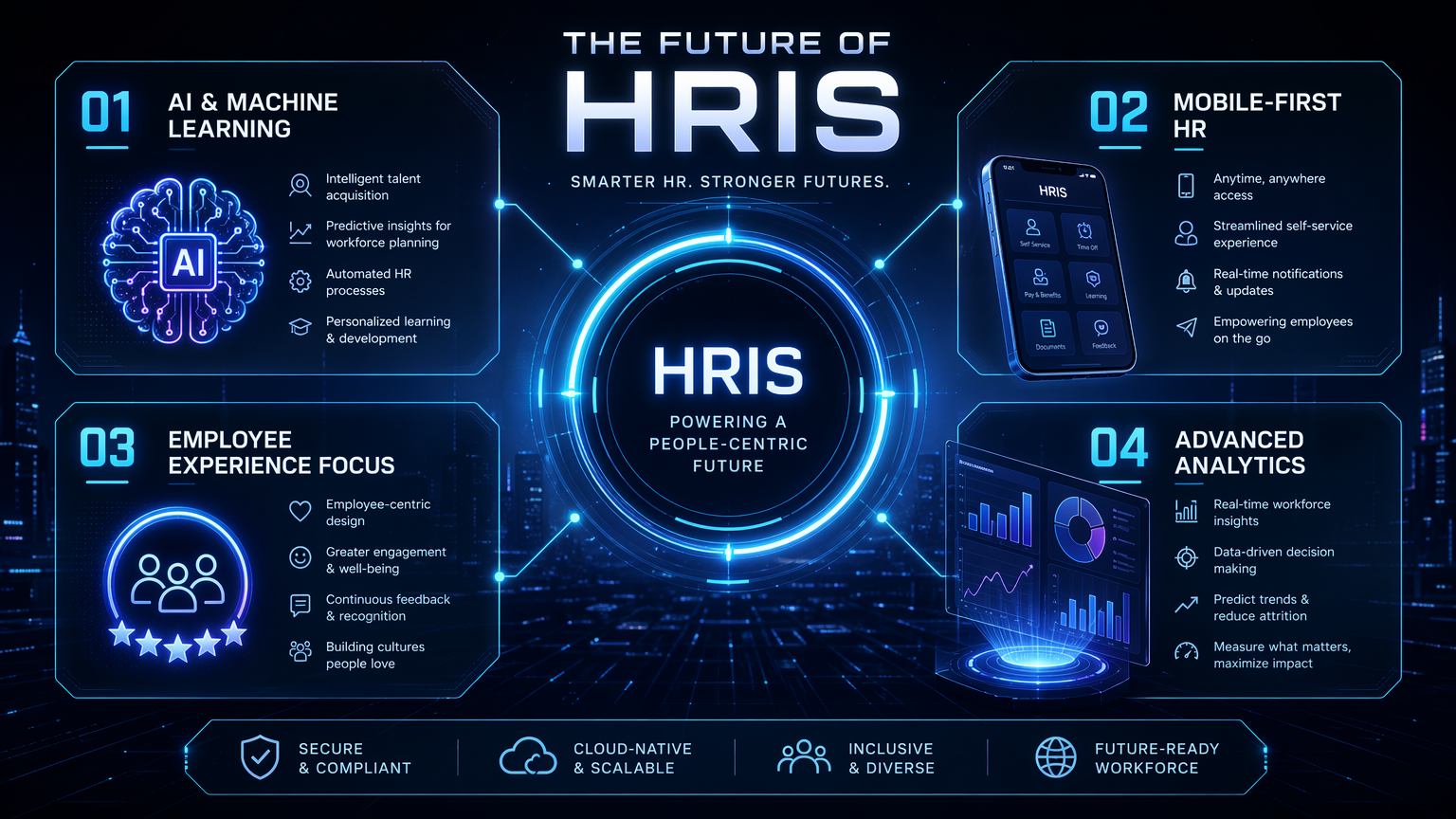
AI and ML are transforming HRIS by enabling predictive analytics, intelligent automation, and personalized employee experiences. AI-powered HRIS can analyze vast amounts of data to predict attrition risks, identify skill gaps, recommend personalized learning paths, and automate routine tasks like resume screening and chatbot interactions. This allows HR professionals to focus on more strategic, human-centric initiatives.
Integration with Emerging Technologies
Future HRIS will increasingly integrate with other emerging technologies such as the Internet of Things (IoT) for tracking employee well-being or workplace safety, and blockchain for secure credential verification and payroll processing. These integrations will create more interconnected and intelligent HR ecosystems.
Focus on Employee Experience (EX)
As the war for talent intensifies, HRIS is shifting its focus towards enhancing the overall employee experience. This includes providing intuitive, user-friendly interfaces, personalized communication, and tools that support employee well-being, career development, and work-life balance. The goal is to create a positive and engaging environment that attracts and retains top talent.
Mobile HR
With a growing remote and mobile workforce, mobile HR capabilities are becoming essential. HRIS platforms are increasingly offering robust mobile applications that allow employees and managers to access HR services anytime, anywhere. This includes mobile-friendly self-service portals, performance management tools, and communication platforms, enhancing flexibility and accessibility. For those involved in broader human resource planning and management, the Training on Human Resources for Health (HRH) Planning and Management can offer valuable insights into strategic workforce planning.
Case Studies: Real-World HRIS Successes and Lessons Learned
Numerous organizations have successfully leveraged HRIS to transform their HR operations and achieve significant business outcomes. For example, a global manufacturing company implemented a cloud-based HRIS to centralize its disparate HR systems across 20 countries. This resulted in a 30% reduction in payroll processing time, improved data accuracy, and enhanced compliance with international labor laws. The employee self-service portal also led to a 15% increase in employee satisfaction scores.
Conversely, some implementations face challenges. A common pitfall is inadequate change management, leading to low user adoption. Another is insufficient data cleansing before migration, resulting in inaccurate reports and distrust in the system. These cases underscore the importance of thorough planning, robust training, and continuous stakeholder engagement for successful HRIS implementation.
FAQs About HRIS
What is the average cost of an HRIS?
The cost of an HRIS varies widely depending on factors such as the size of the organization, the number of modules required, deployment model (on-premise vs. cloud), and vendor. Small businesses might pay a few hundred dollars per month for a basic cloud-based system, while large enterprises could invest hundreds of thousands or even millions annually for comprehensive, customized solutions. It’s crucial to consider the total cost of ownership (TCO) rather than just the upfront price.
How secure is HRIS data?
Modern HRIS vendors prioritize data security with robust measures such as encryption, multi-factor authentication, regular security audits, and compliance with data protection regulations (e.g., GDPR, HIPAA). Cloud-based HRIS providers often have more advanced security infrastructure than many individual organizations. However, organizations also bear responsibility for implementing strong internal security protocols and user access controls.
Can HRIS integrate with existing systems?
Yes, most modern HRIS solutions are designed to integrate with other business systems, such as enterprise resource planning (ERP), accounting software, customer relationship management (CRM), and learning management systems (LMS). Integration is typically achieved through APIs (Application Programming Interfaces), ensuring seamless data flow and eliminating the need for manual data entry across different platforms. This interoperability is a key factor in maximizing the value of an HRIS.
What’s the difference between HRIS, HRMS, and HCM?
As discussed earlier, HRIS focuses on core HR data and administrative tasks. HRMS includes all HRIS functionalities plus operational HR processes like payroll and time tracking. HCM is the most comprehensive, encompassing HRIS and HRMS, along with strategic talent management, workforce planning, and advanced analytics, aiming to optimize human capital as a strategic asset.
Conclusion: The Indispensable Role of HRIS in Modern HR
In 2026, the Human Resource Information System is far more than an administrative tool; it is a strategic imperative for any organization seeking to thrive in a dynamic global economy. By centralizing data, automating processes, enhancing compliance, and providing actionable insights, HRIS empowers HR departments to transition from transactional roles to strategic partners. It fosters a more engaged workforce, drives operational efficiency, and positions businesses for sustainable growth. Embracing a well-implemented HRIS is not just about adopting new technology; it’s about investing in the future of your human capital and securing a competitive advantage. The journey to an optimized HR function begins with a comprehensive understanding and strategic adoption of HRIS.