
Human Sustainability and Burnout 2.0: Why Businesses Must Treat Employee Energy as a Finite Resource

The global workforce has entered a new era where exhaustion is no longer hidden behind productivity dashboards and performance metrics. After years of economic uncertainty, remote work disruption, digital overload, and constant organizational change, companies are beginning to recognize a crucial truth: employee energy is not infinite. Human sustainability in business is rapidly replacing outdated wellness initiatives because organizations now understand that sustainable performance cannot exist without sustainable people.
Traditional workplace wellness programs focused heavily on surface-level interventions such as gym memberships, mindfulness apps, or occasional team-building activities. However, modern organizations are facing a more complex challenge. Employees are dealing with continuous digital fatigue, emotional strain, cognitive overload, and blurred work-life boundaries. Consequently, businesses that ignore these realities are experiencing rising burnout rates, reduced innovation, high turnover, and declining engagement.
Today, forward-thinking organizations are shifting toward leadership for wellbeing, sustainable performance strategies, and operational models that protect human capacity over the long term. Companies that prioritize human sustainability are not simply supporting employee happiness. Instead, they are creating resilient systems that improve productivity, innovation, retention, and organizational longevity.
Understanding Human Sustainability in Business
Human sustainability refers to the ability of employees to maintain physical, emotional, mental, and professional wellbeing while consistently contributing value to an organization over time. Unlike temporary wellness trends, this approach recognizes human energy as a limited resource that must be protected, replenished, and managed strategically.
Modern businesses operate in environments defined by constant communication, endless notifications, aggressive deadlines, and digital dependence. Employees are expected to respond quickly, multitask efficiently, and remain continuously available. As a result, organizations are witnessing a new form of burnout often referred to as Burnout 2.0 , a deeper, more chronic state of exhaustion fueled by digital intensity and cognitive overload.
Companies investing in sustainable workforce strategies are increasingly turning to specialized professional development and organizational training programs to strengthen resilience and long-term workforce capacity. Platforms such as Forelite Training provide workforce-focused learning solutions designed to help organizations improve operational efficiency, leadership capability, and employee sustainability.
Why Traditional Wellness Programs Are Failing
For years, companies attempted to solve burnout with isolated wellness initiatives. Unfortunately, these programs often failed because they addressed symptoms rather than root causes.
Employees cannot sustain high performance when organizations normalize:
- Continuous availability
- Excessive workloads
- Poor leadership communication
- Digital overstimulation
- Lack of recovery periods
- Unrealistic productivity expectations
- Emotional disconnection from work
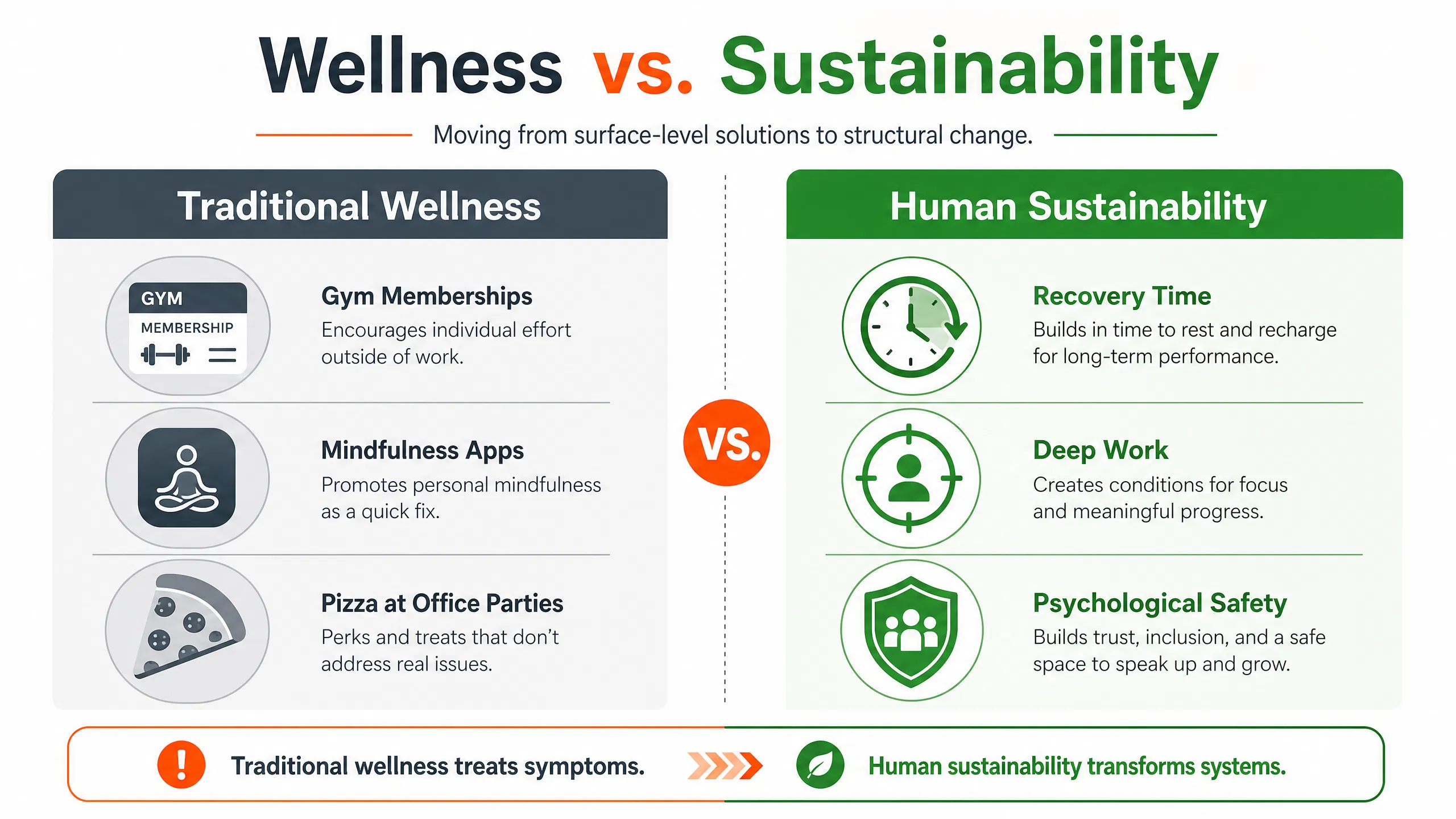
Furthermore, wellness programs lose effectiveness when organizational culture rewards overwork while simultaneously promoting balance. Employees quickly recognize these contradictions, leading to skepticism and disengagement.
Human sustainability requires structural change. Businesses must redesign workflows, communication practices, leadership behaviors, and performance expectations to align with long-term human capacity.
Organizations seeking to build resilient workplace systems increasingly invest in leadership and organizational development training through providers like Corporate Leadership Programs by Forelite Training to help managers develop healthier, more sustainable workplace cultures.
The Rise of Leadership for Wellbeing
Leadership behavior plays a decisive role in either accelerating burnout or supporting sustainable performance. In today’s workplace, employees no longer evaluate leadership solely based on operational competence. They also assess whether leaders create psychologically safe, sustainable, and human-centered environments.
Effective leadership for wellbeing involves:
- Setting realistic expectations
- Encouraging recovery and rest
- Respecting personal boundaries
- Reducing unnecessary digital interruptions
- Supporting mental clarity and focus
- Promoting transparent communication
- Recognizing emotional fatigue early
Leaders who constantly glorify hustle culture create environments where employees suppress exhaustion until performance collapses. In contrast, sustainable leaders understand that long-term productivity depends on maintaining employee energy reserves.
Companies are increasingly prioritizing leadership development programs that focus on emotional intelligence, communication strategy, and sustainable workforce management. Resources such as Professional Development Training Solutions help organizations equip leaders with practical skills needed to support workforce sustainability.
Preventing Digital Exhaustion in the Modern Workplace
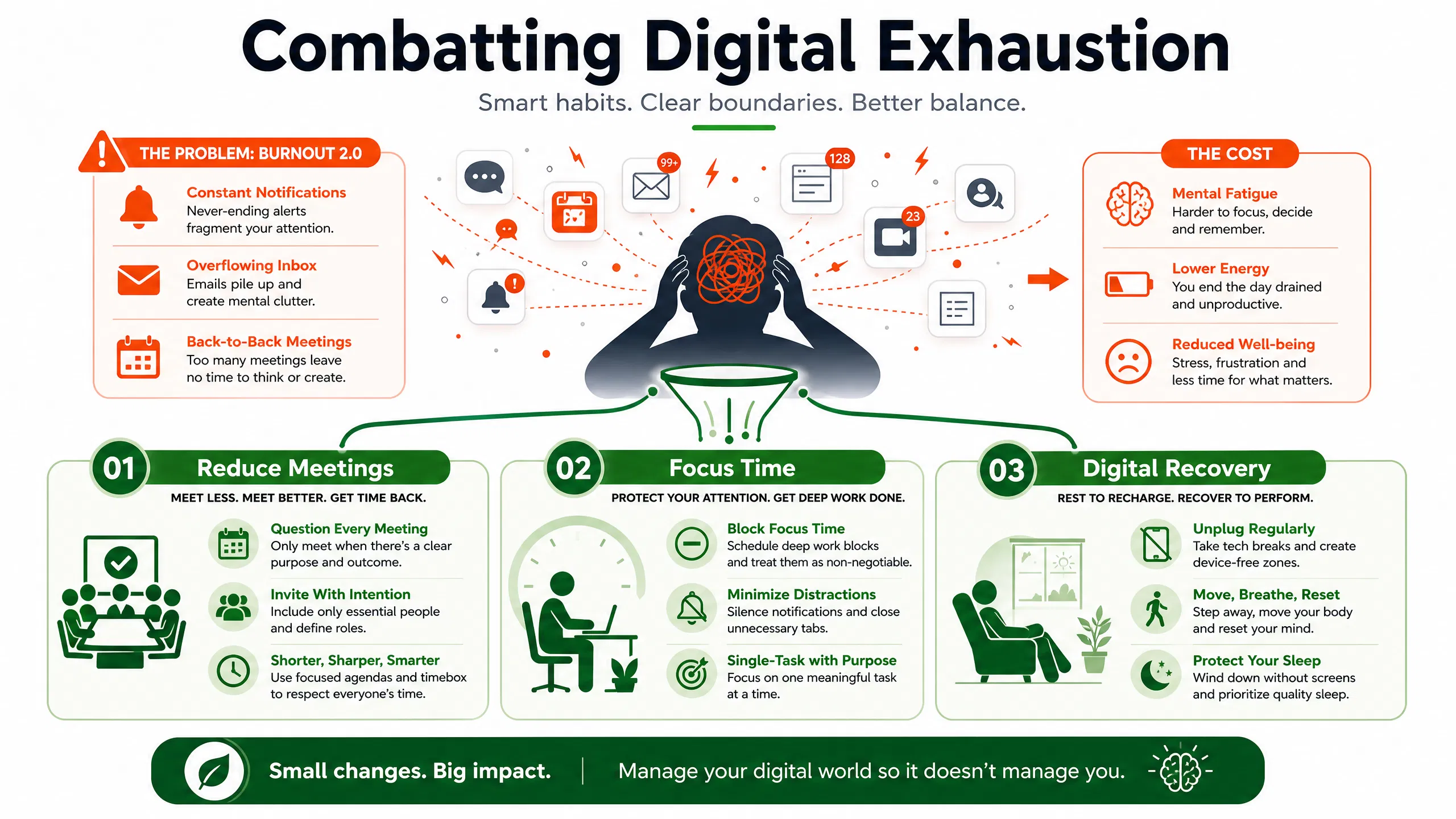
One of the biggest contributors to Burnout 2.0 is digital exhaustion. Employees are now exposed to constant notifications, virtual meetings, multitasking demands, and information overload. The human brain was not designed for uninterrupted digital stimulation.
Digital exhaustion affects:
- Cognitive performance
- Creativity
- Decision-making quality
- Emotional resilience
- Attention span
- Sleep quality
- Workplace engagement
Therefore, preventing digital exhaustion requires intentional operational design. Sustainable organizations are now implementing strategies such as:
Reducing Meeting Overload
Many businesses have realized that excessive meetings destroy productivity while increasing cognitive fatigue. High-performing organizations now limit unnecessary meetings and encourage asynchronous communication whenever possible.
Creating Focus Time
Employees require uninterrupted periods for deep work. Sustainable companies establish protected focus hours where notifications and meetings are minimized.
Encouraging Digital Recovery
Organizations promoting human sustainability encourage employees to disconnect after working hours. They discourage after-hours communication unless absolutely necessary.
Optimizing Technology Use
Businesses are increasingly leveraging smarter digital systems to streamline operations without overwhelming employees. Companies such as Nexera Digital Solutions help organizations implement digital transformation strategies that improve efficiency while reducing operational friction and unnecessary complexity.
Sustainable Performance Models Are Reshaping Business Strategy
For decades, organizations measured success primarily through output volume and short-term profitability. However, businesses are now realizing that unsustainable performance models eventually damage both employees and organizational results.
Sustainable performance models prioritize:
- Long-term workforce resilience
- Consistent productivity
- Employee retention
- Innovation sustainability
- Operational adaptability
- Healthy organizational culture
Importantly, sustainable performance does not mean lowering standards. Instead, it means optimizing human performance without destroying human capacity.
Organizations embracing sustainable workforce strategies often outperform competitors because employees maintain higher engagement, creativity, and problem-solving ability over extended periods.
Training providers such as Forelite Training Professional Workshops support organizations in developing workforce capabilities that align with modern sustainability and leadership goals.
How Human Sustainability Drives Business Growth
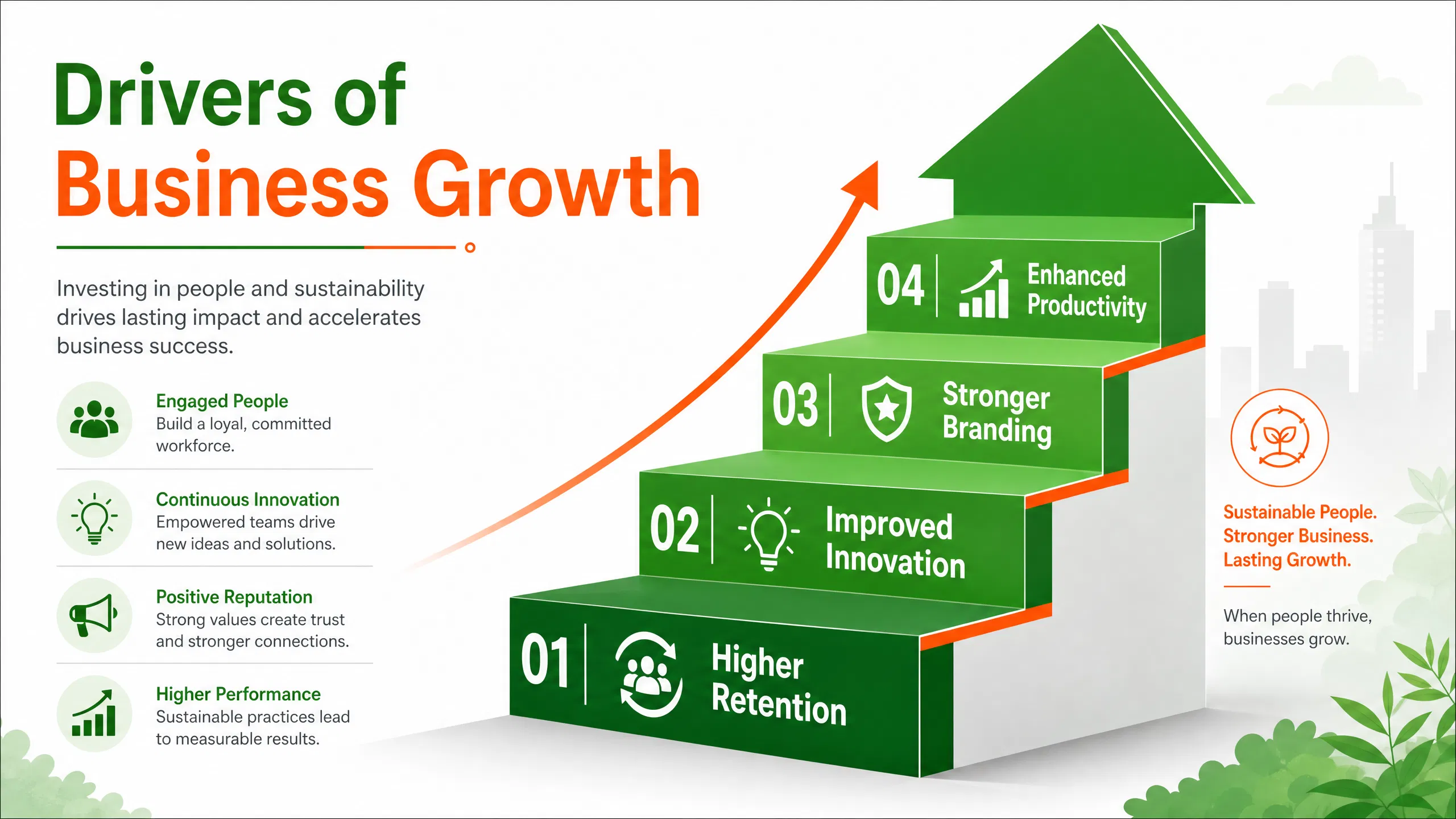
Many executives once viewed employee wellbeing as a secondary HR concern. That perception has changed dramatically. Human sustainability is now directly linked to organizational profitability and strategic growth.
Businesses with sustainable workforce cultures benefit from:
Higher Employee Retention
Burnout remains one of the leading causes of employee turnover. Companies that protect workforce wellbeing reduce costly talent loss and strengthen institutional knowledge retention.
Improved Innovation
Creativity requires cognitive space and mental clarity. Exhausted employees rarely produce innovative solutions. Sustainable organizations create environments where employees can think strategically rather than merely survive operational pressure.
Stronger Employer Branding
Modern professionals increasingly seek organizations that prioritize wellbeing, flexibility, and sustainable work cultures. Businesses known for supporting human sustainability attract stronger talent pools.
Enhanced Productivity
Contrary to outdated assumptions, overworked employees are not more productive. Chronic exhaustion reduces focus, efficiency, and decision quality. Sustainable workplaces maintain higher productivity consistency over time.
Greater Organizational Resilience
Organizations with healthy workforce systems adapt more effectively to economic uncertainty, technological disruption, and market volatility.
Building a Human-Centered Workplace Culture
Creating sustainable organizations requires more than policy changes. It demands cultural transformation. Human-centered workplace cultures recognize employees as strategic assets rather than endlessly renewable resources.
To achieve this transformation, businesses must:
Normalize Recovery
Rest should not be viewed as weakness. Recovery improves long-term performance and cognitive resilience.
Redefine Productivity
Organizations must shift away from measuring performance based solely on hours worked or constant responsiveness.
Improve Communication Practices
Clear communication reduces unnecessary stress and confusion while improving operational alignment.
Support Continuous Learning
Professional development increases employee confidence, adaptability, and engagement. Organizations investing in workforce growth through platforms like Forelite Training Learning Programs strengthen both individual and organizational sustainability.
Encourage Psychological Safety
Employees should feel safe discussing workload challenges, mental fatigue, and operational concerns without fear of punishment.
The Future of Human Sustainability in Business
Human sustainability is no longer a temporary business trend. It is becoming a core operational requirement for organizations seeking long-term success in a volatile digital economy.
The future workplace will prioritize:
- Energy management over time management
- Sustainable productivity over burnout culture
- Human-centered leadership over authoritarian management
- Strategic recovery over constant availability
- Workforce resilience over short-term output obsession
Organizations that fail to adapt risk losing talent, innovation capacity, and competitive advantage. Meanwhile, companies embracing sustainable workforce models will build stronger cultures, healthier employees, and more resilient operations.
The next evolution of workplace success will not be determined solely by technology, automation, or financial capital. Instead, it will depend heavily on how effectively organizations preserve and optimize human energy.
Businesses that recognize employee wellbeing as a strategic performance driver will lead the future of work. Those that continue treating human capacity as limitless will struggle with disengagement, turnover, and declining organizational performance.
Human sustainability is not about doing less. It is about building systems that allow people to perform exceptionally without sacrificing their long-term wellbeing. That shift is redefining modern business leadership, operational strategy, and workplace culture across industries worldwide.