AI Training Courses Every Corporate Team Should Explore: 10 Powerful Programs for Business Growth

Artificial intelligence is no longer a futuristic concept. Today, businesses across industries are integrating AI into daily operations, customer engagement, decision-making, and workforce management. As a result, companies that invest in AI training courses for corporate teams are positioning themselves for long-term growth and innovation.
From healthcare and finance to manufacturing and retail, AI tools are helping organizations automate repetitive tasks, analyze massive amounts of data, and improve efficiency. Moreover, employees with AI skills can solve problems faster and contribute more strategically to organizational goals.
Corporate leaders are now realizing that AI adoption without employee training creates skill gaps and resistance to change. Therefore, structured learning programs are becoming essential for modern organizations. Companies that prioritize workforce upskilling are seeing improved productivity, better collaboration, and stronger competitiveness.
Professional training providers such as Forelite Training offer specialized programs that help teams gain practical AI knowledge while aligning with business objectives. In addition, digital transformation firms like Nexera Digital Solutions support organizations in implementing AI-driven business strategies effectively.
Why AI Skills Matter in Modern Workplaces
Artificial intelligence is transforming how organizations work. For instance, AI-powered systems can automate customer service, improve logistics planning, and streamline financial reporting. Businesses that fail to adapt may struggle to compete in increasingly digital markets.
Employees also benefit directly from AI literacy. Team members who understand AI tools can make faster decisions, identify trends, and optimize workflows. Consequently, organizations experience better efficiency and reduced operational costs.
Another important factor is adaptability. The workplace is evolving rapidly, and employees need modern skills to remain relevant. AI training helps staff become more confident when working with advanced technologies. Furthermore, it reduces fear surrounding automation by showing employees how AI complements human expertise instead of replacing it.
Companies are also using AI to enhance customer experiences. Personalized recommendations, intelligent chatbots, and predictive analytics improve service quality significantly. Because of this, businesses need employees who can manage and optimize AI-driven systems effectively.
Benefits of AI Training for Corporate Teams
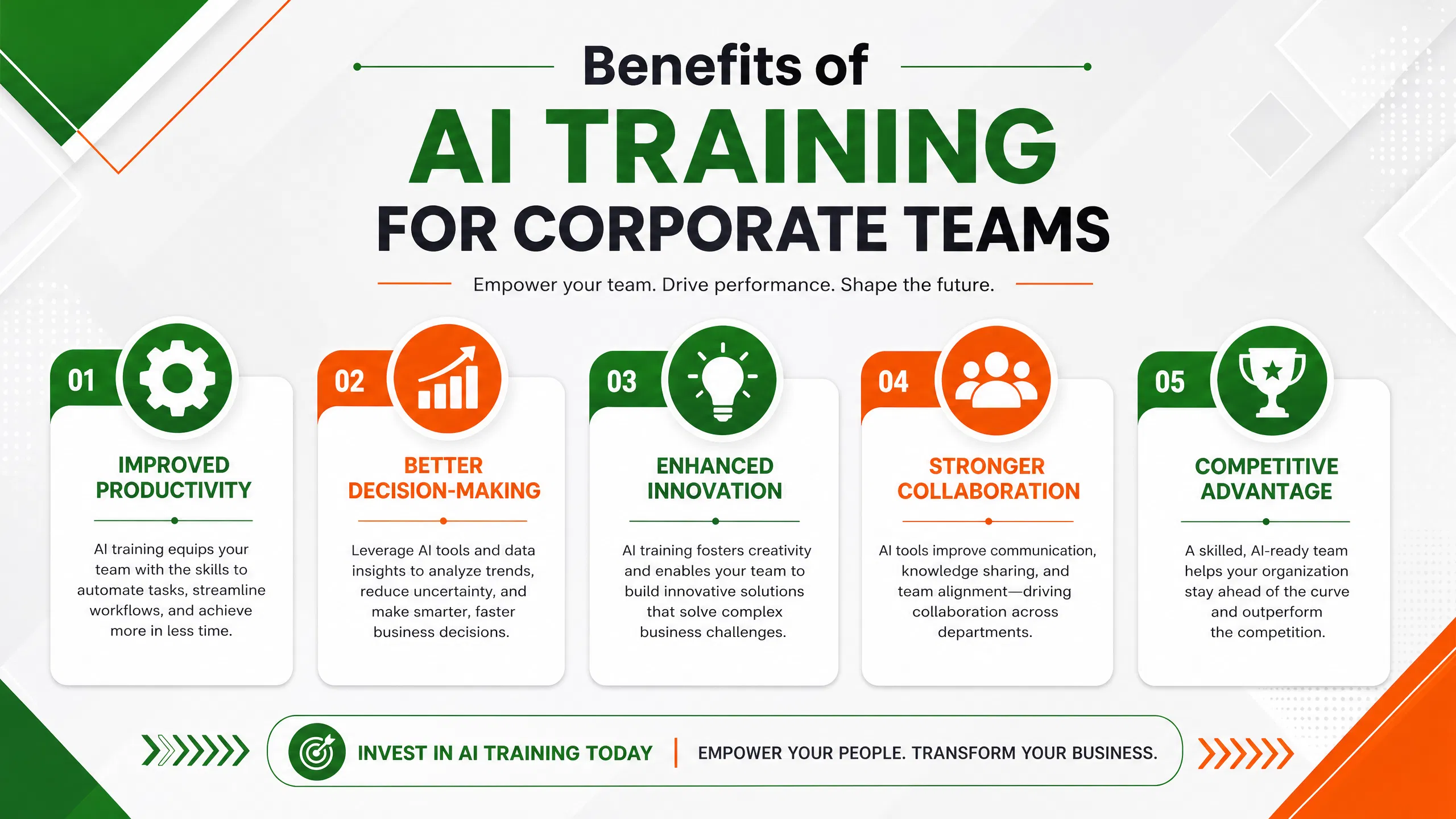
Organizations investing in AI training courses for corporate teams gain several advantages. These benefits extend beyond technical knowledge and impact overall business performance.
Improved Productivity
AI automates repetitive tasks such as data entry, scheduling, and report generation. Employees can focus on more strategic activities that require creativity and problem-solving. As a result, teams accomplish more within shorter periods.
Better Decision-Making
AI systems analyze large datasets quickly and accurately. Employees trained in AI can interpret insights effectively and support data-driven decisions. Therefore, businesses reduce guesswork and improve operational planning.
Enhanced Innovation
Teams with AI expertise are more likely to develop innovative products and services. They can identify opportunities for automation and digital transformation across departments. In the long run, this improves competitiveness and market positioning.
Stronger Collaboration
AI tools often connect multiple departments through shared platforms and analytics dashboards. Employees trained in AI workflows collaborate more effectively across teams. Additionally, communication improves because everyone understands the technology being used.
Competitive Advantage
Businesses that embrace AI early gain a significant edge over competitors. Skilled employees can implement modern technologies faster and more effectively. Consequently, organizations remain agile in rapidly changing industries.
Key Features of Effective AI Training Programs
Not all training programs deliver the same value. Corporate teams need courses that combine theory with practical application.
Industry-Relevant Curriculum
Effective programs focus on real-world business applications instead of purely academic concepts. Courses should include case studies, practical projects, and industry examples.
Organizations can explore specialized learning opportunities through Forelite Training AI and Data Programs which provide professional development tailored to modern business needs.
Flexible Learning Formats
Corporate employees often have busy schedules. Therefore, flexible learning options such as online classes, hybrid workshops, and self-paced modules are important.
Hands-On Experience
Employees learn faster when they apply concepts directly. Practical exercises involving AI tools, analytics platforms, and automation systems improve retention significantly.
Expert Instructors
Experienced trainers with industry backgrounds provide valuable insights into practical implementation challenges and solutions.
Certification and Career Development
Recognized certifications motivate employees and strengthen professional credibility. Furthermore, certifications demonstrate organizational commitment to workforce development.
AI for Data Analytics and Business Intelligence
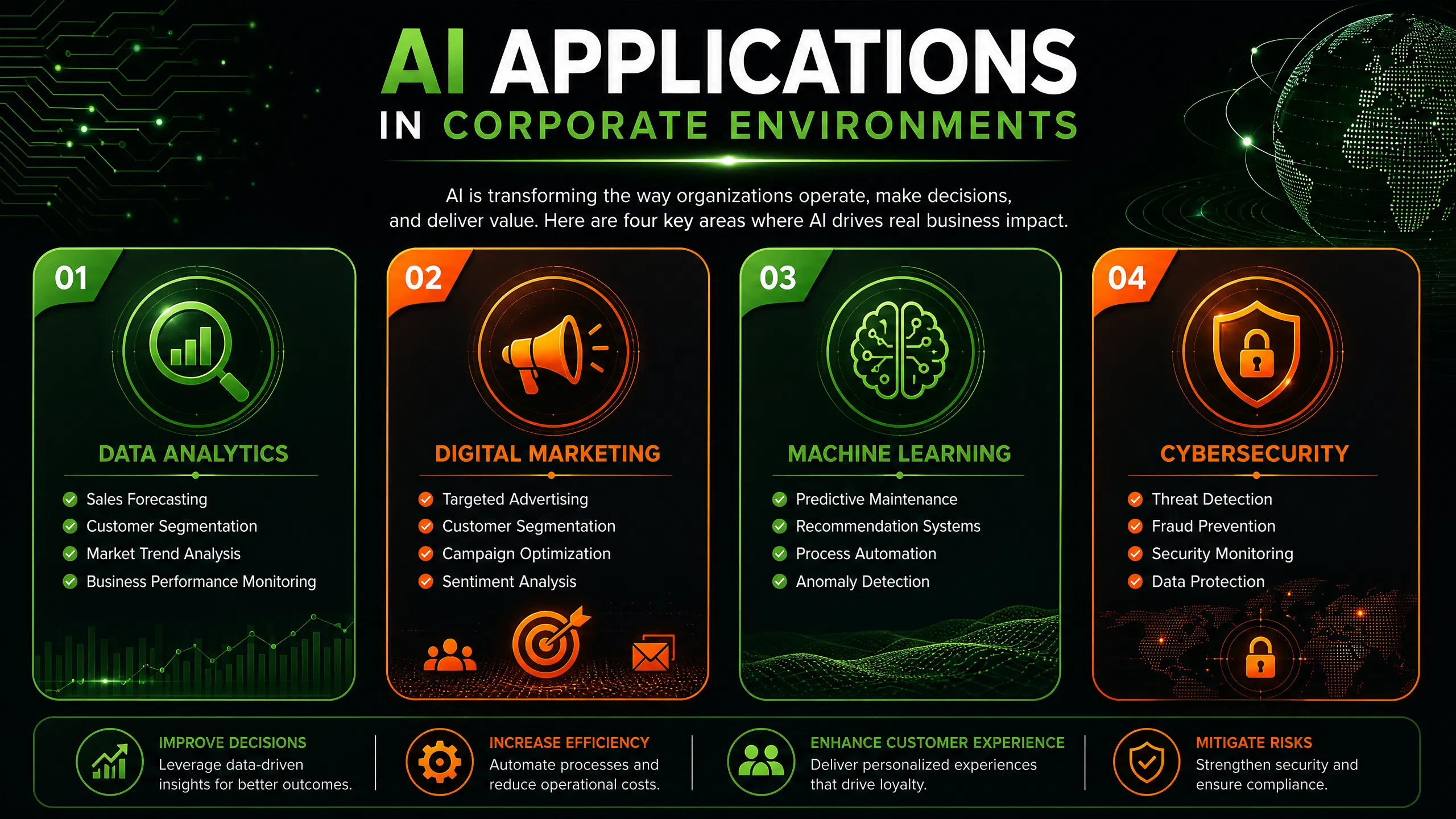
Data analytics is one of the most valuable applications of artificial intelligence in corporate environments.
Data-Driven Decision Making
AI systems process large datasets rapidly and uncover patterns that humans may overlook. Teams trained in AI analytics can interpret these insights and make informed decisions.
Organizations seeking advanced analytics skills can explore Data Analytics Training Courses by Forelite Training to strengthen data-driven capabilities within their workforce.
Predictive Analytics Applications
Predictive models help companies forecast customer behavior, inventory needs, and financial trends. Consequently, businesses reduce risks and improve planning accuracy.
Examples of predictive analytics include:
- Sales forecasting
- Fraud detection
- Customer churn prediction
- Supply chain optimization
- Market trend analysis
Employees trained in predictive analytics become valuable assets because they can translate insights into actionable strategies.
AI-Powered Digital Marketing Training
Marketing departments are increasingly relying on AI tools to improve campaign performance and customer engagement.
Automation in Marketing
AI automates email campaigns, customer segmentation, and social media scheduling. As a result, marketing teams save time while improving targeting accuracy.
Corporate teams can strengthen their marketing capabilities through Digital Marketing and SEO Training Courses designed for modern professionals.
AI Content and SEO Optimization
AI-powered platforms analyze keywords, audience behavior, and search trends. Marketers can create optimized content more efficiently and improve visibility online.
Benefits include:
- Faster content generation
- Better audience targeting
- Improved conversion rates
- Enhanced customer insights
- Real-time performance analysis
Moreover, AI tools help marketers personalize customer interactions, which increases engagement and loyalty.
Machine Learning for Business Professionals
Machine learning is one of the most influential areas of AI today.
Core Concepts Every Team Should Understand
Employees do not always need advanced programming knowledge to benefit from machine learning training. However, understanding key concepts is important.
Core concepts include:
- Supervised learning
- Unsupervised learning
- Neural networks
- Classification models
- Regression analysis
These concepts help employees understand how AI systems learn and improve over time.
Real-World Corporate Applications
Machine learning supports many business functions, including:
- Customer recommendation engines
- Financial forecasting
- Quality control systems
- Fraud prevention
- Inventory management
Organizations investing in machine learning training build stronger analytical and operational capabilities.
Cybersecurity and AI Risk Management
Cybersecurity threats are becoming more sophisticated. Therefore, AI-driven security systems are increasingly important for corporate protection.
Threat Detection Using AI
AI systems identify suspicious behavior patterns and detect cyber threats faster than traditional methods. Employees trained in AI security can respond more effectively to risks.
Corporate Compliance and Governance
AI training also helps organizations understand ethical considerations and regulatory compliance requirements. Businesses must ensure responsible AI usage to maintain customer trust.
Important training areas include:
- Data privacy regulations
- Ethical AI practices
- Risk management frameworks
- Cybersecurity protocols
- Governance strategies
AI for Human Resource Management
Human resource departments are using AI to improve recruitment, employee engagement, and workforce planning.
Smart Recruitment Systems
AI-powered recruitment tools screen resumes, identify qualified candidates, and reduce hiring bias. Consequently, HR teams save time and improve hiring accuracy.
Employee Performance Analytics
AI systems track productivity trends and employee engagement metrics. Managers can identify areas for improvement and support employee development more effectively.
Organizations can enhance workforce management capabilities through Professional Corporate Training Programs by Forelite Training which focus on modern workplace skills.
Cloud Computing and AI Integration
AI systems often rely on cloud infrastructure for scalability and accessibility.
Scalable AI Infrastructure
Cloud computing allows businesses to store and process large amounts of data efficiently. Teams trained in cloud-based AI tools can collaborate seamlessly across locations.
Collaboration Across Departments
Cloud platforms improve communication and data sharing between departments. As a result, organizations achieve better operational coordination.
Businesses integrating AI and cloud technologies gain flexibility, scalability, and cost efficiency.
Generative AI in Corporate Operations
Generative AI tools are becoming increasingly popular across industries.
Workflow Automation
Generative AI automates document creation, reporting, and customer communication. Employees can complete administrative tasks more efficiently.
AI-Assisted Communication
AI writing assistants improve communication quality and consistency. Teams can draft emails, presentations, and reports faster while maintaining professionalism.
Key benefits of generative AI include:
- Faster document creation
- Improved productivity
- Reduced operational costs
- Enhanced customer support
- Streamlined internal communication
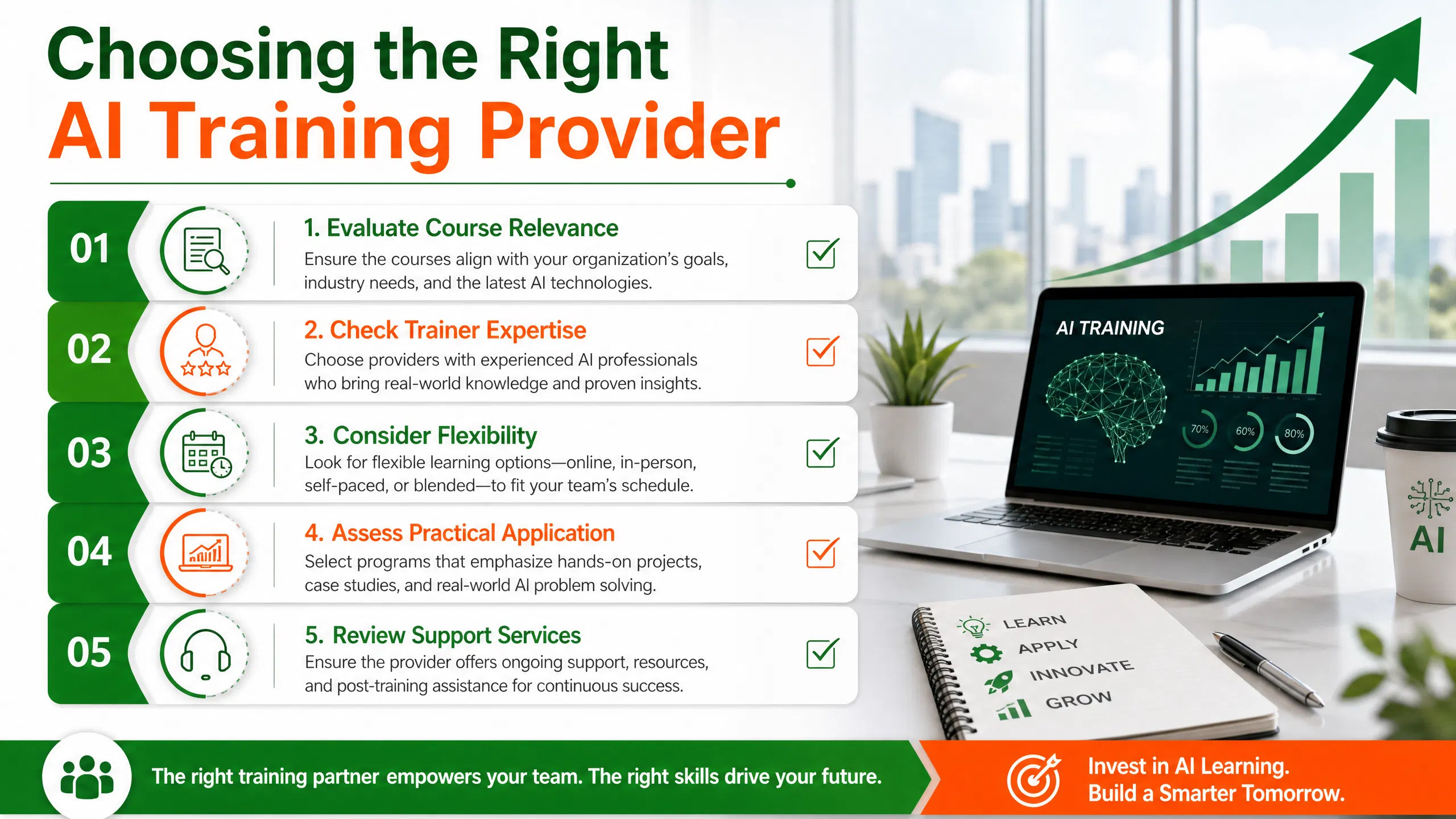
Selecting the Right AI Training Provider
Choosing the right training provider is critical for successful workforce development.
Evaluate Course Relevance
Organizations should select programs aligned with their industry and operational goals.
Check Trainer Expertise
Experienced instructors with practical industry knowledge deliver more valuable learning experiences.
Consider Flexibility
Flexible schedules and online options help employees balance learning with work responsibilities.
Assess Practical Application
Hands-on projects and case studies improve skill retention and real-world readiness.
Review Support Services
Reliable providers offer mentorship, technical support, and post-training guidance.
Companies exploring professional development solutions can visit Forelite Training Official Website for a wide range of AI and digital transformation programs.
Frequently Asked Questions
1. What are AI training courses for corporate teams?
AI training courses help employees understand and apply artificial intelligence technologies in business operations. These programs cover topics such as automation, analytics, machine learning, and AI strategy.
2. Why should businesses invest in AI training?
Businesses benefit from improved productivity, better decision-making, stronger innovation, and enhanced competitiveness. AI training also helps employees adapt to digital transformation.
3. Which departments benefit most from AI training?
Many departments benefit, including marketing, finance, HR, operations, customer service, and IT. AI applications are useful across nearly every business function.
4. Do employees need technical backgrounds for AI training?
No. Many programs are designed for beginners and business professionals without programming experience.
5. How long does AI corporate training take?
Training duration varies depending on course complexity. Some workshops last a few days, while advanced certification programs may take several weeks or months.
6. What industries use AI training the most?
Industries such as healthcare, finance, manufacturing, retail, logistics, and education are rapidly adopting AI technologies.
7. Can AI training improve employee retention?
Yes. Employees value professional development opportunities. AI training helps staff feel more confident and future-ready, which improves engagement and retention.
Conclusion
Artificial intelligence is reshaping the corporate world at an unprecedented pace. Businesses that prioritize AI training courses for corporate teams are preparing their workforce for long-term success. Furthermore, organizations investing in AI education gain stronger innovation capabilities, improved operational efficiency, and greater adaptability.
Corporate teams trained in AI can automate workflows, analyze data effectively, enhance customer experiences, and improve strategic planning. Consequently, companies become more competitive in increasingly digital markets.
Training providers such as Forelite Training and digital transformation experts like Nexera Digital Solutions play an important role in helping organizations build future-ready teams.
Ultimately, businesses that embrace AI learning today will lead the industries of tomorrow.