
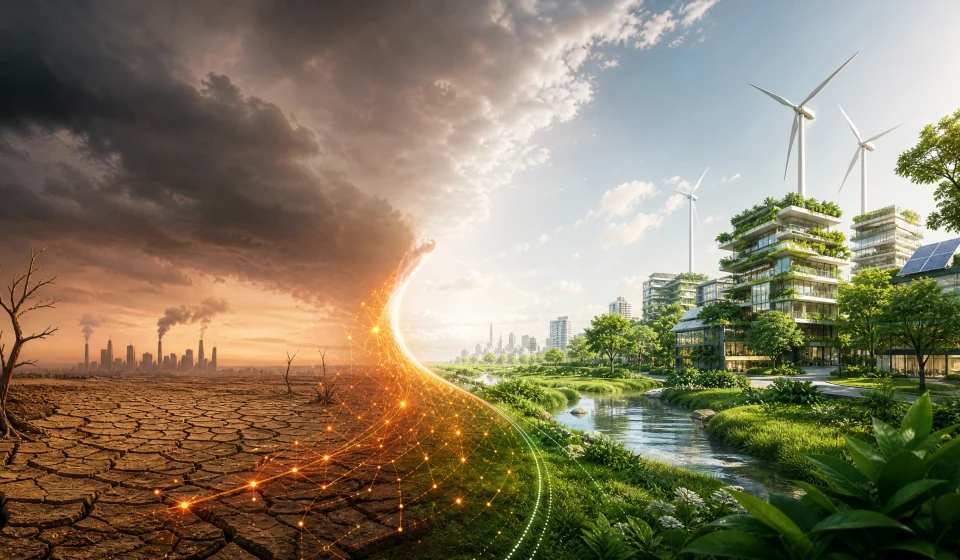

Understanding Climate Change and Why Resilience Matters
Climate change has evolved from being viewed primarily as an environmental concern into one of the defining economic and business challenges of the twenty-first century. Across every continent, organizations are experiencing the consequences of rising temperatures, changing rainfall patterns, more frequent droughts, severe flooding, stronger storms, and unpredictable weather events. These disruptions affect agricultural productivity, manufacturing schedules, transportation networks, water availability, public health, insurance costs, and infrastructure performance. As a result, governments, private companies, development organizations, and research institutions are increasingly prioritizing climate resilience as part of their long-term strategies.
Therefore, resilience is no longer simply about recovering after disasters occur. It involves anticipating climate risks, preparing for uncertainty, minimizing vulnerabilities, and adapting operations before disruptions become costly. Businesses that invest in resilience are better positioned to protect employees, maintain supply chains, reduce financial losses, and identify new market opportunities. Investors are also paying closer attention to environmental, social, and governance (ESG) performance, making climate resilience a competitive advantage rather than just a compliance requirement.
Meanwhile, technological innovation has accelerated the availability of climate intelligence tools. Geographic Information Systems (GIS), satellite imagery, artificial intelligence, predictive analytics, and remote sensing technologies now enable organizations to monitor environmental changes with unprecedented accuracy. These innovations support evidence-based decision-making, allowing industries to allocate resources efficiently while improving long-term sustainability. Climate resilience has become an essential business capability rather than an optional environmental initiative.
The Growing Impact of Climate Change on Global Industries
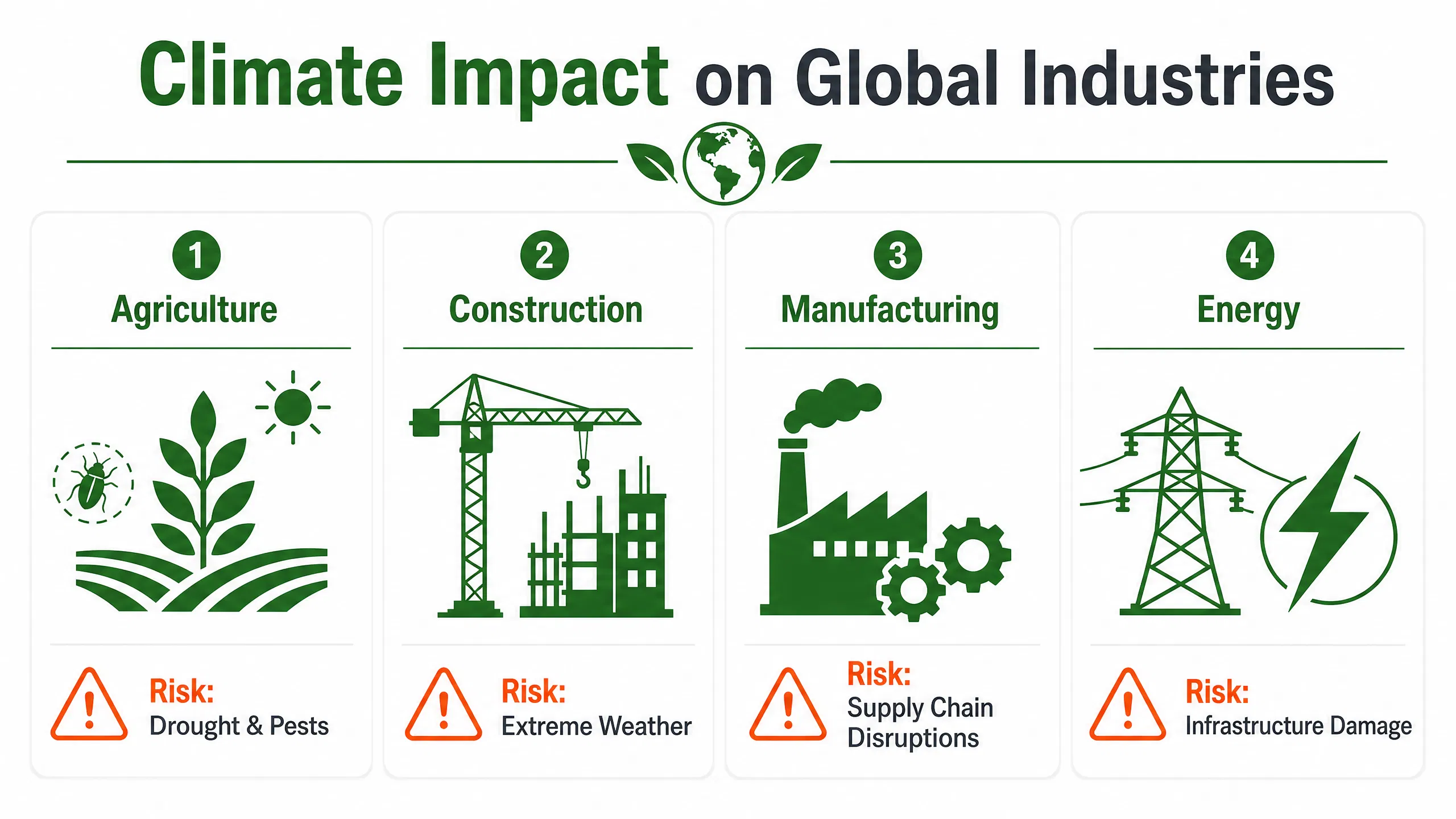
Every industry experiences climate change differently, yet none remain unaffected. Agriculture faces declining yields because of prolonged droughts, shifting rainfall patterns, and increasing pest outbreaks. Manufacturing companies experience production interruptions caused by heatwaves, flooding, and shortages of critical raw materials. Transportation networks encounter damaged roads, ports, railways, and airports following extreme weather events. Even service industries, once considered relatively insulated, now confront operational disruptions caused by energy instability and damaged infrastructure.
Additionally, financial institutions have begun incorporating climate risk into lending decisions, insurance pricing, and investment portfolios. Companies unable to demonstrate resilience planning may find it increasingly difficult to secure financing or attract investors. Global supply chains have also become significantly more vulnerable. A single flood affecting one manufacturing hub can disrupt production across multiple continents, illustrating how interconnected today’s economy has become.
Organizations are responding by strengthening risk management frameworks, investing in resilient infrastructure, diversifying suppliers, and integrating climate scenarios into strategic planning. These proactive measures reduce uncertainty while improving business continuity. They also create opportunities for innovation, particularly in renewable energy, sustainable construction, environmental consulting, climate technology, and digital transformation services.
Professionals seeking to build expertise in climate adaptation can strengthen their capabilities through specialized environmental and sustainability programs such as those available at Forelite Training, including courses in climate risk management, GIS applications, environmental impact assessment, disaster risk reduction, and sustainability planning. These skills are becoming increasingly valuable as organizations seek qualified professionals capable of translating climate science into practical business solutions.
What Climate Resilience Really Means
Climate resilience extends far beyond emergency response plans. It encompasses an organization’s ability to anticipate environmental risks, adapt to changing conditions, recover quickly from disruptions, and continuously improve its preparedness over time. A resilient organization views uncertainty as something to manage strategically rather than simply react to when crises emerge.
Consequently, resilience requires collaboration across multiple disciplines. Engineers design stronger infrastructure capable of withstanding floods and storms. Environmental scientists analyze ecological changes affecting natural resources. Data analysts interpret climate datasets to identify future risks. Urban planners develop cities that can better manage heatwaves and extreme rainfall. Business leaders integrate sustainability objectives into long-term investment decisions while policymakers establish regulatory frameworks encouraging resilient development.
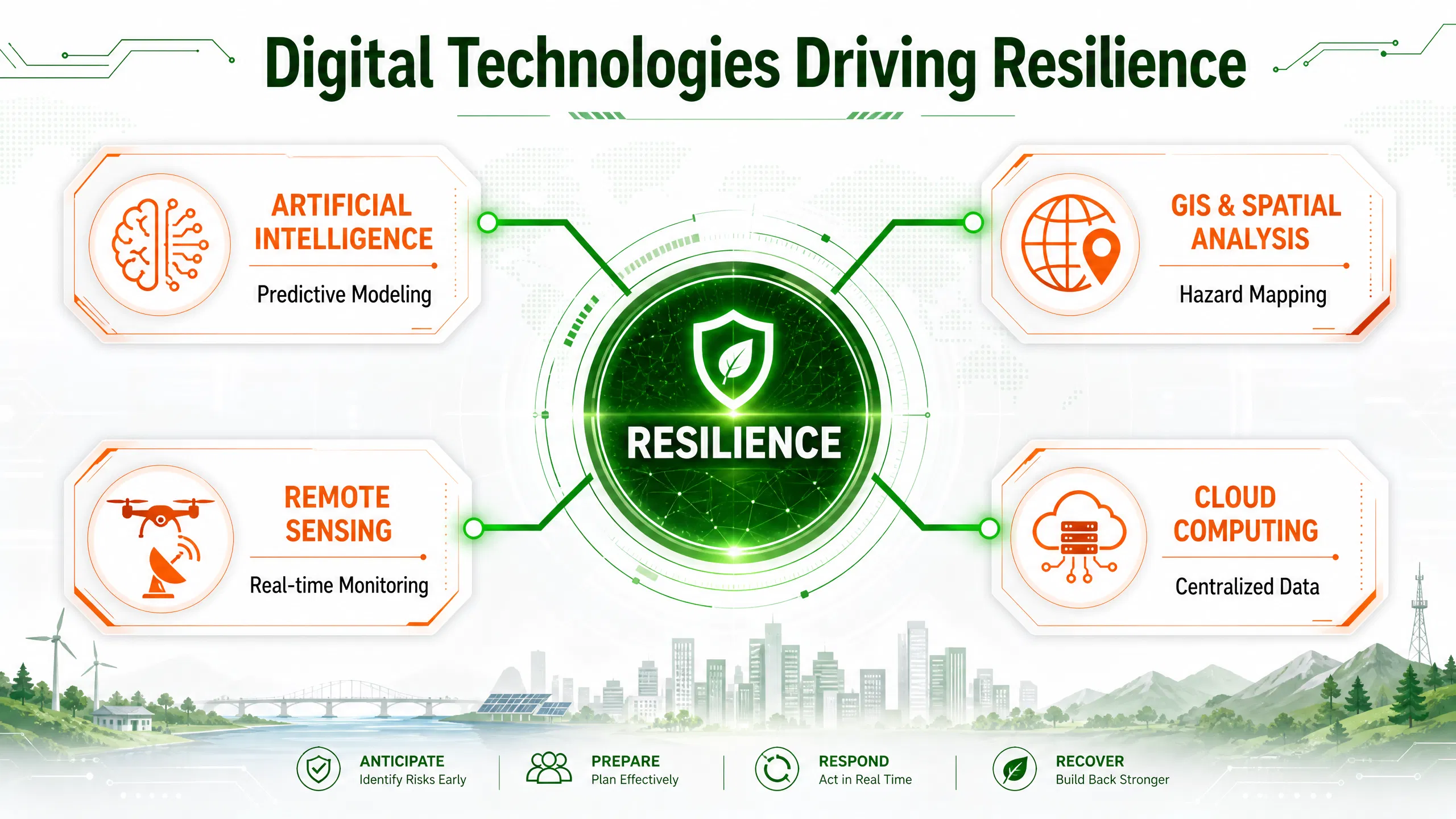
Digital technologies play a transformative role in supporting resilience initiatives. Modern organizations increasingly rely on remote sensing, drones, cloud computing, artificial intelligence, and predictive analytics to improve environmental monitoring and disaster preparedness. These technologies provide near real-time insights that enable faster decision-making and more effective resource allocation.
Professionals interested in expanding their expertise in spatial analysis and environmental intelligence can benefit from specialized GIS, remote sensing, and environmental data analysis programs offered through Forelite Training. Such training equips practitioners with practical skills for analyzing climate hazards, monitoring land-use changes, assessing environmental risks, and supporting evidence-based policy development.
The private sector is also embracing resilience through innovation. Companies specializing in digital transformation, including Nexera Digital Solutions, help organizations modernize business processes, improve operational efficiency, implement cloud-based systems, and strengthen digital resilience. While climate resilience often focuses on physical infrastructure, digital resilience has become equally important because organizations increasingly depend on reliable information systems to manage emergencies, coordinate response efforts, and maintain continuity during disruptions.
Industries Facing the Greatest Climate Risks
Climate change affects every sector of the global economy, but some industries experience greater exposure because their operations depend heavily on natural resources, stable weather patterns, or extensive infrastructure networks. As a result, organizations in these sectors are investing more aggressively in climate adaptation strategies to minimize disruptions and maintain long-term profitability. Understanding where these risks exist helps governments, businesses, and professionals develop targeted solutions that strengthen resilience while creating new opportunities for innovation.
Agriculture and Food Security
Agriculture remains one of the industries most vulnerable to climate change because crop production depends directly on rainfall, temperature, soil health, and water availability. Extended droughts, floods, changing growing seasons, and invasive pests are already reducing agricultural productivity in many regions. Farmers are increasingly forced to adapt by adopting climate-smart farming techniques, drought-resistant crop varieties, precision agriculture technologies, and improved irrigation systems. Consequently, food security has become a global concern, particularly in developing countries where agriculture contributes significantly to employment and national income.
Modern technologies are transforming agricultural resilience. Satellite imagery, drones, and Geographic Information Systems (GIS) enable farmers to monitor crop health, identify water stress, detect pest infestations, and optimize fertilizer application with remarkable precision. Artificial intelligence also supports predictive weather forecasting, allowing producers to make informed planting and harvesting decisions.
Professionals working in agriculture, environmental management, and rural development can strengthen their expertise through specialized programs in GIS, remote sensing, environmental monitoring, and climate adaptation offered by Forelite Training. These practical skills enable decision-makers to develop data-driven agricultural solutions that improve productivity while reducing climate-related risks.
Construction and Infrastructure
The construction industry faces growing challenges as rising temperatures, extreme rainfall, flooding, and stronger storms threaten buildings, bridges, roads, and public infrastructure. Traditional engineering standards are increasingly being revised to account for future climate conditions rather than historical weather patterns. Therefore, engineers and urban planners now prioritize resilience alongside cost, safety, and sustainability when designing infrastructure projects.
Climate-resilient infrastructure incorporates flood-resistant foundations, improved drainage systems, heat-resistant construction materials, green roofs, permeable pavements, and nature-based solutions that reduce environmental impacts. Governments worldwide are investing billions in resilient infrastructure because repairing climate-related damage after disasters often costs significantly more than incorporating resilience during project design.
Environmental Impact Assessments (EIAs), hazard mapping, and climate risk assessments have become essential components of infrastructure planning. Professionals responsible for these activities require specialized knowledge in environmental management, spatial analysis, and sustainability planning. Training in these disciplines equips practitioners with the technical capabilities needed to evaluate environmental risks before construction begins and recommend effective mitigation measures.
Manufacturing and Supply Chains
Manufacturing has become increasingly vulnerable to climate disruptions because modern supply chains extend across multiple countries and continents. A single flood, wildfire, or hurricane affecting one supplier can delay production for manufacturers located thousands of kilometers away. Likewise, water shortages, energy instability, and transportation disruptions create additional operational challenges that affect production schedules and customer deliveries.
Businesses are responding by diversifying suppliers, improving inventory management, digitizing logistics operations, and integrating climate risk into procurement strategies. Supply chain visibility has become particularly important because organizations need real-time information about supplier performance, transportation conditions, and environmental risks. Digital platforms supported by artificial intelligence and cloud computing now provide greater transparency throughout global supply networks.
Energy and Utilities
The global energy sector sits at the center of climate resilience efforts because it both contributes to climate change and plays a crucial role in supporting adaptation. Rising temperatures increase electricity demand for cooling, while extreme weather events threaten power generation facilities, transmission lines, and fuel supply chains. Meanwhile, the transition toward renewable energy continues to reshape investment priorities across both developed and developing economies.
Solar, wind, hydroelectric, geothermal, and battery storage technologies are expanding rapidly as governments pursue net-zero emission targets. Smart grids, decentralized energy systems, and microgrids improve resilience by reducing dependence on centralized infrastructure that may be vulnerable to climate-related disruptions. Energy companies are also investing heavily in predictive maintenance technologies that use sensors and artificial intelligence to identify equipment failures before they occur.
Emerging Industry Trends in Climate Adaptation
Climate adaptation is no longer driven solely by environmental policy. Instead, it has become a catalyst for innovation across technology, finance, engineering, and workforce development. Organizations increasingly recognize that resilience creates competitive advantages by improving operational efficiency, reducing financial risks, and enhancing stakeholder confidence.
Digital Technologies Driving Resilience
Digital transformation has fundamentally changed how organizations manage climate risks. Artificial intelligence processes enormous climate datasets to identify emerging patterns that humans might overlook. Machine learning models forecast floods, droughts, wildfires, and infrastructure failures with increasing accuracy. Remote sensing technologies provide continuous environmental monitoring, while drones collect detailed aerial imagery that supports disaster assessments and infrastructure inspections.
Cloud computing enables organizations to integrate environmental information from multiple sources into centralized platforms accessible by decision-makers in real time. These digital capabilities improve emergency response, optimize resource allocation, and support evidence-based planning. As technology continues evolving, organizations that embrace digital resilience will likely outperform competitors that rely on traditional management approaches.
Professionals interested in environmental intelligence can further develop these competencies through specialized GIS, remote sensing, and climate analytics programs available through Forelite Training, enabling them to translate complex environmental data into practical business decisions.
Green Infrastructure Investments
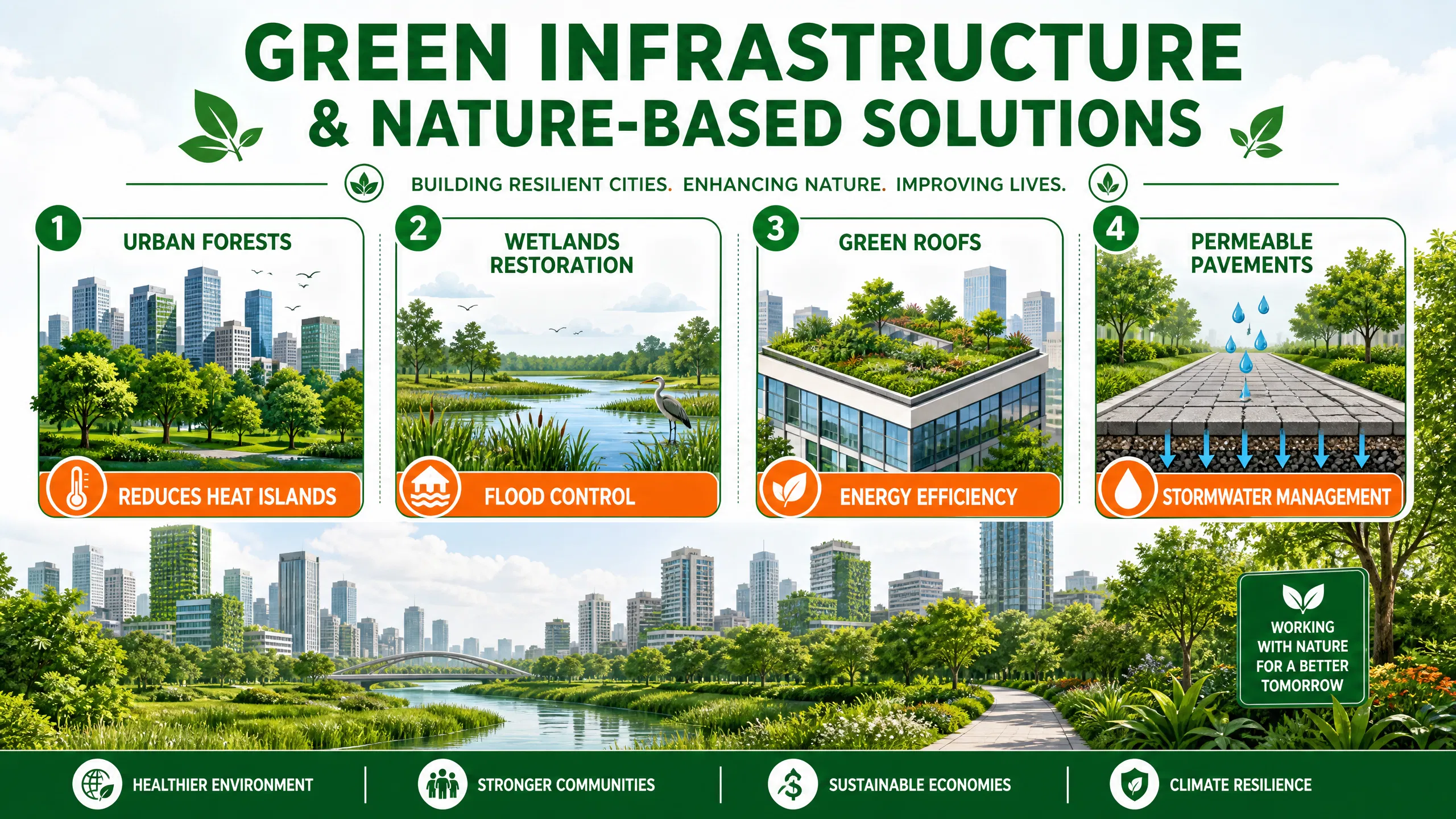
Governments and private investors increasingly recognize that nature-based solutions often provide long-term resilience benefits while supporting biodiversity and improving community well-being. Green infrastructure includes wetlands restoration, urban forests, rain gardens, permeable pavements, green roofs, and sustainable drainage systems. These approaches reduce flooding, improve water quality, lower urban temperatures, and enhance ecosystem services.
Unlike conventional infrastructure, green infrastructure frequently delivers multiple benefits simultaneously. A restored wetland, for example, can reduce flood risks, improve biodiversity, support tourism, and enhance water quality while requiring relatively low maintenance compared to engineered flood control structures. Consequently, many cities now integrate green infrastructure into urban development strategies as part of broader climate adaptation plans.