

Understanding Human Resource Management
What Is Human Resource Management?
Human Resource Management (HRM) is the process of attracting, developing, managing, and retaining employees to help an organization achieve its goals. At its core, HRM focuses on people, the most valuable asset in any organization. While technology, capital, and infrastructure contribute to business success, it is people who drive innovation, productivity, and growth. HR professionals ensure that employees are recruited effectively, trained continuously, compensated fairly, and supported throughout their employment journey.
Today’s HR function extends far beyond hiring and payroll. Modern HR departments play a strategic role in shaping organizational culture, improving employee engagement, and aligning workforce capabilities with business objectives. As organizations face rapid technological change, evolving employee expectations, and increasing competition for talent, HR has become a critical business partner rather than simply an administrative function.
Organizations that invest in strong HR practices often experience better employee satisfaction, higher retention rates, and improved operational performance. Additionally, effective HRM helps companies navigate compliance requirements, manage workplace relationships, and build resilient teams capable of adapting to changing business environments.
Why HRM Matters in Modern Organizations
The workplace has changed dramatically over the last decade. Hybrid work arrangements, artificial intelligence, workforce diversity, and shifting employee expectations have transformed how organizations manage their people. As a result, HR professionals are increasingly responsible for creating strategies that support both organizational goals and employee well-being.
Research indicates that workforce readiness remains a major concern for employers. According to Deloitte’s 2025 Global Human Capital Trends report, 66% of managers and executives believe that recent hires are not fully prepared for their roles, highlighting the importance of training and development initiatives.
Consequently, organizations are focusing more on continuous learning, skills development, and employee experience. HR leaders must balance business performance with employee needs while creating workplaces where people can thrive. This balance has become one of the defining responsibilities of modern human resource management.
The Evolution of Human Resource Management
From Personnel Administration to Strategic HR
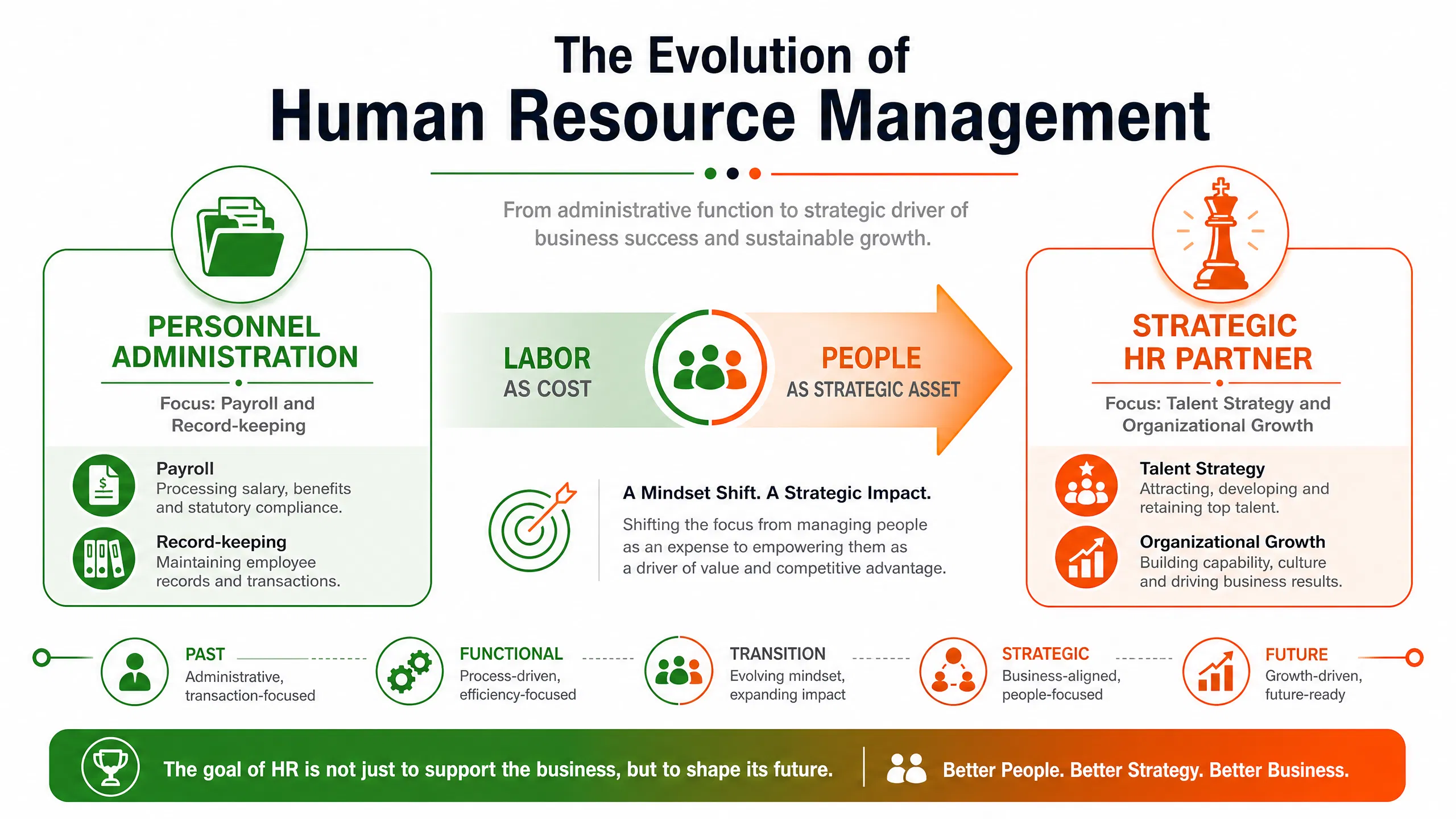
Historically, HR was known as personnel management and primarily focused on administrative tasks such as record-keeping, payroll processing, and employee documentation. The objective was largely operational, ensuring compliance and maintaining workforce records.
Over time, organizations recognized that employees contribute far more than labor. Human capital emerged as a strategic asset capable of driving innovation, customer satisfaction, and competitive advantage. This realization transformed HR into a strategic business function.
Modern HR professionals participate in workforce planning, leadership development, succession planning, and organizational transformation initiatives. They work closely with executives to align talent strategies with business objectives. Therefore, HR has evolved from a support function into a key driver of organizational success.
The Impact of Digital Transformation on HR
Technology has revolutionized human resource management. Cloud-based HR systems, workforce analytics platforms, and artificial intelligence tools have streamlined many traditional HR processes. The global Human Resource Management market was valued at approximately USD 27.51 billion in 2024 and is projected to reach USD 60.52 billion by 2030, reflecting the growing importance of HR technology and workforce analytics.
The rise of digital HR solutions allows organizations to automate repetitive tasks, improve recruitment efficiency, and gain valuable workforce insights. Meanwhile, employees benefit from self-service portals, personalized learning opportunities, and improved workplace experiences.
Businesses seeking to strengthen workforce capabilities often invest in professional development initiatives such as the training programs available through Forelite Training Centre. These programs help organizations address skills gaps while supporting employee growth and career advancement.
Core Functions of Human Resource Management
Workforce Planning and Recruitment
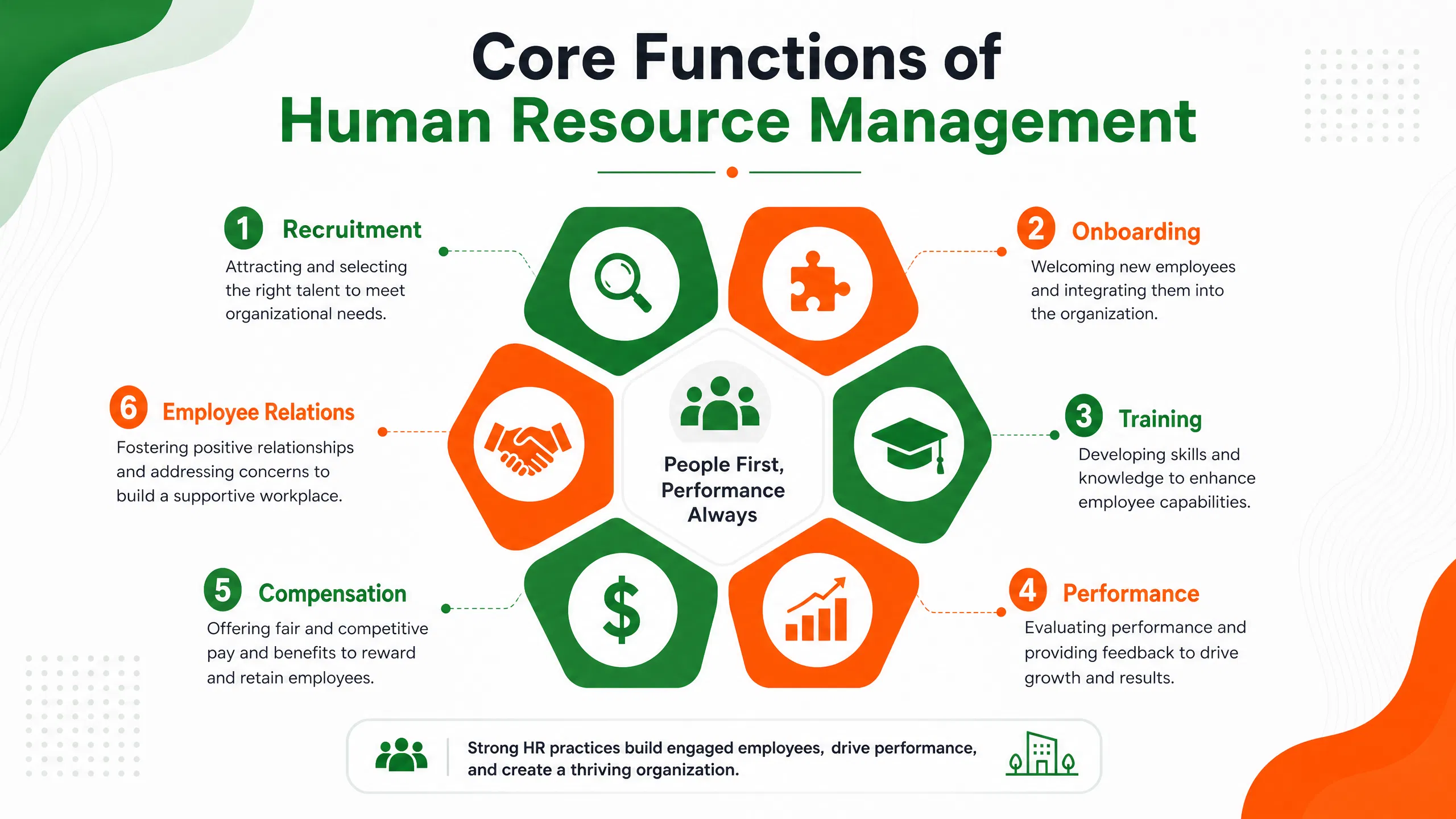
Recruitment remains one of the most visible functions of HR. Organizations depend on HR professionals to identify workforce needs, attract qualified candidates, and select individuals who align with company values and objectives.
Effective recruitment begins with workforce planning. HR teams analyze current staffing levels, future business needs, and market trends to determine hiring requirements. Afterward, recruitment strategies are developed to attract top talent through job boards, social media, employee referrals, and recruitment agencies.
Artificial intelligence is increasingly being used to streamline recruitment processes. Many organizations now utilize AI-powered tools to screen resumes, identify suitable candidates, and improve hiring efficiency.
Employee Onboarding and Integration
Recruitment does not end when a candidate accepts an offer. Successful onboarding ensures that new employees understand their responsibilities, organizational culture, and performance expectations.
A well-structured onboarding process helps employees become productive more quickly while improving engagement and retention. Similarly, onboarding provides opportunities to establish relationships, clarify goals, and foster a sense of belonging.
Organizations that prioritize onboarding often experience lower turnover rates and stronger employee commitment. HR professionals play a crucial role in designing onboarding programs that support long-term success.
Training and Development
Employee development has become one of the most important responsibilities of modern HR departments. As industries evolve and technology advances, employees must continuously acquire new skills to remain effective.
CompTIA’s Workforce and Learning Trends 2025 report highlights the growing importance of addressing skill shortages and validating workforce capabilities through targeted learning initiatives.
Companies frequently enhance employee skills through specialized programs such as leadership development, project management training, and technical certification courses. Organizations interested in workforce development can explore resources like the Corporate Training Programs at Forelite Training Centre to strengthen employee competencies and improve organizational performance.
Performance Management
Performance management involves setting expectations, evaluating results, and supporting continuous improvement. Rather than relying solely on annual performance reviews, modern organizations increasingly adopt ongoing feedback systems.
Employees perform best when expectations are clear and feedback is timely. Therefore, effective performance management emphasizes coaching, goal alignment, and professional growth rather than simply measuring outcomes.
Managers and HR professionals collaborate to identify development opportunities, recognize achievements, and address performance challenges. This process supports employee engagement while ensuring organizational objectives are met.
Compensation and Benefits
Compensation is a critical factor in attracting and retaining talent. Employees expect competitive salaries, comprehensive benefits, and opportunities for career advancement.
HR teams design compensation structures that balance organizational budgets with employee expectations. Benefits packages often include health coverage, retirement plans, flexible work arrangements, wellness initiatives, and professional development opportunities.
A fair and transparent compensation strategy contributes significantly to employee satisfaction and organizational loyalty.
Employee Relations
Healthy workplace relationships are essential for productivity and morale. HR professionals serve as mediators, advisors, and advocates when workplace issues arise.
Employee relations involve conflict resolution, communication strategies, policy development, and workplace investigations. Importantly, HR helps create environments where employees feel respected, valued, and heard.
Strong employee relations contribute to a positive workplace culture and reduce the likelihood of disputes or legal issues.
The Strategic Role of HR in Business Growth
Talent Acquisition and Retention
Attracting talent is only half the challenge. Retaining skilled employees is equally important. High turnover rates can increase recruitment costs, reduce productivity, and disrupt organizational stability.
Successful retention strategies focus on employee engagement, career development, recognition programs, and supportive leadership. HR professionals work closely with managers to identify factors that influence retention and address potential concerns proactively.
Building a Positive Workplace Culture
Culture influences how employees think, behave, and interact within an organization. A positive culture promotes collaboration, trust, innovation, and accountability.
HR leaders help shape organizational culture by defining values, supporting leadership development, and implementing employee engagement initiatives. Research indicates that employee engagement continues to be a major challenge globally, making culture-building efforts more important than ever.
Diversity, Equity, and Inclusion
Modern organizations recognize the value of diverse perspectives and inclusive workplaces. Diversity initiatives contribute to innovation, better decision-making, and stronger organizational performance.
HR departments develop policies and programs that promote equitable opportunities and foster inclusive environments. As organizations become increasingly global, diversity and inclusion remain essential components of effective human resource management.
Technology and the Future of HRM
AI and Automation in HR
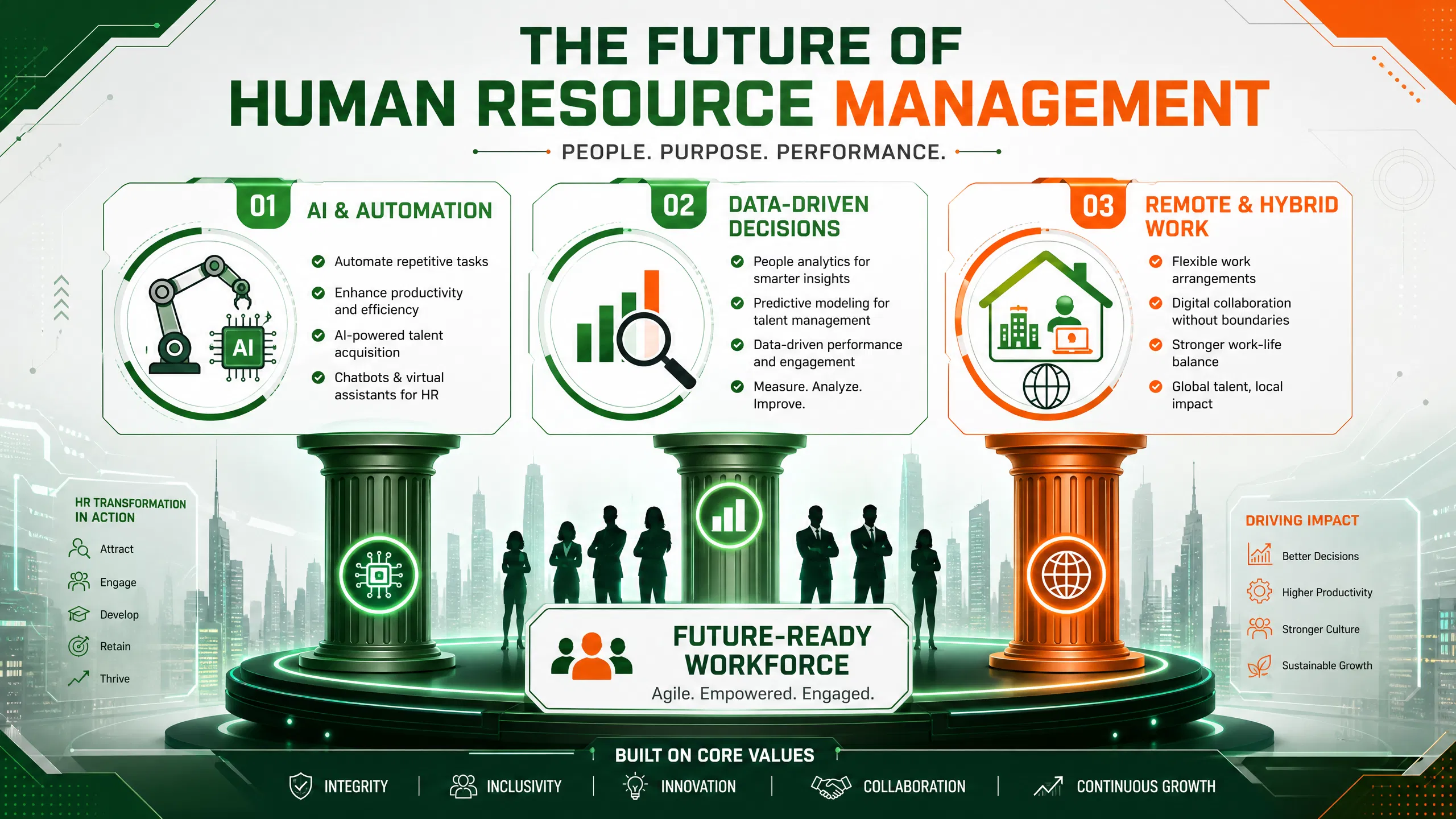
Artificial intelligence is reshaping HR operations. AI-powered systems can assist with recruitment, workforce planning, employee support, and predictive analytics. However, human judgment remains essential when making decisions that affect people and organizational culture.
Emerging HR roles increasingly require expertise in analytics, AI governance, and digital workforce management. Organizations are creating new positions focused on responsible AI implementation and employee experience enhancement.
Data-Driven Decision Making
Data analytics enables HR professionals to make informed decisions regarding recruitment, retention, engagement, and workforce planning. By analyzing workforce trends, organizations can identify potential challenges before they become significant issues.
The growing adoption of workforce analytics reflects the broader shift toward evidence-based management practices. HR leaders increasingly rely on data to guide strategic initiatives and improve organizational outcomes.
Remote and Hybrid Workforce Management
Remote and hybrid work models have fundamentally changed workforce management. HR professionals must address communication challenges, employee engagement concerns, and performance monitoring in distributed work environments.
Successful hybrid workforce management requires clear policies, effective technology, and strong leadership. HR departments play a central role in creating frameworks that support productivity while maintaining employee well-being.
Organizations looking to strengthen leadership and remote workforce capabilities often benefit from professional courses such as those offered through Leadership and Management Training Programs at Forelite Training Centre.
Challenges Facing Human Resource Managers
Skills Gaps and Workforce Readiness
One of the most pressing challenges facing HR professionals is addressing workforce skill gaps. Rapid technological advancements continue to reshape job requirements across industries.
Employers increasingly seek candidates with digital fluency, adaptability, and problem-solving capabilities. Consequently, HR leaders must develop learning strategies that support continuous workforce development and future readiness.
Employee Engagement and Well-Being
Employee engagement directly influences productivity, retention, and organizational performance. Yet maintaining engagement remains challenging in modern workplaces.
Factors such as workload pressures, hybrid work arrangements, and economic uncertainty can affect employee morale. HR professionals must implement initiatives that promote recognition, communication, wellness, and career development.
Creating supportive workplace environments benefits both employees and organizations by fostering trust, motivation, and long-term commitment.
Best Practices for Effective Human Resource Management
Developing a Learning Culture
Organizations that prioritize learning gain a significant competitive advantage. Continuous development helps employees remain adaptable while supporting innovation and growth.
A strong learning culture encourages curiosity, experimentation, and knowledge sharing. HR professionals can foster this culture by providing access to training resources, mentorship programs, and career development opportunities.
Professional development solutions available through Forelite Training Courses enable organizations to strengthen workforce capabilities and address evolving industry demands.
Leveraging Professional Training and HR Development
HR professionals themselves require continuous development to remain effective. Emerging technologies, changing regulations, and evolving workforce expectations demand ongoing learning.
Training programs focused on leadership, strategic HR, workforce analytics, and organizational development help HR teams stay ahead of industry trends. Businesses seeking digital transformation support alongside workforce development may also benefit from services offered by Nexera Digital Solutions, which assists organizations in leveraging technology to improve operational performance.
Organizations can also explore specialized learning opportunities through Professional Development and Capacity Building Programs at Forelite Training Centre to equip teams with future-ready skills.
| HR Function | Primary Objective | Business Impact |
|---|---|---|
| Recruitment | Attract top talent | Improved workforce quality |
| Training & Development | Enhance skills | Increased productivity |
| Performance Management | Improve performance | Better organizational outcomes |
| Employee Relations | Foster workplace harmony | Higher engagement |
| Compensation & Benefits | Retain talent | Reduced turnover |
| Workforce Analytics | Support decision-making | Strategic workforce planning |
Conclusion
Human Resource Management has evolved into one of the most strategic functions within modern organizations. Today’s HR professionals are responsible for far more than administrative tasks. They shape workplace culture, develop talent, drive employee engagement, and support organizational transformation. As technology continues to reshape the workplace, HR leaders must balance innovation with human-centered management practices.
The future of HR will be defined by continuous learning, data-driven decision-making, and responsible technology adoption. Organizations that invest in employee development, embrace workforce analytics, and prioritize employee well-being will be better positioned to attract and retain top talent. Ultimately, effective human resource management remains the foundation of sustainable business success because organizations achieve their goals through the people who power them.
FAQs
1. What is the primary purpose of Human Resource Management?
The primary purpose of HRM is to manage employees effectively by recruiting, developing, motivating, and retaining talent while aligning workforce capabilities with organizational objectives.
2. How has technology changed Human Resource Management?
Technology has automated administrative tasks, improved recruitment processes, enabled workforce analytics, and enhanced employee experiences through digital HR platforms and AI-powered solutions.
3. Why is employee training important in HRM?
Training helps employees acquire new skills, adapt to changing workplace demands, improve productivity, and support organizational growth.
4. What are the biggest challenges facing HR professionals today?
Major challenges include addressing skills gaps, improving employee engagement, managing hybrid workforces, implementing AI responsibly, and retaining top talent.
5. How can organizations improve employee retention?
Organizations can improve retention by offering competitive compensation, career development opportunities, positive workplace cultures, recognition programs, and supportive leadership.