

The Career Development Imperative: What Africa and MENA Leaders Must Invest In Before 2027

Career development courses in 2026 are the single most defensible investment a corporate or public sector leader can make, they are no longer optional, they are structural. The highest-performing organisations across Africa and the MENA region are embedding formal learning journeys that address technical mastery, strategic leadership, and human-centric wellness simultaneously. For HR directors and decision-makers in Nairobi, Dubai, Accra, and beyond, the return on this investment is measurable, regulatory-aligned, and compounding.
Why Are Career Development Courses the Defining Investment of 2026?
The answer is structural. Not motivational.
Across Sub-Saharan Africa and the MENA region, organisations face an extraordinary convergence: rapid digitisation, post-pandemic talent volatility, tightening regulatory environments, and the accelerating integration of agentic AI into routine decision-making.
Skills that were adequate in 2022 are insufficient today.
The global corporate leadership training market, valued at approximately $42.92 billion in 2026, is projected to reach $73.67 billion by 2034, growing at a CAGR of 6.99%. The organisations investing now are building structural advantages that will be very difficult to close later.
Most institutions still treat training as a budget line. The ones that treat it as a strategic asset are widening the gap every quarter.
Kenya’s Public Officers Leadership Development (POLD) Regulations 2023 now codify continuous professional development as a governance requirement for public sector officers. Institutions that embed structured learning into their annual planning cycles are not simply being progressive. They are fulfilling statutory obligations and building the institutional trust that comes with visible compliance.
The urgency is not abstract. It is documented, regulated, and accelerating.

What Does a “Whole Professional” Actually Look Like?
Most training providers address one dimension of professional development. Occasionally two. The differentiation lies in holding all three simultaneously.
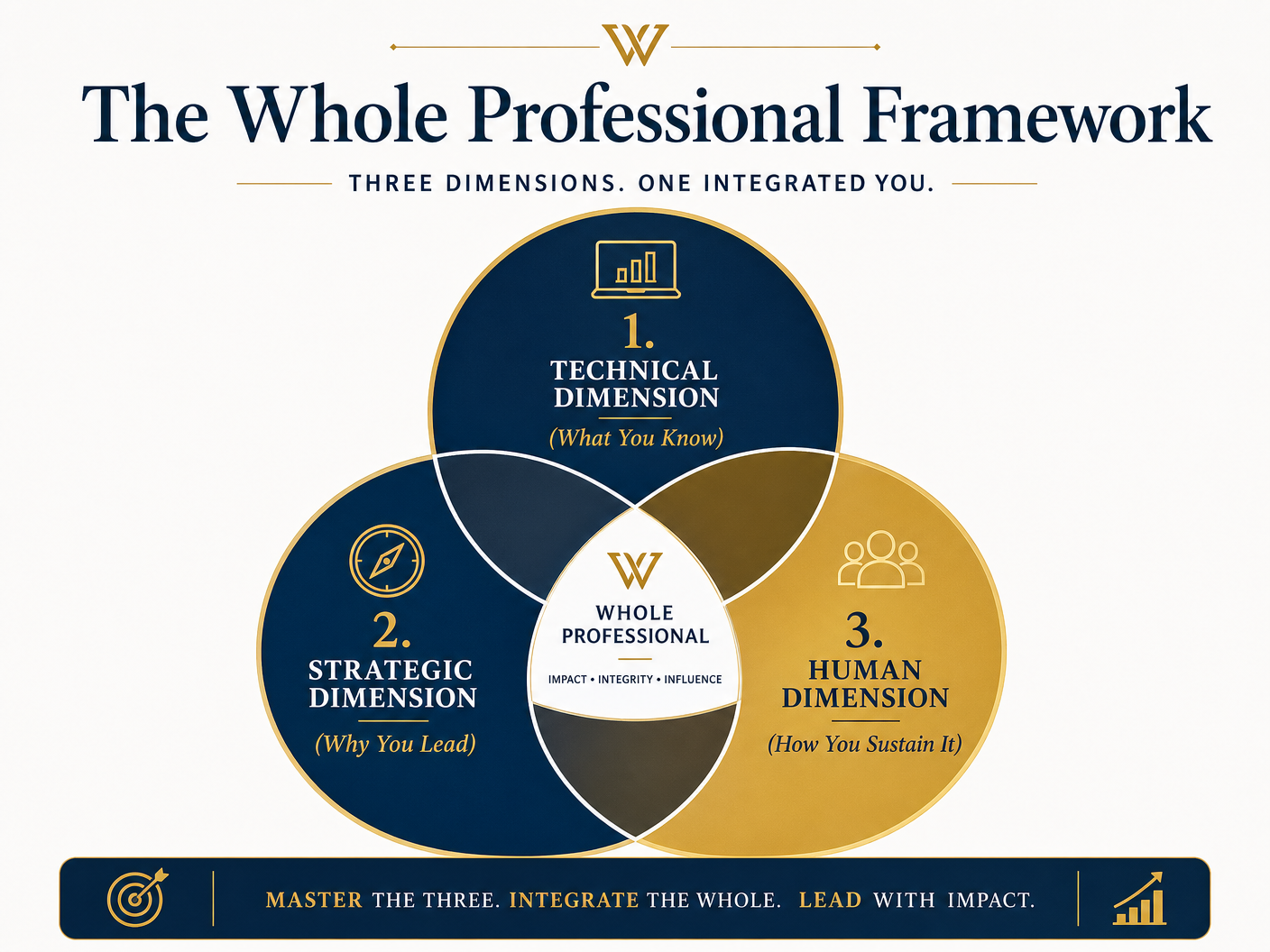
At ForElite, we organise career development around three inseparable pillars what we call the Whole Professional Framework.
The Technical Dimension: What You Know
This is the credentialed layer. Domain expertise. Digital literacy. Regulatory knowledge. Project and financial management competencies.
A finance director must understand IPSAS standards. A public sector manager must navigate procurement regulations. A programme officer must be fluent in Monitoring, Evaluation and Learning (MEL) methodology.
Technical skill is the entry requirement. It is never sufficient on its own.
The Strategic Dimension: Why You Lead
This is the executive layer. Visioning. Stakeholder influence. Cross-cultural leadership. Long-term scenario planning.
Effective leadership development programs yield an average ROI of $7 for every $1 invested. The return is not accidental. It comes from leaders who understand the why behind their decisions and can bring others with them.
ForElite’s Leadership and Executive Coaching programmes are specifically designed to develop this strategic layer, grounded in real-world case studies from African and MENA institutional contexts, not imported Western frameworks applied without adaptation.
The Human Dimension: How You Sustain It
This is the durable layer. Psychological safety. Occupational wellbeing. Resilience under pressure. Ethical decision-making.
A finance director who masters technical standards but cannot navigate board dynamics will plateau. A public sector manager who leads with charisma but ignores team burnout will eventually fail retention benchmarks.
The human dimension is where most organisations under-invest and where the compounding costs are most severe. Burnout, attrition, and presenteeism cost African enterprises billions in lost productivity annually. These are not soft metrics. They are measurable in absenteeism rates, engagement scores, and healthcare utilisation data.
How Can Africa and MENA Organisations Scale Career Development Responsibly?
The question in 2026 is no longer whether to invest. It is how to sequence the investment intelligently.
Three principles guide responsible scaling.
Start With the Regulatory Anchor
Any serious development programme in the East African public sector must be legible to the POLD Regulations 2023. These require demonstrable, documented competency development for officers at all senior grades.
Similarly, organisations pursuing AU Agenda 2063 alignment particularly in infrastructure, education, or public financial management, need learning journeys that map explicitly to Aspiration 6 goals around people-centred governance.
This is not box-ticking. Regulatory alignment creates a shared vocabulary between HR, the C-suite, and external oversight bodies. It makes the case for training budget renewal self-evident and it protects organisations during audits, evaluations, and donor reviews.
Sequence From Cohort to Culture
Individual training interventions rarely stick. The most effective HR directors think in cohorts.
Start with 20 to 40 mid-senior leaders trained together. Return them to their teams as practitioners of new behaviours. Over 18 months, this cascades into measurable culture shift.
ForElite’s Global Leadership programme is designed for exactly this cohort model, cross-cultural communication, ethical decision-making, and stakeholder management delivered in five intensive days, with structured follow-through frameworks built in.
Blend Formats Deliberately
The 2026 learning environment is neither purely in-person nor purely digital.
The most effective programmes combine residential intensives for relationship depth, virtual synchronous sessions for continuity, and asynchronous micro-learning for reinforcement. AI-powered personalisation is increasingly embedded into these journeys, adapting content sequencing in real time based on individual assessment data.

Which Career Development Courses Deliver the Highest Return in 2026?
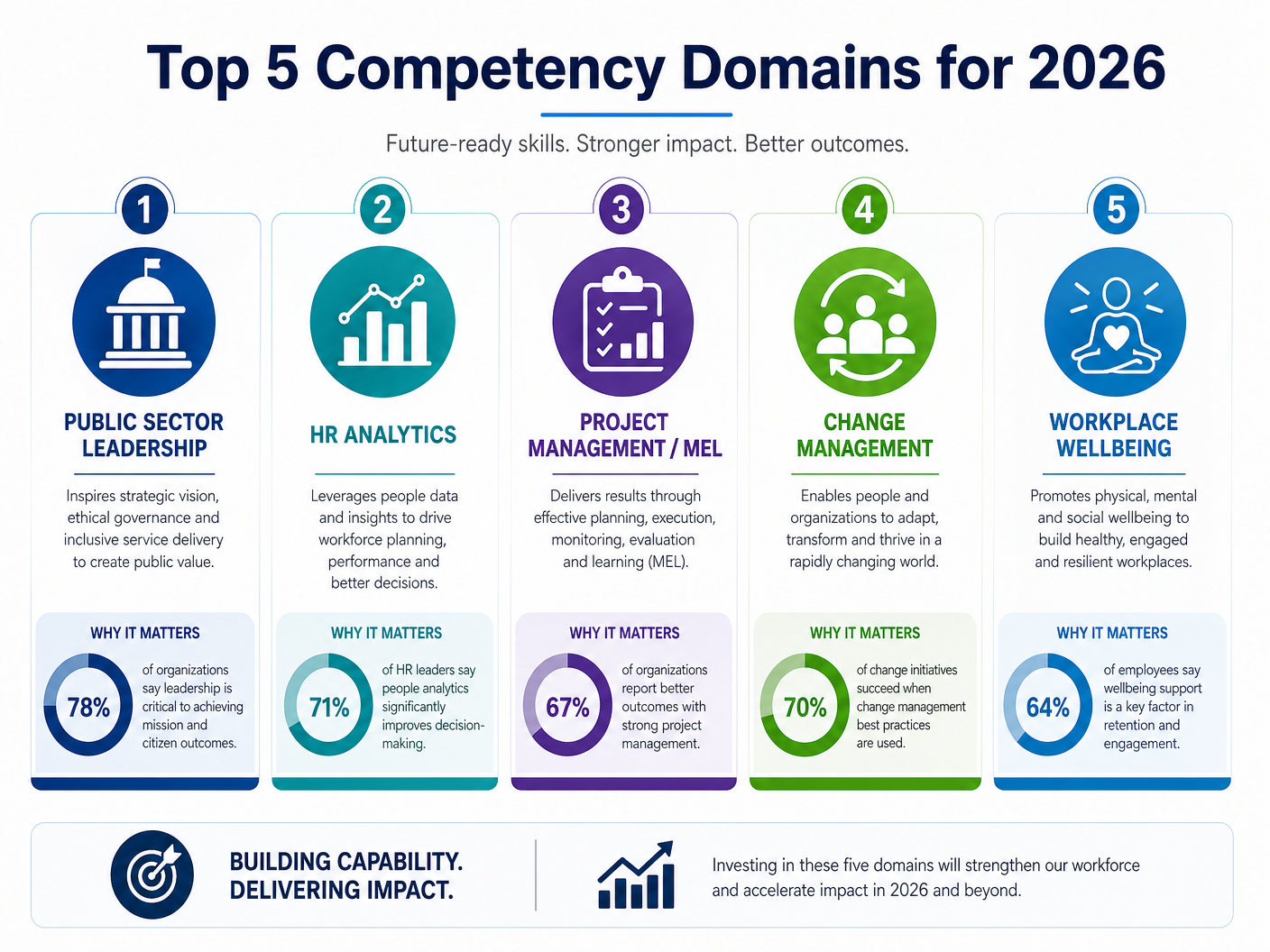
Not all programmes are equal. The highest-return investments this year cluster around five competency domains, each mapping to a specific pressure point that African and MENA organisations are navigating right now.
Public Sector Leadership and Governance
With devolution expanding across East Africa and governance frameworks tightening under donor scrutiny, demand for public sector leadership short courses has never been stronger.
Programmes covering strategic planning, public financial management, and service delivery transformation are seeing the sharpest enrolment growth. The driver is simple: leaders who can demonstrate governance competency are protecting their organisations at audit, at review, and at renewal.
HR Analytics and Digital HR Systems
People data is now a boardroom conversation.
HR directors who cannot speak the language of analytics, workforce forecasting, turnover cost modelling, skills gap mapping are increasingly marginalised in budget discussions. Competency in digital HR systems is becoming a baseline expectation, not a differentiator.
Project Management and MEL
For development sector organisations, NGOs, and government ministries managing donor-funded programmes, certification in project management and Monitoring, Evaluation and Learning is practically mandatory.
Funders are scrutinising implementation quality more rigorously than ever. Beyond acquiring technical proficiency in planning, scheduling, budgeting, and risk management, these programmes foster crucial soft skills; leadership, communication, and problem-solving that significantly boost career trajectory by opening doors to leadership roles and higher earning potential.
Change Management and Organisational Development
Post-merger integration. Digital transformation rollouts. Hybrid work restructuring.
The volume of organisational change that leaders must absorb in 2026 is extraordinary. Leaders without structured change management frameworks are improvising through crises that have known, teachable solutions. This is preventable incompetence and it is expensive.
Workplace Wellbeing and Occupational Safety
This is where most organisations under-invest and over-suffer.
Wellbeing is not a soft metric. It is a hard one. Measurable in absenteeism rates, engagement scores, and healthcare utilisation data. Organisations that invest in structured wellbeing programmes consistently outperform peers on productivity benchmarks over a 24-month horizon.
What Should an HR Director Ask Before Choosing a Training Partner?
The market is crowded. Choosing the right institutional partner requires discipline. Ask five questions before signing any engagement.
Does the provider design curricula from current practice? The 2026 skills landscape moves at a pace that makes pre-2022 content structurally obsolete in several domains. Ask for evidence of curriculum review cycles.
Can they demonstrate cohort-level outcomes? Satisfaction scores tell you very little. Learning transfer metrics, 90-day behavioural assessments, and organisational performance correlations tell you everything.
Is the faculty drawn from active practitioners? Academic credentials matter. But applied expertise, leaders who have managed real reform, navigated real crises, worked inside the institutions your people work inside, produces different and more durable learning.
How does the programme account for the human dimension? Training that ignores the person in the professional will yield fragile, short-lived behaviour change. Wellbeing and resilience frameworks should be embedded, not bolted on.
What is the post-programme infrastructure? The learning does not end on day five. Follow-through coaching, peer networks, and action-learning projects determine whether insight becomes institutional muscle.
Graduates of advanced leadership programmes are frequently fast-tracked for promotions and board appointments, signalling to boards and investors that an executive has invested in continuous development and possesses contemporary leadership frameworks.

The Strategic Bottom Line for 2026
Career development is not a human resources function. It is a strategic leadership function.
The organisations that will lead their sectors across Africa and the MENA region in the next decade are already identifying their next cohort of leaders. They are designing the learning architecture to prepare them. They are doing it now not when the skills gap becomes a crisis.
The regulatory environment is tightening. The talent market is competitive. The expectations of boards, donors, and citizens are rising simultaneously.
Structured, outcome-oriented career development courses are not a cost in this environment. They are the most defensible capital expenditure an organisation can make.
The question is not whether your organisation can afford to invest in development. It is whether you can afford the compounding cost of not investing.

Ready to Develop Your Next Generation of Leaders?
Explore ForElite Training Institute’s full portfolio of career development programmes from public sector governance to executive coaching, HR analytics to global leadership at forelitetraining.com.
Browse our Senior Management Course guide for a structured entry point into leadership development planning for 2026.
ForElite Training Institute is a global institutional capacity-building and EdTech partner that empowers organisations and professionals with transformative, high-impact learning. Headquartered in Nairobi with a global faculty network.



The distinction that career development has shifted from being optional to a structural necessity resonates deeply, especially given the pace of change in the Africa and MENA regions. Viewing these courses as the most ‘defensible investment’ truly reframes them from a simple training expense to a critical component of organizational resilience. Focusing on this mindset before 2027 seems essential for leaders aiming to navigate the upcoming global shifts effectively.
The article’s emphasis on treating career development as a structural necessity rather than an optional perk really resonates, especially given the unique speed of change in the Africa and MENA markets. By framing upskilling as the ‘single most defensible investment,’ it shifts the narrative from simply ‘getting certified’ to fundamentally rebuilding organizational resilience. I’m particularly intrigued by the implications of this for public sector leaders who are often the slowest to adapt to such rapid shifts.