
The Ultimate Guide to Climate Finance Courses: Boost Your Career and Drive Sustainability in 2026

Climate change presents an unprecedented challenge, demanding innovative solutions across all sectors. At the forefront of this global effort is climate finance, a critical mechanism for funding initiatives that mitigate and adapt to environmental shifts. As the world accelerates its transition to a sustainable economy, the demand for professionals skilled in climate finance is skyrocketing. This comprehensive guide explores the evolving landscape of climate finance education, offering insights into top courses, career opportunities, and emerging trends for 2026, ensuring you are equipped to make a significant impact.
Understanding the Climate Finance Ecosystem
Climate finance encompasses local, national, and transnational financing, drawn from public, private, and alternative sources, to support mitigation and adaptation actions that address climate change. It is the financial engine driving the shift towards a low-carbon, climate-resilient future. This involves investments in renewable energy, sustainable agriculture, green infrastructure, and climate-resilient development projects. The complexity of this field necessitates a deep understanding of financial instruments, risk management, and policy frameworks.
The Interconnected Web of Climate Finance
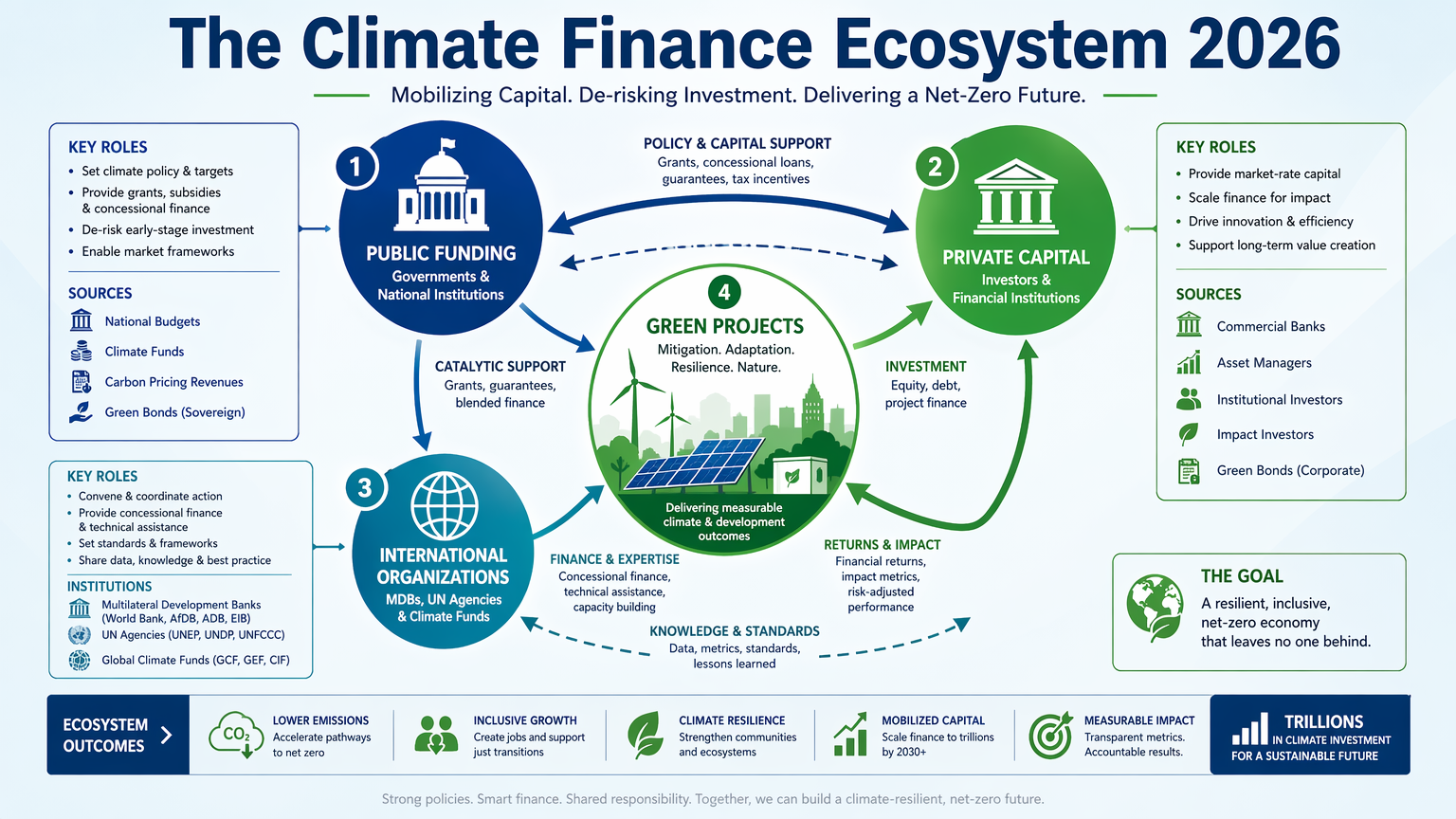
The climate finance ecosystem is a dynamic interplay of various stakeholders, each playing a crucial role in mobilizing capital towards green initiatives. Public funding often provides the foundational capital and policy incentives, while private capital scales these efforts through diverse investment vehicles. International organizations facilitate cross-border collaboration and capacity building, all converging to support green projects that deliver measurable climate and development impacts.
Why Pursue a Career in Climate Finance?
The urgency of climate action, coupled with significant global investment targets—such as the estimated US$1.3 trillion annual target by 2035 for climate finance —has created a robust and expanding job market. A career in climate finance offers not only the opportunity for substantial professional growth but also the profound satisfaction of contributing to a sustainable future. Professionals in this field are instrumental in shaping investment strategies that balance profitability with environmental stewardship.
Surging Demand for Specialized Skills
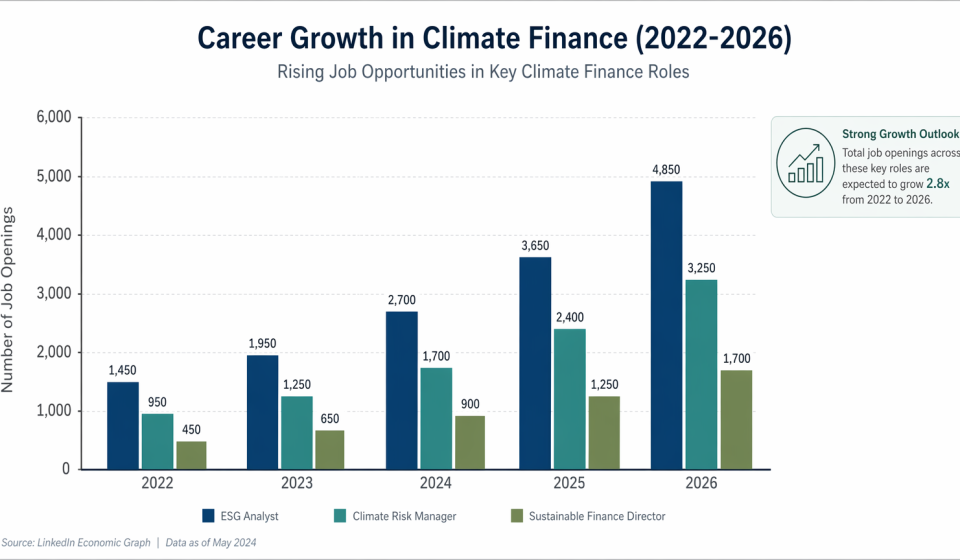
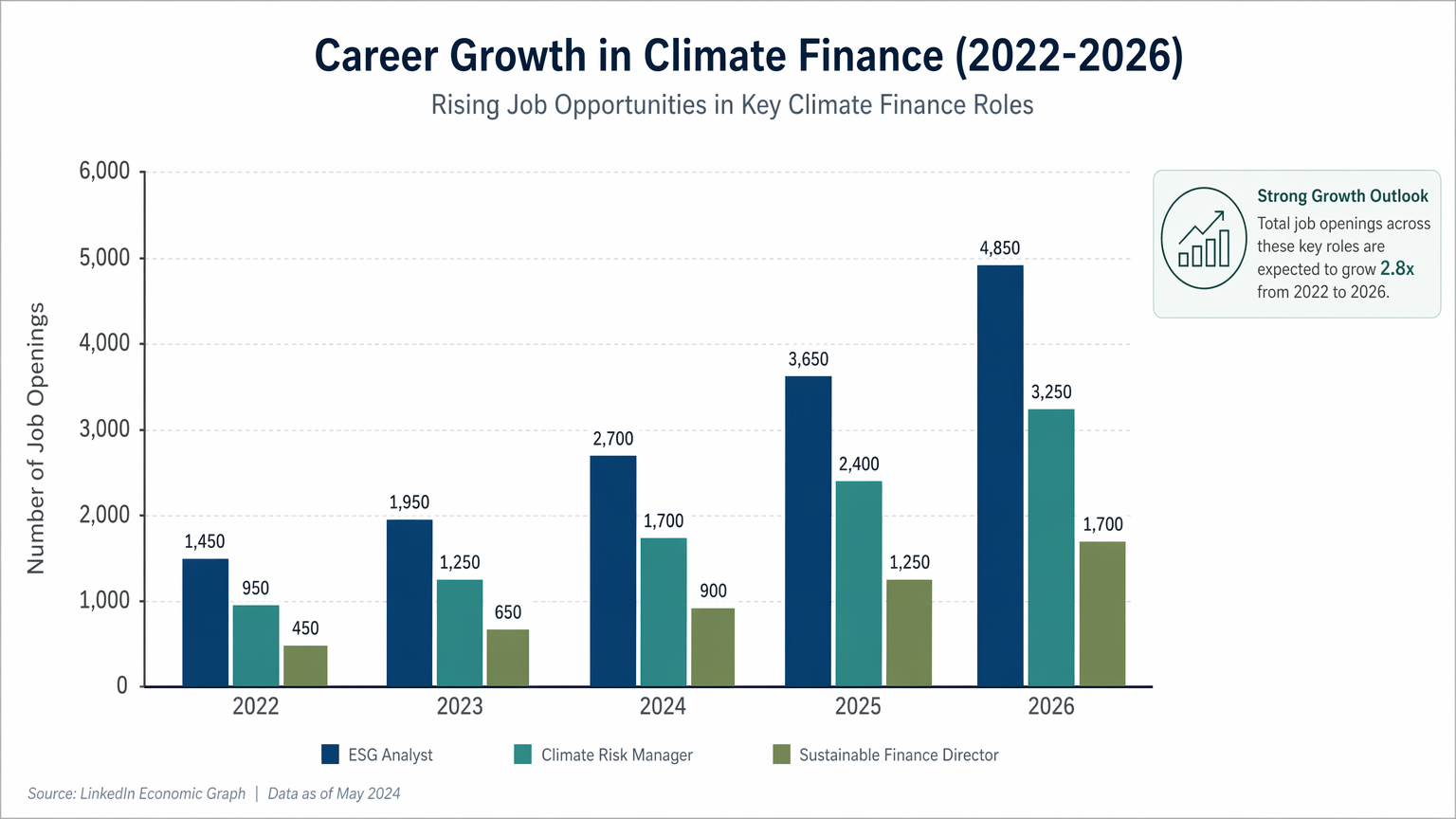
The demand for climate finance professionals has seen remarkable growth. Roles such as ESG Analyst, Climate Risk Manager, and Sustainable Finance Director are becoming increasingly vital across financial institutions, corporations, and governmental bodies. These roles require a unique blend of financial acumen, environmental understanding, and strategic thinking. Acquiring specialized knowledge through dedicated courses can significantly enhance your employability and career trajectory.
Core Competencies Covered in Top Climate Finance Courses
To excel in climate finance, a diverse skill set is essential. Leading courses are designed to equip students with the theoretical knowledge and practical tools needed to navigate this complex domain. Key areas of study typically include environmental economics, financial modeling for green projects, risk management in the context of climate change, and the intricacies of sustainable investments.
Designing Bankable Climate Projects
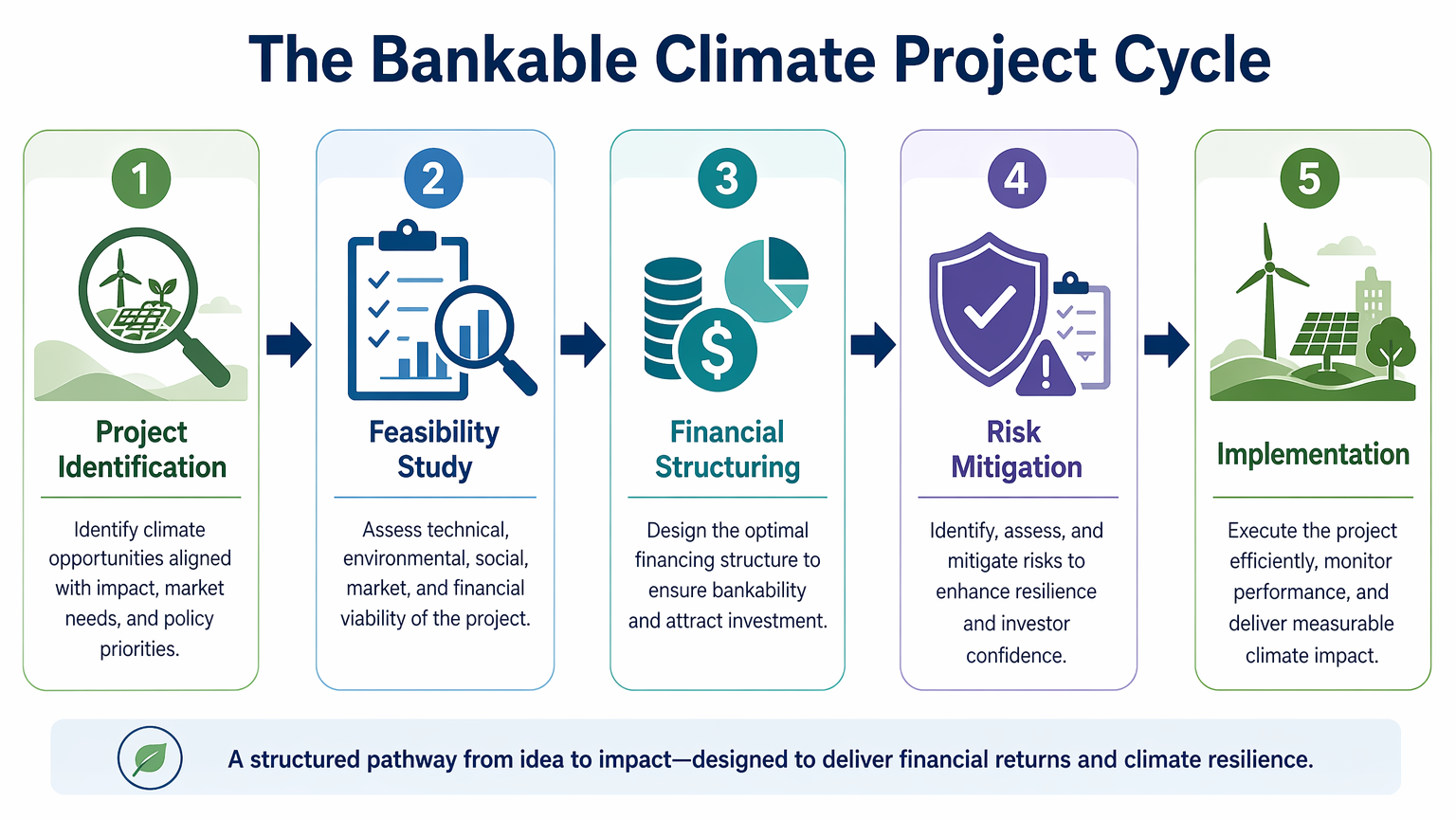
One of the most critical skills in climate finance is the ability to design and structure projects that are not only environmentally sound but also financially viable and attractive to investors. This involves understanding project finance, conducting thorough feasibility studies, and implementing robust risk mitigation strategies. For professionals looking to deepen their expertise in this area, specialized training is invaluable. For instance, the Training on Climate Finance and Sustainable Investment Strategies offered by ForElite Training Institute provides comprehensive insights into funding mechanisms and designing bankable climate projects.
ESG Integration and Sustainable Finance Principles
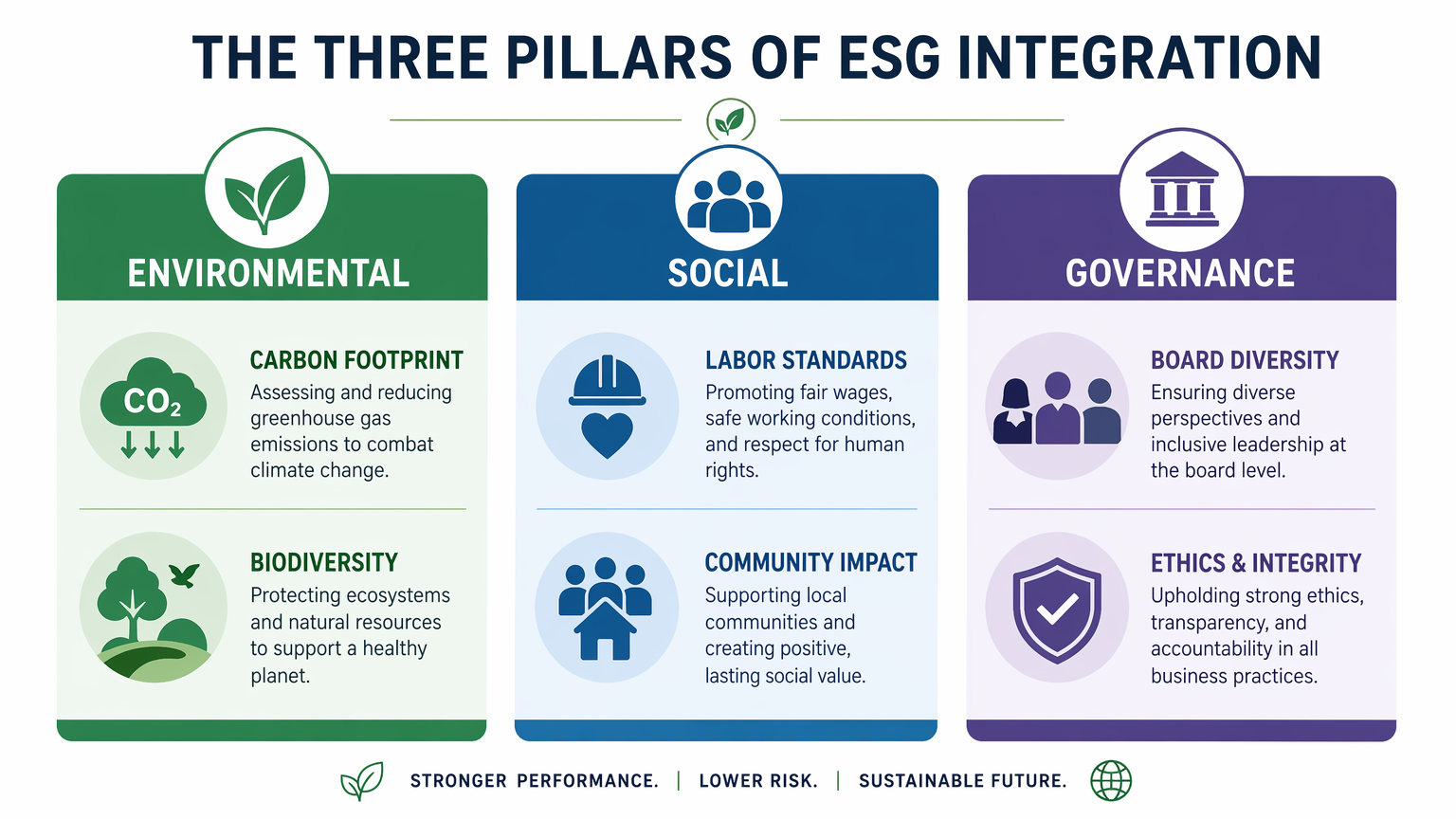
Environmental, Social, and Governance (ESG) factors are now central to investment decision-making. Climate finance courses often delve into the principles of ESG integration, teaching how to assess and incorporate these non-financial factors into investment analysis and portfolio management. Understanding green bonds, impact investing, and other sustainable financial products is crucial for aligning capital with long-term sustainability goals. The Training on Sustainable Finance Principles from ForElite Training Institute is an excellent resource for mastering ESG integration and related concepts.
Navigating Climate Risk and Infrastructure
Climate change introduces a new layer of financial risk, impacting asset values, supply chains, and operational continuity. Professionals must be adept at identifying, assessing, and managing these risks, particularly for critical infrastructure projects. This includes stress-testing portfolios against various climate scenarios and developing resilience strategies. For advanced learning in this domain, consider the Training on Climate Risk Assessment and Management for Critical Infrastructure by ForElite Training Institute.
Legal Frameworks and Climate Litigation
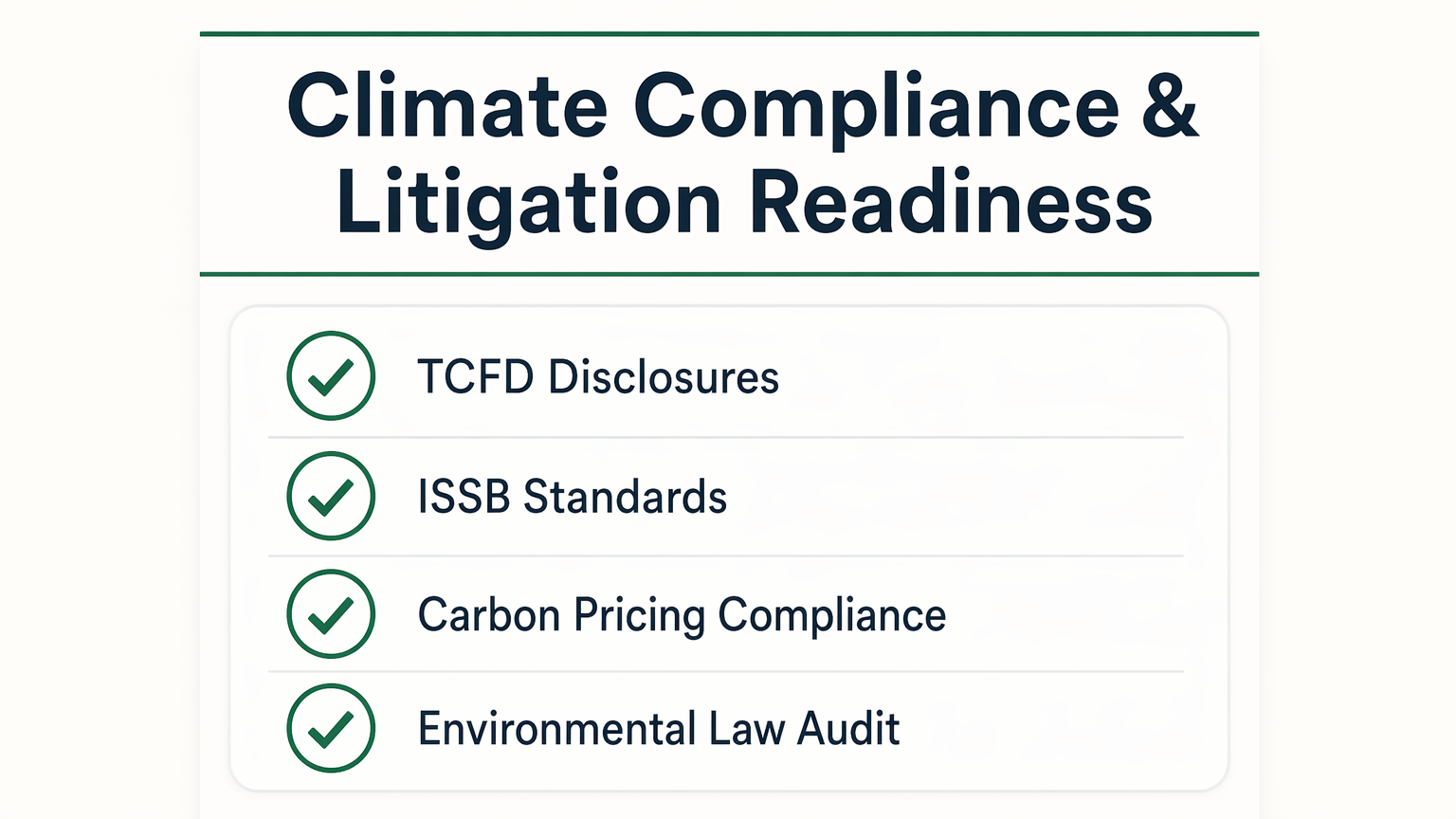
The regulatory landscape surrounding climate change is rapidly evolving, with increasing mandates for climate-related financial disclosures (e.g., TCFD, ISSB) and a growing trend of climate litigation. Understanding environmental law, international agreements like the Paris Agreement, and the legal implications of climate-related decisions is paramount. Courses that cover these legal aspects provide a crucial advantage. The Training on Environmental Law and Climate Litigation offered by ForElite Training Institute can equip you with the necessary expertise.
Emerging Trends in Climate Finance Education for 2026
The field of climate finance is dynamic, with new trends constantly shaping its educational offerings. For 2026, several key areas are gaining prominence:
•Adaptation Finance: A growing focus on funding projects that help communities and ecosystems adapt to the unavoidable impacts of climate change, moving beyond just mitigation efforts.
•AI and Fintech in Climate Finance: The application of artificial intelligence for climate risk modeling, ESG data analysis, and the use of blockchain for enhanced transparency in carbon markets.
•Nature-Based Solutions (NbS): Increased emphasis on financing biodiversity conservation and ecosystem restoration projects as critical components of climate action.
•Climate Justice: Integrating social equity considerations into financial decisions to ensure that climate solutions benefit all segments of society, particularly vulnerable populations.
These trends highlight the interdisciplinary nature of climate finance and the continuous need for professionals to update their skills and knowledge.
Frequently Asked Questions (FAQs)
1. What are the prerequisites for enrolling in a climate finance course?
Most climate finance courses require a foundational understanding of finance, economics, or environmental science. For advanced certifications, a bachelor’s degree in a related field or several years of professional experience in finance or sustainability is often preferred.
2. How long does it take to complete a climate finance certification?
The duration varies significantly based on the program’s depth. Short-term professional workshops or online modules can be completed in 4 to 8 weeks, while comprehensive certifications may take 3 to 6 months of part-time study.
3. Are climate finance courses recognized by global financial institutions?
Yes, certifications from reputable organizations like the CFA Institute, GARP, and specialized training centers like ForElite Training Institute are highly regarded as financial institutions actively seek candidates to manage ESG risks.
4. Can I transition from a traditional finance role to climate finance?
Absolutely. Traditional financial skills—such as risk assessment and financial modeling—are the bedrock of climate finance. Specialized courses help you apply these skills to environmental contexts like carbon pricing and green bonds.
5. What is the difference between ESG investing and climate finance?
ESG is a broader framework used to evaluate a company’s sustainability and ethical impact. Climate finance is a specific subset of the “E” in ESG, focusing specifically on the mobilization of capital to address climate change.
6. What kind of salary can I expect after completing a climate finance course?
Salaries are competitive, with entry-level analysts earning between $70,000 and $90,000, while senior managers and ESG directors can earn upwards of $150,000 to $200,000, depending on the region.
Conclusion: Your Path to a Sustainable Future
Enrolling in a climate finance course in 2026 is more than just an educational pursuit; it’s an investment in a future-proof career and a commitment to global sustainability. By acquiring specialized skills in areas like bankable project design, ESG integration, climate risk management, and environmental law, you position yourself at the forefront of a rapidly expanding and impactful field. The opportunities are vast, and the need for skilled professionals is urgent. Take the step today to boost your career and drive meaningful change towards a more sustainable world.



This guide really highlights how climate finance is becoming a cornerstone for driving sustainable development, especially as we look toward 2026 and beyond. It’s encouraging to see the growing emphasis on equipping professionals with the right tools and knowledge to tackle climate-related challenges. I particularly appreciate the focus on practical career-building steps, which makes the content not just informative but also actionable.
This guide really highlights how climate finance is becoming a cornerstone for driving sustainable development, especially as we look toward 2026 and beyond. It’s encouraging to see the growing emphasis on equipping professionals with the right tools and knowledge to tackle climate-related challenges. The practical insights shared here will definitely help anyone looking to build a career in this space.