

Policy development plays a critical role in shaping how organizations, governments, and institutions operate. Strong policies provide direction, improve accountability, reduce risks, and ensure consistency across operations. Whether you manage a business, nonprofit, educational institution, or government agency, effective policy development helps create structure and supports long-term organizational success.
In today’s fast-changing environment, organizations must develop policies that are flexible, inclusive, compliant, and aligned with strategic goals. From governance frameworks to risk management procedures, policy development impacts every part of an organization.
This comprehensive guide explores the importance of policy development, the step-by-step process, common challenges, and practical strategies for creating effective policies that drive sustainable growth and operational excellence.
What Is Policy Development?
Policy development refers to the structured process of creating guidelines, rules, procedures, and frameworks that govern organizational activities and decision-making. Policies establish expectations, responsibilities, and standards for employees, departments, stakeholders, and leadership teams.
Effective policy development involves:
- Identifying organizational needs
- Conducting research and analysis
- Consulting stakeholders
- Drafting policy documents
- Implementing procedures
- Monitoring performance and compliance
Policies can exist in both public and private sectors and may address areas such as governance, finance, ethics, compliance, procurement, human resources, environmental management, and technology use.
Organizations that invest in policy development often experience improved efficiency, stronger accountability, and reduced legal or operational risks.
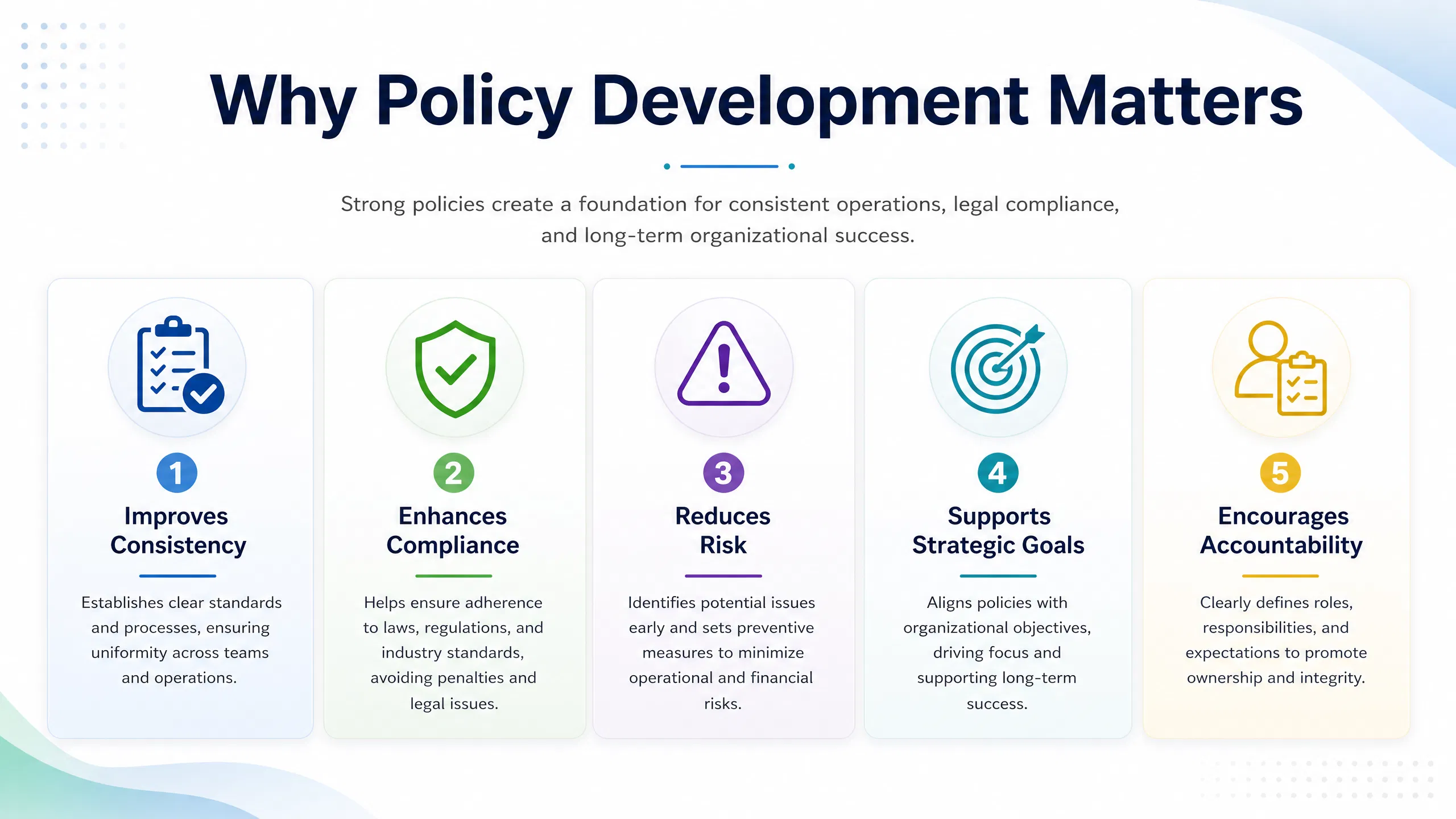
Why Policy Development Matters
Policy development is more than creating documents. It establishes the foundation for organizational culture, decision-making, and accountability.
1. Improves Organizational Consistency
Policies ensure that employees and departments follow standardized procedures. This consistency reduces confusion and improves operational efficiency.
2. Enhances Compliance
Well-developed policies help organizations comply with laws, regulations, and industry standards.
3. Reduces Risk
Policies provide safeguards against legal, financial, operational, and reputational risks.
4. Supports Strategic Goals
Strong policies align organizational operations with long-term objectives and institutional priorities.
5. Encourages Accountability
Clear policies define responsibilities and expectations, making it easier to measure performance and accountability.
Organizations seeking professional training on governance and policy frameworks can explore resources such as ForElite Training Institute.
Key Principles of Effective Policy Development
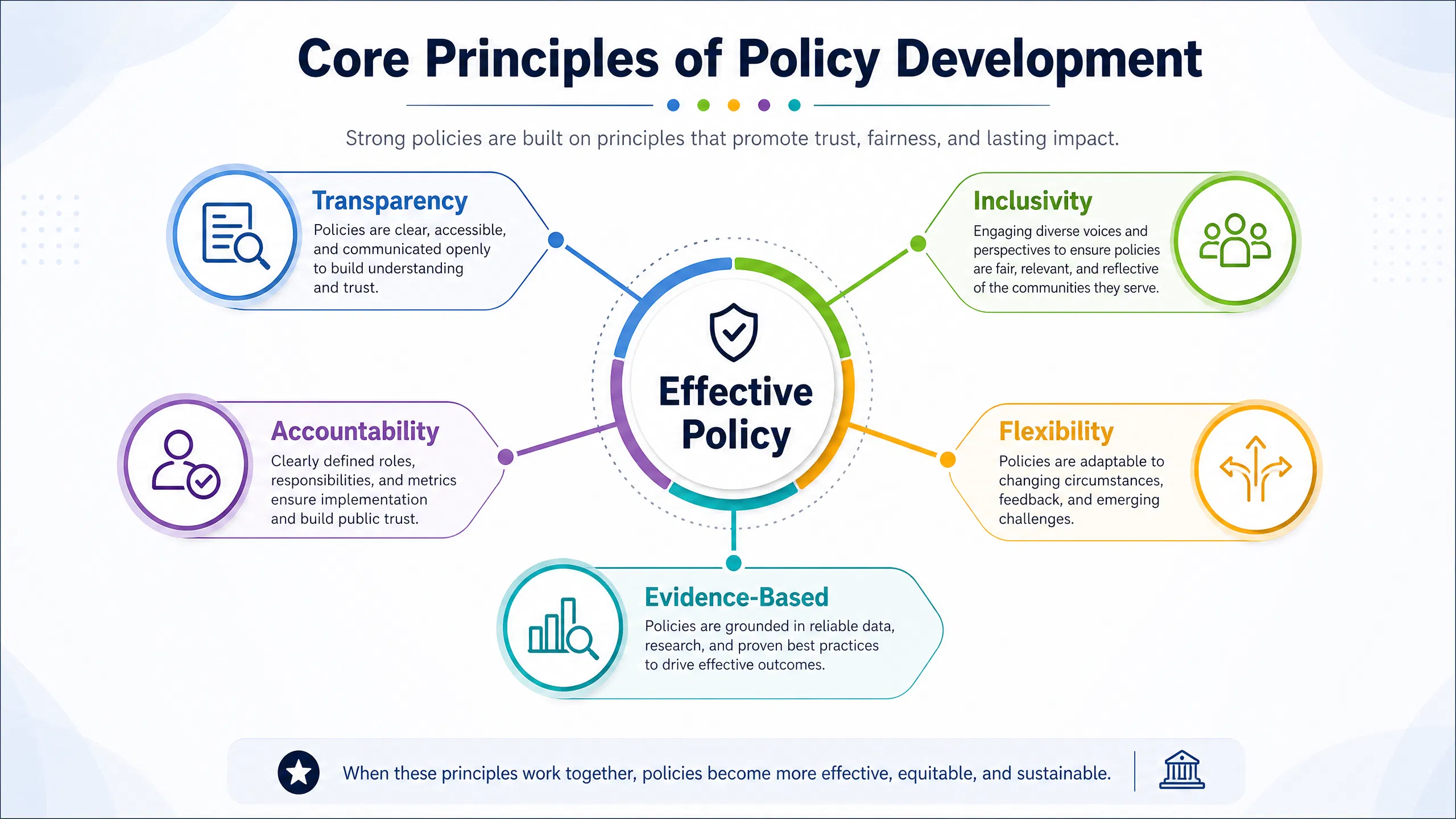
Successful policy development follows several core principles.
Transparency
Policies should be clear, accessible, and understandable to all stakeholders.
Inclusivity
Stakeholder engagement ensures policies reflect diverse perspectives and practical realities.
Accountability
Policies must define roles, responsibilities, and reporting mechanisms.
Flexibility
Good policies adapt to changing organizational and regulatory environments.
Evidence-Based Decision Making
Data and research should inform policy design and implementation.
Professionals interested in strengthening governance capabilities may benefit from Training on Strengthening WASH Governance, Policy and Regulatory Frameworks.
Types of Organizational Policies
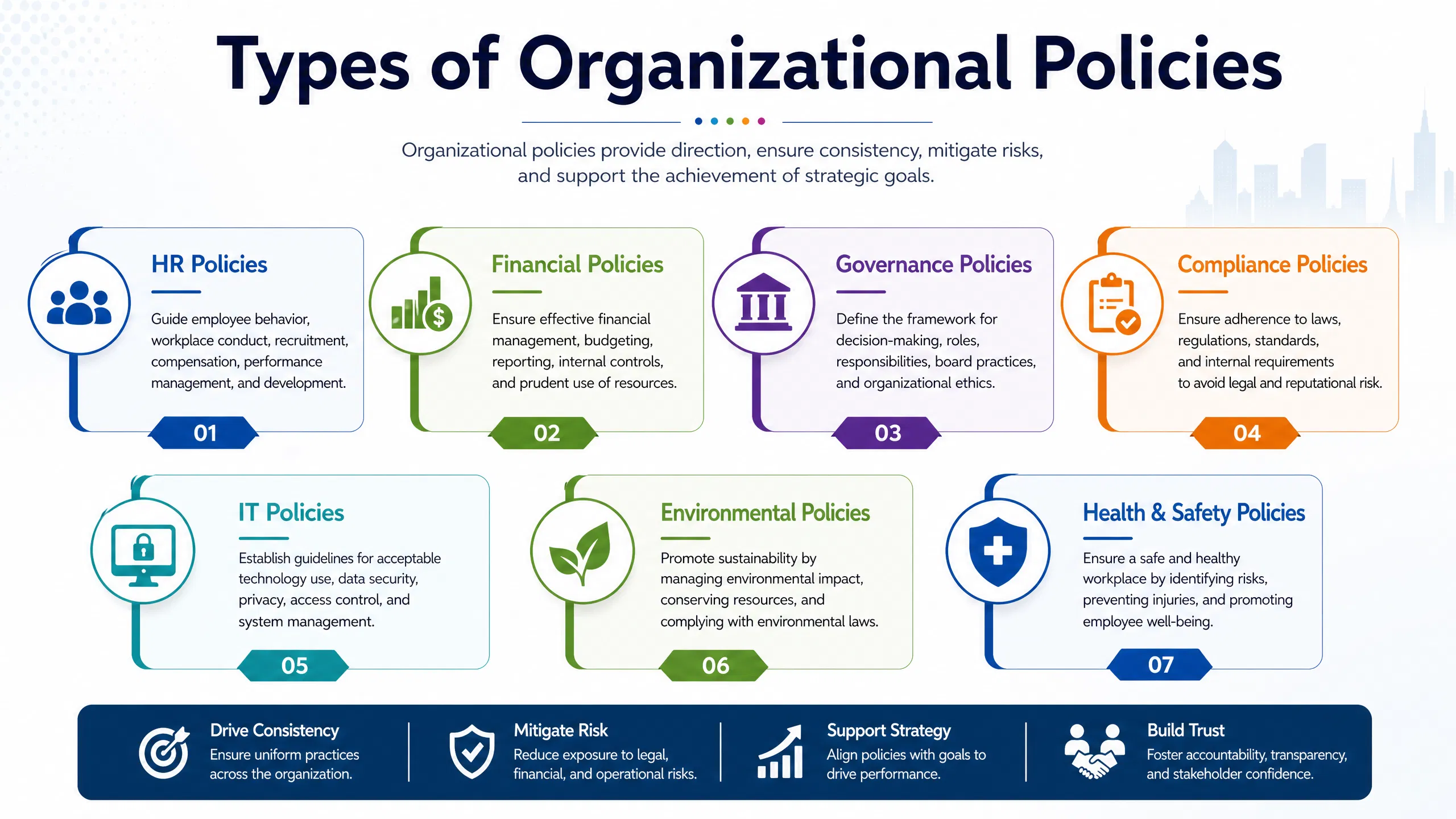
Organizations develop policies across multiple operational areas.
| Policy Type | Purpose |
|---|---|
| HR Policies | Employee conduct, recruitment, leave |
| Financial Policies | Budgeting, procurement, audits |
| Governance Policies | Leadership accountability |
| Compliance Policies | Legal and regulatory adherence |
| IT Policies | Cybersecurity and data protection |
| Environmental Policies | Sustainability and compliance |
| Health & Safety Policies | Workplace safety standards |
Each policy category contributes to organizational effectiveness and operational integrity.
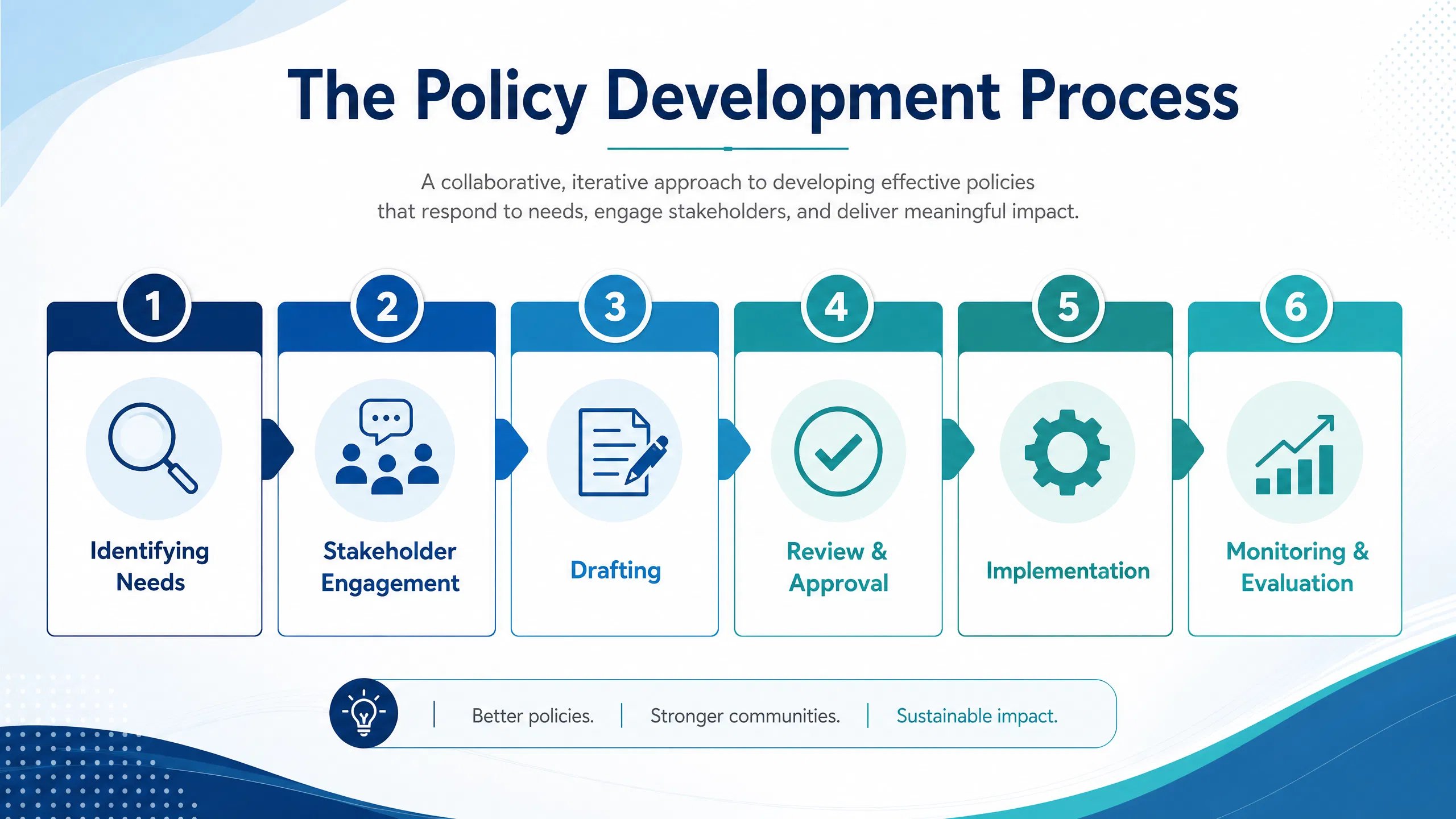
The Policy Development Process
A structured policy development process increases effectiveness and implementation success.
Identifying Organizational Needs
The first step involves identifying gaps, risks, and operational challenges.
Organizations often conduct:
- Risk assessments
- Stakeholder interviews
- Compliance reviews
- Performance evaluations
This stage ensures policies address real organizational needs rather than theoretical concerns.
Stakeholder Engagement
Stakeholder participation strengthens policy acceptance and implementation.
Stakeholders may include:
- Employees
- Managers
- Community representatives
- Regulatory agencies
- External partners
Collaborative policy development promotes transparency and trust.
For organizations focused on stakeholder collaboration and engagement, Training on Participatory Monitoring and Evaluation for Strategic Stakeholder Engagement offers valuable professional insights.
Drafting the Policy
Policy drafting should prioritize:
- Clear language
- Specific responsibilities
- Practical procedures
- Compliance requirements
A standard policy format often includes:
- Purpose
- Scope
- Definitions
- Roles and responsibilities
- Procedures
- Monitoring mechanisms
- Review timelines
Reviewing and Approval
Leadership teams and legal experts should review policies before approval.
This stage ensures:
- Legal compliance
- Operational feasibility
- Alignment with strategic objectives
Policy Implementation
Implementation requires more than distributing documents.
Organizations should:
- Conduct staff training
- Communicate expectations
- Provide implementation tools
- Establish reporting channels
Monitoring and Evaluation
Policies must be reviewed regularly to ensure effectiveness.
Monitoring activities may include:
- Compliance audits
- Employee feedback
- Performance indicators
- Risk assessments
Continuous evaluation supports policy improvement and organizational learning.
Organizations seeking expertise in monitoring systems can explore Training on Monitoring and Evaluation for Community-based Projects.
Common Challenges in Policy Development
Despite its importance, policy development presents several challenges.
Resistance to Change
Employees and stakeholders may resist new procedures or governance frameworks.
Poor Communication
Unclear communication can lead to misunderstanding and inconsistent implementation.
Lack of Stakeholder Engagement
Policies developed without consultation often face low adoption rates.
Insufficient Resources
Organizations may lack the financial, technical, or human resources required for implementation.
Outdated Policies
Policies that fail to adapt to changing environments quickly become ineffective.
Best Practices for Policy Development
Organizations can improve policy effectiveness by following proven best practices.
1. Align Policies with Strategic Goals
Policies should directly support organizational objectives and long-term priorities.
2. Use Simple Language
Avoid technical jargon whenever possible.
3. Involve Stakeholders Early
Engagement improves ownership and implementation success.
4. Establish Review Cycles
Policies should be reviewed annually or whenever significant changes occur.
5. Provide Staff Training
Training helps employees understand policy requirements and expectations.
6. Use Data and Analytics
Evidence-based policy development improves decision-making quality.
Organizations looking to strengthen strategic planning capacity may benefit from Training on Strategic Project Planning and Implementation.
Technology and Modern Policy Development
Technology is transforming policy development across industries.
Digital Policy Management Systems
Modern software platforms help organizations:
- Store policy documents
- Track revisions
- Monitor compliance
- Automate approvals
Data Analytics
Analytics improve evidence-based policy decisions and risk assessment.
Artificial Intelligence
AI tools can support:
- Regulatory analysis
- Compliance monitoring
- Policy research
- Workflow automation
Remote Collaboration Tools
Virtual collaboration platforms enable stakeholder engagement across multiple locations.
Professionals interested in data-driven governance can explore Training on Data Driven Decision Making and Strategic Business Intelligence.
Policy Development in Government and NGOs
Governments and nonprofit organizations rely heavily on policy development to deliver services, manage resources, and promote accountability.
Public Sector Policy Development
Government policies often address:
- Economic development
- Healthcare
- Education
- Infrastructure
- Environmental sustainability
Public sector policies typically involve extensive stakeholder consultation and regulatory review.
NGO Policy Development
Nonprofit organizations develop policies related to:
- Program management
- Financial accountability
- Safeguarding
- Community engagement
- Monitoring and evaluation
Strong governance frameworks improve donor confidence and operational transparency.
The Role of Leadership in Policy Development
Leadership significantly influences policy success.
Strategic Direction
Leaders ensure policies align with institutional missions and objectives.
Resource Allocation
Successful implementation requires sufficient staffing, technology, and funding.
Culture Building
Leadership behavior shapes organizational culture and policy compliance.
Decision-Making Support
Leaders must champion policy adoption and continuous improvement.
Administrative professionals seeking leadership and operational management skills may find value in Training on Management Development for Administrative Officers.
Training and Capacity Building for Policy Development
Policy development requires specialized skills in governance, analysis, communication, compliance, and strategic planning.
Essential Skills for Policy Professionals
- Policy analysis
- Stakeholder engagement
- Risk management
- Strategic planning
- Data interpretation
- Communication skills
Benefits of Professional Training
Professional training helps organizations:
- Improve governance structures
- Strengthen compliance systems
- Enhance leadership capabilities
- Build institutional resilience
Training institutions like ForElite Training Institute offer courses covering governance, strategic planning, monitoring and evaluation, and regulatory frameworks.
Future Trends in Policy Development
Policy development continues to evolve alongside technological, economic, and social changes.
Data-Driven Governance
Organizations increasingly rely on analytics for evidence-based policies.
Sustainability Integration
Environmental, social, and governance (ESG) considerations are becoming central to policy design.
Digital Transformation
Digital systems are streamlining policy management and compliance monitoring.
Inclusive Governance
Modern policy frameworks prioritize diversity, inclusion, and stakeholder participation.
Adaptive Policy Models
Organizations are shifting toward flexible policies that can rapidly adapt to emerging risks and opportunities.
FAQs About Policy Development
1. What is the purpose of policy development?
Policy development creates structured guidelines that support consistent decision-making, accountability, compliance, and organizational efficiency.
2. Who should participate in policy development?
Stakeholders such as leadership teams, employees, legal experts, regulators, and community representatives should participate in the process.
3. How often should policies be reviewed?
Most organizations review policies annually or whenever significant operational or regulatory changes occur.
4. Why is stakeholder engagement important in policy development?
Stakeholder engagement improves policy relevance, acceptance, transparency, and implementation success.
5. What are the key stages of policy development?
The major stages include needs assessment, stakeholder consultation, drafting, review, approval, implementation, and evaluation.
6. How does technology improve policy development?
Technology supports digital collaboration, compliance tracking, analytics, workflow automation, and policy management.
7. What skills are required for policy development professionals?
Important skills include research, analysis, communication, strategic planning, governance, and stakeholder engagement.
Conclusion
Policy development remains one of the most important functions within organizations, governments, and institutions. Strong policies improve governance, support accountability, reduce risks, and guide operational decision-making.
Successful policy development requires a structured process that includes stakeholder engagement, evidence-based analysis, leadership support, effective implementation, and continuous evaluation. Organizations that invest in modern governance frameworks and professional training are better positioned to achieve long-term sustainability and operational excellence.
As technology, regulations, and organizational environments continue to evolve, adaptive and inclusive policy development will become even more essential for future success.