


Problem Solving Skills Training for Customer Service
In today’s fast-moving business environment, excellent customer service is no longer optional. Customers expect quick responses, personalized support, and effective solutions whenever they face issues. This is why problem solving skills training for customer service has become one of the most valuable investments companies can make.
A customer service representative who can calmly identify problems, think critically, and deliver practical solutions creates a positive customer experience. On the other hand, poor problem-solving skills often lead to frustration, complaints, and customer loss.
Businesses that focus on training their customer support teams gain a strong competitive advantage. From handling difficult conversations to resolving technical concerns, trained employees can transform negative situations into opportunities for customer loyalty and trust.
Companies seeking professional development solutions often turn to trusted providers such as Fore Elite Training for comprehensive employee development programs tailored to modern business needs.
Introduction to Customer Service Problem Solving
Customer service teams deal with countless issues every day. These may include delayed deliveries, billing problems, product defects, communication misunderstandings, or technical support challenges. Without proper training, agents may struggle to respond effectively.
Problem-solving training teaches employees how to:
- Analyze customer concerns carefully
- Stay calm under pressure
- Identify root causes
- Develop practical solutions
- Communicate professionally
- Prevent future issues
When employees learn these skills, customers receive faster and more satisfying support experiences.
Why Problem Solving Matters in Customer Service
Customer service is often the first and most important interaction between a business and its customers. A single bad experience can damage a company’s reputation.
The Growing Expectations of Modern Customers
Modern customers expect:
- Fast solutions
- Personalized support
- 24/7 communication
- Professional interactions
- Empathy and understanding
If a company fails to meet these expectations, customers can easily switch to competitors.
Organizations that invest in employee development through programs like those offered by ForeElite Training’s corporate training solutions often see significant improvements in customer satisfaction and team performance.
Common Customer Service Challenges
Customer service representatives commonly face:
| Challenge | Impact |
|---|---|
| Angry customers | Increased stress |
| Communication barriers | Misunderstandings |
| Technical issues | Delayed resolutions |
| High workload | Burnout |
| Lack of authority | Escalations |
Problem-solving training prepares employees to handle these situations professionally and confidently.
What Is Problem Solving Skills Training for Customer Service?
Problem solving skills training for customer service refers to structured learning programs that teach customer support professionals how to analyze issues and deliver effective solutions.
These programs usually include:
- Communication techniques
- Conflict resolution
- Decision-making skills
- Emotional intelligence
- Critical thinking
- Customer psychology
- Team collaboration
Core Elements of Effective Training
Successful training programs focus on real-world application rather than theory alone. Employees should practice realistic customer scenarios and role-playing exercises.
Professional institutions such as Fore Elite Training’s leadership and soft skills programs help businesses strengthen workplace communication and problem-solving abilities.
Critical Thinking and Decision-Making
Critical thinking allows customer service agents to evaluate multiple solutions before responding. Instead of reacting emotionally, they learn to:
- Gather information
- Identify the root problem
- Explore possible solutions
- Choose the best action
- Evaluate results
This structured approach reduces mistakes and improves service quality.
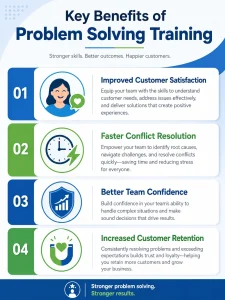
Key Benefits of Problem Solving Skills Training for Customer Service
Improved Customer Satisfaction
When customers receive fast and accurate solutions, satisfaction levels rise significantly. Customers appreciate companies that value their time and concerns.
Satisfied customers are more likely to:
- Leave positive reviews
- Recommend the company
- Become repeat buyers
- Trust the brand long-term
Faster Conflict Resolution
Well-trained employees resolve issues more quickly because they understand how to identify the root cause efficiently.
This reduces:
- Escalations
- Waiting times
- Customer frustration
- Operational costs
Better Team Confidence
Employees who receive proper training feel more confident when handling difficult situations.
Confidence leads to:
- Better communication
- Reduced stress
- Higher productivity
- Improved morale
Many businesses strengthen team confidence through customized workshops from Fore Elite Training, which focuses on practical workplace learning experiences.
Increased Customer Retention
Customers stay loyal when companies consistently solve their problems effectively.
Research consistently shows that retaining existing customers costs far less than acquiring new ones. Strong customer service directly supports long-term business growth.
Essential Skills Every Customer Service Agent Needs
Communication Skills
Clear communication is one of the most important customer service skills.
Employees must learn how to:
- Explain solutions simply
- Use positive language
- Avoid misunderstandings
- Maintain professionalism
Emotional Intelligence
Emotional intelligence helps agents understand customer emotions and respond empathetically.
Key emotional intelligence skills include:
- Self-awareness
- Empathy
- Patience
- Emotional control
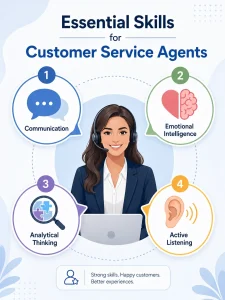
Analytical Thinking
Analytical thinking allows customer service staff to break down problems logically and identify patterns.
This skill is especially useful when handling recurring customer complaints.
Active Listening
Active listening means fully understanding customer concerns before responding.
Good listeners:
- Avoid interruptions
- Ask clarifying questions
- Confirm understanding
- Show empathy
These habits improve trust and reduce communication errors.
Best Methods for Training Customer Service Teams
Role-Playing Exercises
Role-playing allows employees to practice handling difficult customer interactions in a safe environment.
Common scenarios include:
- Angry customers
- Refund requests
- Technical issues
- Service delays
These exercises build confidence and practical experience.
Scenario-Based Learning
Scenario-based training presents employees with realistic situations that require problem-solving decisions.
This method improves:
- Critical thinking
- Decision-making speed
- Adaptability
Coaching and Mentorship
Experienced managers can provide valuable guidance through one-on-one coaching sessions.
Mentorship helps employees:
- Learn from experience
- Improve communication
- Gain confidence
- Develop leadership skills
Online Learning Programs
Online training platforms provide flexible learning opportunities for remote and hybrid teams.
Businesses looking to improve digital learning strategies can benefit from technology solutions offered by Nexera Digital Solutions, which supports modern business transformation and digital growth initiatives.
How Technology Supports Customer Service Training
Technology has changed the way companies train customer service teams.
AI and Automation Tools
AI-powered tools help businesses:
- Analyze customer behavior
- Track support trends
- Identify training gaps
- Automate repetitive tasks
This allows customer service agents to focus on more complex problems.
CRM Systems and Data Insights
Customer Relationship Management (CRM) systems provide valuable information about customer history and behavior.
These insights help agents:
- Personalize interactions
- Predict customer needs
- Resolve issues faster
Mistakes Companies Make During Customer Service Training
Lack of Practical Exercises
Many companies focus too heavily on theory instead of hands-on practice.
Employees learn best when they can apply concepts in realistic situations.
Ignoring Employee Feedback
Employees often understand customer frustrations better than management. Ignoring their feedback can weaken training effectiveness.
Inconsistent Training Programs
Training should be continuous, not a one-time event.
Regular refreshers help employees stay updated on:
- New technologies
- Customer expectations
- Company policies
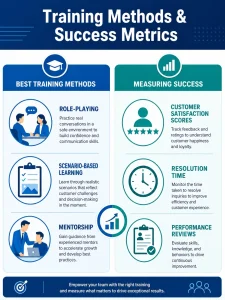
Measuring the Success of Problem Solving Training
Businesses should track training effectiveness using measurable indicators.
Customer Satisfaction Scores
Surveys and feedback forms help companies evaluate customer experiences.
Resolution Time Metrics
Faster issue resolution usually indicates stronger problem-solving skills.
Employee Performance Reviews
Managers should regularly assess:
- Communication quality
- Decision-making ability
- Customer interactions
These evaluations identify areas for improvement.
Industry Examples of Successful Customer Service Training
Many leading companies invest heavily in customer service development because they understand its impact on profitability.
For example:
| Company Practice | Result |
|---|---|
| Ongoing coaching | Improved employee confidence |
| Scenario-based learning | Faster problem resolution |
| AI-powered support tools | Better customer insights |
| Emotional intelligence training | Stronger customer relationships |
Organizations that prioritize employee growth consistently outperform competitors in customer satisfaction rankings.
Frequently Asked Questions (FAQs)
1. What is problem solving skills training for customer service?
It is a training program designed to help customer service employees analyze problems, think critically, communicate effectively, and provide practical customer solutions.
2. Why are problem-solving skills important in customer service?
They help employees resolve customer issues quickly, improve satisfaction, reduce complaints, and strengthen customer loyalty.
3. How long does customer service problem-solving training take?
Training length varies depending on the company and program. Some workshops last a few days, while advanced programs may continue for several weeks.
4. What are the most important customer service problem-solving skills?
Key skills include communication, emotional intelligence, active listening, critical thinking, and decision-making.
5. Can online training improve customer service skills?
Yes. Online learning platforms provide flexible and interactive training opportunities for customer service teams.
6. How can businesses measure training success?
Businesses can measure success using customer satisfaction scores, employee performance metrics, issue resolution speed, and customer retention rates.
Conclusion
Investing in problem solving skills training for customer service is one of the smartest decisions a business can make. Customers remember how companies respond during difficult situations, and trained employees can turn negative experiences into lasting customer relationships.
Strong problem-solving abilities improve communication, reduce stress, increase customer loyalty, and boost overall business performance. Companies that continuously train their customer service teams position themselves for long-term success in an increasingly competitive market.
Professional training providers such as ForElite Training offer valuable learning programs that help organizations build highly effective customer service teams. Combined with modern digital support solutions from Nexera Digital Solutions, businesses can create exceptional customer experiences that drive growth and loyalty.