


Why Performance Conversations Matter More Than Ever
Performance conversations have never been easy. Most managers would rather postpone them, while many employees approach them with anxiety. Yet avoiding these discussions can create bigger problems than addressing them. When performance issues remain unresolved, productivity declines, team morale suffers, and trust slowly erodes. The irony is that many workplace relationships are damaged not because difficult conversations happened, but because they never happened at all.
Modern organizations are increasingly moving away from annual performance reviews toward continuous feedback and regular coaching conversations. According to workplace performance management experts, ongoing discussions help employees stay aligned with expectations while creating opportunities for growth and development. Regular conversations also reduce surprises because employees receive feedback in real time rather than months after issues arise.
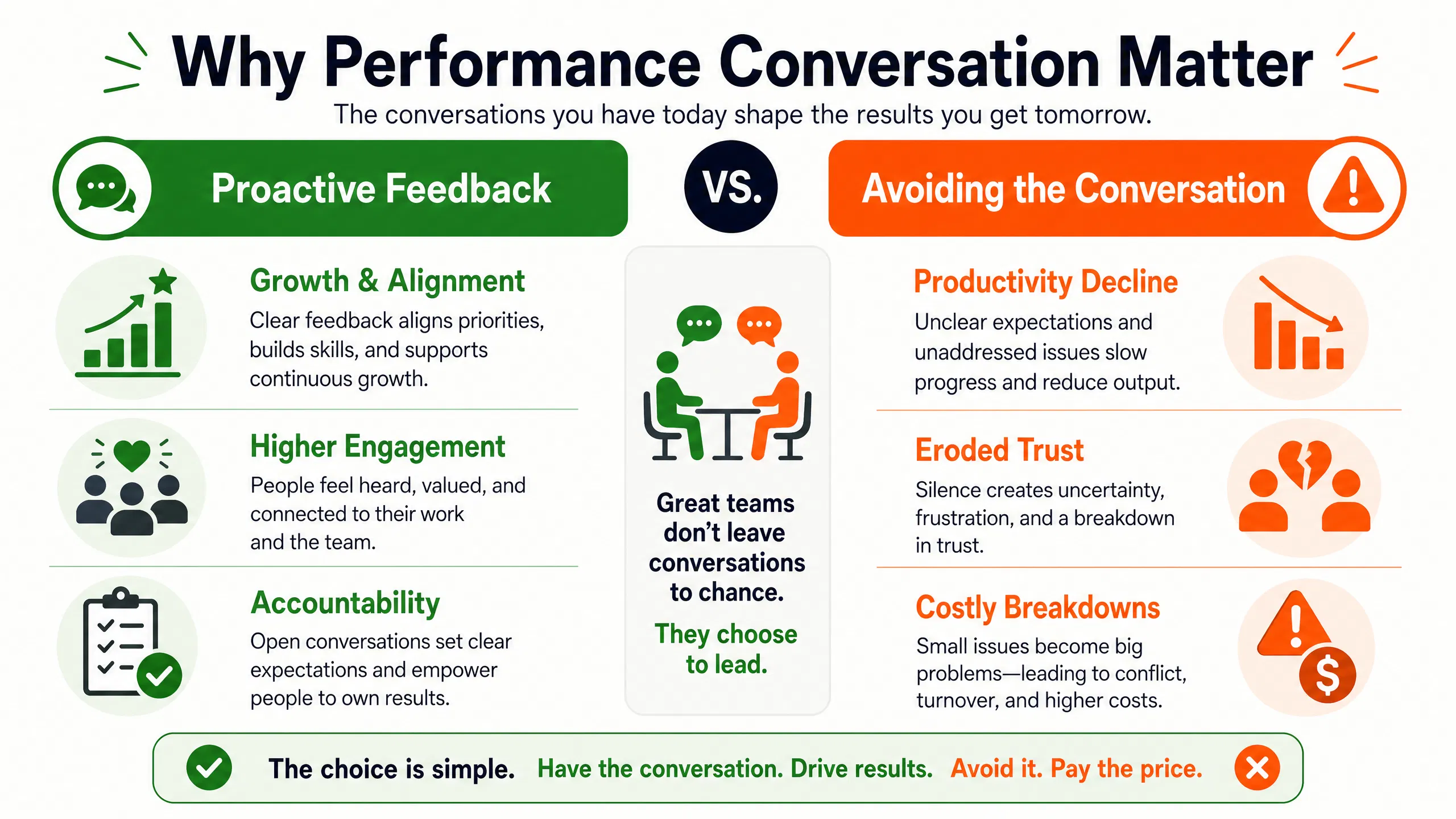
Think about performance conversations like routine maintenance for a vehicle. A small issue identified early can be fixed quickly and inexpensively. Ignore it for too long, however, and it can become a costly breakdown. The same principle applies to workplace performance. Small gaps become major challenges when leaders avoid addressing them.
Organizations that normalize constructive feedback often experience stronger engagement, better accountability, and healthier workplace relationships. Employees generally want to succeed. They want clarity, support, and guidance. A respectful performance conversation provides exactly that. The goal should never be punishment. Instead, it should be helping people understand expectations and giving them a fair opportunity to improve.
Understanding Why Performance Discussions Become Difficult
Fear of Conflict and Emotional Reactions
Many managers avoid performance conversations because they fear conflict. Nobody enjoys seeing another person disappointed or upset. Some leaders worry that providing honest feedback might damage trust or harm team morale. Others fear confrontation and hope performance problems will somehow resolve themselves.
Employees often experience similar concerns. Feedback can feel personal, even when it is intended to address behaviors and outcomes. People naturally want to feel competent and valued. When performance concerns arise, emotions such as embarrassment, frustration, or defensiveness may surface.
Research and management experts consistently emphasize that performance discussions become less threatening when they focus on observable behaviors rather than personal characteristics. Instead of saying, “You are careless,” an effective leader says, “Three reports were submitted after the deadline, which delayed project completion.” The difference is significant. One statement attacks identity, while the other addresses behavior.
Common Mistakes Managers Make
Several mistakes repeatedly undermine performance conversations:
| Common Mistake | Negative Impact |
|---|---|
| Being vague | Employees leave confused about expectations |
| Using assumptions | Creates defensiveness and mistrust |
| Waiting too long | Small issues become major problems |
| Talking more than listening | Misses important context |
| Focusing only on negatives | Reduces motivation and engagement |
Experts note that vague phrases such as “needs improvement” rarely drive change because they provide no actionable guidance. Specific examples and measurable expectations create clarity and accountability.
Preparing Before the Conversation
Preparation often determines whether a performance conversation succeeds or fails. Walking into a meeting armed only with frustration is rarely productive. Walking in with facts, examples, and a clear objective creates a foundation for success.
Gather Facts, Not Assumptions
Before scheduling a discussion, collect objective evidence. Review performance metrics, project outcomes, missed deadlines, customer feedback, or documented observations. Focus on behaviors and results rather than interpretations. Ask yourself what happened, when it happened, and how it affected the team or organization.
Performance management experts recommend documenting specific examples before the conversation. This approach minimizes emotional reactions and keeps the discussion grounded in reality. Employees are far more likely to accept feedback when they can clearly see the evidence supporting it.
Define the Desired Outcome
Every performance conversation should have a purpose. What exactly needs to change? How will success be measured? What support might be required?
Many managers focus so heavily on discussing problems that they forget to define the desired future state. Effective conversations focus not only on what went wrong but also on what success looks like moving forward. Employees need a clear destination before they can map a route toward improvement.
Choose the Right Time and Environment
Timing matters. A rushed conversation in a busy hallway rarely produces meaningful results. Experts recommend scheduling private, uninterrupted discussions in environments that encourage open dialogue and mutual respect. Privacy communicates professionalism and demonstrates that the conversation is important.
Organizations seeking to strengthen managerial communication skills often benefit from professional development programs such as those available through Forelite Training, which offers leadership and workplace communication training designed to improve employee engagement and performance management capabilities.
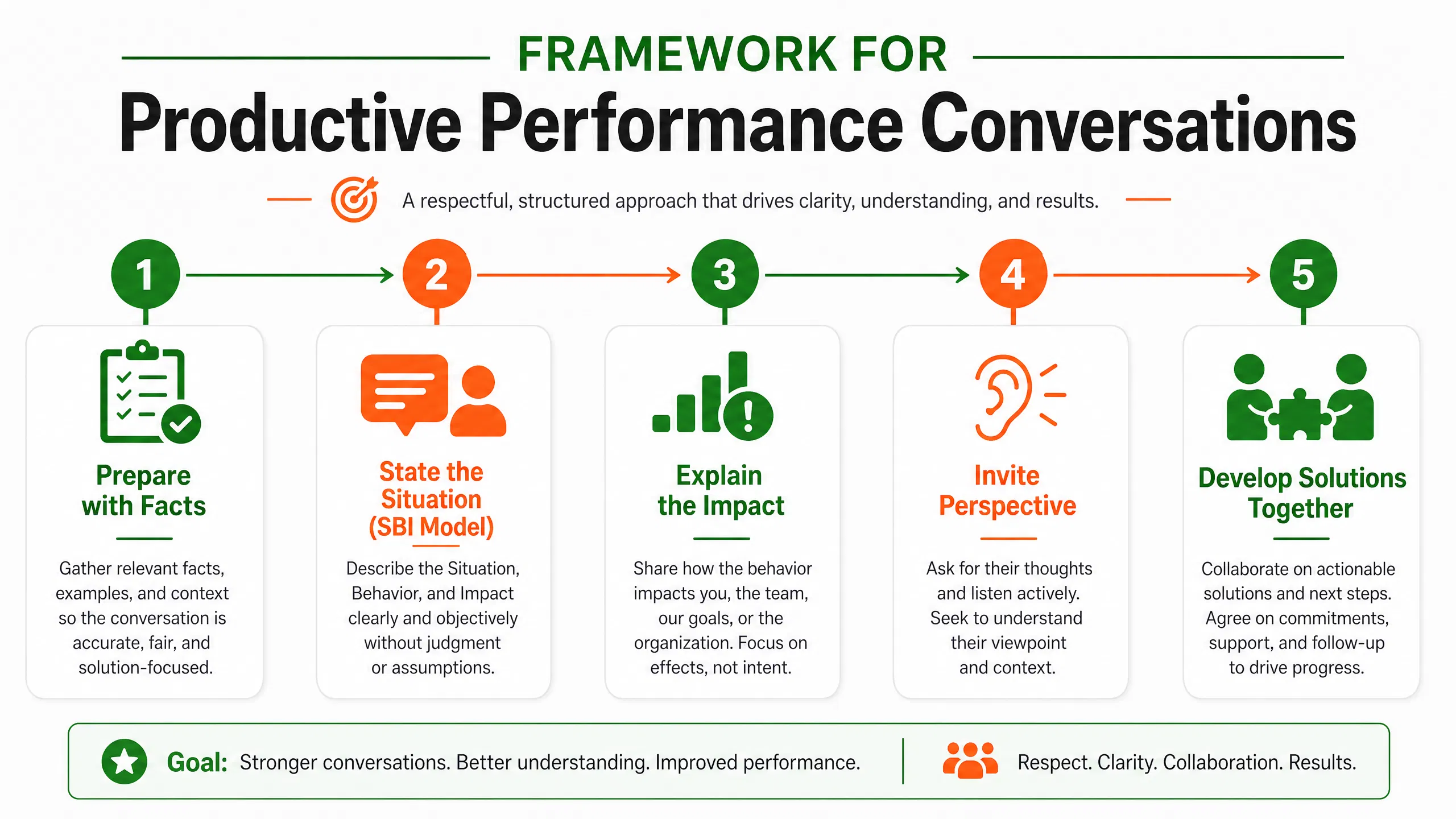
A Step-by-Step Framework for Productive Performance Conversations
Start with Respect and Clarity
The opening moments set the tone for everything that follows. Begin by explaining the purpose of the discussion clearly and respectfully. Avoid surprises whenever possible. Employees should understand that the goal is improvement and development rather than punishment.
A simple opening might sound like this:
“Thank you for meeting with me. I’d like to discuss some recent performance challenges and work together on solutions.”
This approach immediately establishes collaboration rather than confrontation.
Describe the Situation Using Evidence
Many leadership experts recommend structured feedback models such as SBI (Situation, Behavior, Impact). This framework helps managers communicate concerns objectively and effectively. The conversation focuses on observable facts rather than assumptions or emotions.
For example:
- Situation: Project Alpha deadline last Friday.
- Behavior: The final report was submitted three days late.
- Impact: The client presentation had to be postponed.
Notice how the focus remains on facts rather than personality traits.
Explain the Impact
People are more likely to change behavior when they understand its consequences. Explain how performance gaps affect customers, colleagues, projects, or business outcomes. Keep the discussion factual and balanced.
Research suggests that connecting behavior to measurable outcomes increases understanding and accountability. Employees gain valuable context that helps them see the broader significance of their actions.
Invite the Employee’s Perspective
One of the most common mistakes managers make is treating performance discussions as one-way lectures. Effective conversations create space for dialogue. Ask open-ended questions. Listen carefully. Encourage self-reflection.
Questions might include:
- How do you see the situation?
- What challenges have you encountered?
- What support would help you succeed?
Management experts emphasize that collaborative discussions reduce defensiveness and increase ownership of improvement efforts.
Collaboratively Develop Solutions
Performance improvement should not feel like a punishment plan. Instead, it should resemble a roadmap for success. Work together to identify practical solutions, resources, and development opportunities.
This is where professional development can play a valuable role. Programs such as the leadership and management courses offered by Forelite Training Leadership Programs can help managers strengthen coaching, communication, and employee development skills.
Agree on Measurable Next Steps
Every conversation should conclude with clear expectations and timelines. Employees should leave knowing exactly what needs to change, how success will be measured, and when progress will be reviewed. Vague commitments often lead to vague results.
Document agreements and schedule follow-up discussions. Regular check-ins reinforce accountability while demonstrating ongoing support.
Communication Techniques That Preserve Relationships
Active Listening
Listening is often more powerful than speaking. Employees who feel heard are more likely to remain engaged and receptive. Active listening involves maintaining eye contact, asking clarifying questions, and reflecting understanding before responding.
Strong leaders understand that performance problems frequently have underlying causes. Workload challenges, unclear expectations, skill gaps, or personal circumstances may contribute to performance issues. Listening helps uncover these factors.
Empathy Without Lowering Standards
Empathy does not mean avoiding accountability. It means acknowledging another person’s perspective while maintaining clear expectations. The best managers combine compassion with consistency.
A statement like, “I understand this project presented unexpected challenges, and I appreciate your effort. At the same time, we need to ensure deadlines are met moving forward,” demonstrates both understanding and accountability.
Leadership communication programs available through Forelite Training Communication Courses frequently emphasize this balance because it strengthens trust while maintaining performance standards.
Using Constructive Language
Words matter. Constructive language focuses on solutions rather than blame. Compare these examples:
- Blame-focused: “You keep making mistakes.”
- Solution-focused: “Let’s identify what’s causing these errors and develop a plan to prevent them.”
One creates resistance. The other creates collaboration.
Organizations looking to enhance workplace communication strategies may also benefit from digital transformation and communication consulting solutions offered by Nexera Digital Solutions, which supports businesses in improving operational effectiveness and organizational communication.
Managing Challenging Reactions
When an Employee Becomes Defensive
Defensiveness is a natural reaction to criticism. When it occurs, remain calm and avoid escalating the situation. Return to facts, acknowledge concerns, and refocus on solutions.
Experienced managers recommend resisting the urge to argue. Instead, ask questions and seek understanding. A defensive employee often becomes more cooperative when they feel respected and heard.
When Emotions Run High
Sometimes emotions surface despite everyone’s best intentions. If an employee becomes upset, allow space for them to process their feelings. Maintain professionalism and empathy. Avoid dismissing emotions or rushing the conversation.
Experts suggest that emotional reactions often diminish when leaders remain calm, respectful, and focused on constructive outcomes.
When There Is Disagreement
Not every employee will immediately agree with feedback. When disagreement occurs, focus on evidence rather than opinions. Review specific examples, clarify expectations, and continue exploring solutions.
The goal is not necessarily complete agreement. The goal is mutual understanding regarding expectations and next steps.
Organizations investing in leadership capability development through programs such as those offered by Forelite Training Management Development Programs often find that managers become significantly more confident handling these challenging conversations.
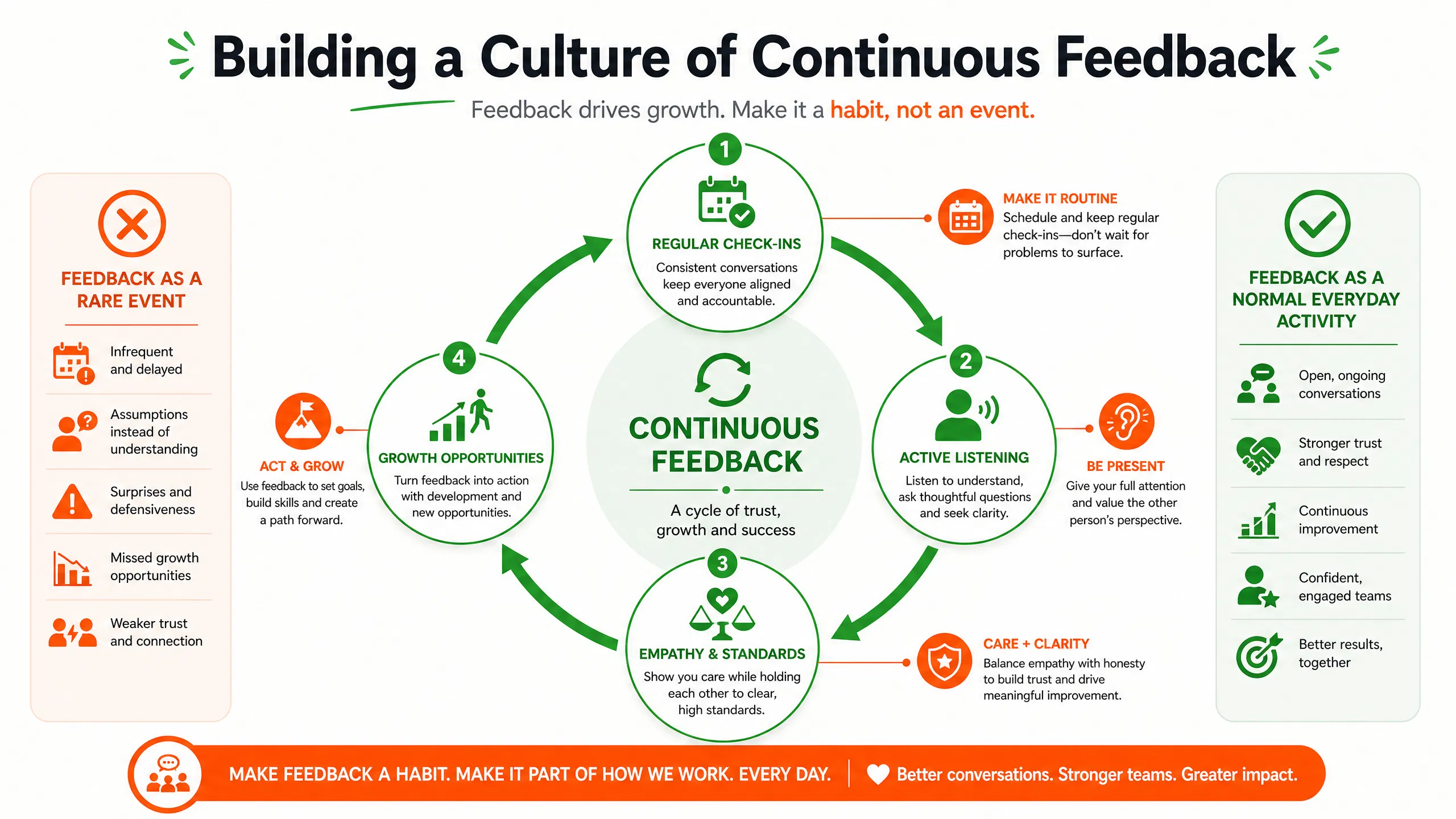
Building a Culture Where Feedback Feels Normal
The strongest workplace cultures treat feedback as an everyday activity rather than a rare event. Regular check-ins reduce anxiety because feedback becomes familiar instead of exceptional. Employees receive guidance before problems become severe, and managers develop stronger coaching relationships.
Research shows that ongoing conversations improve alignment, accountability, and engagement. Regular discussions also create opportunities for recognition, which is just as important as corrective feedback. Employees need to know what they are doing well, not only what needs improvement.
Creating this culture requires leadership commitment. Training managers to communicate effectively, listen actively, and coach consistently can transform workplace relationships. Organizations can support these efforts through initiatives such as Forelite Training Professional Development Programs and Forelite Training Corporate Learning Solutions, which help build leadership and communication competencies across teams.
When feedback becomes part of daily work rather than an annual event, performance conversations lose much of their stigma. Employees see them as opportunities for growth instead of threats.
Conclusion
Performance conversations do not have to damage relationships. In fact, when handled effectively, they often strengthen trust, improve performance, and deepen professional respect. The key is preparation, empathy, clarity, and collaboration. Focus on facts rather than assumptions. Listen as much as you speak. Define clear expectations and provide meaningful support.
Every difficult conversation presents a choice. It can become a source of conflict and resentment, or it can become a catalyst for growth and improvement. Leaders who approach performance discussions with honesty, respect, and genuine concern for employee success are far more likely to achieve positive outcomes while preserving valuable workplace relationships.
Frequently Asked Questions
1. How often should managers hold performance conversations?
Most experts recommend regular check-ins throughout the year rather than relying solely on annual reviews. Monthly or quarterly conversations help address issues early and support continuous development.
2. What is the biggest mistake managers make during performance discussions?
Being vague is one of the most common mistakes. Employees need specific examples and clear expectations to understand what needs to change.
3. How can managers reduce employee defensiveness?
Focus on observable behaviors, provide evidence, invite employee input, and maintain a respectful tone throughout the conversation.
4. Should performance conversations always be documented?
Yes. Documentation creates clarity, supports accountability, and provides a record of agreed actions and expectations.
5. What should happen after a performance conversation?
Managers should schedule follow-up meetings, monitor progress, provide support, and recognize improvements. Ongoing communication is essential for long-term success.