

FinTech and Digital Finance Innovation: Transforming the Future of Financial Services in a Digital Economy

Understanding FinTech and Digital Finance Innovation
The financial world has experienced an extraordinary transformation over the last decade. Today, banking is no longer limited to physical branches, paperwork, or long queues. Consumers can transfer money, invest in stocks, obtain loans, insure valuable assets, and even manage retirement portfolios directly from their smartphones. This remarkable shift is powered by Financial Technology (FinTech), a sector that combines finance with innovative digital technologies to create faster, smarter, and more accessible financial services.
Recent industry research shows that the global fintech industry continues to expand rapidly despite tighter regulations and changing economic conditions. According to McKinsey, fintech generated approximately $650 billion in revenue during 2025, growing significantly faster than the broader financial services industry. Artificial intelligence, digital assets, embedded finance, and automation are now defining the industry’s next stage of growth.
At the same time, governments and financial institutions are embracing digital transformation. The United Kingdom recently announced plans to issue one of the world’s first sovereign digital bonds, highlighting how digital finance is becoming a strategic national priority rather than simply a technology trend.
For professionals seeking to remain competitive, acquiring modern fintech knowledge has become essential. Specialized programs offered through Fintech and Digital Finance Innovation Upskilling Courses provide practical skills covering financial technologies, blockchain, digital banking, cybersecurity, AI applications, and financial innovation. Whether you work in banking, insurance, telecommunications, government, or technology, understanding these innovations has become a valuable career advantage.
What Is FinTech?
FinTech simply refers to the application of technology to improve financial services. However, the concept extends far beyond mobile banking apps. It encompasses every digital solution designed to simplify financial transactions, automate decision-making, reduce operational costs, improve customer experiences, and increase financial accessibility.
Think about how people managed money twenty years ago. Opening a bank account required visiting a branch, completing multiple forms, and waiting days for approval. Loan applications often took weeks, international transfers were expensive, and investment opportunities remained limited to experienced investors.
Today, the landscape is entirely different. Artificial intelligence evaluates loan applications within minutes. Mobile wallets allow instant payments worldwide. Blockchain technology creates secure digital transactions without traditional intermediaries. Robo-advisors automatically manage investment portfolios according to customer preferences.
These innovations continue expanding because consumers increasingly expect convenience, speed, transparency, and personalized experiences. Financial institutions have recognized that digital transformation is no longer optional, it is necessary for survival.
Professionals looking to understand these technologies can explore specialized learning opportunities through Fintech and Digital Finance Innovation Professional Development Courses, where practical industry-focused programs bridge the gap between traditional finance and emerging digital solutions.
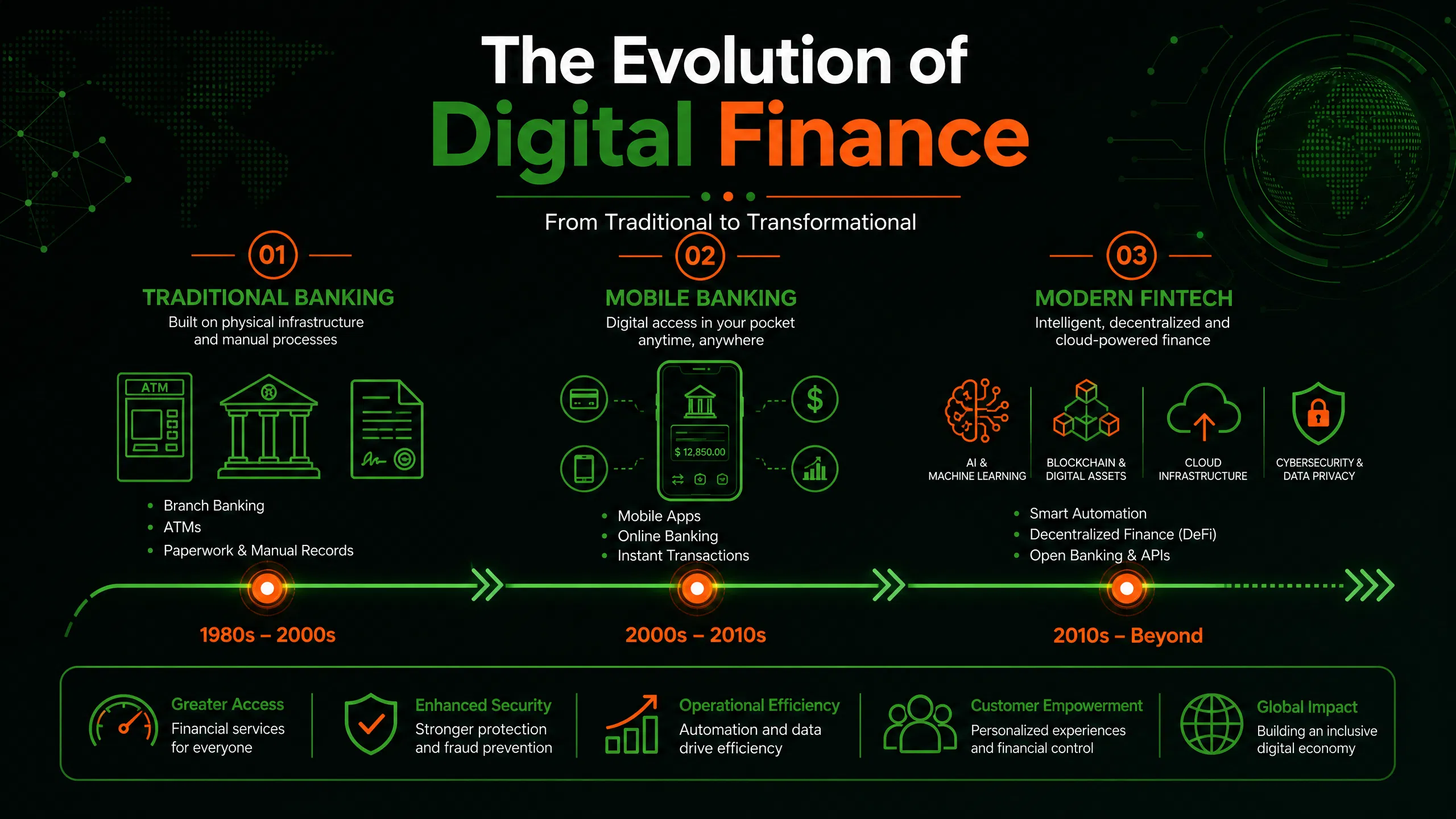
The Evolution of Digital Finance
Digital finance did not emerge overnight. Instead, it represents decades of continuous technological advancement. Early electronic banking introduced ATMs and online account management. The widespread adoption of smartphones accelerated mobile banking and digital payments. Cloud computing reduced infrastructure costs while enabling financial institutions to launch innovative products much faster.
Now, artificial intelligence has become the engine behind intelligent financial decision-making. Banks use AI to detect fraud in real time, predict customer needs, automate compliance, and personalize financial advice. Industry analysts predict that AI will continue reshaping nearly every aspect of financial services over the coming years.
Blockchain technology has also evolved beyond cryptocurrencies. Organizations increasingly use distributed ledger technology for secure record keeping, cross-border payments, smart contracts, digital identity verification, and tokenized assets. Governments are actively exploring digital currencies and blockchain-powered financial infrastructure to improve efficiency and transparency.
Cloud computing deserves equal recognition because it enables financial institutions to scale rapidly while reducing operational costs. Traditional banking systems often required expensive physical infrastructure. Modern cloud platforms allow organizations to deploy secure digital financial services globally with greater flexibility.
Professionals who understand these technologies position themselves for leadership opportunities across banking, insurance, investment management, fintech startups, telecommunications, and public sector financial institutions. Advanced learning opportunities are available through Fintech and Digital Finance Innovation Training Courses, where participants gain practical knowledge aligned with current industry demands.
Why FinTech Matters More Than Ever
One of fintech’s greatest achievements is expanding financial inclusion. Millions of people worldwide previously lacked access to traditional banking services because physical branches were unavailable or financial requirements proved too restrictive. Mobile banking applications and digital payment platforms have dramatically changed this reality.
Across Africa, digital finance continues driving economic growth. Kenya remains one of the continent’s leading fintech ecosystems through continuous innovation, supportive regulation, mobile money adoption, and expanding digital financial services. Recent regulatory developments, including legislation governing virtual asset service providers, demonstrate the country’s commitment to balancing innovation with consumer protection.
Businesses also benefit enormously. Digital payment systems accelerate cash flow. Automated accounting reduces administrative workloads. AI-powered analytics improve lending decisions. Embedded finance integrates payment solutions directly into e-commerce platforms, transportation services, healthcare systems, and educational applications.
Consumers experience faster approvals, personalized recommendations, lower transaction costs, and improved convenience. Financial institutions reduce operational expenses while increasing customer satisfaction. Governments improve tax collection, transparency, and financial monitoring.
Organizations hoping to implement successful digital transformation strategies increasingly seek employees with specialized fintech expertise. Practical training programs available through Fintech and Digital Finance Innovation Upskilling Courses prepare professionals to understand both technological innovation and regulatory requirements within modern financial ecosystems.
Key Technologies Driving FinTech Innovation
Every successful fintech solution depends on several foundational technologies working together seamlessly. Artificial Intelligence enables predictive analytics, fraud detection, customer support automation, credit scoring, and personalized financial planning. Machine learning algorithms continuously improve by analyzing enormous volumes of financial data, helping organizations make faster and more accurate decisions.
Blockchain introduces decentralized trust into financial transactions. Smart contracts automatically execute agreements without intermediaries. Tokenization allows physical and financial assets to be represented digitally, creating entirely new investment opportunities. Recent projections suggest tokenized assets could represent a multi-trillion-dollar global market during the coming decade.
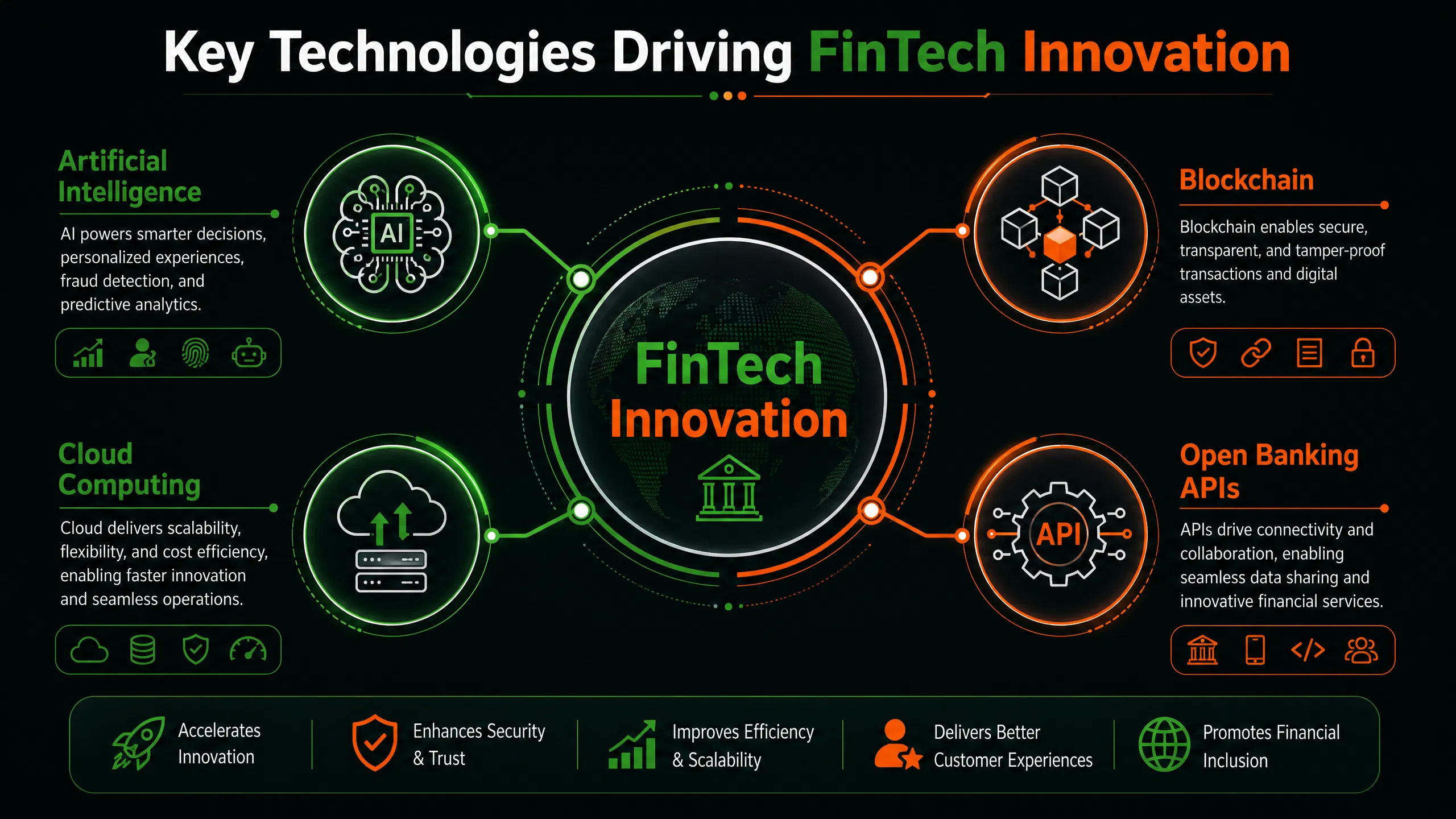
Cloud computing provides the scalability necessary for global financial platforms. Instead of maintaining expensive servers, fintech companies deploy secure applications through cloud infrastructure, allowing rapid innovation while maintaining reliability and security.
Open Banking APIs have also become transformative. These interfaces allow authorized third-party applications to securely access banking data, enabling consumers to connect multiple financial services through a single digital platform. The result is greater competition, improved innovation, and better customer experiences.
Developing expertise across these technologies requires structured professional learning. Programs offered through Fintech and Digital Finance Innovation Professional Development Courses cover practical applications of AI, blockchain, cloud computing, cybersecurity, digital banking, financial analytics, and regulatory technology. Organizations looking to accelerate broader digital transformation initiatives can also benefit from strategic consulting and technology implementation services available through Nexera Digital Solutions.
Emerging Trends in Digital Finance Innovation
The fintech industry continues to evolve at an impressive speed because technology, consumer expectations, and business models are constantly changing. Today, financial services are no longer designed around traditional banking structures alone. Instead, they are becoming more connected, intelligent, personalized, and accessible through digital ecosystems. From mobile payments to artificial intelligence-powered financial advisors, innovation is creating new ways for individuals and organizations to manage money.
As a result, financial institutions are investing heavily in digital transformation strategies that allow them to compete with agile fintech startups. Banks, insurance companies, investment firms, and governments are adopting emerging technologies to improve efficiency, reduce costs, strengthen security, and deliver better customer experiences. Professionals working in finance, technology, business management, and public administration must understand these trends because digital finance knowledge is becoming an important career advantage.
Organizations and individuals interested in developing practical fintech expertise can explore specialized programs such as those available through FinTech and Digital Finance Innovation Short Courses. These courses help professionals understand how emerging technologies are reshaping financial services and how they can apply these innovations within their organizations.
Embedded Finance: Bringing Financial Services Into Everyday Platforms
One of the most important developments in modern fintech is embedded finance. Embedded finance refers to integrating financial services directly into non-financial platforms, allowing customers to access payments, lending, insurance, and banking services without visiting traditional financial institutions.
For example, when customers purchase goods through an e-commerce platform and receive instant financing options during checkout, they are experiencing embedded finance. Similarly, ride-sharing applications that allow users to pay digitally, receive insurance coverage, or access financial products through the same platform demonstrate how financial services are becoming integrated into everyday activities.
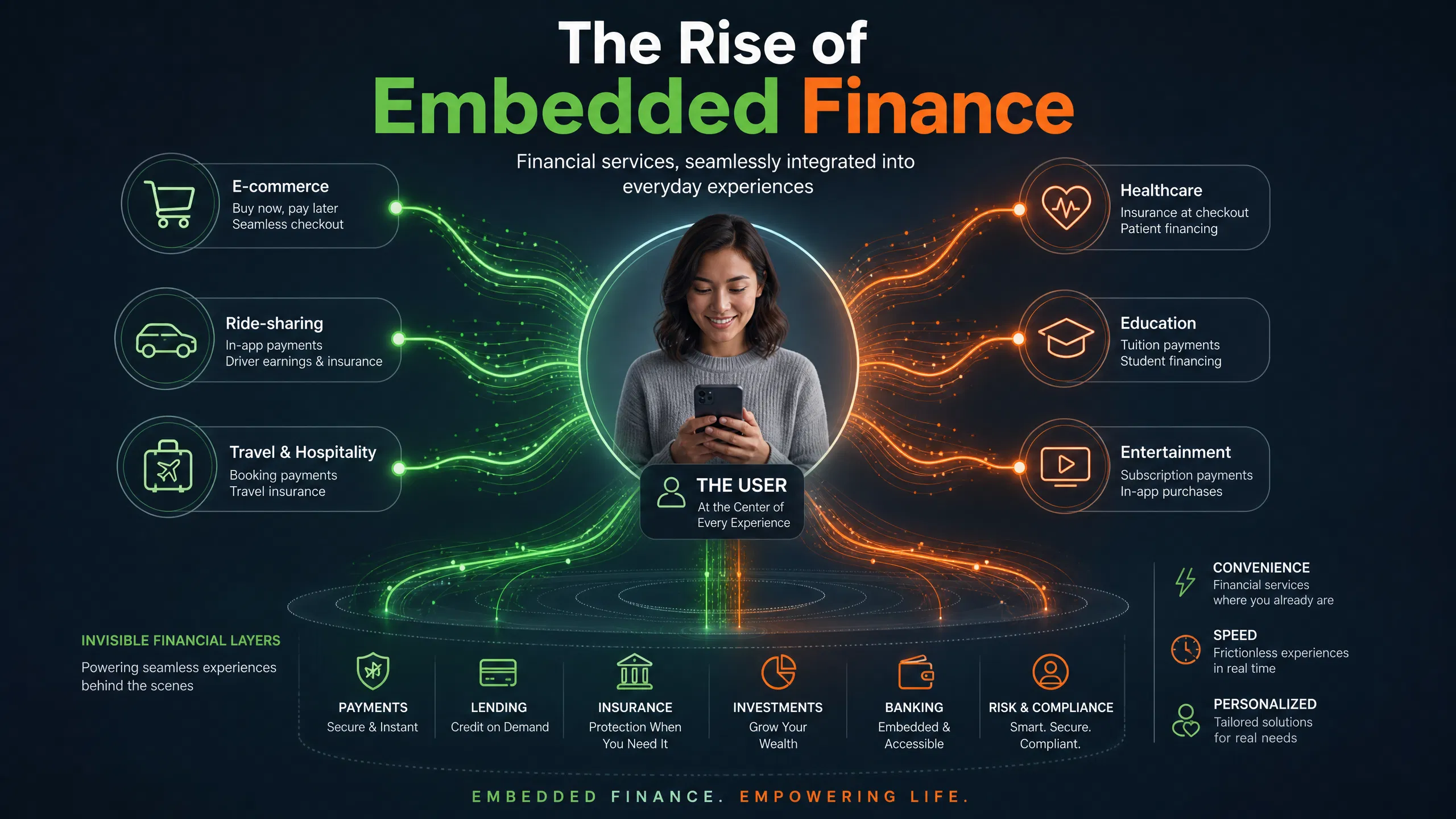
This approach benefits businesses because it creates additional revenue streams and improves customer loyalty. Instead of customers moving between multiple applications, companies can provide complete digital experiences within a single ecosystem.
Retail companies, healthcare providers, educational platforms, and logistics businesses are increasingly adopting embedded finance solutions. The reason is simple: customers value convenience. They prefer financial services that appear naturally within the activities they already perform.
However, implementing embedded finance requires careful planning. Organizations must consider cybersecurity, regulatory compliance, data protection, and customer trust. Poorly designed financial integrations can create security vulnerabilities and damage brand reputation.
Professionals responsible for digital transformation need knowledge of payment systems, APIs, financial regulations, and emerging technologies. Training programs such as Digital Banking and FinTech Innovation Training provide valuable insights into how businesses can successfully adopt these solutions.
The Growth of Digital Wallets and Mobile Payments
Digital wallets have become one of the most visible examples of fintech innovation. These platforms allow users to store payment information, transfer money, pay bills, and conduct transactions through mobile devices.
In many developing economies, digital wallets have played a major role in expanding financial inclusion. People who previously had limited access to traditional banking services can now participate in digital economies through mobile financial platforms.
The success of mobile money systems demonstrates how technology can overcome traditional financial barriers. Instead of requiring expensive banking infrastructure, digital platforms allow individuals to access essential financial services using affordable mobile devices.
Businesses have also benefited from digital wallets because they simplify payment processing and improve customer convenience. Small businesses can accept digital payments without investing in complex payment systems. International organizations can distribute funds more efficiently through secure digital channels.
Furthermore, digital wallets create opportunities for data-driven financial services. Transaction patterns can help organizations understand customer behavior, develop personalized financial products, and improve risk assessment.
However, digital wallet adoption also introduces challenges. Cybersecurity threats, identity theft, fraud, and data privacy concerns require strong protection measures. Financial organizations must invest in encryption, authentication systems, and continuous monitoring.
Professionals interested in understanding digital payment ecosystems can benefit from structured learning through Digital Payments and Financial Technology Courses, which explore modern payment solutions and their practical applications.
Buy Now Pay Later (BNPL) and Alternative Lending Models
Another significant fintech development is the rise of Buy Now Pay Later (BNPL) services. These platforms allow consumers to purchase products immediately while paying gradually over time.
BNPL has gained popularity because it provides flexible payment options, especially among younger consumers who prefer alternatives to traditional credit cards. Digital platforms use technology-driven credit assessments to evaluate customers and provide faster approval decisions.
Unlike traditional lending systems, fintech-based lending platforms often use alternative data sources such as transaction history, digital behavior, and cash flow patterns to evaluate creditworthiness. This approach can help serve individuals and small businesses that may have previously struggled to access formal financial services.
Alternative lending platforms are also supporting entrepreneurship by providing faster access to business financing. Small and medium enterprises can use digital lending solutions to manage cash flow, purchase inventory, and expand operations.
Nevertheless, responsible lending remains essential. Easy access to credit can create financial difficulties if consumers borrow beyond their ability to repay. Regulators worldwide are increasing attention toward consumer protection, transparency, and responsible lending practices.
Financial professionals must understand both the opportunities and risks associated with digital lending. Specialized training in fintech innovation helps organizations develop responsible strategies that balance accessibility with financial stability.
Artificial Intelligence and Machine Learning in Financial Services
Artificial Intelligence (AI) has become one of the most influential technologies transforming financial services. Financial institutions are using AI to automate processes, analyze large datasets, detect fraud, and improve customer experiences.
One major application is fraud detection. Traditional fraud monitoring systems often relied on predefined rules. Modern AI systems analyze transaction patterns in real time and identify unusual activities much faster.
For instance, if an account suddenly shows unusual international transactions, AI-powered systems can recognize the abnormal behavior and trigger security measures immediately. This helps protect customers while reducing financial losses.
AI is also transforming customer service through intelligent chatbots and virtual assistants. These systems can answer common questions, assist customers with transactions, and provide personalized recommendations.
Investment management has also benefited from AI. Robo-advisors use algorithms to analyze financial goals, risk preferences, and market conditions to provide automated investment guidance.
However, AI adoption requires responsible implementation. Organizations must address concerns related to data privacy, algorithmic bias, transparency, and ethical decision-making.
Professionals who understand AI applications in finance are becoming increasingly valuable. Courses focusing on Artificial Intelligence Applications in FinTech help learners understand how AI can be practically applied within modern financial environments.
Blockchain Technology and the Future of Financial Transactions
Blockchain remains one of the most discussed technologies in fintech because it introduces new possibilities for secure, transparent, and decentralized financial transactions.
At its foundation, blockchain is a distributed digital record system where transactions are stored across multiple computers. This structure makes it difficult for unauthorized users to alter information, creating stronger trust between participants.
Blockchain applications extend beyond cryptocurrencies. Financial institutions are exploring blockchain for international payments, digital identity management, smart contracts, asset tokenization, and trade finance.
Smart contracts, for example, allow agreements to execute automatically when predefined conditions are met. This can reduce administrative delays, lower costs, and improve efficiency.
Tokenization is another emerging opportunity. Through tokenization, real-world assets such as property, securities, or commodities can be represented digitally, creating new investment opportunities and improving market accessibility.
At the same time, blockchain adoption requires careful consideration. Organizations must evaluate scalability, regulatory requirements, energy consumption, and security risks before implementing blockchain solutions.
Professionals seeking deeper knowledge of blockchain applications can explore Blockchain and Digital Finance Innovation Training to understand how distributed technologies are influencing financial ecosystems.
Cybersecurity and Regulatory Compliance in Digital Finance
As financial services become increasingly digital, cybersecurity has become one of the most critical priorities. Financial organizations manage highly sensitive information, including personal identities, transaction records, and payment details.
Therefore, protecting digital financial systems requires advanced security strategies. Organizations must implement encryption, multi-factor authentication, access controls, continuous monitoring, and employee awareness programs.
Cybersecurity challenges continue evolving because attackers constantly develop new methods. Phishing attacks, ransomware, identity theft, and financial fraud remain major threats affecting organizations worldwide.
Regulatory compliance is equally important. Governments and financial authorities are introducing stronger rules to protect consumers and maintain trust in digital financial systems.
Organizations must comply with regulations related to data protection, anti-money laundering requirements, cybersecurity standards, and digital transaction monitoring.
For this reason, professionals working in fintech need a combination of technical knowledge and regulatory awareness. Understanding cybersecurity principles allows organizations to innovate safely while protecting customers.
Training opportunities such as FinTech Risk Management and Digital Finance Compliance Courses help professionals understand how to manage risks while supporting financial innovation.
The Role of Digital Transformation Partners in FinTech Growth
Successful fintech implementation often requires more than technology alone. Organizations need strategic planning, digital expertise, system integration, cybersecurity awareness, and continuous improvement.
Digital transformation partners help businesses identify opportunities, select appropriate technologies, and develop sustainable innovation strategies. Companies seeking digital solutions can benefit from services offered by Nexera Digital Solutions, which supports organizations through digital transformation, technology solutions, and online growth strategies.
Ultimately, fintech success depends on combining technology with people, processes, and strategic vision. Organizations that embrace innovation while maintaining security and customer trust will be better positioned for long-term growth.
Skills Required for FinTech Professionals in the Digital Economy
The rapid growth of FinTech and digital finance innovation has created a strong demand for professionals who can combine financial knowledge with technology skills. Today, organizations are no longer looking only for traditional banking expertise. They need individuals who understand digital platforms, data analytics, cybersecurity, automation, artificial intelligence, and customer-centered innovation.
The modern fintech professional is similar to a bridge connecting two worlds: finance and technology. On one side, there is the financial ecosystem involving banking, investments, payments, insurance, and regulations. On the other side, there are emerging technologies that create faster, smarter, and more efficient solutions. Professionals who can connect these areas become valuable assets for organizations undergoing digital transformation.
Therefore, continuous learning has become essential. Financial professionals, technology specialists, business leaders, and government officers must develop skills that allow them to understand how digital finance solutions work and how they can be applied responsibly.
Some of the most important skills required in the fintech sector include:
| Skill Area | Importance in FinTech |
|---|---|
| Data Analytics | Helps organizations analyze financial information and make better decisions |
| Artificial Intelligence | Supports automation, fraud detection, and personalized financial services |
| Blockchain Knowledge | Enables understanding of decentralized transactions and digital assets |
| Cybersecurity | Protects financial systems and customer information |
| Digital Payments | Helps professionals understand modern transaction ecosystems |
| Regulatory Technology (RegTech) | Supports compliance with changing financial regulations |
| Cloud Computing | Enables scalable and secure financial applications |
| Business Strategy | Helps organizations transform innovation into sustainable solutions |
Additionally, professionals need strong problem-solving abilities. Technology alone does not solve business challenges. Successful fintech solutions require people who understand customer needs, operational problems, regulatory environments, and market opportunities.
Structured professional development programs such as FinTech and Digital Finance Innovation Short Courses help professionals build practical knowledge in emerging financial technologies and prepare for changing workplace requirements.
Career Opportunities Created by FinTech Innovation
The expansion of fintech has created diverse career opportunities across multiple industries. Previously, financial technology roles were mainly associated with banks and software companies. Today, fintech expertise is needed in almost every sector, including healthcare, agriculture, education, government, retail, telecommunications, and international development.
Banks require professionals who can manage digital banking platforms, improve customer experiences, and implement artificial intelligence solutions. Insurance companies need experts who understand digital insurance platforms and automated claims processing. Investment organizations require specialists who can analyze financial data and develop technology-driven investment strategies.
Fintech startups are also creating opportunities for entrepreneurs and innovators. These companies are developing solutions for digital payments, alternative lending, financial inclusion, blockchain applications, and personal finance management.
Some emerging fintech career roles include:
- FinTech Product Manager
- Digital Banking Specialist
- Blockchain Analyst
- Financial Data Analyst
- Artificial Intelligence Finance Specialist
- Digital Payments Consultant
- Cybersecurity Analyst
- RegTech Specialist
- Financial Innovation Consultant
- Digital Transformation Manager
Furthermore, governments and development organizations increasingly require fintech specialists to support digital economy initiatives. Digital financial services are becoming important tools for improving financial inclusion, strengthening public services, and supporting economic development.
Professionals who invest in fintech education position themselves for opportunities in both established institutions and innovative technology companies. Courses such as Digital Banking Transformation Training provide practical insights into the changing financial services landscape.
How Organizations Can Build Strong FinTech Capabilities
Organizations that want to succeed in the digital finance era must approach fintech adoption strategically. Technology investment alone is not enough. Successful transformation requires a combination of leadership commitment, skilled employees, appropriate infrastructure, customer understanding, and effective risk management.
Many organizations fail in digital transformation because they focus only on purchasing new technologies without developing the necessary internal capabilities. A new digital banking platform, payment system, or artificial intelligence solution will not deliver expected results if employees lack the knowledge required to manage and use these tools effectively.
First, organizations should develop a clear digital finance strategy. This involves identifying business challenges, understanding customer expectations, and selecting technologies that provide measurable value.
Second, companies should invest in employee training. Digital transformation requires continuous learning because fintech technologies evolve quickly. Employees must understand not only how technologies work but also how they can support organizational goals.
Third, organizations should prioritize cybersecurity and compliance from the beginning. Digital innovation must be built on trust. Customers will only adopt digital financial solutions if they believe their money and personal information are protected.
Finally, organizations should encourage innovation cultures. Employees should be empowered to experiment with new ideas, identify customer problems, and develop creative solutions.
Professional training providers offering programs such as Digital Transformation and Emerging Technologies Courses support organizations in developing the knowledge needed to successfully implement fintech strategies.
The Future of FinTech and Digital Finance Innovation
The future of fintech will be shaped by deeper integration between technology, finance, and human-centered design. Over the coming years, financial services are expected to become more personalized, automated, and embedded into everyday activities.
Artificial intelligence will continue playing a major role. Advanced AI systems will improve financial forecasting, risk management, fraud prevention, and customer engagement. Financial institutions will increasingly use intelligent systems to provide personalized recommendations based on individual financial behaviors and goals.
Blockchain technology will also continue evolving. While cryptocurrencies attracted significant attention, the broader impact of blockchain lies in improving transaction transparency, digital identity management, asset ownership, and financial infrastructure.
Digital currencies issued by central banks may become more common as governments explore alternatives to traditional cash systems. These developments could transform how individuals and businesses conduct transactions in the future.
Embedded finance will likely expand further as more industries integrate financial services into their platforms. Customers may increasingly access payments, loans, insurance, and investment products without interacting with traditional financial institutions directly.
At the same time, ethical considerations will become increasingly important. Organizations must ensure that digital finance solutions remain inclusive, transparent, secure, and accessible. Innovation should improve financial experiences without creating unnecessary risks or excluding vulnerable populations.
Professionals who understand these future trends will be better prepared to contribute to digital finance transformation. Learning opportunities such as Emerging Technologies in Financial Services Training enable individuals and organizations to stay ahead of industry changes.
Why Continuous FinTech Learning Matters
The fintech industry changes faster than many traditional sectors. A technology that appears innovative today may become standard practice within a few years. Because of this, professionals cannot rely only on previous experience. They must continuously update their knowledge and adapt to new developments.
Continuous learning helps professionals understand emerging technologies, identify opportunities, manage risks, and contribute effectively to organizational transformation.
For businesses, investing in employee development creates stronger innovation capabilities. Skilled employees can evaluate new technologies, improve processes, enhance customer experiences, and support strategic decision-making.
For individuals, fintech training creates opportunities for career growth and professional advancement. Whether someone works in finance, information technology, management, entrepreneurship, or public service, digital finance skills provide valuable competitive advantages.
Organizations seeking practical learning solutions can explore specialized FinTech Professional Development Courses designed to help professionals understand modern financial technologies and their applications.
Conclusion: Building a Smarter Digital Financial Future
FinTech and digital finance innovation are transforming how individuals, businesses, and governments interact with financial services. From artificial intelligence and blockchain to digital wallets and embedded finance, technology is creating faster, more accessible, and more personalized financial experiences.
However, successful digital finance transformation requires more than adopting new tools. Organizations need skilled professionals, strong cybersecurity practices, effective strategies, and a commitment to responsible innovation.
The future belongs to organizations and professionals who can adapt to change and understand the relationship between technology and finance. As digital ecosystems continue expanding, fintech knowledge will become increasingly valuable across industries.
By investing in professional development, organizations can build the capabilities needed to navigate the evolving financial landscape. Through practical education and continuous learning, professionals can contribute to creating a more inclusive, efficient, and innovative digital economy.
Frequently Asked Questions (FAQs)
1. What is FinTech and why is it important?
FinTech refers to the use of technology to improve financial services. It includes digital payments, mobile banking, artificial intelligence, blockchain, online lending, and automated financial solutions. It is important because it improves accessibility, reduces costs, increases efficiency, and creates better financial experiences for individuals and organizations.
2. What technologies are driving FinTech innovation?
The main technologies driving fintech innovation include artificial intelligence, blockchain, cloud computing, big data analytics, mobile technology, cybersecurity solutions, and open banking APIs. These technologies help financial institutions provide faster, safer, and more personalized services.
3. How can professionals start a career in FinTech?
Professionals can start by developing knowledge in finance, technology, data analysis, cybersecurity, and digital transformation. Taking specialized courses in fintech, digital banking, blockchain, and financial innovation can help build practical skills required by employers.
4. What are the biggest challenges facing FinTech adoption?
Major challenges include cybersecurity threats, regulatory compliance, data privacy concerns, technology integration difficulties, and the need for skilled professionals. Organizations must carefully manage these risks while pursuing innovation.
5. Will FinTech replace traditional banks?
FinTech is unlikely to completely replace traditional banks. Instead, it is transforming how banks operate. Many traditional financial institutions are partnering with fintech companies or adopting digital technologies to provide better services and remain competitive.