


Strategic thinking and decision making are essential skills for leaders, entrepreneurs, and professionals who want to solve problems, seize opportunities, and achieve long-term success.
In today’s fast-changing world, strategic thinking and decision making are more important than ever. Whether you are a business leader, student, entrepreneur, or employee, the ability to think ahead and make smart decisions can shape your future success. These skills help people solve problems, avoid risks, and identify opportunities before others do.
Organizations across the globe are investing heavily in strategic leadership because success no longer depends only on hard work. It also depends on making intelligent choices at the right time. People who master strategic thinking often become better leaders, stronger communicators, and more effective planners.
Professionals looking to sharpen these capabilities can benefit from specialized executive programs such as Training on Strategic Project Planning and Implementation, which focuses on aligning organizational goals with effective project execution.
According to Harvard Business Review, strategic leaders focus on long-term growth while adapting to constant changes in the market. This approach allows businesses and individuals to remain competitive and resilient.
Understanding Strategic Thinking and Decision Making
What Is Strategic Thinking?
Strategic thinking is the ability to analyze situations, predict outcomes, and plan effectively for the future. It involves looking beyond immediate problems and considering long-term goals.
People with strong strategic thinking skills:
- Identify patterns and trends
- Understand risks and opportunities
- Think creatively
- Focus on long-term success
- Make informed choices
Strategic thinkers do not simply react to situations. Instead, they anticipate future possibilities and prepare for them.
What Is Decision Making?
Decision making is the process of selecting the best course of action among several options. Every day, people make decisions ranging from simple choices to complex business strategies.
Good decision making requires:
- Accurate information
- Logical reasoning
- Emotional control
- Risk evaluation
- Clear objectives
Strategic thinking and decision making work together. Strategic thinking helps you see the bigger picture, while decision making turns ideas into action.
Why These Skills Matter in Modern Life
The modern world is filled with uncertainty, competition, and rapid technological changes. Businesses face economic shifts, global competition, and changing customer expectations.
Many organizations now encourage executives and managers to pursue leadership-focused programs like Training on Global Leadership to improve strategic communication, cross-cultural management, and executive decision-making skills in international environments.
Individuals also encounter important life decisions related to careers, finances, relationships, and education. Strong strategic skills help people navigate these challenges with confidence.
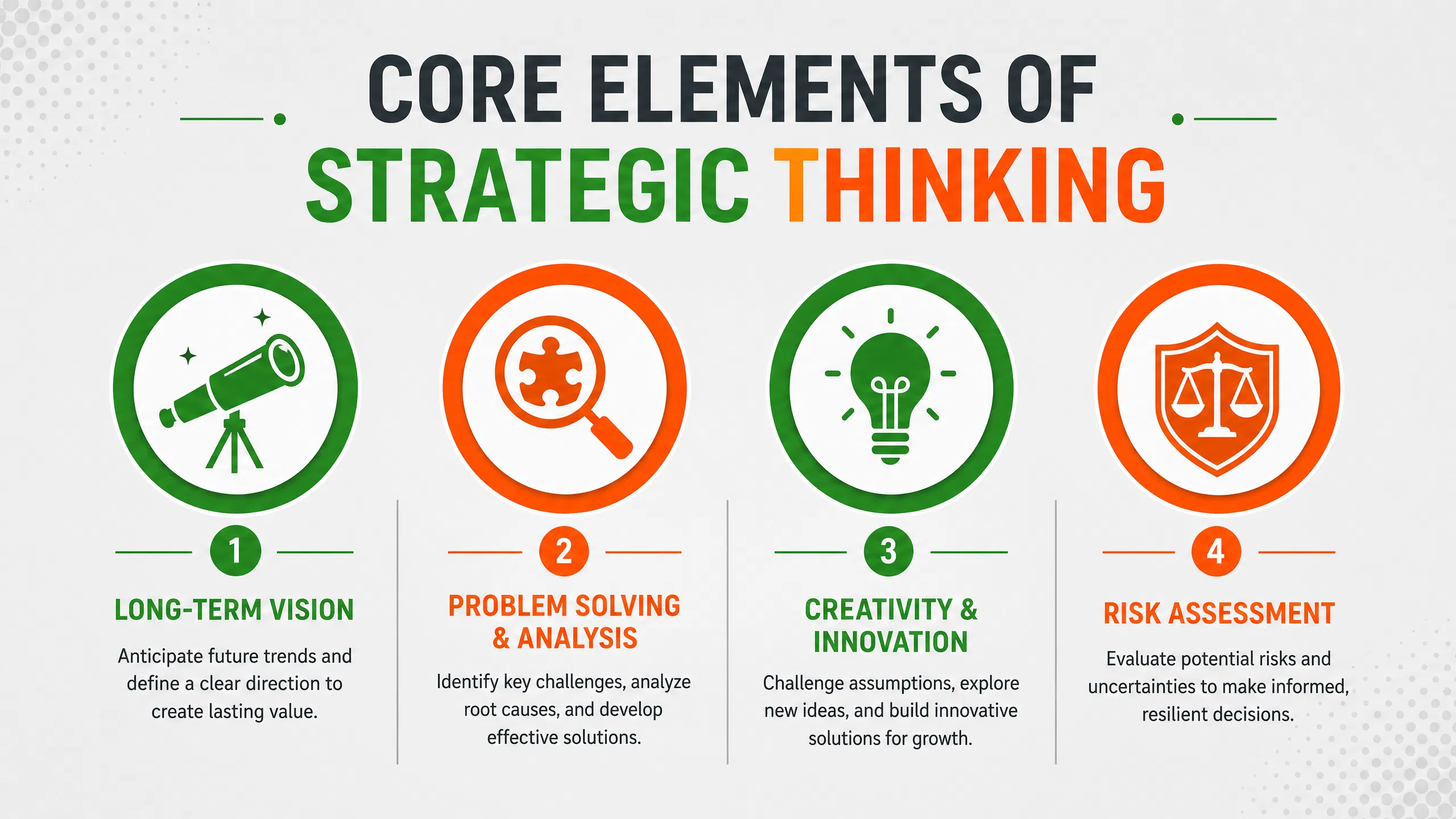
The Core Elements of Strategic Thinking
Long-Term Vision
A long-term vision allows people to focus on future outcomes instead of temporary results. Successful organizations often create five-year or ten-year plans to guide growth and innovation.
Visionary thinkers ask:
- Where do we want to be?
- What challenges might appear?
- How can we prepare now?
Long-term thinking reduces impulsive actions and improves consistency.
Problem Solving and Analysis
Strategic thinkers analyze problems carefully before acting. They gather information, study patterns, and identify possible solutions.
Effective problem solving includes:
- Defining the issue
- Collecting data
- Exploring alternatives
- Evaluating consequences
- Choosing the best option
This structured approach leads to smarter decisions.
Creativity and Innovation
Innovation is a major part of strategic thinking. Creative thinkers develop fresh ideas and discover new opportunities.
Companies like Apple and Tesla became industry leaders because they embraced innovation and strategic vision.
Creativity helps organizations:
- Improve products
- Solve customer problems
- Adapt to market changes
- Stay ahead of competitors
Risk Assessment
Every decision involves risk. Strategic thinkers evaluate possible dangers before taking action.
Risk assessment involves:
- Identifying potential threats
- Estimating impact
- Planning preventive measures
- Preparing backup strategies
This process reduces uncertainty and improves confidence.
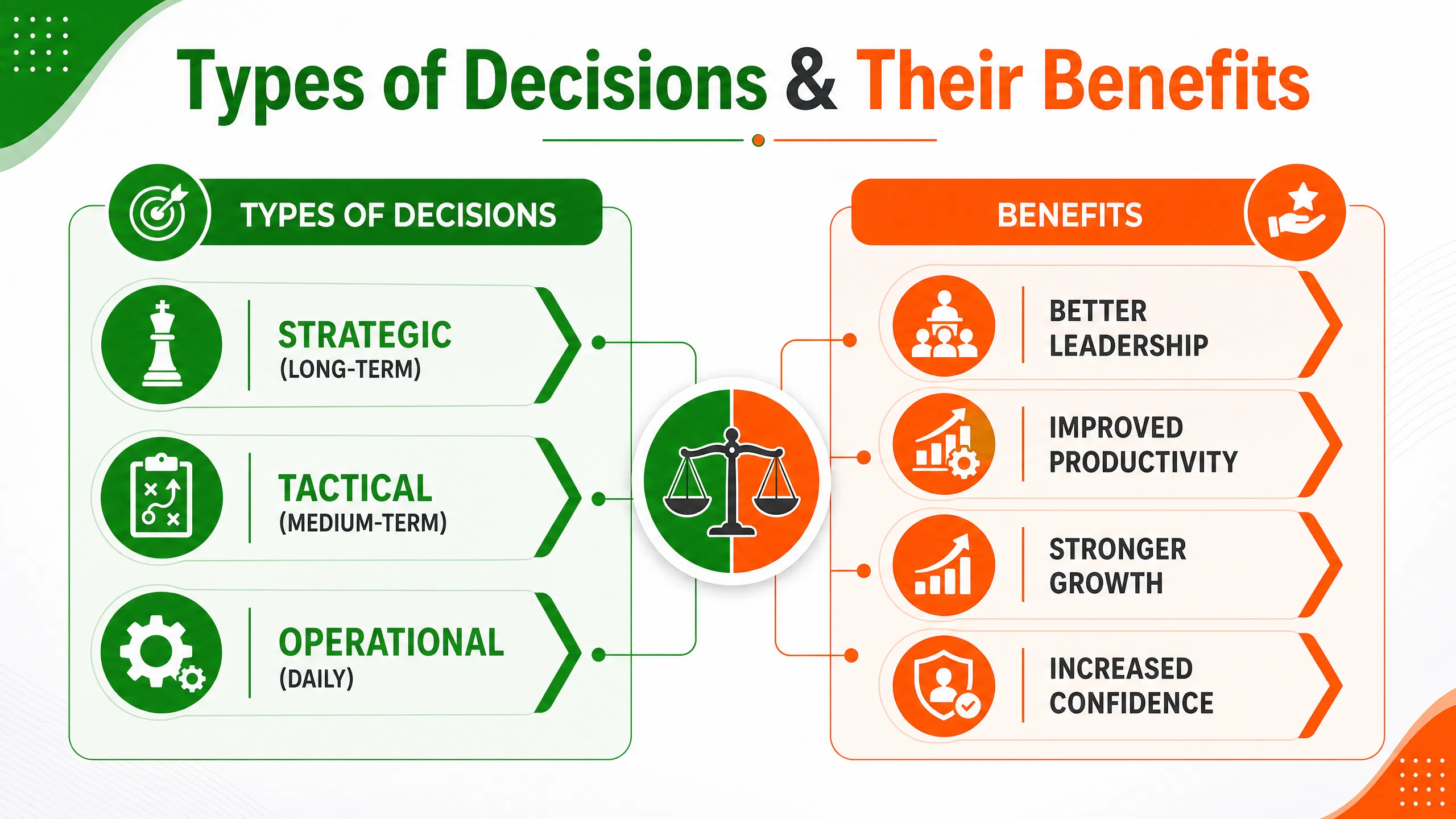
Types of Decision Making
Strategic Decisions
Strategic decisions affect long-term goals and organizational direction. These choices are usually made by senior leaders.
Examples include:
- Expanding into new markets
- Launching new products
- Merging with another company
- Investing in technology
Leaders who manage large-scale organizational transformation often strengthen their capabilities through advanced learning opportunities like Training on Project Management for Leaders, which combines strategic planning with leadership execution techniques.
Strategic decisions often involve high risk and significant impact.
Tactical Decisions
Tactical decisions support strategic goals. Managers typically make these decisions to improve efficiency and performance.
Examples:
- Marketing campaigns
- Staffing plans
- Budget allocation
Operational Decisions
Operational decisions involve daily activities and routine tasks.
Examples:
- Scheduling employees
- Managing inventory
- Customer service processes
Although operational decisions seem small, they can greatly influence overall performance.
Benefits of Strategic Thinking and Decision Making
Better Leadership Skills
Leaders who think strategically inspire trust and confidence. They communicate clear goals and guide teams effectively.
Strong strategic leaders:
- Solve problems quickly
- Adapt to change
- Motivate employees
- Improve teamwork
Improved Productivity
Strategic planning helps individuals and organizations focus on priorities. This reduces wasted time and resources.
Productivity improves when people:
- Set clear objectives
- Eliminate distractions
- Use resources wisely
- Monitor progress regularly
Stronger Business Growth
Businesses with strategic leadership often outperform competitors. They respond faster to market trends and customer needs.
Strategic businesses:
- Identify profitable opportunities
- Reduce operational risks
- Improve customer satisfaction
- Increase profitability
Increased Confidence
People who make informed decisions feel more confident and prepared. Confidence improves communication, leadership, and performance.
Key Challenges in Strategic Thinking
Information Overload
Modern professionals face enormous amounts of information daily. Too much data can slow decision making and create confusion.
To avoid overload:
- Focus on relevant information
- Use reliable sources
- Organize data effectively
Emotional Bias
Emotions can influence judgment. Fear, anger, and excitement may lead to poor decisions.
Common biases include:
- Confirmation bias
- Overconfidence bias
- Anchoring bias
Recognizing these biases improves objectivity.
Fear of Failure
Many people avoid strategic risks because they fear failure. However, avoiding risk completely can prevent growth and innovation.
Successful leaders learn from mistakes and adjust their strategies accordingly.
A growing number of organizations are investing in executive coaching and transformational leadership programs such as Beyond Management: Inside the Mind of Senior Leaders Who Drive Real Change to help professionals become more adaptive and resilient leaders in uncertain environments.
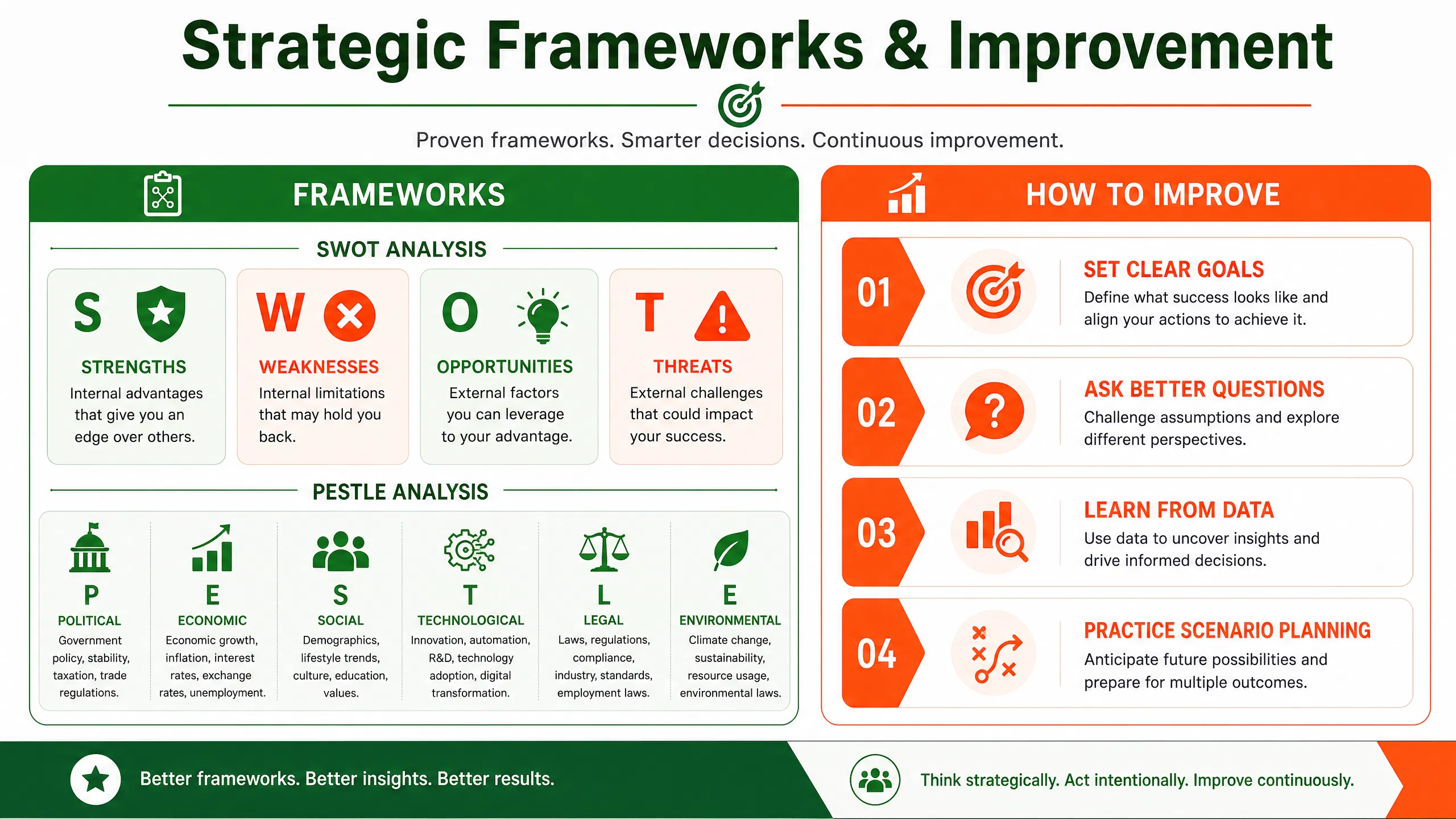
Strategic Thinking Frameworks
SWOT Analysis
SWOT stands for:
- Strengths
- Weaknesses
- Opportunities
- Threats
This framework helps organizations evaluate internal and external factors.
| SWOT Element | Description |
|---|---|
| Strengths | Internal advantages |
| Weaknesses | Internal limitations |
| Opportunities | External growth possibilities |
| Threats | External risks |
PESTLE Analysis
PESTLE examines external influences:
- Political
- Economic
- Social
- Technological
- Legal
- Environmental
This method helps businesses prepare for environmental changes.
Decision Matrix
A decision matrix compares multiple options using weighted criteria. This approach improves objectivity and clarity.
Organizations aiming to improve procurement strategies and operational efficiency frequently explore professional programs like Training on Strategic Sourcing and Procurement Management to strengthen analytical and strategic planning skills.
How to Improve Strategic Thinking and Decision Making
Set Clear Goals
Goals provide direction and purpose. Clear objectives help people focus on meaningful actions.
SMART goals are:
- Specific
- Measurable
- Achievable
- Relevant
- Time-bound
Ask Better Questions
Strategic thinkers ask thoughtful questions such as:
- What could go wrong?
- What are the alternatives?
- What is the long-term impact?
Good questions lead to deeper understanding.
Learn From Data
Data-driven decisions are often more accurate than assumptions. Businesses use analytics to understand customer behavior and market trends.
Organizations increasingly rely on McKinsey & Company research for strategic insights and industry analysis.
Develop Critical Thinking
Critical thinking improves logic and reasoning. It helps people analyze evidence objectively.
Ways to improve critical thinking:
- Read widely
- Challenge assumptions
- Analyze different viewpoints
- Practice reflection
Practice Scenario Planning
Scenario planning prepares organizations for uncertain futures. Leaders create multiple possible scenarios and develop response plans.
This method improves flexibility and resilience.
Conclusion
Strategic thinking and decision making are essential skills for success in today’s complex world. These abilities help individuals and organizations navigate uncertainty, solve problems, and achieve meaningful goals.
People who think strategically can anticipate challenges, recognize opportunities, and make informed choices with confidence. Whether managing a business, planning a career, or improving personal finances, strategic thinking creates a strong foundation for growth and resilience.
As technology, globalization, and competition continue to evolve, the importance of strategic leadership will only increase. By developing critical thinking, learning from data, embracing innovation, and planning for the future, anyone can become a more effective decision maker.
The journey toward smarter thinking begins with one simple step: choosing to think beyond today and prepare for tomorrow.