

What Is Upskilling? 15 Powerful Benefits That Drive Career Growth and Business Success

Introduction to Upskilling
The modern workplace is changing faster than ever before. New technologies, evolving business models, and shifting customer expectations are transforming industries across the world. As a result, professionals and organizations must continuously adapt to remain competitive. This is where upskilling becomes essential.
Many people ask, what is upskilling, and why is it receiving so much attention from employers, educators, and government institutions. Simply put, upskilling refers to the process of learning new skills or improving existing ones to perform current roles more effectively or prepare for future responsibilities.
Today, upskilling is no longer optional. Instead, it has become a critical strategy for career growth, organizational development, and long-term success. Employees who embrace learning opportunities often enjoy better career prospects, while businesses that invest in workforce development through programs offered by Fore Elite Training are more likely to achieve sustainable growth.
Understanding the Meaning of Upskilling
When discussing workforce development, understanding what is upskilling is the first step. Upskilling involves enhancing existing competencies so individuals can adapt to changing job requirements.
For example, a marketing professional may learn data analytics to improve campaign performance. Similarly, a project manager may develop advanced leadership skills to manage larger teams.
Difference Between Upskilling and Reskilling
Although people often use these terms interchangeably, they have different meanings.
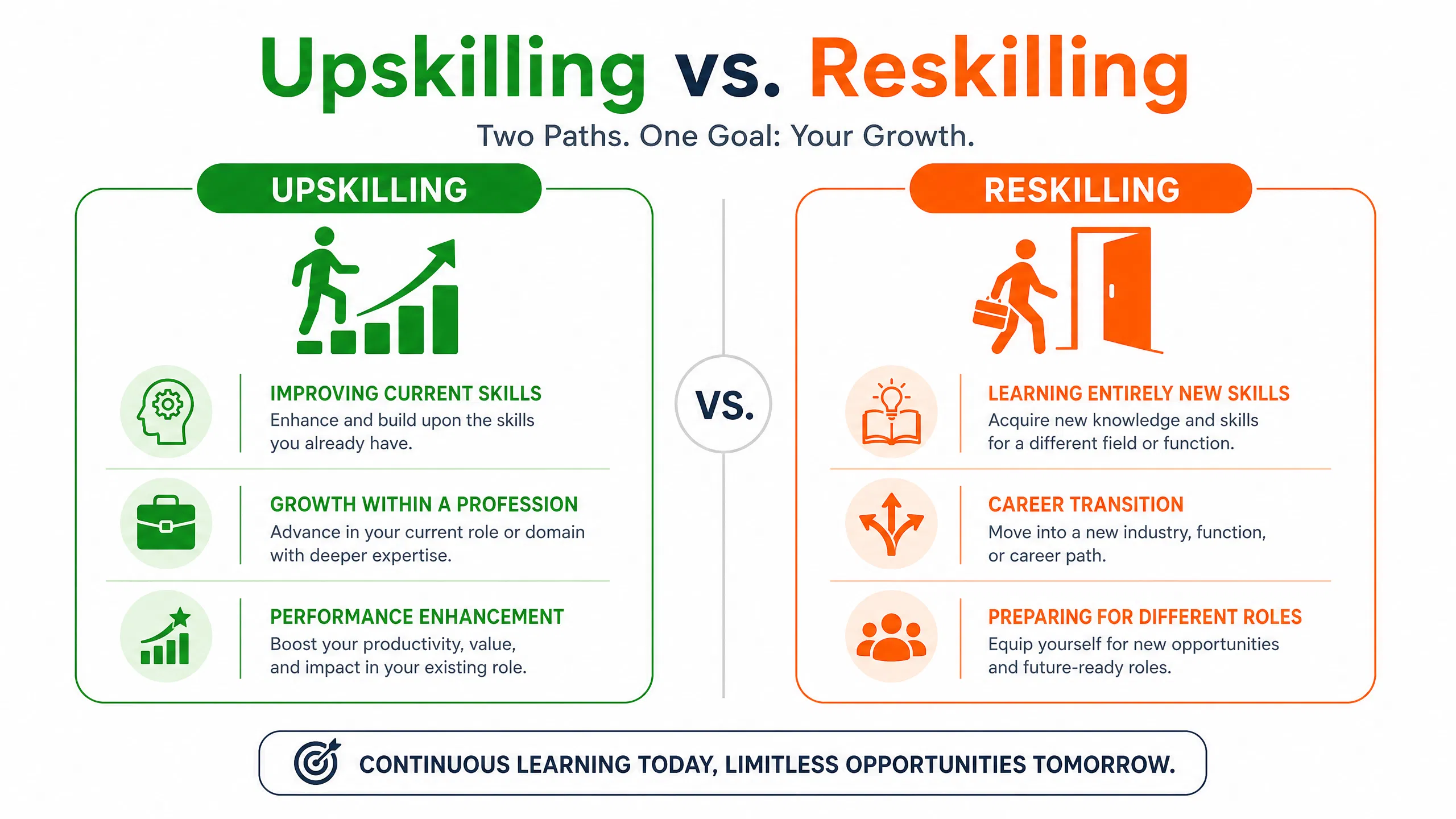
| Upskilling | Reskilling |
|---|---|
| Improves current skills | Develops entirely new skills |
| Enhances performance in existing roles | Prepares employees for different roles |
| Focuses on growth within a profession | Focuses on career transition |
For instance, learning advanced Excel techniques is upskilling. On the other hand, moving from administrative work into software development requires reskilling.
Why Upskilling Matters Today
Several factors make upskilling increasingly important:
- Rapid technological advancements
- Automation of routine tasks
- Increased workplace competition
- Changing customer expectations
- Growth of remote and hybrid work
Consequently, organizations are investing heavily in training programs to ensure their workforce remains relevant and productive.
The Evolution of Workplace Learning
Workplace learning has undergone significant transformation over the past few decades.
Traditional Learning vs Modern Learning
Traditionally, training occurred primarily in classrooms through seminars and workshops. While these methods remain useful, modern learning offers greater flexibility.
Today, professionals can access:
- Online courses
- Virtual classrooms
- Mobile learning applications
- Interactive simulations
- Self-paced learning platforms
As a result, learning has become more accessible and convenient.
Impact of Technology on Skills Development
Technology has revolutionized professional development. Artificial intelligence, cloud computing, data analytics, and cybersecurity have created demand for specialized expertise.
Therefore, understanding what is upskilling helps professionals prepare for technological changes rather than being overwhelmed by them.
Furthermore, organizations implementing digital transformation strategies often collaborate with technology partners such as Nexera Digital Solutions to strengthen operational efficiency and innovation.
Organizations increasingly seek employees who can:
- Analyze data
- Use digital tools effectively
- Collaborate remotely
- Adapt to emerging technologies
- Solve complex problems
Key Benefits of Upskilling for Employees
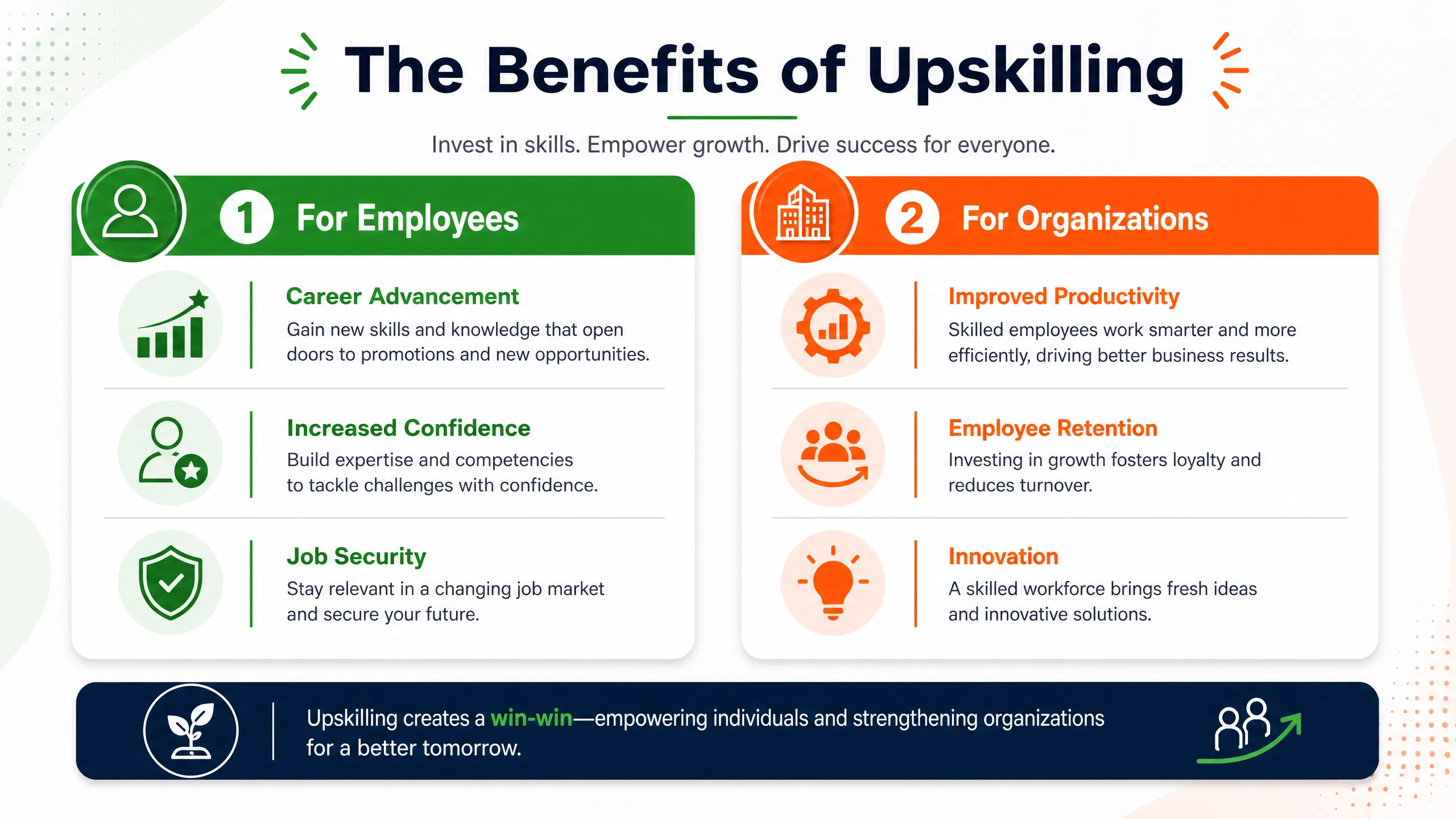
Employees gain numerous advantages when they invest in continuous learning.
Career Advancement
One of the most significant benefits of upskilling is improved career progression.
Employers often prefer promoting individuals who demonstrate commitment to personal growth. Furthermore, employees with advanced skills can qualify for leadership roles and higher-paying positions.
Increased Confidence
Learning new skills boosts self-confidence. Employees become more comfortable handling responsibilities, contributing ideas, and solving challenges.
Moreover, confidence often translates into stronger workplace performance and improved professional relationships.
Better Job Security
Automation continues to replace repetitive tasks across many industries. However, individuals who consistently update their skills remain valuable assets.
Consequently, upskilled employees are less vulnerable to redundancy and better positioned for future opportunities.
Enhanced Professional Reputation
Continuous learners are often viewed as proactive and adaptable. These qualities can strengthen professional credibility and increase networking opportunities.
Greater Adaptability
The business environment changes rapidly. Employees who embrace learning can respond effectively to new technologies, market shifts, and organizational changes.
Key Benefits of Upskilling for Organizations
Upskilling benefits employers just as much as employees.
Improved Productivity
When employees possess updated skills, they can perform tasks more efficiently. Improved efficiency often leads to higher productivity and better outcomes.
Additionally, well-trained employees require less supervision and make fewer errors.
Employee Retention
Organizations that invest in employee development often experience higher retention rates.
Employees appreciate employers who support career growth. Therefore, professional development programs can strengthen loyalty and reduce turnover costs.
Innovation and Competitiveness
Innovation thrives when employees continuously learn and develop new capabilities.
By encouraging upskilling, organizations can:
- Generate fresh ideas
- Improve problem-solving
- Accelerate innovation
- Respond to market changes
- Maintain competitive advantages
Stronger Organizational Culture
Learning-focused workplaces often foster collaboration, engagement, and knowledge sharing. Consequently, teams become more resilient and adaptable.
Essential Areas for Upskilling
Not all skills offer equal value. Some competencies are especially important in today’s workplace.
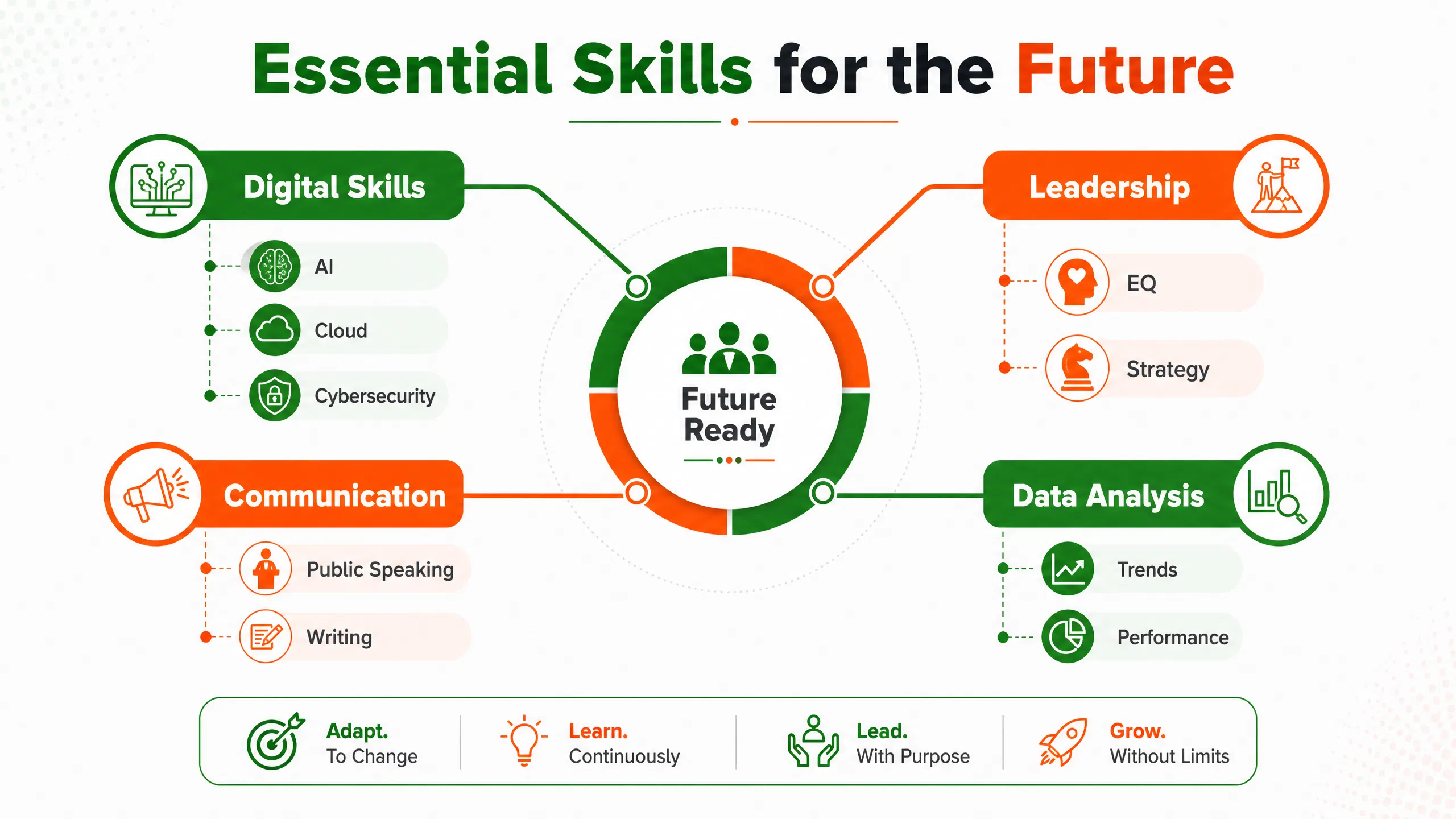
Digital Skills
Digital literacy has become fundamental across industries.
Important digital skills include:
- Data analytics
- Cloud computing
- Cybersecurity awareness
- Digital marketing
- Artificial intelligence fundamentals
Professionals who develop these capabilities often enjoy greater career opportunities. If you who want to strengthen these competencies can benefit from specialized programs available through ForElite Training’s Digital Skills Training Courses.
Leadership Skills
Leadership is no longer limited to managers.
Valuable leadership competencies include:
- Decision-making
- Emotional intelligence
- Conflict resolution
- Team management
- Strategic thinking
These skills improve organizational effectiveness at every level. To develop these critical capabilities, professionals can explore industry-focused learning opportunities through ForElite Training’s Leadership Development Programs.
Communication Skills
Strong communication remains one of the most sought-after workplace competencies.
Employees should focus on:
- Presentation skills
- Active listening
- Business writing
- Public speaking
- Cross-cultural communication
Effective communication supports collaboration and productivity.
Data Analysis Skills
Data-driven decision-making is increasingly important.
Organizations rely on professionals who can:
- Interpret reports
- Identify trends
- Measure performance
- Support strategic decisions
Therefore, data literacy has become a valuable area for upskilling. Individuals interested in building analytical expertise can pursue practical learning opportunities through ForElite Training’s Data Analytics Courses.
Effective Upskilling Strategies
Successful upskilling requires structured approaches.
Online Training Programs
Online learning offers flexibility, affordability, and accessibility.
Benefits include:
- Self-paced learning
- Global access to expertise
- Diverse course options
- Cost efficiency
Professionals can learn without disrupting their work schedules.
Mentorship
Mentorship remains one of the most effective development methods.
Experienced professionals can provide:
- Practical insights
- Career guidance
- Constructive feedback
- Networking opportunities
As a result, learners gain valuable real-world knowledge.
Workshops and Certifications
Certifications validate expertise and demonstrate commitment to professional growth.
Popular certification areas include:
- Project management
- Data analytics
- Information technology
- Occupational safety
- Leadership development
For professionals seeking recognized credentials, programs available through ForElite Training’s Project Management Training Courses can help strengthen both technical and leadership competencies.
On-the-Job Learning
Many valuable lessons occur during daily work activities.
Examples include:
- Job shadowing
- Stretch assignments
- Cross-functional projects
- Team collaboration
Practical experience reinforces theoretical knowledge.
Common Challenges in Upskilling
Despite its benefits, upskilling presents several challenges.
Time Constraints
Many professionals struggle to balance learning with work and personal responsibilities.
Organizations can address this issue by:
- Offering flexible schedules
- Providing learning time
- Supporting self-paced courses
Budget Limitations
Training investments can be expensive.
However, organizations can reduce costs through:
- E-learning platforms
- Internal training programs
- Group learning initiatives
- Knowledge-sharing sessions
Resistance to Change
Some employees may hesitate to adopt new skills.
Common reasons include:
- Fear of failure
- Lack of confidence
- Comfort with existing routines
Therefore, leaders should promote a positive learning culture and provide encouragement.
Measuring Learning Outcomes
Organizations sometimes struggle to evaluate training effectiveness.
Useful metrics include:
- Productivity improvements
- Employee engagement
- Retention rates
- Skill assessments
- Business performance indicators
Future Trends in Upskilling
The future of work will continue to increase demand for continuous learning.
Artificial Intelligence
Artificial intelligence is reshaping nearly every industry.
Professionals who understand AI applications will likely enjoy significant advantages. However, human-centered skills such as creativity, leadership, and emotional intelligence will remain equally important.
Microlearning
Microlearning delivers information in short, focused lessons.
Benefits include:
- Improved retention
- Greater flexibility
- Faster skill acquisition
- Better learner engagement
Consequently, organizations are increasingly adopting this approach.
Personalized Learning
Modern learning platforms use technology to customize training experiences.
Personalized learning offers:
- Relevant content
- Individual learning paths
- Adaptive assessments
- Better outcomes
As technology evolves, personalization will become increasingly sophisticated.
Occupational Health and Safety Training
Organizations across industries increasingly recognize the importance of maintaining safe working environments. Upskilling in workplace safety not only helps organizations remain compliant but also protects employees and improves productivity. Comprehensive learning opportunities are available through ForElite Training’s Occupational Health and Safety Courses.
Continuous Learning Cultures
Organizations are shifting away from occasional training toward continuous development.
This approach encourages employees to learn regularly rather than waiting for annual training events.
Frequently Asked Questions
1. What is upskilling in simple terms?
Upskilling is the process of learning new skills or improving existing skills to perform current job responsibilities more effectively and prepare for future opportunities.
2. Why is upskilling important?
Upskilling helps individuals remain competitive, improve job performance, enhance career prospects, and adapt to workplace changes.
3. What is the difference between upskilling and reskilling?
Upskilling improves skills for a current role, while reskilling prepares someone for a completely different role or career path.
4. Who benefits from upskilling?
Both employees and organizations benefit. Employees gain career growth and job security, while organizations improve productivity, retention, and innovation.
5. What skills should professionals prioritize?
Digital literacy, leadership, communication, problem-solving, data analysis, and adaptability are among the most valuable skills today.
6. How can organizations encourage upskilling?
Organizations can provide training programs, mentorship opportunities, certification support, flexible learning schedules, and career development pathways.
7. Can upskilling improve employee retention?
Yes. Employees are more likely to remain with employers who invest in their professional growth and career advancement.
8. Is upskilling necessary for every industry?
Absolutely. Every industry experiences change, making continuous learning essential for long-term success.
Conclusion
Understanding what is upskilling is essential in today’s rapidly changing workplace. As industries evolve and technology continues to advance, professionals must continuously develop new capabilities to remain competitive.
Upskilling offers significant benefits for both individuals and organizations. Employees gain confidence, career advancement opportunities, and job security. Meanwhile, organizations improve productivity, innovation, and workforce retention.
Looking ahead, continuous learning will become even more important. Businesses that embrace a culture of development and professionals who commit to lifelong learning will be best positioned to thrive in the future of work. Ultimately, upskilling is not simply a trend—it is a strategic investment in long-term success.



I hadn’t realized how upskilling can boost not just efficiency but also employee satisfaction. It’s interesting to see how focusing on skill development benefits both personal growth and overall team morale. Makes a strong case for continuous learning in today’s fast-changing work environment.
One point that stood out is how upskilling benefits both employees and organizations, not just individual career growth. As technology and job requirements continue to evolve, regularly building new skills can help professionals stay adaptable and confident rather than reacting to change after it happens. It would also be interesting to explore how companies can create a culture that encourages continuous learning over the long term.